Agent Infrastructure and Deployment
Putting agents into production and keeping them there. These pages cover deployment targets and containers, CI and GitOps pipelines, scaling and scheduling, job durability for long-running tasks, cost control, rollout and rollback, and the infrastructure-as-code that makes any of it repeatable. The storage question is a production question too: an agent that runs in ephemeral compute needs a durable place to put results, which Fast.io provides through its REST API and CLI.
The pages assume something already works on a laptop and the question is how to run it for other people. They cover the difference between a long-running process and a scheduled job, what to do about work that outlives a single request, and the cost behaviour that only shows up at volume. Storage and secrets get separate treatment, because between them they account for most failed first deployments.
55 guides in this topic.
Start here

Best AI Agent Hosting Platforms in 2026
AI agent hosting platforms provide compute, storage, and orchestration for deploying autonomous agents in production. This guide compares 10 platforms across pricing, persistent storage, framework support, and developer experience so you can pick the right infrastructure for your agents.
Best Self-Hosted AI Agent Platforms (2026 Guide)
Self-hosted AI agent platforms let teams run agents on their own infrastructure, keeping data on-premise and avoiding vendor lock-in. This guide compares the leading frameworks, from code-first libraries to drag-and-drop visual builders.
Best AI Knowledge Management Tools for Teams in 2026
AI knowledge management tools organize and retrieve organizational knowledge using natural language, semantic search, and intelligent indexing. This guide compares 11 platforms designed for teams that need both human-accessible knowledge bases and AI-native retrieval systems.

How to Orchestrate AI Agents with Argo Workflows
Argo workflows ai agents provide a Kubernetes-native way to orchestrate multiple AI agents in directed acyclic graphs or sequences. Each agent runs as a containerized step, handling tasks like data processing, LLM inference, or tool calls. This approach scales to thousands of concurrent agents and works alongside persistent storage solutions. You get full visibility through the Argo UI and REST API.

Best AI Agent Runtime Environments for Developers
Agent runtimes provide secure stateful execution for AI agents. Developers need tool support, persistent memory, safe environments. We compare the top 10 by popularity, features, ease of deployment, and cost.
How to Manage AI Agent Fleets: Operate and Scale Agent Deployments
Managing a fleet of AI agents requires more than just running a few scripts. You must deploy, monitor, and scale multiple autonomous units as a cohesive team to maintain performance and control costs. This guide explores the architectural patterns and operational pillars needed to move from single-agent experiments to production-grade agent fleet management.
All guides

10 Best Platforms for Scaling AI Agent Fleets
Platforms manage AI agent fleets from 1 to 1000+ concurrent agents. Production scaling often fails due to state management, collaboration gaps, or infrastructure limits. Top platforms stack up on scalability, multi-tenancy, pricing, and shared workspaces for human-agent teams like Fastio.

7 Best Agentic GitOps Platforms for 2026
Agentic GitOps platforms use Git to manage AI agents. Agents handle infrastructure deployments independently, using Git as the source of truth. Here are the top picks that handle large agent operations and MCP integration. They manage thousands of agents reliably while staying cost-effective. Check the table for a quick comparison, then read the reviews.

AI Agent Production Best Practices: A Complete Guide
Most AI agent prototypes never reach production. The gap between a working demo and a reliable deployment is filled with infrastructure code for observability, error handling, cost controls, and security. This guide provides a framework-agnostic checklist for getting agents production-ready, covering the eight areas that matter most: tracing, retries, budgets, access control, testing, human oversight, persistent storage, and scaling.

AI-Native Knowledge Management Software: The Future of Workspace Shared Context
AI-native knowledge management software represents a shift from static document folders to queryable team context. While traditional repositories isolate information in stale structures, modern platforms build a unified knowledge base that humans and AI agents query via natural language. By automating document ingestion, extracting structured schemas, and exposing context via APIs and the Model Context Protocol (MCP), teams can eliminate internal search bottlenecks and keep coordination high.
Best AI Agent Hosting Platforms in 2026
AI agent hosting platforms provide compute, storage, and orchestration for deploying autonomous agents in production. This guide compares 10 platforms across pricing, persistent storage, framework support, and developer experience so you can pick the right infrastructure for your agents.
Best AI Agent Infrastructure Stacks in 2026
Guide to agent infrastructure stacks: Choosing an AI agent stack means balancing storage, orchestration, and observability. This guide compares the top options for production agents. We look at state management, tool reliability, and how well they handle multi-agent systems. Whether you need a simple bot or a complex team of agents, here is how to find the right infrastructure for your project.
Best AI Agent Runtime Environments for Developers
Agent runtimes provide secure stateful execution for AI agents. Developers need tool support, persistent memory, safe environments. We compare the top 10 by popularity, features, ease of deployment, and cost.
Best AI Knowledge Management Tools for Teams in 2026
AI knowledge management tools organize and retrieve organizational knowledge using natural language, semantic search, and intelligent indexing. This guide compares 11 platforms designed for teams that need both human-accessible knowledge bases and AI-native retrieval systems.

Best Edge AI Platforms in 2026: Hardware, Software, and Fleet Management Compared
The edge AI market reached $24.91 billion in 2025, yet most comparisons still separate hardware from software, leaving buyers to figure out the integration themselves. This guide evaluates 9 platforms across the full stack, covering hardware acceleration, model optimization, deployment tooling, fleet management, and cloud sync to help you choose the right platform for production edge AI.
Best Self-Hosted AI Agent Platforms (2026 Guide)
Self-hosted AI agent platforms let teams run agents on their own infrastructure, keeping data on-premise and avoiding vendor lock-in. This guide compares the leading frameworks, from code-first libraries to drag-and-drop visual builders.
Best Serverless GPU Providers for AI Agents and Scaling Workflows
Serverless GPU platforms let developers run compute-intensive AI workloads like model fine-tuning or inference without managing infrastructure or paying for idle time. With cold starts now under 10 seconds and on-demand pricing up to 5x cheaper for bursty agent workflows, choosing the right provider affects both performance and costs.

Cloudflare R2 Limits: Object Sizes, Rate Caps, and AI Agent Workflows
Cloudflare R2 limits set maximum single object storage sizes at 5 TB, multipart chunk limits at 5 GB, and provide zero egress fees within standard account throughput quotas. Operational caps include 1,200 requests per five minutes on the Cloudflare REST API and a concurrency ceiling of 1 write per second per key. Autonomous AI agent workflows processing extensive document corpuses require distinct architectures that pair raw object buckets with intelligent workspaces.

Cloudflare Workers Limits: Memory, CPU Time, and Large File Workarounds
Cloudflare Workers limits restrict execution resources to `128 MB` of memory per isolate and `10 ms` of CPU time on Free plans, with incoming request bodies capped at `100 MB`. Engineering teams overcome these constraints by streaming payloads through TransformStream and offloading heavy document indexing to external intelligent workspaces.

Fastio API vs Cloudflare R2: Best Storage for AI Agents
Cloudflare R2 works well for egress-free blob storage, but Fastio provides the structured workspaces, RAG integration, and MCP servers that autonomous AI agents need. Building agent workspaces on R2 means writing a lot of custom middleware. Fastio saves time by handling storage retrieval, advisory file locks, version history, and handoffs from agents to humans out of the box.

GitLab vs GitHub Actions: Building AI-Driven CI/CD Pipelines
A detailed comparison of GitLab Duo and GitHub Copilot for building AI-driven CI/CD pipelines. We evaluate native root-cause analysis, CLI integration, workflow automation, and how teams can coordinate configurations in persistent workspaces.
How to Architect Terraform Infrastructure for AI Agents
Autonomous AI agents need infrastructure that's reproducible and scales. This guide explains how to use Terraform to set up compute, security, and persistent memory for reliable production use.

How to Automate AI Agent Infrastructure
AI agent infrastructure automation helps you scale agent workflows from one bot to thousands. Most teams focus on compute but forget often overlook storage that lasts. This guide shows how to set up self-managing infrastructure for your agents using modern tools and Fastio's intelligent workspaces.

How to Build AI Agent GitOps Workflows
AI agent GitOps workflows use autonomous agents to manage declarative infrastructure from Git repositories. Traditional GitOps relies on tools like ArgoCD and Flux to reconcile cluster state with Git definitions. Agentic GitOps adds reasoning on top: agents validate manifests, coordinate deployments, analyze failures, and adapt without human intervention.
How to Build AI Agent Infrastructure: The Complete Stack Guide
AI agent infrastructure is the comprehensive technology stack required to build, deploy, and run autonomous agents in production. Unlike simple chatbots, agents need strong layers for orchestration, long-term memory, tool execution, and observability. This guide maps out the essential components of a modern agent architecture.
How to Build an AI Agent Control Plane: Manage Agent Infrastructure at Scale
An AI agent control plane is the centralized management layer that handles agent provisioning, configuration, health monitoring, and lifecycle management across a fleet of autonomous AI agents. As organizations move from single-agent pilots to multi-agent systems, a reliable control plane becomes essential for security, observability, and orchestration. This guide explains how to architect a control plane that scales with your AI ambitions.

How to Build an AI Agent Data Enrichment Pipeline
Most data enrichment pipelines connect to a single API and stop there. An AI agent enrichment pipeline chains multiple sources autonomously, validates results across providers, and stores versioned output for human review. This guide covers the architecture, tooling, and failure modes you need to build one that actually works in production.
How to Build an AI Agent Knowledge Vault for Secure Storage
An AI agent knowledge vault is a centralized, secure storage system designed specifically for autonomous agents. Knowledge vaults provide persistent memory, allowing agents to retain context, conversation histories, and document embeddings across multiple sessions. Without a secure agent vault, workflows suffer from repetitive data processing and contextual amnesia.
How to Build an AI Agent Service Mesh: A Guide for 2026
As enterprises deploy more autonomous agents, managing their communication becomes critical. An AI agent service mesh provides the observability, security, and routing needed to scale agentic workflows. This guide explores the architecture of an agent service mesh, compares it to traditional microservices infrastructure, and details how to implement one using stateful files and MCP tools.
How to Build Distributed Knowledge Graphs for AI Agents
Distributed knowledge graphs for AI agents store structured data that multiple agents can share. This setup lets agents query and update entities, relations, and facts together for coordinated reasoning. Graph-grounded communication reduces tokens by 73% and improves accuracy by 34% in retrieval-augmented generation compared to plain vector search.[^multiple] Distributed setups scale better than centralized ones.

How to Build Shared Knowledge Graphs for Multi-Agent Systems
A knowledge graph for shared context gives AI agents a structured way to store facts that multiple agents can use at once. By building a shared memory based on a graph, teams can reduce LLM hallucinations and help agents finish complex tasks much faster. This guide explains the four main parts of an agent knowledge graph and shows how to keep that memory active across different sessions using tools like Fastio and the Model Context Protocol (MCP).

How to Complete a Production Agent Engine Deployment
Running AI agent engines in production requires resilient infrastructure configurations that differ from development setups. Learn how containerizing runtimes, setting up persistent volume mounts, and using Fastio for workspace coordination can cut costs by up to 70% during agent engine deployment.

How to Connect ChatGPT to Nextcloud: Private Cloud AI Integration Guide
Connecting ChatGPT to Nextcloud allows users to combine OpenAI conversational intelligence with self-hosted private cloud storage via WebDAV, API endpoints, or workspace sync. While direct WebDAV bridges force administrators to open firewall ports and suffer from recursive folder latency, modern integration patterns decouple sovereign storage from AI retrieval. Teams can deploy secure middleware bridges or synchronize repositories into indexed workspaces for sub-second semantic search.
How to Deploy AI Agents on Kubernetes
Learn how to deploy AI agents on Kubernetes for scalable, production-ready systems. This guide covers container orchestration, auto-scaling with HPA, multi-agent coordination, and persistent file storage using Fastio workspaces. Topics include YAML examples, deployment checklists, security hardening, and monitoring setup. Perfect for developers building AI agent kubernetes deployment infrastructure.
How to Deploy AI Agents with FluxCD
Manually deploying AI agents leads to errors and poor tracking. FluxCD enables GitOps deployments for AI agent infrastructure, ensuring your autonomous systems are version-controlled, self-healing, and scalable. This guide covers the complete setup, from bootstrapping to managing prompt versions with Kustomize.

How to Deploy AI Agents: The Complete Production Guide
This AI agent deployment guide explains how to move autonomous systems from development to production. Most AI agents fail to reach production due to infrastructure and operational challenges. This guide covers the essential infrastructure, security, and storage patterns needed to deploy autonomous agents that work reliably at scale.
How to Design a Data Pipeline Architecture for AI Agents
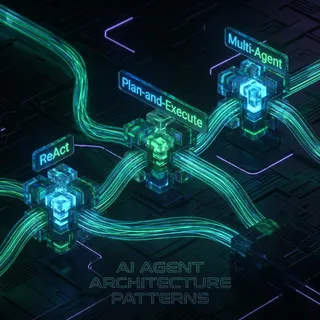
A data pipeline for AI agents is the backbone of reliable autonomous systems. It moves unstructured data from sources through normalization and embedding to make it accessible for agent reasoning. This guide breaks down the essential architecture layers for production-ready agents.
How to Design Serverless AI Agent Architecture
Serverless AI agent architecture lets agents run on-demand using FaaS platforms like AWS Lambda, with external services for state and coordination. This design scales automatically for bursty AI workloads, cutting costs compared to always-on servers. You'll learn components, single/multi-agent patterns, state strategies, and how tools like Fastio provide persistent storage for agents.

How to Handle Long-Running Tasks in AI Agents
AI agents that run for minutes or hours need more than a basic request-response loop. This guide covers five production strategies for keeping long-running agent tasks reliable: checkpointing state to persistent storage, decoupling work through message queues, using durable execution frameworks, setting timeout and retry policies, and reporting progress to humans.

How to Implement AI Agent Autoscaling Strategies
Autoscaling ensures AI agents handle variable loads dynamically by adjusting resources based on demand. In multi-agent systems, this prevents overloads and optimizes costs. This guide explores autoscaling AI agents, strategies for scale multi-agent systems, key metrics, proven techniques, and workspace-integrated methods using persistent storage solutions like Fastio. Whether building reactive workflows or handling bursty traffic, these approaches help maintain reliability.
How to Implement AI Agent GitOps: Declarative Agent Deployments
AI Agent GitOps applies the principles of GitOps, version control, declarative definitions, and automated reconciliation, to the chaotic world of autonomous AI agents. By treating agent prompts, tool definitions, and memory schemas as code, teams can tame configuration drift and ensure reliable deployments. In this guide, we explore how to build a declarative agent pipeline where a Git repository acts as the single source of truth.
How to Implement AI Agent Infra as Code (IaC)
Deploying AI agents manually leads to "works on my machine" issues and state drift. AI Agent Infrastructure as Code (IaC) solves this by defining your agent's compute, memory, and tools in declarative configuration files. This guide shows you how to automate reproducible agent environments using modern IaC patterns and Fastio for state persistence.
How to Implement AI Agent Production Logging
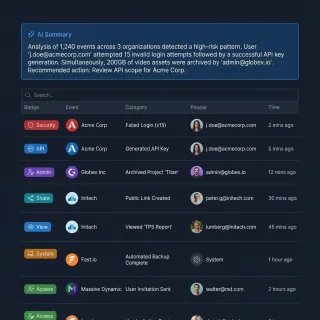
Logging for AI agents requires capturing traces, reasoning chains, decisions, API calls, and errors for effective debugging.

How to Integrate AI Agents with Argo CD
AI agent Argo CD integration enables autonomous continuous deployment management through GitOps principles. Agents can monitor repositories, sync applications, and handle rollbacks without human intervention. This guide covers prerequisites, single-agent setup, multi-agent coordination patterns missing from competitors, and using Fastio workspaces for shared manifests and collaboration. Kubernetes users benefit as 84% of organizations use or evaluate it.
How to Integrate Fastio API with Cloudflare Workers
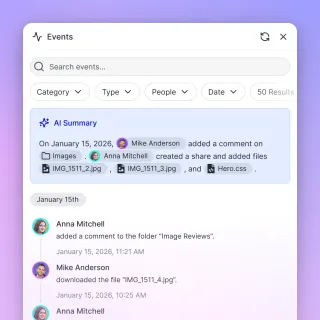
Integrating the Fastio API with Cloudflare Workers lets developers handle file routing, authentication, and activity polling directly at the edge. Running serverless functions close to your users cuts latency and offloads heavy I/O tasks from your primary backend. This guide covers setting up the integration, managing large file streams, and using edge intelligence.

How to Integrate Fastio API with Deno Deploy
Integrating the Fastio API with Deno Deploy lets you trigger file operations and AI workflows globally from the edge. This guide provides step-by-step instructions and practical TypeScript code designed for Deno's runtime constraints. Learn how to authenticate endpoints, stream files, and build reactive serverless applications using Fastio and Deno Deploy.

How to Integrate Fastio API with Supabase Edge Functions
Connecting the Fastio API with Supabase Edge Functions lets you process file uploads and metadata without heavy backend infrastructure. Edge functions run close to users to reduce latency for API-driven workflows. This guide covers the Deno implementation needed to connect both platforms and build intelligent agent workspaces.

How to Integrate Nextcloud with AI Agents
Integrating Nextcloud with AI agents allows autonomous systems to read, write, and analyze files directly from your self-hosted storage. While Nextcloud's internal AI tools are powerful, external agents often require standardized protocols like WebDAV or MCP to access data effectively. This guide covers two methods: direct WebDAV connection and high-performance bridging via Fastio.
How to Manage AI Agent Fleets: Operate and Scale Agent Deployments
Managing a fleet of AI agents requires more than just running a few scripts. You must deploy, monitor, and scale multiple autonomous units as a cohesive team to maintain performance and control costs. This guide explores the architectural patterns and operational pillars needed to move from single-agent experiments to production-grade agent fleet management.
How to Master AI Agent Job Scheduling for Production Workflows
AI agent job scheduling enables autonomous agents to execute tasks on predefined schedules while maintaining context and continuity. Unlike simple scripts, agents require persistent state and memory between runs. This guide covers essential scheduling patterns, implementation strategies, and storage solutions for production agents.
How to Orchestrate AI Agents with Argo Workflows
Argo workflows ai agents provide a Kubernetes-native way to orchestrate multiple AI agents in directed acyclic graphs or sequences. Each agent runs as a containerized step, handling tasks like data processing, LLM inference, or tool calls. This approach scales to thousands of concurrent agents and works alongside persistent storage solutions. You get full visibility through the Argo UI and REST API.
How to Scale AI Agents with Ray Clusters
Ray AI agent clusters distribute workloads across multiple nodes to scale beyond single-machine limits. Ray clusters run agent tasks in parallel, Ray Serve turns them into scalable services, and Fastio handles shared storage for the distributed files. Many organizations use Ray for distributed computing. This guide explains how to set up a cluster, deploy agents, and use Fastio workspaces to manage files across the system. Use these steps to scale your AI agents across a cluster.
How to Use AI Agents for KEDA Autoscaling
AI agent KEDA autoscaling uses agents to dynamically scale workloads based on events. KEDA, Kubernetes Event-driven Autoscaling, supports over 70 scalers for event sources like queues and metrics. Pairing it with AI agents adds proactive scaling through custom events or webhooks. This guide walks through setup, patterns, and Fastio integration for agent workflows.

Knowledge Management System Example: Building an Agent-First Wiki
Establishing a modern knowledge management system example requires moving from static folders to queryable workspaces where humans and AI agents collaborate. This guide explains how to design a structured folder schema, deploy indexing for semantic search, and expose documentation to software agents using the Model Context Protocol.

Kubernetes ConfigMap Size Limit: The 1 MiB etcd Ceiling and Agent Workarounds
Kubernetes imposes a strict 1 MiB size limit on ConfigMap objects, driven by etcd maximum request constraints and Raft consensus overhead. Storing large configurations causes API server rejections and control plane degradation. Engineering teams working with complex application schemas or autonomous AI agents must look beyond ConfigMap sharding and compression to external intelligent workspaces.

The 7 Best AI Scheduling Assistants in 2026
Clockwise's shutdown in March 2026 displaced over 40,000 organizations and reshaped the AI scheduling market. We tested seven tools on multi-calendar conflict resolution, natural-language rescheduling, and focus time protection to find the best fit for different workflows and budgets.
Top 10 AI Agent Infrastructure Platforms in 2026
AI agent infrastructure platforms build backends for multi-agent systems. The market is expected to grow from $7.63 billion in 2025 to $182.97 billion by 2033. We evaluated leading platforms for scalability, integrations, pricing, and workspace support. LangChain excels at orchestration. Fastio works well for agent-human teams.

Top AI Agent Hosting Providers in 2026
AI agent hosting providers offer scalable runtime with persistent storage and tools for reliable operation. This list ranks the top 10 by pricing and uptime, from serverless like Modal to persistent workspaces like Fastio. We focus on state persistence and multi-agent coordination, gaps in many competitors.
Top AI Agent Infrastructure Stacks for Developers
Choosing the right infrastructure is the difference between a prototype and a production agent. We analyze the top stacks, from DIY orchestration with [LangChain](https://langchain.com) to integrated workspaces like [Fastio](/storage-for-agents/) that simplify tool access and storage.

Top AI Agent Scaling Platforms Ranked for 2026
AI agent scaling platforms handle load balancing, state sync, and auto-scaling for fleets of agents. These tools let developers run hundreds or thousands of agents reliably in production. We ranked the top 7 by throughput metrics, state management, observability, cost, and MCP support. Fastio offers MCP-native scaling with persistent workspaces.
Top LLM Agent Hosting Platforms Reviewed
Discover the top LLM agent hosting platforms that handle inference, tools, and state for production language model agents. LLM agents need 10x more compute than chatbots due to iterative tool calls, planning, and tool usage. This review covers 8 options with perf metrics, pricing, and features like persistent workspaces and MCP support.