Best Edge AI Platforms in 2026: Hardware, Software, and Fleet Management Compared
The edge AI market reached $24.91 billion in 2025, yet most comparisons still separate hardware from software, leaving buyers to figure out the integration themselves. This guide evaluates 9 platforms across the full stack, covering hardware acceleration, model optimization, deployment tooling, fleet management, and cloud sync to help you choose the right platform for production edge AI.


Why the Full Platform Stack Matters
The edge AI market reached $24.91 billion in 2025 and is growing at a 21.7% compound annual growth rate, according to Grand View Research. But that spending is spread across a fragmented ecosystem where hardware vendors, model optimization tools, and fleet management platforms all operate in silos.
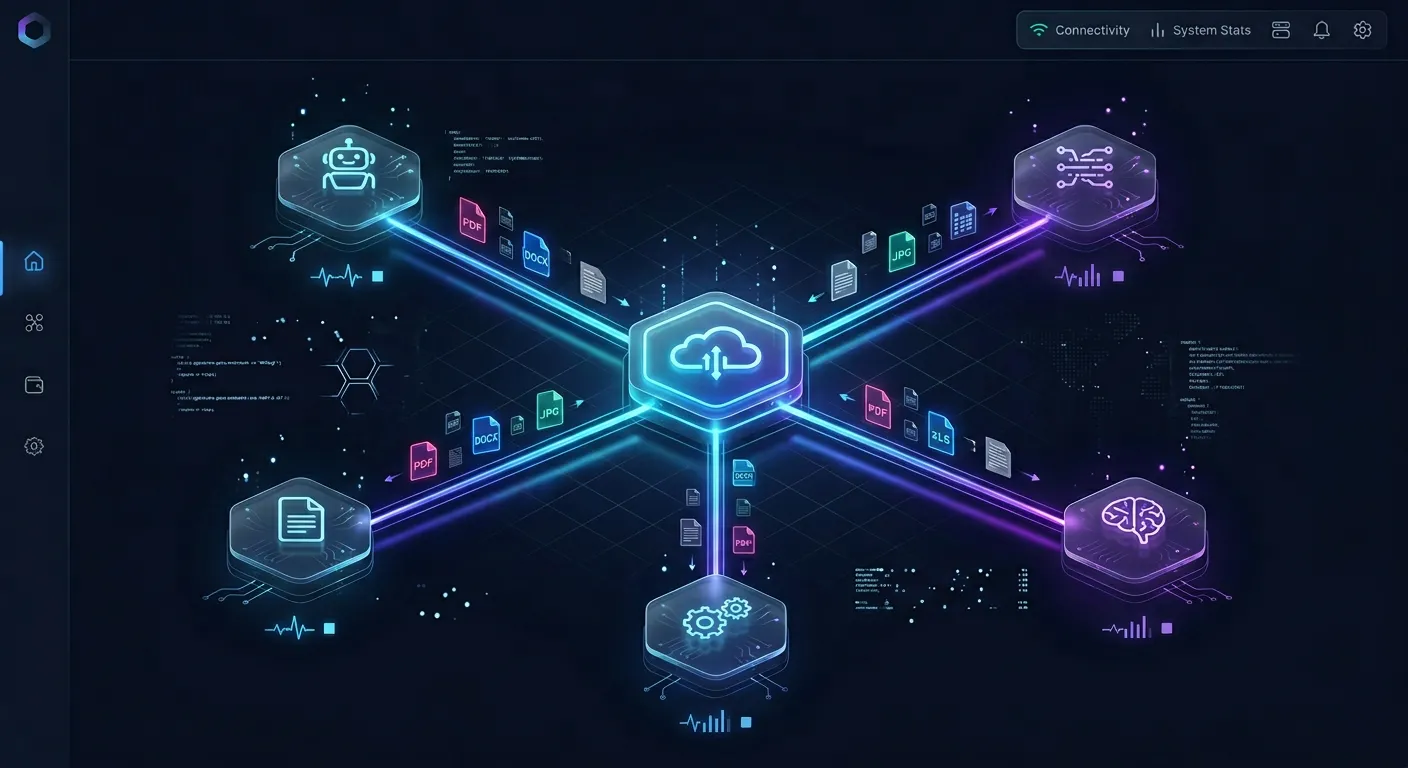
Most edge AI comparisons pit NVIDIA Jetson against Google Coral as if choosing a chip settles the question. It doesn't. A production edge deployment needs five layers working together: hardware acceleration, a model runtime, optimization tooling (quantization, pruning, compilation), fleet management for OTA updates and monitoring, and a cloud sync path for training data and model artifacts.
Edge inference delivers response times of 5 to 20 milliseconds compared to 100 to 500 milliseconds for cloud inference. That 10 to 50x latency improvement makes edge AI necessary for real-time computer vision, autonomous systems, and on-device language models. But realizing that speed in production depends on the platform, not just the chip.
The platforms below cover different slices of this stack. Some are end-to-end. Others excel at one layer and rely on integrations for the rest. Understanding where each platform starts and stops is the key to making a good choice.
Related guides
- Best AI Knowledge Management Tools for Teams in 2026AI knowledge management tools organize and retrieve organizational knowledge using natural language, semantic search,...
- How to Build an AI Agent Knowledge Vault for Secure StorageAn AI agent knowledge vault is a centralized, secure storage system designed specifically for autonomous agents....
- How to Manage AI Agent Fleets: Operate and Scale Agent DeploymentsManaging a fleet of AI agents requires more than just running a few scripts. You must deploy, monitor, and scale...
- Top 10 AI Agent Infrastructure Platforms in 2026AI agent infrastructure platforms build backends for multi-agent systems. The market is expected to grow from $7.63...
- Top LLM Agent Hosting Platforms ReviewedDiscover the top LLM agent hosting platforms that handle inference, tools, and state for production language model...
- 7 Best Agentic GitOps Platforms for 2026Agentic GitOps platforms use Git to manage AI agents. Agents handle infrastructure deployments independently, using Git...
More on this subject: Agent Infrastructure and Deployment (55 guides)
How We Evaluated These Platforms
We scored each platform across six criteria that matter for production edge AI, not just benchmarks on a dev board.
Hardware support
Which chips and accelerators does the platform target? A platform locked to one vendor's silicon limits your options as requirements change.
Model format compatibility
Does it support PyTorch, TensorFlow, ONNX, TensorFlow Lite, Core ML, or proprietary formats? Broader format support means less conversion friction.
Optimization tooling
Does the platform handle quantization, pruning, graph optimization, or compilation to target hardware? This step determines whether your model fits in memory and meets latency targets.
Fleet management
Can you push model updates, monitor device health, roll back deployments, and enforce policies across hundreds or thousands of devices? This separates a dev tool from a production platform.
Cloud integration
How does the platform sync training data, model artifacts, and telemetry back to your cloud environment? Some platforms lock you into one cloud. Others are cloud-agnostic.
Pricing model
Is it open source, per-device, per-node, usage-based, or enterprise-quoted? The pricing model matters as much as the sticker price when you scale from 10 devices to 10,000.
The 9 Best Edge AI Platforms
Each entry below covers what the platform does, where it fits in the stack, its strengths and limitations, and who should consider it.
1. NVIDIA Jetson and Fleet Command
NVIDIA's edge AI stack combines Jetson hardware modules (Orin Nano, Orin NX, AGX Orin) with Fleet Command, a cloud-based management plane for deploying and monitoring AI workloads across GPU-powered edge devices.
Key strengths:
- Jetson AGX Orin delivers 275 TOPS at 60W, enough for multi-stream video analytics and on-device generative AI
- TensorRT optimization accelerates models from PyTorch, TensorFlow, ONNX, and Caffe with INT8 and FP16 quantization
- Fleet Command provides centralized deployment, monitoring, and OTA updates across distributed GPU fleets
- JetPack SDK includes CUDA, cuDNN, and containerized AI runtimes out of the box
Limitations:
- Power draw (15W to 60W) makes Jetson impractical for battery-powered or thermally constrained deployments
- Fleet Command requires NVIDIA GPU hardware, locking you into the Jetson ecosystem
Best for: Computer vision, video analytics, robotics, and any use case that needs GPU-class compute at the edge.
Pricing: Jetson modules are one-time hardware purchases ($250 to $2,000 depending on the Orin variant). Fleet Command uses per-node subscription pricing through NVIDIA AI Enterprise.
2. Edge Impulse
Edge Impulse is an end-to-end platform for building, optimizing, and deploying ML models on embedded devices and microcontrollers. It covers the full pipeline from data collection through production deployment.
Key strengths:
- Handles the entire workflow: data acquisition, feature extraction, model training, quantization, and C++ export for MCUs
- Supports hardware from Arm Cortex-M microcontrollers to NVIDIA Jetson and Qualcomm platforms
- Visual, low-code model builder makes edge ML accessible to firmware engineers who aren't ML specialists
- Built-in device monitoring dashboards for production fleets
Limitations:
- Enterprise pricing is not publicly listed, which makes cost planning harder for mid-size teams
- Less suited for large language models or generative AI workloads at the edge
Best for: IoT sensor fusion, predictive maintenance, keyword spotting, and embedded computer vision on resource-constrained devices.
Pricing: Free developer tier available. Enterprise plans are custom-quoted.
3. Google Coral
Google Coral combines purpose-built Edge TPU hardware with TensorFlow Lite to deliver fast, low-power inference for classification and detection tasks. Available as USB accelerators, M.2 modules, PCIe cards, and standalone dev boards.
Key strengths:
- Edge TPU delivers 4 TOPS at just 2W, making it ideal for fanless, battery-powered, and thermally sealed enclosures
- Sub-5ms inference latency on MobileNet-class models
- Multiple form factors (USB, M.2, PCIe, dev board) let you add acceleration to existing hardware
- Affordable entry point at around $23 per accelerator module in volume
Limitations:
- Only runs quantized INT8 TensorFlow Lite models compiled for Edge TPU, so framework flexibility is minimal
- 4 TOPS ceiling rules out generative AI, large vision transformers, and multi-stream video
- No built-in fleet management; you need a separate platform (Greengrass, KubeEdge, or custom) for OTA updates
Best for: Single-task inference like facial recognition, object counting, inventory monitoring, and quality inspection where power and cost matter more than model complexity.
Pricing: Hardware purchase only. $23 to $175 depending on the form factor.
4. Intel OpenVINO
OpenVINO is Intel's open-source toolkit for optimizing and deploying inference on Intel CPUs, integrated GPUs, and NPUs. It converts models from PyTorch, TensorFlow, ONNX, and PaddlePaddle into optimized intermediate representations.
Key strengths:
- Runs on existing Intel hardware (Core, Xeon, Arc GPUs, Movidius VPUs) without requiring dedicated AI accelerators
- Open source with an active community and no licensing fees
- Automatic device selection distributes inference across available CPU, GPU, and NPU resources
- 5 to 15ms latency on Intel platforms for common vision models
Limitations:
- Performance is best on Intel silicon, so cross-vendor portability is limited in practice
- Higher power draw (15W to 65W+) compared to purpose-built edge accelerators
- No fleet management layer; you need separate tooling for device updates and monitoring
Best for: Retrofitting AI into existing Intel-based infrastructure like point-of-sale systems, retail cameras, and industrial PCs.
Pricing: Free and open source.
5. AWS IoT Greengrass
Greengrass extends AWS services to edge devices, letting you run Lambda functions, Docker containers, and ML models locally while staying connected to the AWS cloud for management and data sync.
Key strengths:
- Tight integration with SageMaker for model training, S3 for artifact storage, and IoT Core for device messaging
- Continues operating with limited connectivity and syncs when back online
- Component-based architecture lets you deploy only what each device needs
- Pairs with AWS IoT Fleet Manager for device health monitoring and bulk operations
Limitations:
- Deep AWS dependency means you're committing to one cloud provider
- Usage-based pricing (IoT Core messaging, Lambda invocations, data transfer) can be hard to predict at scale
- Not optimized for GPU inference at the edge; works best with CPU-based models
Best for: Organizations already using AWS for ML training (SageMaker) that need to push inference models to edge devices with a managed deployment pipeline.
Pricing: No upfront fees. Pay per IoT Core message, Lambda execution, and data transfer.
6. Azure IoT Edge
Azure IoT Edge runs containerized modules on Linux and Windows edge devices, with built-in integration to Azure ML, Cognitive Services, and the Azure IoT Hub management plane.
Key strengths:
- Module-based deployment model lets you compose edge workloads from containers
- Device twin management syncs configuration and state between cloud and device
- Direct integration with Azure ML for model deployment and Azure Monitor for telemetry
- Runtime is free; you pay only for IoT Hub throughput
Limitations:
- Locks you into the Azure cloud ecosystem
- Smaller community and fewer third-party modules compared to Kubernetes-based alternatives
Best for: Enterprises standardized on Azure for ML and IoT that want a managed edge runtime with device twin synchronization.
Pricing: Runtime is free. IoT Hub Standard tier starts at approximately $25 per month plus message volume charges.
7. Qualcomm AI Hub
Qualcomm AI Hub is a developer platform for optimizing and deploying ML models on Snapdragon and Qualcomm IoT processors. It provides model conversion, quantization, profiling, and a library of 175+ pre-optimized models.
Key strengths:
- Automatic conversion from PyTorch and ONNX to Qualcomm AI Engine Direct, TensorFlow Lite, or ONNX Runtime
- Hardware-aware quantization targeting Hexagon DSP, Adreno GPU, and CPU inference paths
- 175+ pre-optimized models ready to deploy on Qualcomm silicon
- Free access for developers with no licensing fees for the optimization toolkit
Limitations:
- Qualcomm silicon only; models optimized here won't transfer to Jetson, Coral, or Intel without re-optimization
- No fleet management layer; you'll need a separate tool for OTA model distribution
- Focused on mobile and IoT processors, not data center or automotive edge
Best for: Mobile app developers and IoT builders targeting Snapdragon-powered devices who need hardware-optimized inference without writing custom kernels.
Pricing: Free developer access. Enterprise support is custom-quoted.
8. RunAnywhere
RunAnywhere provides native SDKs for running AI models on mobile devices (iOS, Android) with a cloud control plane for model distribution, hybrid routing policies, and runtime analytics.
Key strengths:
- Native SDKs for Swift, Kotlin, React Native, and Flutter with GGUF, ONNX, Core ML, and MLX backend support
- Hybrid routing policies let you split inference between on-device and cloud based on model size, latency, and cost
- OTA model distribution pushes updated models to devices without app store releases
- Privacy-first telemetry collects performance data without exposing user content
Limitations:
- Mobile-focused, so it's not the right fit for industrial edge, robotics, or embedded MCU deployments
- Newer platform with a smaller community than established options like Jetson or OpenVINO
Best for: Mobile teams shipping on-device LLMs, speech recognition, or computer vision in iOS and Android apps who need a control plane for model lifecycle management.
Pricing: Free developer SDKs. Production and enterprise plans are tiered.
9. KubeEdge
KubeEdge is a CNCF-graduated open-source project that extends Kubernetes to edge nodes. It provides container orchestration, device management, and offline autonomy for distributed edge deployments.
Key strengths:
- Familiar Kubernetes primitives (deployments, services, config maps) work across edge nodes with unreliable connectivity
- DeviceTwin and EventBus handle MQTT-based state synchronization between cloud and edge
- Hardware-agnostic: runs containers on any Linux edge node with attached accelerators
- No vendor lock-in to a specific cloud or hardware platform
Limitations:
- Requires Kubernetes expertise to set up and operate, raising the barrier for small teams
- No built-in model optimization or AI-specific tooling; you pair it with separate ML frameworks
- Open source means you own the infrastructure, so budget for platform engineering time
Best for: Platform teams already running Kubernetes who want to extend their existing orchestration to edge nodes without adopting a proprietary edge platform.
Pricing: Free and open source. Infrastructure and engineering costs are on you.
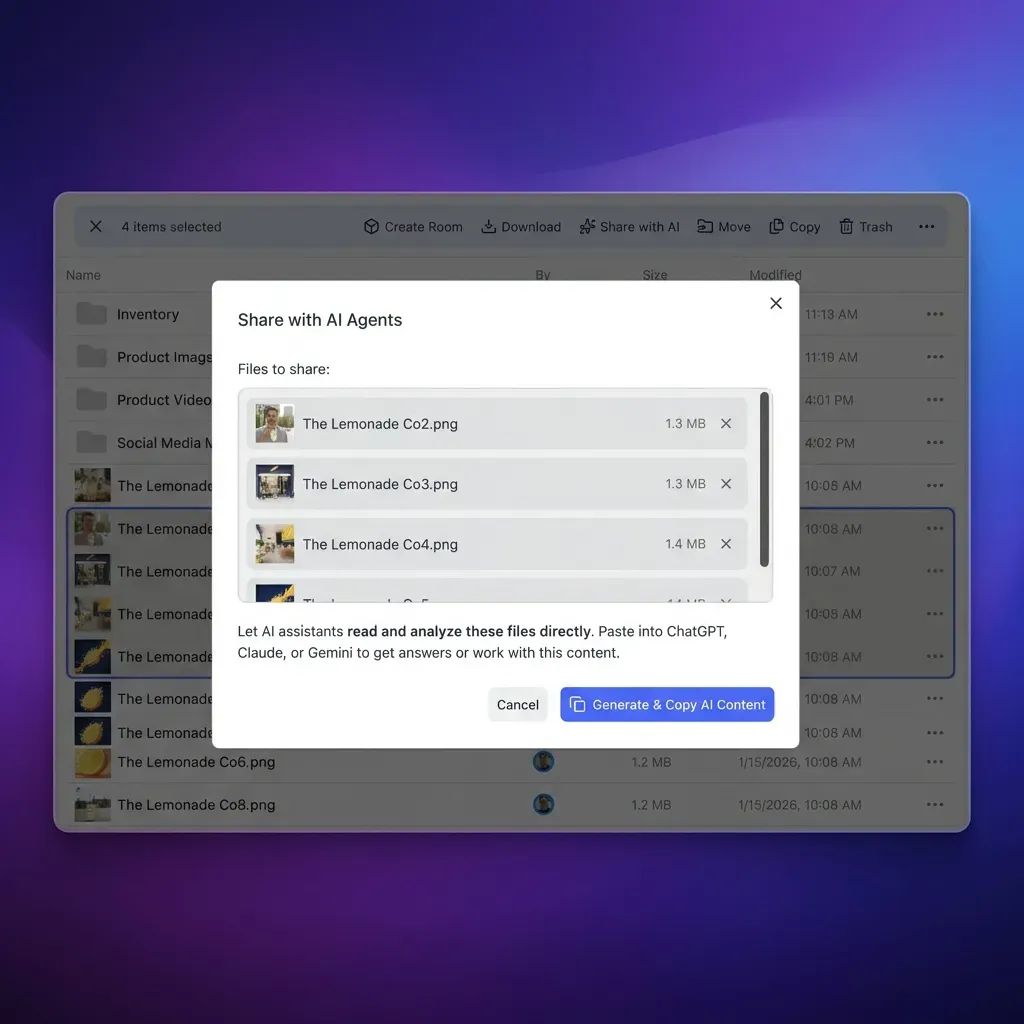


Keep your edge AI models and training data organized
Fastio gives edge teams persistent workspace storage with built-in Intelligence Mode for semantic search across model docs and deployment artifacts.
Quick Comparison by Use Case
Rather than picking the "best" platform overall, match your deployment to the layer you need most.
GPU-powered computer vision and generative AI at the edge: NVIDIA Jetson + Fleet Command. Nothing else combines 275 TOPS hardware with a purpose-built fleet management plane for GPU devices.
Embedded ML on microcontrollers and sensors: Edge Impulse. It covers the full pipeline from data collection to C++ export, and it works on hardware too small for Docker or Kubernetes.
Low-power, single-task inference (counting, classification, detection): Google Coral. Sub-5ms latency at 2W power draw is hard to beat for dedicated inference tasks in constrained form factors.
Retrofitting AI onto existing Intel infrastructure: Intel OpenVINO. If you already have Intel CPUs, GPUs, or NPUs deployed, OpenVINO adds inference without new hardware.
AWS or Azure cloud-to-edge pipeline: AWS IoT Greengrass or Azure IoT Edge, depending on your cloud. Both manage edge model deployment through familiar cloud consoles and pair with their respective ML training services.
Mobile on-device inference with app-level control: RunAnywhere or Qualcomm AI Hub. RunAnywhere adds the control plane and hybrid routing. Qualcomm AI Hub gives you the deepest optimization for Snapdragon devices.
Cloud-agnostic Kubernetes at the edge: KubeEdge. If your team already thinks in pods and deployments, KubeEdge extends that model to edge nodes without new abstractions.
Managing model artifacts, training data, and team collaboration across edge projects: A workspace platform like Fastio fills a gap that chip and runtime vendors don't cover. Edge teams generate large volumes of training data, optimized model binaries, and deployment configs that need version control, permissioned sharing, and audit trails. Fastio's Intelligence Mode auto-indexes uploaded files for semantic search, so you can ask questions about your model documentation and deployment logs without building a separate knowledge base. The MCP server lets AI agents pull artifacts from shared workspaces during automated build and deploy pipelines. Fastio offers a 14-day Business Trial (credit card required; see pricing) to help teams get started with edge AI model management.

Choosing the Right Platform for Your Project
Start with your constraints, not a feature matrix. Three questions narrow the field fast.
What hardware are you deploying to? If you've already selected silicon (Jetson, Coral, Snapdragon, Intel), pick the platform built for that hardware. Cross-platform model portability sounds good in theory, but hardware-specific optimization delivers better latency and power efficiency in practice.
Do you need fleet management? A prototype running on one device doesn't need OTA updates and device monitoring. A fleet of 500 cameras does. If fleet management is a requirement, NVIDIA Fleet Command, AWS IoT Greengrass, Azure IoT Edge, and KubeEdge are your starting points. Edge Impulse and RunAnywhere offer lighter-weight device management that works for smaller fleets.
What's your team's infrastructure skill set? KubeEdge assumes Kubernetes expertise. Greengrass assumes AWS fluency. Edge Impulse is designed for firmware engineers who aren't ML specialists. Match the platform to the team you have, not the team you plan to hire.
One pattern worth noting in production edge AI deployments: teams underinvest in the tooling around model management. Tracking which model version is running on which device, who approved the deployment, and where the training data lives becomes more important at scale than the chip you chose. Plan for that layer early, whether through your edge platform's built-in tools or a dedicated workspace like Fastio for model artifacts and documentation.
Sources
References used to verify factual claims in this guide.
-
The edge AI market reached $24.91 billion in 2025 and is growing at a 21.7% compound annual growth rate
-
Edge inference delivers response times of 5 to 20 milliseconds compared to 100 to 500 milliseconds for cloud inference
-
IDC estimates global spending on edge computing to reach nearly 380 billion dollars by 2028
-
NVIDIA Jetson AGX Orin delivers 275 TOPS at 60W
-
Google Coral Edge TPU delivers 4 TOPS at 2W
-
Qualcomm AI Hub offers 175+ pre-optimized models for Qualcomm devices
Frequently Asked Questions
What is the best platform for edge AI?
There is no single best platform because the right choice depends on your hardware, deployment scale, and team skills. NVIDIA Jetson with Fleet Command leads for GPU-powered vision and generative AI. Edge Impulse is strongest for embedded ML on microcontrollers. Google Coral wins on power efficiency for single-task inference. AWS IoT Greengrass and Azure IoT Edge serve teams already invested in those cloud ecosystems.
How do you deploy AI models on edge devices?
The typical workflow starts with training a model in the cloud using PyTorch, TensorFlow, or a managed service like SageMaker. Next, you optimize the model for edge hardware through quantization, pruning, or compilation using tools like TensorRT, OpenVINO, or Edge Impulse. Then you package the model into a container or binary, push it to devices through an OTA update pipeline, and monitor inference performance in production.
What is the difference between edge AI and cloud AI?
Edge AI runs inference directly on the device, delivering 5 to 20ms response times compared to 100 to 500ms for cloud AI. Edge processing keeps sensitive data on-premises and reduces bandwidth costs. Cloud AI offers more compute power for training and large models, but adds network latency and ongoing data transfer costs. Most production systems use a hybrid approach where training happens in the cloud and inference runs at the edge.
Which edge AI hardware is best for production?
NVIDIA Jetson Orin modules (275 TOPS, 15 to 60W) are the standard for demanding workloads like multi-stream video and on-device LLMs. Google Coral Edge TPU (4 TOPS, 2W) is better for cost-sensitive, low-power deployments running classification and detection. AMD Kria is gaining traction for industrial applications that need deterministic, real-time response. Intel OpenVINO lets you add AI to existing Intel-based systems without dedicated accelerators.
How much does an edge AI platform cost?
Costs vary widely. Open-source tools like OpenVINO and KubeEdge have zero licensing fees but require platform engineering investment. Hardware ranges from $23 for a Coral accelerator to $2,000 for an NVIDIA Jetson AGX Orin. Cloud-managed platforms like AWS Greengrass charge per message and compute usage. Edge Impulse and RunAnywhere offer free developer tiers with enterprise pricing on request. For most teams, the biggest cost isn't the platform license but the engineering time to integrate, optimize, and maintain the deployment pipeline.
Can you run large language models on edge devices?
Yes, but with constraints. NVIDIA Jetson AGX Orin can run quantized LLMs with 7 to 13 billion parameters at reasonable speeds. Platforms like RunAnywhere support GGUF-format models on mobile devices. Qualcomm AI Hub optimizes transformer models for Snapdragon chips. For very large models (70B+ parameters), edge inference isn't practical yet, and you'll need a hybrid approach that routes complex queries to the cloud.
Related Resources

Keep your edge AI models and training data organized
Fastio gives edge teams persistent workspace storage with built-in Intelligence Mode for semantic search across model docs and deployment artifacts.