Top AI Agent Infrastructure Stacks for Developers
Choosing the right infrastructure is the difference between a prototype and a production agent. We analyze the top stacks, from DIY orchestration with [LangChain](https://langchain.com) to integrated workspaces like [Fastio](/storage-for-agents/) that simplify tool access and storage.

Why Do Top AI Agent Infrastructure Stacks Fail?
Building AI agents is easy; deploying them to production is hard. While frameworks like LangChain have democratized the logic of agents, infrastructure (memory, storage, tool execution, and state management) remains a major bottleneck.
According to the RAND Corporation, over 80% of AI projects fail to reach successful production, often due to infrastructure complexity and data quality issues. Developers frequently find themselves stitching together six or seven different services just to get a basic agent running: a vector database for memory, an object store for files, a server for tool execution, and an orchestration layer to tie it all together.
The market is shifting from "stitching components" to "integrated stacks." This guide breaks down the top infrastructure approaches for developers, ranging from fully managed intelligent workspaces to highly customizable DIY architectures.
Related guides
- How to Architect Terraform Infrastructure for AI AgentsAutonomous AI agents need infrastructure that's reproducible and scales. This guide explains how to use Terraform to...
- How to Automate AI Agent InfrastructureAI agent infrastructure automation helps you scale agent workflows from one bot to thousands. Most teams focus on...
- How to Integrate AI Agents with Argo CDAI agent Argo CD integration enables autonomous continuous deployment management through GitOps principles. Agents can...
- How to Build an AI Agent Service Mesh: A Guide for 2026As enterprises deploy more autonomous agents, managing their communication becomes critical. An AI agent service mesh...
- How to Master AI Agent Job Scheduling for Production WorkflowsAI agent job scheduling enables autonomous agents to execute tasks on predefined schedules while maintaining context...
- How to Build an AI Agent Knowledge Vault for Secure StorageAn AI agent knowledge vault is a centralized, secure storage system designed specifically for autonomous agents....
More on this subject: Agent Infrastructure and Deployment (55 guides)
Why Choose the Intelligent Workspace Stack? (Fastio + Any LLM)
Best For: Production agents, human-agent collaboration, and MCP-native workflows.
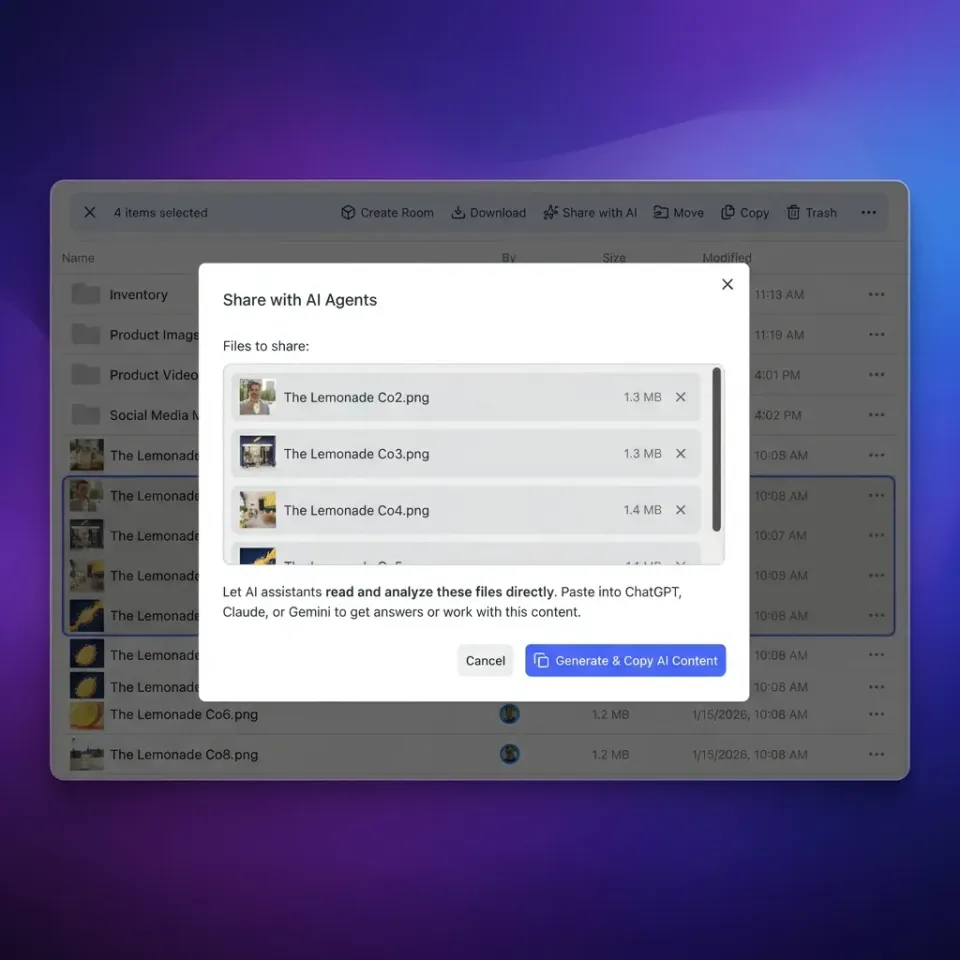
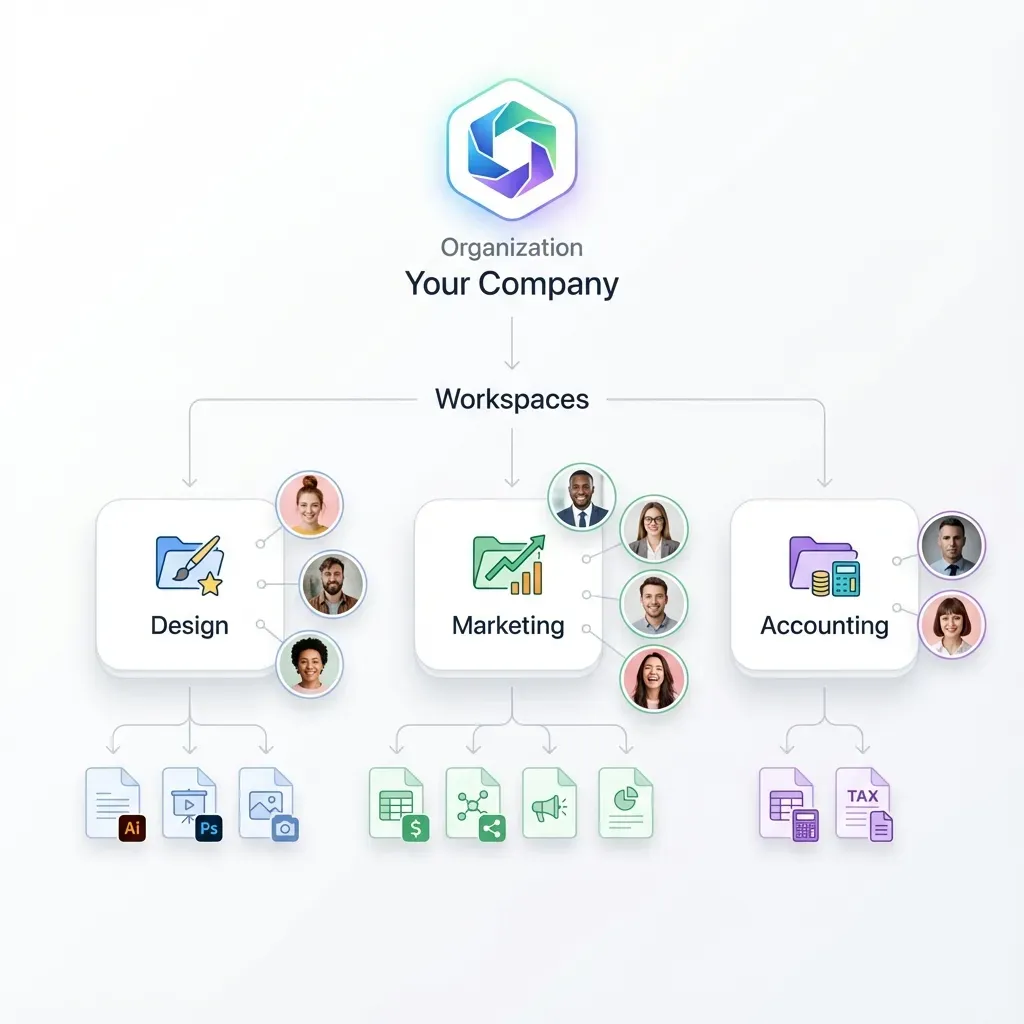
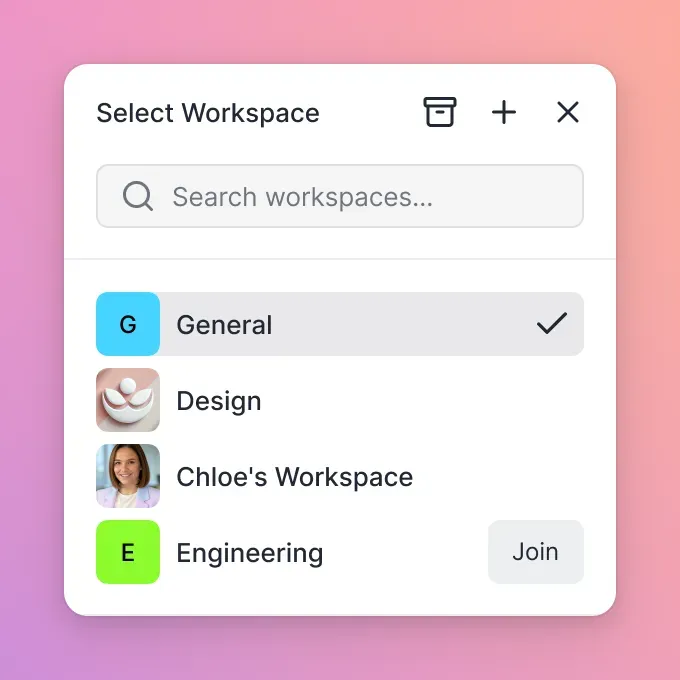
The "Intelligent Workspace" approach flips the traditional stack on its head. Instead of treating storage, memory, and tools as separate infrastructure components to be managed, Fastio provides a unified workspace where agents and humans work side-by-side.
In this stack, the "infrastructure" is actually a collaborative environment. Agents don't just dump files into an S3 bucket; they interact with a live file system that automatically indexes content for RAG.
Key Components:
- Storage & Memory: Fastio (Files + Intelligence Mode for RAG).
- Tool Interface: Model Context Protocol (MCP) Server.
- Compute: Any LLM (Claude, GPT, Llama via OpenClaw).
Why It Works: This stack eliminates the need to manage a separate vector database or build custom tool servers. Fastio's MCP server provides a consolidated MCP toolset for file operations, allowing agents to read, write, search, and organize data immediately. Because it's a workspace, humans can inspect, edit, and comment on the agent's work in real-time.

Fastio Stack Highlights
- Zero-Config RAG: Toggle "Intelligence Mode" to auto-index documents, PDFs, and videos. No Pinecone or Weaviate required.
- Persistent Storage: Scalable storage tiers with usage-based credits (vs. ephemeral storage in many other stacks).
- Universal Tooling: Works with any MCP-compliant client (Claude Desktop, Cursor, Devin Desktop (formerly Windsurf)) or via standard APIs.


Give Your AI Agents Persistent Storage
Stop stitching together APIs. Get persistent storage, built-in RAG once Intelligence is enabled, and a consolidated MCP toolset for your agents instantly.
2. The DIY Orchestration Stack (LangChain + Pinecone + FastAPI)
Best For: Maximum flexibility and complex custom logic.
This is the "classic" stack for developers who want full control over every layer. It involves assembling best-in-class components for each function. While powerful, it requires significant maintenance and DevOps overhead.
Key Components:
- Orchestration: LangChain or LangGraph.
- Memory: Pinecone, Weaviate, or ChromaDB.
- API/Serving: Python with FastAPI.
- Storage: AWS S3.
Why It Works: LangChain has a massive ecosystem of integrations, meaning you can connect to almost anything if you're willing to write the glue code. This stack is ideal for research teams or products with highly specific algorithmic requirements that off-the-shelf platforms can't support.
The Trade-off: You are responsible for the integration tax. You must ensure your vector database stays in sync with your object storage, manage your own auth, and handle scaling for the API layer.
3. The Autonomous Swarm Stack (CrewAI + Docker)
Best For: Multi-agent systems and complex task delegation.
When a single agent isn't enough, developers turn to swarm architectures. Frameworks like CrewAI and Microsoft's AutoGen allow multiple agents to role-play specific functions (e.g., "Researcher," "Writer," "Editor") and collaborate to solve problems.
Key Components:
- Orchestration: CrewAI or AutoGen.
- Runtime: Docker / Kubernetes.
- State Management: MemGPT or local file state.
Why It Works: This stack excels at decomposing complex tasks. Instead of asking one model to do everything, you create specialized agents. The infrastructure focus here is on containerization (Docker) because these swarms often run as long-lived processes that need to maintain state over hours or days.
4. The Serverless Web Stack (Vercel AI SDK + Upstash)
Best For: Chatbots and web-facing agent UIs.
For developers building user-facing applications (like support bots or interactive tutors), the serverless stack offers the lowest latency and easiest deployment.
Key Components:
- Framework: Next.js.
- AI Library: Vercel AI SDK.
- Database: Upstash (Redis/Vector) or Neon (Postgres).
Why It Works: This stack is optimized for the web request/response cycle. It handles streaming responses to the frontend beautifully. Vercel's global edge network ensures low-latency access worldwide. However, it can struggle with long-running agent tasks that exceed serverless execution time limits, requiring offloading to background workers.
5. The Enterprise Cloud Stack (Azure AI / Vertex AI)
Best For: Regulatory compliance and large enterprise contracts.
Large organizations often prefer to stay within their existing cloud walled gardens. Both Azure and Google Cloud have released comprehensive "Agent Builder" platforms that tightly works alongside their ecosystem.
Key Components:
- Platform: Azure AI Studio or Google Vertex AI Agent Builder.
- Models: OpenAI (Azure) or Gemini (Google).
- Data: SharePoint / Google Drive connectors.
Why It Works: Security and procurement. If your data is already in SharePoint, keeping the agent inside the Microsoft tenant simplifies data management and governance. These platforms provide enterprise-grade support and SLAs. The downside is vendor lock-in and often higher costs compared to composable stacks.
Top AI Agent Infrastructure Stacks Comparison: Which Should You Choose?
Our Verdict:
- Choose Fastio if you want to build agents that perform real work on files (analysis, media processing, data organization) without managing infrastructure.
- Choose DIY (LangChain) if you are building a novel agent architecture or research project.
- Choose Serverless for simple customer-facing chatbots.
Sources
References used to verify factual claims in this guide.
-
RAND Corporation: more than 80% of AI projects fail
-
Fastio's MCP server provides a consolidated toolset for file operations
-
Fastio provides a 14-day Business Trial with usage-based credits across paid plans
Frequently Asked Questions
What is an AI agent infrastructure stack?
An AI agent infrastructure stack is the set of technologies used to build, deploy, and run autonomous AI agents. It typically includes an LLM (brain), an orchestration framework (logic), a vector database (memory), object storage (files), and a tool execution environment.
Do I need a vector database for my AI agent?
Not necessarily. If you use an integrated stack like Fastio with Intelligence Mode, the system automatically handles vector indexing and retrieval for you. You only need a standalone vector database like Pinecone if you are building a custom DIY stack from scratch.
How much does AI agent infrastructure cost?
Costs vary wildly. A DIY stack can quickly become expensive depending on vector DB and cloud compute fees. [Fastio](/storage-for-agents/) offers a 14-day Business Trial (card required; see /pricing/) with plans starting at $9.99/mo, making it one of the most cost-effective ways to start.
What is the difference between LangChain and Fastio?
LangChain is a code library for building agent logic. Fastio is an intelligent workspace and storage platform. You can actually use them together: use LangChain to write the agent's reasoning, and use Fastio as the agent's file system, long-term memory, and tool provider.
Why do most AI agents fail in production?
According to RAND Corporation, 80% of AI projects fail. Common reasons include infrastructure complexity, poor data quality, and lack of persistent state. Using a managed platform that handles state and data consistency can reduce failure rates.
Related Resources

Give Your AI Agents Persistent Storage
Stop stitching together APIs. Get persistent storage, built-in RAG once Intelligence is enabled, and a consolidated MCP toolset for your agents instantly.