AI & Agents

How to Deploy AI Agents to Production

Moving AI agents from development to production requires infrastructure setup, security configuration, and operational monitoring. This guide covers the steps and common pitfalls to avoid when deploying agents at scale. This guide covers ai agent deployment guide with practical examples.

Fast.io Editorial Team 17 min read
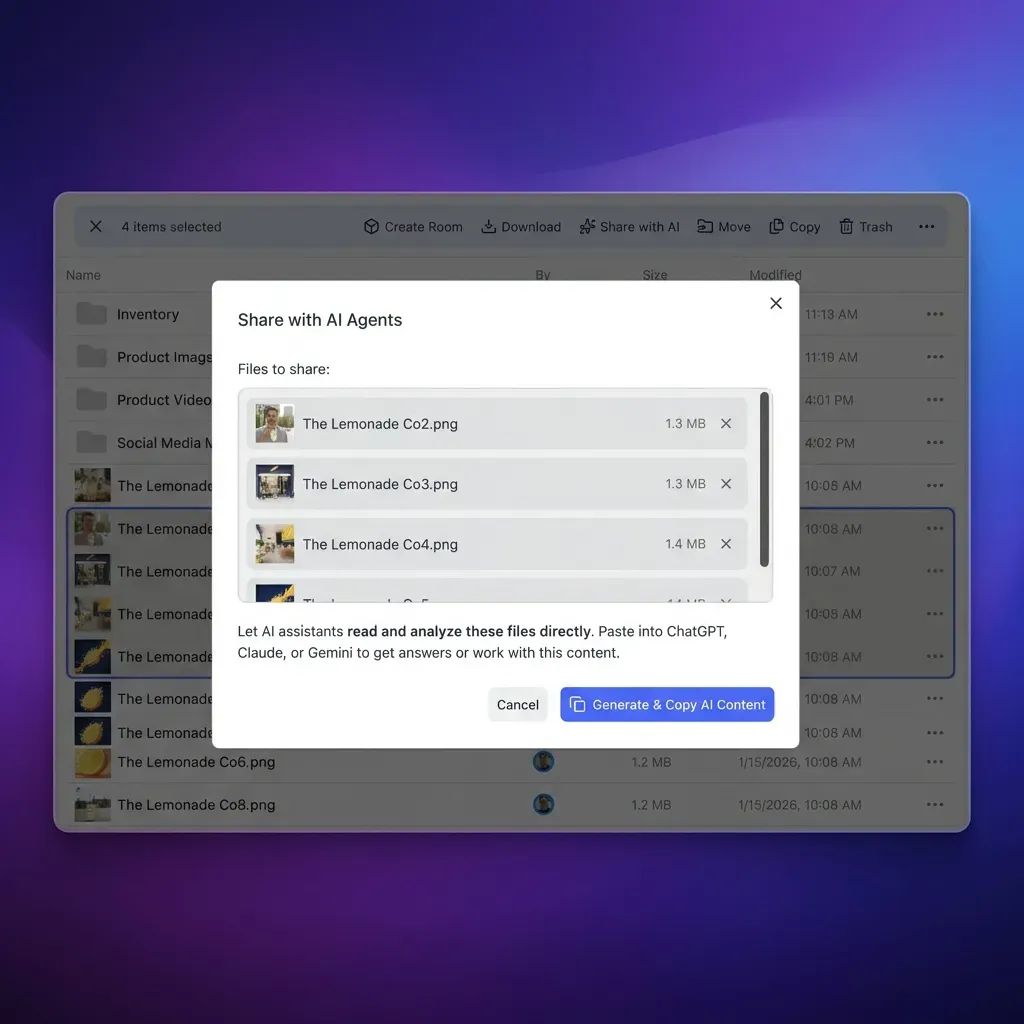
AI agent deployment architecture diagram showing infrastructure, storage, and monitoring components

Why Most AI Agents Never Reach Production: ai agent deployment guide

Only 15% of AI agents make it to production. The gap between a working prototype and a production-ready system is larger than most teams expect. Deployment failures come from infrastructure issues (38%), security gaps (27%), storage problems (22%), and monitoring blind spots (13%). The prototype works locally with hard-coded credentials and temporary files. Production requires infrastructure that scales, security that meets enterprise standards, storage that survives restarts, and monitoring that catches failures before users see them. Most deployment guides focus on platform-specific tools (Salesforce Agentforce, Google Vertex AI, Databricks) but skip the fundamentals that apply to all platforms. This guide covers those fundamentals, with a focus on persistent storage for agent artifacts and outputs.

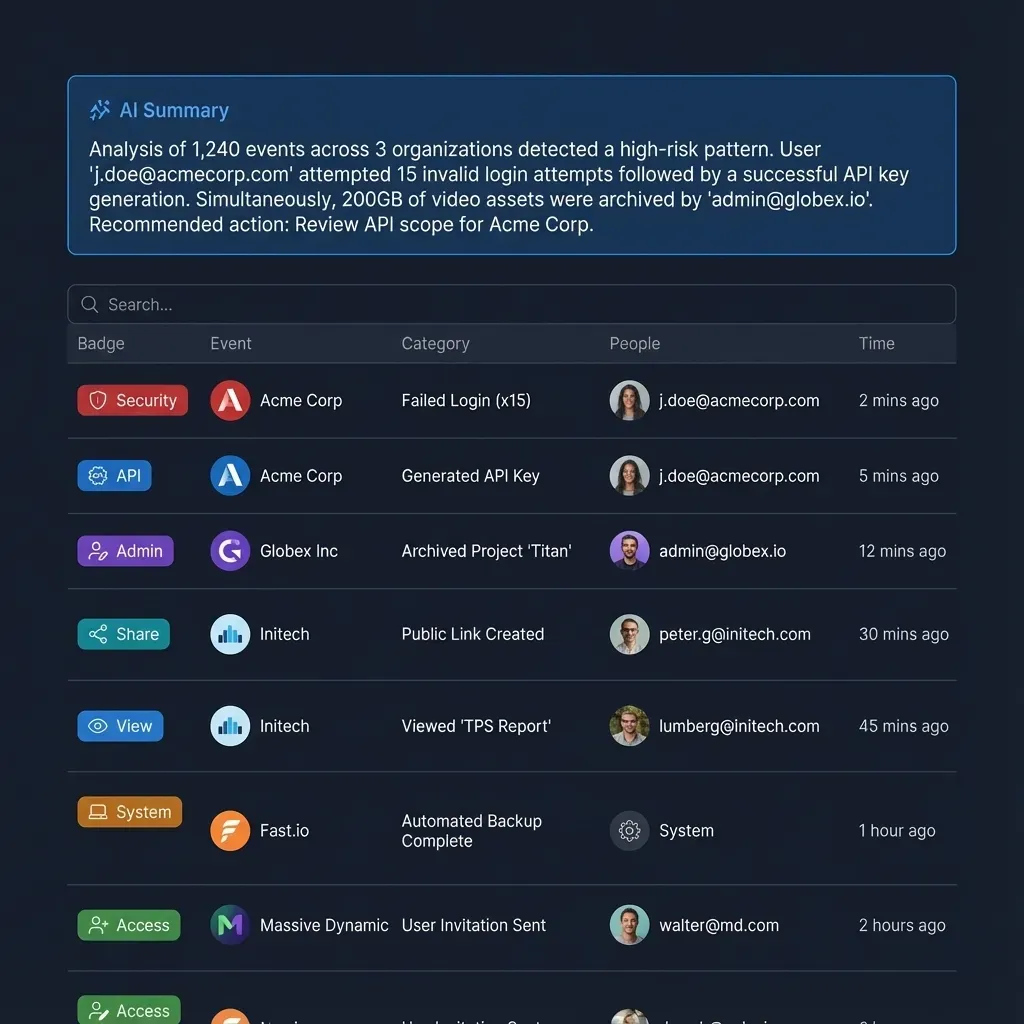
AI agent infrastructure components

Pre-Deployment Checklist

Before deploying, verify these requirements:

Infrastructure:

  • Production environment ready (cloud or on-premises)
  • API keys and credentials in secrets manager
  • Database connections tested (vector DB, operational DB)
  • File storage configured for agent artifacts and outputs
  • Network access verified (external APIs, internal services)

Security configuration:

  • Authentication and authorization implemented
  • API rate limiting configured
  • Input validation on all external data
  • Audit logging enabled for all agent actions
  • Data encryption at rest and in transit

Operations:

  • Monitoring and alerting configured
  • Error handling and retry logic in place
  • Degradation paths defined for service failures
  • Rollback procedure documented
  • On-call rotation set up

Storage requirements:

  • Persistent storage for agent state and checkpoints
  • File storage for generated artifacts (reports, images, data exports)
  • Version control for agent outputs
  • Retention policies defined (how long to keep artifacts)
  • Backup and recovery procedures tested

Infrastructure Setup

AI agents need infrastructure that supports autonomous operation, persistent state, and integration with external systems.

Compute Resources

Choose compute based on what your agent does. CPU-based instances work for most agents (reasoning, API calls, file operations). GPU instances are needed for agents that run local models, generate images, or process video. Serverless functions (AWS Lambda, Google Cloud Functions, Cloudflare Workers) work for event-driven agents that respond to webhooks or scheduled triggers. Container orchestration (Kubernetes, Cloud Run) works for long-running agents that keep state across sessions.

API Gateway and Rate Limiting

Place an API gateway in front of agent endpoints to enforce rate limits, authentication, and request validation. This prevents abuse and protects downstream services. Set per-user and per-endpoint rate limits. A typical configuration:

  • Public endpoints: 100 requests/hour per IP
  • Authenticated users: 1,000 requests/hour per user
  • Internal services: 10,000 requests/hour

Database and Vector Storage

Agents need operational databases for state management and vector databases for RAG (retrieval-augmented generation). Operational databases (PostgreSQL, MongoDB) store agent state, conversation history, and configuration. Vector databases (Pinecone, Weaviate, Qdrant) store embeddings for semantic search and RAG. Some platforms offer integrated solutions. Fast.io's Intelligence Mode auto-indexes workspace files for RAG when enabled, eliminating the need to manage a separate vector database for file-based knowledge.

Persistent File Storage

Agents generate artifacts: reports, spreadsheets, images, data exports, PDFs. These need persistent storage that survives agent restarts, supports versioning, and lets you share with humans. Object storage (S3, Google Cloud Storage) is common but requires custom integration for versioning, sharing, and access controls. Agent-specific storage platforms like Fast.io provide these features out of the box. Fast.io offers a free agent tier (50GB storage, 5,000 credits/month, no credit card) designed for AI agents. Agents sign up like human users, create workspaces, upload and download files via API, and transfer ownership to humans when ready. This solves the persistent storage gap most deployment guides skip.

Security Configuration

Production agents handle sensitive data and make autonomous decisions. Security failures create legal liability.

Authentication and Authorization

Use authentication for all agent endpoints. API keys work for machine-to-machine communication, OAuth for user-facing agents, and service accounts with scoped permissions for internal agents. Authorization controls what actions an agent can perform. Grant only the permissions required for the agent's tasks. For agents that work with files, use scoped access tokens. Fast.io's workspace permissions model lets you create agents with read-only access, upload-only access, or full admin access depending on the use case.

Input Validation and Sanitization

Validate all external inputs before passing them to the agent or downstream services. Reject requests with unexpected formats, excessive sizes, or suspicious patterns. For file uploads, validate file types, scan for malware, and enforce size limits. For text inputs, sanitize HTML and SQL to prevent injection attacks.

API Rate Limiting and Abuse Prevention

Rate limit all agent endpoints to prevent abuse and control costs. Track usage by user, by endpoint, and by IP address. Implement circuit breakers for external API calls. If a downstream service fails, stop making requests after a threshold (e.g., 5 consecutive failures) and return cached results or graceful errors.

Audit Logging

Log all agent actions with timestamps, user identifiers, input parameters, and outputs. Store logs in a central system (CloudWatch, Datadog, Splunk) for analysis and compliance. For file operations, log who accessed what, when, and from where. Fast.io's audit logs track all workspace activity: file views, downloads, permission changes, and external sharing.

Secrets Management

Never hard-code API keys, database credentials, or encryption keys. Use a secrets manager (AWS Secrets Manager, HashiCorp Vault, Google Secret Manager) to store and rotate them. Load secrets as environment variables at runtime. Agents should never log or expose secret values.

Deployment Strategies

Choose a deployment strategy that balances speed, safety, and operational complexity.

Blue-Green Deployment

Run two identical production environments (blue and green). Deploy new agent versions to the inactive environment, test, then switch traffic. If issues show up, switch back instantly. This works well for agents with state that can be shared between versions (database, file storage). It costs double the infrastructure during deployment.

Canary Deployment

Route a small percentage of traffic (5-10%) to the new agent version while the rest goes to the stable version. Watch error rates, latency, and user feedback. Gradually increase traffic to the new version if metrics look good. This lowers risk but requires more complex traffic routing and monitoring.

Rolling Deployment

Update agent instances gradually (10% at a time) while keeping the rest on the old version. If errors spike, roll back the remaining instances. This works for stateless agents or agents with shared state storage. Simpler than blue-green but slower to roll back.

Shadow Deployment

Run the new agent version in parallel with the production version, but don't return its results to users. Compare outputs between versions to catch regressions before they affect users. This is safest but doubles compute costs and requires careful output comparison logic.

Monitoring and Observability

Production agents fail in ways you didn't test. Monitoring catches failures before they spread.

Key Metrics to Track

Performance metrics:

  • Agent response time (p50, p95, p99)
  • API call latency for downstream services
  • Token usage per request (for LLM-based agents)
  • File operation times (upload, download, indexing)

Reliability metrics:

  • Error rate by endpoint
  • Success rate for multi-step workflows
  • Retry count before failure
  • Circuit breaker triggers

Business metrics:

  • Tasks completed per hour
  • User satisfaction (if available)
  • Cost per task (token cost + infrastructure cost)
  • Storage growth rate (for agents that generate files)

Logging Best Practices

Structure logs as JSON for easier parsing. Include these fields in every log entry:

  • Timestamp (ISO 8601)
  • Agent ID or session ID
  • User ID (if applicable)
  • Action or event type
  • Input parameters (sanitized)
  • Output or error message
  • Duration or latency

What to log:

  • All API requests and responses (sanitize sensitive data)
  • Agent reasoning steps (for transparency and debugging)
  • External API calls (which service, latency, success/failure)
  • File operations (upload, download, delete, share)
  • Permission changes and security events

What NOT to log:

  • User passwords or API keys
  • Full contents of large files
  • Personally identifiable information (PII) unless required for compliance

Alerting

Set up alerts for critical failures and performance degradations:

Critical alerts (page immediately):

  • Error rate above 5% for more than 5 minutes
  • Agent crashes or restarts
  • Authentication failures spike
  • Storage quota exceeded
  • Downstream service unavailable

Warning alerts (notify during business hours):

  • Response time above threshold (e.g., p95 > 5 seconds)
  • Token usage 80% of budget
  • Disk space 80% full
  • Unusual traffic patterns

Tracing and Debugging

Distributed tracing (OpenTelemetry, Jaeger, Datadog APM) shows the full path of a request through your system. When an agent fails, tracing shows which step broke and why. For agents that make multiple API calls, tracing shows which external service caused the delay or failure.

Storage Best Practices for Agents

Agents generate files: reports, spreadsheets, images, data exports, invoices, presentations. Where do these files go? How long do they live? Who can access them?

Ephemeral vs Persistent Storage

Ephemeral storage (local disk, container filesystem) is fast but disappears when the agent restarts. Use this for temporary files during processing.

Persistent storage (cloud object storage, databases, agent storage platforms) survives restarts and lets you share with humans. Use this for final outputs. Many agents fail in production because they rely on ephemeral storage for outputs. A deployment or crash wipes all generated files.

File Organization and Versioning

Organize agent outputs by workspace, project, or user. Flat directories become unmanageable at scale. Version generated files when updates are expected. If an agent regenerates a report weekly, keep previous versions for comparison and rollback. Fast.io's workspace model fits naturally: create a workspace per project or client, organize files in folders, and enable versioning for critical outputs. When the work is done, transfer ownership to the human client while keeping admin access for the agent.

Sharing and Access Control

Generated files often need sharing with humans (clients, teammates, external reviewers). Set up secure sharing with:

  • Expiration dates (links expire after 7 days)
  • Password protection for sensitive files
  • View-only access (prevent downloads)
  • Domain restrictions (only share with @company.com emails)

Fast.io supports all these controls via API, plus branded client portals and data rooms for sensitive deliveries.

Retention and Cleanup

Define retention policies: how long to keep agent outputs. Storage costs grow linearly with file count. Archive or delete old files automatically. Agents should clean up temporary files after processing.

Integration with RAG and AI Chat

If your agent generates files that later need semantic search, choose storage with built-in RAG support. Fast.io's Intelligence Mode auto-indexes workspace files when enabled, allowing agents (and humans) to query documents in natural language with citations.

Error Handling and Recovery

Agents encounter failures: API timeouts, rate limits, malformed inputs, missing files, permission errors. Production-ready agents handle errors without crashing.

Retry Logic

Use exponential backoff for transient failures (network errors, rate limits). Retry 3-5 times with increasing delays (1s, 2s, 4s, 8s, 16s). Don't retry on permanent failures (authentication errors, 404s, validation errors). These won't succeed on retry.

Circuit Breakers

If an external service fails repeatedly, open a circuit breaker and stop making requests for a cooldown period (e.g., 60 seconds). This prevents wasting time on a service that's down and avoids cascading failures. After the cooldown, allow a single test request. If it succeeds, close the circuit and resume normal operation.

Checkpointing and Resume

For long-running tasks, checkpoint progress periodically. If the agent crashes, resume from the last checkpoint instead of starting over. Store checkpoints in persistent storage (database, object storage, agent file storage). Include enough context to resume: which step completed, what inputs remain, what outputs were generated.

Graceful Degradation

When a non-critical service fails, continue with reduced functionality instead of failing completely. If semantic search is down, fall back to keyword search. If file preview fails, return a download link. Define which features are critical (must work) and which are optional (nice to have). Agent failures should keep critical functionality working.

Human Handoff

For errors that require human judgment, escalate gracefully. Log the error, notify the responsible team, and pause the agent until the issue is resolved. Some platforms support human-in-the-loop workflows where agents can request approval or input before proceeding.

Cost Optimization

Production agents consume resources all the time. Small inefficiencies add up at scale.

Token Cost Management

LLM-based agents spend most of their budget on tokens. Reduce costs by:

  • Using smaller models for simple tasks (Haiku for classification, Sonnet for reasoning, Opus only when needed)
  • Caching system prompts and frequently used context
  • Truncating long inputs to stay within context limits
  • Batching requests when possible

Storage Cost Optimization

Cloud object storage is cheap but not free. At scale, storage costs add up.

  • Compress large files before storing (especially images, videos, logs)
  • Use lifecycle policies to move old files to cheaper storage tiers (S3 Glacier, Google Coldline)
  • Delete temporary files and failed uploads
  • Monitor storage growth and alert when quotas approach

Fast.io's free agent tier includes 50GB storage and 5,000 credits/month (covers storage, bandwidth, and AI tokens). For agents that operate within those limits, storage is free.

Infrastructure Right-Sizing

Start with small instances and scale up based on actual usage. Most agents don't need large instances. Use autoscaling for variable workloads. Scale down during off-peak hours.

Monitoring Costs

Track costs by feature, by agent, and by customer. This reveals which parts of your system are expensive and where to focus optimization efforts. Set budget alerts (e.g., notify if monthly spend exceeds $500) to avoid surprises.

Testing in Production

Pre-production testing catches obvious bugs. Production shows edge cases you didn't test.

Synthetic Monitoring

Run automated tests against production endpoints every 5-15 minutes. These tests check that core workflows still work even when no real users are active. Synthetic tests should cover:

  • Authentication and authorization
  • Common agent tasks (file upload, API call, report generation)
  • Error handling (invalid inputs, missing files)
  • Performance thresholds (response time under 2 seconds)

Chaos Engineering

Intentionally inject failures to check that error handling and recovery work. Kill random agent instances, throttle network connections, corrupt input data. Start small (inject failures in staging) and gradually increase scope (production, during off-peak hours).

A/B Testing for Agents

Test changes to agent behavior by routing a subset of users to the new version. Compare task completion rates, error rates, and user satisfaction. This works for agents with measurable outcomes (customer support agents, data extraction agents, report generation agents).

Scaling to Multiple Agents

Single-agent deployments are straightforward. Multi-agent systems need coordination.

Inter-Agent Communication

Agents that work together need communication protocols. Options include:

  • Message queues (RabbitMQ, SQS) for asynchronous task distribution
  • Shared databases for state synchronization
  • File-based handoffs where one agent writes output files that another agent reads

Fast.io's workspace collaboration model supports multi-agent scenarios: create a workspace, add multiple agent accounts as collaborators, and let them coordinate via files and comments. File locks prevent conflicts when multiple agents edit the same file.

Task Orchestration

Orchestration frameworks (Temporal, Prefect, Apache Airflow) manage multi-step workflows across multiple agents. They handle retries, timeouts, and task dependencies. Use orchestration when:

  • Tasks depend on each other (agent B needs agent A's output)
  • Workflows span multiple services or systems
  • Long tasks need monitoring and recovery

Resource Allocation

Prevent one agent from monopolizing resources. Set per-agent quotas for:

  • API calls per hour
  • Storage space
  • Compute time

Monitor resource usage and alert when agents exceed quotas.

Frequently Asked Questions

How do you deploy an AI agent to production?

Deploying an AI agent to production has five steps: provision infrastructure (compute, database, storage), configure security (authentication, rate limiting, input validation), set up monitoring and logging, add error handling with retry logic, and choose a deployment strategy (blue-green, canary, or rolling). The most common failure point is persistent storage for agent outputs, which many teams miss until production.

What infrastructure do AI agents need in production?

AI agents need compute resources (serverless functions or containers), operational databases for state management, vector databases for RAG (or integrated solutions like Fast.io's Intelligence Mode), persistent file storage for generated artifacts, API gateways for rate limiting, and monitoring infrastructure for observability. The exact requirements depend on agent complexity and workload characteristics.

How do you handle AI agent errors in production?

Handle agent errors with retry logic using exponential backoff for transient failures, circuit breakers to stop calling failing services, checkpointing to resume long-running tasks after crashes, and graceful degradation to preserve critical functionality when non-essential services fail. Always log errors with full context for debugging and set up alerts for critical failure patterns.

What security measures are needed for production AI agents?

Production agents require authentication for all endpoints (API keys, OAuth, or service accounts), authorization with least-privilege permissions, input validation and sanitization to prevent injection attacks, API rate limiting to prevent abuse, audit logging for all agent actions, and secrets management (never hard-code credentials). For file operations, implement scoped access controls and track all file access in audit logs.

How do you store AI agent outputs in production?

AI agents need persistent storage for generated files (reports, spreadsheets, images, data exports). Cloud object storage (S3, Google Cloud Storage) is common but requires custom integration for versioning, sharing, and access controls. Agent-specific platforms like Fast.io provide these features built-in with 50GB free storage, API access, workspace organization, and ownership transfer to humans.

What metrics should you monitor for production AI agents?

Track performance metrics (response time p50/p95/p99, token usage, file operation latency), reliability metrics (error rate, success rate for workflows, retry counts), and business metrics (tasks completed per hour, cost per task, storage growth). Set alerts for error rates above 5%, authentication failures, storage quota exceeded, and response time degradation.

How do you scale AI agent deployments?

Scale agents by using autoscaling for compute resources, implementing message queues for task distribution across multiple agent instances, setting per-agent resource quotas, using orchestration frameworks (Temporal, Prefect) for multi-step workflows, and choosing infrastructure that supports horizontal scaling (containers, serverless functions). For multi-agent collaboration, use shared workspaces or databases for state synchronization.

What's the difference between staging and production for AI agents?

Staging uses development data, lower rate limits, and relaxed security for testing. Production uses real user data, enforces strict security controls, requires audit logging, implements monitoring and alerting, needs error recovery mechanisms, and demands performance optimization. The biggest difference is stakes: staging failures are learning opportunities, production failures affect users and revenue.

How do you optimize AI agent costs in production?

Cut costs by using smaller LLM models for simple tasks (save expensive models for complex reasoning), caching system prompts and frequently used context, compressing files before storage, moving old data to cheaper storage tiers with lifecycle policies, sizing compute instances based on actual usage, and tracking costs by feature and customer to find where to save.

What deployment strategy is best for AI agents?

Blue-green deployment is best when you need instant rollback and can afford double infrastructure during deployment. Canary deployment minimizes risk by routing only 5-10% of traffic to the new version initially. Rolling deployment balances simplicity and safety for stateless agents. Shadow deployment is safest (runs new version in parallel without affecting users) but doubles compute costs. Choose based on your risk tolerance and infrastructure budget.

Related Resources

Fast.io features

Deploy Agents with Persistent Storage for ai agent deployment guide

Fast.io gives AI agents 50GB free storage with full workspace capabilities, built-in RAG, and ownership transfer. No credit card required.