How to Scale AI Agents with Ray Clusters
Ray AI agent clusters distribute workloads across multiple nodes to scale beyond single-machine limits. Ray clusters run agent tasks in parallel, Ray Serve turns them into scalable services, and Fastio handles shared storage for the distributed files. Many organizations use Ray for distributed computing. This guide explains how to set up a cluster, deploy agents, and use Fastio workspaces to manage files across the system. Use these steps to scale your AI agents across a cluster.

What Is a Ray AI Agent Cluster?
A Ray AI agent cluster runs Ray across multiple machines to handle heavier agent workloads. Ray Core manages task scheduling and stateful agents (actors), while Ray Serve deploys them as HTTP endpoints.
Single-node agents hit limits on CPU, GPU, and memory. Clusters spread tasks across nodes so multi-agent systems can run in parallel. For example, one agent processes data, another generates reports, all coordinated via Ray.
Ray powers this with fault-tolerant scheduling. Since agents don't share local state, you need persistent storage like Fastio workspaces to coordinate files.
Helpful references: Fastio Workspaces, Fastio Collaboration, and Fastio AI.

Related guides
- Top AI Agent Scaling Platforms Ranked for 2026AI agent scaling platforms handle load balancing, state sync, and auto-scaling for fleets of agents. These tools let...
- How to Manage AI Agent Fleets: Operate and Scale Agent DeploymentsManaging a fleet of AI agents requires more than just running a few scripts. You must deploy, monitor, and scale...
- Best AI Agent Hosting Platforms in 2026AI agent hosting platforms provide compute, storage, and orchestration for deploying autonomous agents in production....
- How to Integrate AI Agents with Argo CDAI agent Argo CD integration enables autonomous continuous deployment management through GitOps principles. Agents can...
- Best Serverless GPU Providers for AI Agents and Scaling WorkflowsServerless GPU platforms let developers run compute-intensive AI workloads like model fine-tuning or inference without...
- How to Architect Terraform Infrastructure for AI AgentsAutonomous AI agents need infrastructure that's reproducible and scales. This guide explains how to use Terraform to...
More on this subject: Agent Infrastructure and Deployment (55 guides)
Why Scale AI Agents with Ray Clusters?
AI agents perform complex tasks like data analysis or automation. On one machine, they bottleneck at hardware limits. Ray clusters scale linearly, handling thousands of concurrent agents.
Benefits:
- Performance: Run parallel tasks to speed up agent workloads.
- Fault tolerance: Automatic retries and node recovery.
- Resource efficiency: Allocate CPUs and GPUs dynamically.
- Multi-agent coordination: Actors manage state across nodes.
According to Ray documentation, clusters support production ML serving at scale. Fastio adds MCP tools so agents can access shared files without local storage limits.
Ray Usage Stats
Ray serves over 50,000 organizations for distributed AI. Clusters scale agentic pipelines beyond what a single node can run.
Step-by-Step Ray Cluster Setup
To set up a Ray cluster, you need a head node and worker nodes. You can use Anyscale for a managed service or self-host on cloud VMs.
1. Install Ray on head node
pip install -U \"ray[default]\"
ray start --head --dashboard-host=0.0.0.0
Note the dashboard URL and head address.
2. Connect worker nodes On each worker:
ray start --address=<head-node-ip>:6379
3. Verify cluster
ray status
Check nodes and resources.
4. Scale with autoscaler Use ray-cluster-launcher.yaml for AWS/GCP. Edit instance types, min/max workers.
Test with simple tasks before running complex agents.
Deploy AI Agents with Ray Serve
Ray Serve turns agents into scalable services. Define deployments as Python classes.
Example agent deployment:
from ray import serve
import ray

@serve.deployment(num_replicas=4, ray_actor_options={\"num_gpus\": 1})
class AIAgent:
    def __call__(self, request):
        ### Agent logic here
        return \"Processed\"

serve.run(AIAgent.bind())
Scale replicas based on load while Serve handles routing and autoscaling.
For multi-agent setups, chain deployments or use Serve graphs.


Scale Your AI Agents Today
Get generous storage and a consolidated MCP toolset for agents. Built for ray agent cluster workflows.
File Sharing in Distributed Ray Agents
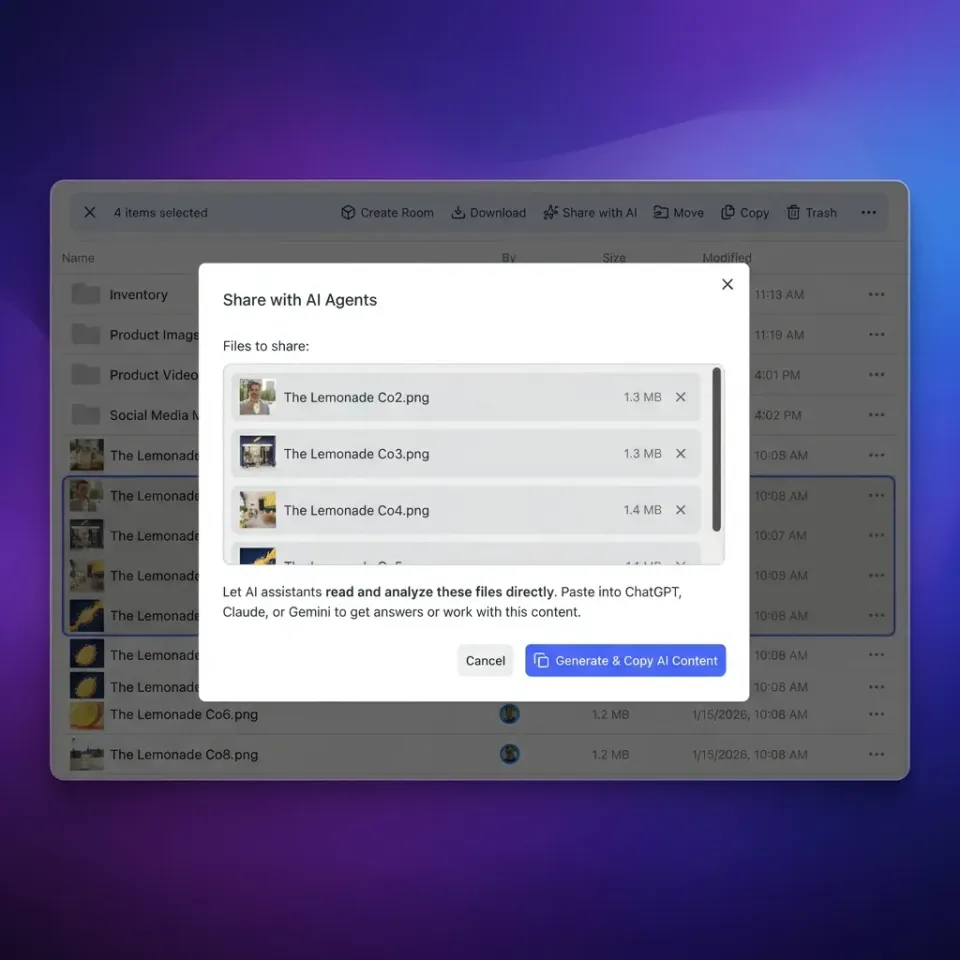
Distributed agents need shared persistent storage. Local files don't sync across nodes. Fastio workspaces solve this.
Agents access files via MCP tools or REST API. Key features:
- Advisory file locks: Coordinate edits before writing with automatic expiry and 409 conflict signals.
- Version history: Track changes and recover versions in multi-agent setups.
- Event feeds: Monitor file changes via WebSocket events or activity polling.
- Cloud import: Pull from external cloud sources and public URLs.
- Ownership transfer: Agent builds workspace, hands to human via claim link.
Connect your agents directly to the remote MCP server URL:
https://mcp.fast.io/mcp/tools
Zero-config file ops with any LLM.
Fastio offers plans with generous storage and credits starting with the 14-day Business Trial. This fills a gap often missing in Ray documentation.
Ray Multi-Agent Workflows
Ray is built for multi-agent orchestration. Use actors for coordination, tasks for parallel execution.
A common pattern is a Supervisor actor dispatching to worker agents, storing intermediate results in Fastio.
Handle failures with retries. Monitor via Ray dashboard.
Watch out for GPU sharing and network latency. Use placement groups to keep related tasks on the same node.
Define clear tool contracts and fallback behavior so agents fail safely when dependencies are unavailable. This improves reliability in production workflows.
Sources
References used to verify factual claims in this guide.
-
Ray used by 50K+ organizations
-
10x scaling for agents
Frequently Asked Questions
Is Ray suitable for AI agent clusters?
Yes, Ray clusters distribute agent tasks across nodes for scaling. Ray Serve deploys agents as services with autoscaling.
How does Ray scale AI agents?
Ray uses distributed tasks and actors. Clusters add nodes dynamically, spreading agent workloads across more machines.
What storage works best for Ray agent file sharing?
Use Fastio workspaces. Agents access shared files via a consolidated MCP toolset or the REST API, using advisory file locks, version history, and granular permissions to coordinate concurrency.
Ray Serve vs traditional serving?
Ray Serve adds autoscaling, compositions, and fault tolerance. Ideal for agent fleets.
Multi-agent with Ray?
Yes, via actors and workflows. Coordinate via shared Fastio storage.
Related Resources

Scale Your AI Agents Today
Get generous storage and a consolidated MCP toolset for agents. Built for ray agent cluster workflows.