Best Serverless GPU Providers for AI Agents and Scaling Workflows
Serverless GPU platforms let developers run compute-intensive AI workloads like model fine-tuning or inference without managing infrastructure or paying for idle time. With cold starts now under 10 seconds and on-demand pricing up to 5x cheaper for bursty agent workflows, choosing the right provider affects both performance and costs.

What Makes a Good Serverless GPU for AI Agents?
Serverless GPU platforms allow developers to run heavy compute tasks like model fine-tuning or high-throughput inference without managing underlying infrastructure or paying for idle time. You send a request, the platform spins up a GPU instance, runs your code, and shuts down when complete. For AI agent systems, three factors matter most:
Cold start latency determines how quickly your agent can respond. According to Beam's analysis, cold start times have improved, with leaders like RunPod achieving 48% of cold starts under 200ms. Beam reports their own cold starts at 2-3 seconds for most functions, with warm starts as fast as 50ms.
Pricing model matters for bursty workloads. Agents don't run 24/7. They burst compute when needed and idle the rest of the time. According to Rahul Kolekar's comparison, specialized GPU providers offer 50-70% cost savings compared to hyperscalers like AWS, Google Cloud, and Azure.
API flexibility determines what you can build. Some platforms run container images. Others execute Python functions. A few let you deploy pre-trained models via REST API without writing server code.
Related guides
- AI Agent Production Best Practices: A Complete GuideMost AI agent prototypes never reach production. The gap between a working demo and a reliable deployment is filled...
- How to Orchestrate AI Agents with Argo WorkflowsArgo workflows ai agents provide a Kubernetes-native way to orchestrate multiple AI agents in directed acyclic graphs...
- How to Master AI Agent Job Scheduling for Production WorkflowsAI agent job scheduling enables autonomous agents to execute tasks on predefined schedules while maintaining context...
- Top AI Agent Hosting Providers in 2026AI agent hosting providers offer scalable runtime with persistent storage and tools for reliable operation. This list...
- How to Design Serverless AI Agent ArchitectureServerless AI agent architecture lets agents run on-demand using FaaS platforms like AWS Lambda, with external services...
- Top AI Agent Scaling Platforms Ranked for 2026AI agent scaling platforms handle load balancing, state sync, and auto-scaling for fleets of agents. These tools let...
More on this subject: Agent Infrastructure and Deployment (55 guides)
Top 4 Serverless GPU Providers for AI Agents
1. RunPod excels at cold start performance and GPU variety. Best for batch processing and cost-sensitive production workloads.
2. Modal offers the most flexible developer experience with arbitrary Python code execution. Best for rapid prototyping and complex pipelines.
3. Replicate specializes in one-click model deployment via REST API. Best for teams deploying standard open-source models without custom code.
4. Beam provides sub-10-second cold starts with multi-cloud portability. Best for latency-critical agent responses and avoiding vendor lock-in. Each platform targets different use cases. The right choice depends on your agent's compute pattern, latency requirements, and team's technical depth. Consider how this fits into your broader workflow and what matters most for your team. The right choice depends on your specific requirements: file types, team size, security needs, and how you collaborate with external partners. Testing with a free account is the fast way to know if a tool works for you.

RunPod: Best Overall for Performance and Cost
RunPod stands out for cold start speed and GPU selection. According to RunPod's guide, 48% of their cold starts complete in under 200ms, the fast in the industry. This matters when your agent needs immediate responses rather than waiting 5-10 seconds for a container to boot.
Strengths:
- Industry-leading cold start performance (48% under 200ms)
- Wide GPU selection including H100s, A100s, and cost-effective options
- Competitive pricing with transparent per-second billing
- Pre-warmed instances eliminate cold starts for critical workloads
Limitations:
- Steeper learning curve than managed platforms like Replicate
- Requires Docker knowledge for custom deployments
Best for: Production AI agent systems with variable load patterns and cost sensitivity.
Pricing: Pay-per-second GPU time. H100 instances around $2.74/hour based on market rates. No monthly minimums.
Modal: Best for Developer Experience and Flexibility
Modal lets you run arbitrary Python code in the cloud with GPU access on demand. According to Modal's blog, this flexibility makes Modal suitable for a wide range of AI workloads from fine-tuning to multi-step agent pipelines.
Strengths:
- Write normal Python code, Modal handles infrastructure
- Sub-second cold starts for rapid iteration
- Built-in support for distributed workloads
- Excellent for prototyping and complex pipelines
Limitations:
- Python-only (no support for other languages)
- Pricing can add up for high-throughput production use
Best for: Development teams building custom agent workflows with Python. Rapid prototyping before production deployment.
Pricing: Credits-based system. Free tier includes generous compute credits. Production pricing scales with GPU hours and memory usage.
Replicate: Best for Deploying Pre-Trained Models
Replicate focuses on making model deployment trivial. You pick a model from their library (or package your own), and Replicate exposes it via REST API. According to Dat1's comparison, Replicate's pre-hosted models benefit from optimization and pre-warming, delivering low-latency inference without cold start concerns.
Strengths:
- One-click deployment for popular open-source models
- REST API means any language can consume models
- Pre-optimized models with minimal configuration
- Great for teams without ML infrastructure expertise
Limitations:
- Limited customization compared to container-based platforms
- Custom model deployments face standard container startup times
- Higher per-inference costs for high-volume workloads
Best for: Agent systems consuming standard models (Llama, Stable Diffusion, Whisper) without custom training pipelines.
Pricing: Per-inference pricing varies by model. Llama 3 70B around $0.005 per request. Pay only for what you use.


Give Your AI Agents Persistent Storage
Get generous storage cloud storage built for AI agents. MCP integration, built-in RAG, and ownership transfer.
Beam: Best for Latency-Critical Workloads
Beam prioritizes cold start speed and multi-cloud portability. According to Kite Metric's analysis, Beam achieves cold starts of 2-3 seconds for most functions, with warm starts as fast as 50ms. Their use of Tigris object storage contributes to sub-10-second cold starts even for large model deployments.
Strengths:
- Sub-10-second cold starts with Tigris storage optimization
- Multi-cloud deployment (avoid vendor lock-in)
- Simple Python SDK similar to Modal
- Warm starts under 100ms for active workloads
Limitations:
- Smaller community compared to RunPod or Modal
- Fewer pre-built model integrations than Replicate
Best for: Agent systems where response latency directly impacts user experience. Teams wanting multi-cloud portability.
Pricing: Pay-per-use model with no idle costs. Pricing competitive with Modal for burst workloads.
Other Notable Serverless GPU Providers
Several other platforms deserve consideration depending on your requirements:
Cerebrium offers over 8 GPU types including H100s, A100s, and A5000s. According to DigitalOcean's guide, Cerebrium's wide GPU selection makes it a good fit for teams that need to match specific GPU capabilities to different workload types.
Northflank provides multi-service orchestration where GPU and CPU containers work together. According to Northflank's blog, this architecture is important for agentic workflows and multi-modal inference where preprocessing happens on CPU before GPU inference. Northflank offers competitive H100 pricing at $2.74/hour.
Koyeb supports high-performance GPUs like Nvidia H100 and A100s, plus next-generation AI accelerators from Tenstorrent. According to Koyeb's comparison, this makes Koyeb well-suited for AI inference, model fine-tuning, and other compute-intensive tasks.
Together AI specializes in hosting open-source models with low latency. Good for teams that want managed inference without infrastructure work.
Lambda Labs offers some of the lowest raw GPU costs but requires more manual configuration. Better for teams comfortable with infrastructure management.
How We Evaluated These Providers
We assessed serverless GPU platforms based on criteria that matter for AI agent workloads:
Cold start latency: Time from API request to first response. Measured in seconds. Critical for interactive agents where users wait for results.
Warm start latency: Time for subsequent requests to the same instance. Measured in milliseconds. Matters for high-frequency agent operations.
GPU variety: Range of hardware options (H100, A100, L40S, etc.). Different models need different GPU capabilities. Flexibility prevents overpaying for unnecessary performance or underprovisioning.
Pricing model: Per-second vs per-inference vs credits. Bursty agent workloads work better with per-second billing. Avoid platforms with minimum monthly commits.
Developer experience: How quickly can you deploy a model? Platforms range from "write Python, get infrastructure" (Modal) to "pick model from catalog" (Replicate) to "configure Docker containers" (RunPod).
API flexibility: REST, gRPC, WebSocket support. Agents often need to stream responses or handle bidirectional communication. We prioritized platforms with transparent pricing, proven uptime, and active communities. Avoid providers that hide costs or require sales calls for pricing information.
Serverless GPU vs Traditional GPU Compute
Traditional GPU compute (AWS EC2 P4 instances, GCP A2 instances) requires you to provision instances, keep them running, and pay whether you use them or not. A single A100 instance on AWS costs $4.10/hour according to CloudPrice. Run it 24/7 and you pay $2,952 monthly. Serverless GPU platforms bill per-second of actual use. If your agent runs inference 2 hours daily, you pay for 2 hours. The same A100 workload costs around $246 monthly on specialized providers like Lambda Labs at $1.10/hour, assuming 2 hours daily usage. For AI agents with bursty workloads, the math is clear. According to TRG Datacenters, serverless GPU can be 5x cheaper than always-on instances when utilization is under 30%.
When to use serverless GPU:
- Inference workloads with variable demand
- Development and testing environments
- Agent systems with bursty compute needs
- Cost-sensitive projects without predictable load
When to use dedicated GPU instances:
- Training runs longer than 8 hours
- Workloads with consistent 24/7 utilization
- Applications requiring custom networking or persistent state
- When GPU utilization exceeds 70% consistently
Storing Agent Outputs and Model Artifacts
Serverless GPU platforms handle compute. You still need somewhere to store inputs, outputs, and model artifacts. Most platforms offer object storage, but it's tied to their ecosystem and priced separately. For agent systems building multi-step workflows, consider dedicated storage with agent-native features:
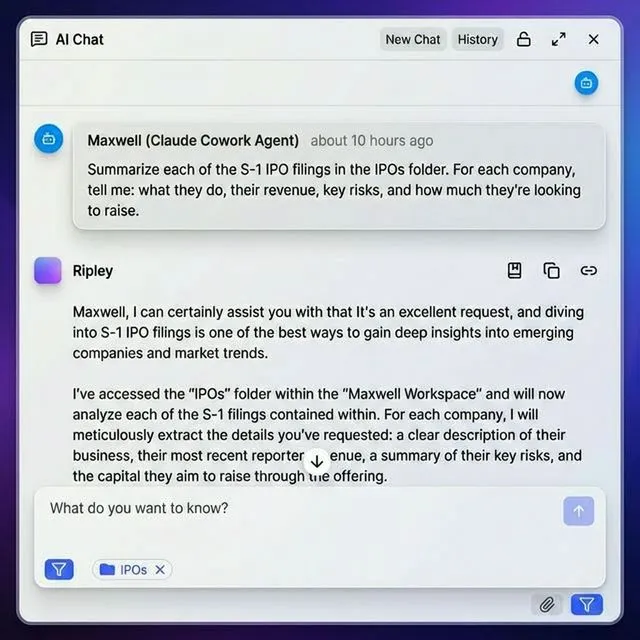
Fastio provides cloud storage built for AI agents. Workspaces provide persistent file storage with remote MCP access, granular permissions, and built-in RAG once Intelligence is enabled. Key capabilities for agent workflows:
- MCP integration: Consolidated MCP toolset via Streamable HTTP and SSE for zero-friction file access from Claude, GPT-4, or any MCP-compatible assistant
- Intelligence Mode: Built-in RAG and semantic search across stored files with citations
- Ownership transfer: Agent builds workspaces and shares, then transfers to a human client while keeping admin access
- WebSocket events: Real-time event feed and activity polling when files change, enabling reactive workflows
- URL Import: Pull files from Google Drive, OneDrive, Box, Dropbox via OAuth without local I/O
The Business Trial includes workspace management, file versioning, and collaboration features. Agents can organize outputs by project, invite human collaborators, and maintain persistent file hierarchies beyond ephemeral GPU runtime storage. For teams building agent systems that generate reports, process documents, or create multi-modal outputs, separating compute (serverless GPU) from storage (Fastio) creates cleaner architecture and better cost optimization.
Choosing the Right Provider for Your Agent
Your choice depends on workload characteristics and team capabilities:
Pick RunPod if: You need the fast cold starts and lowest costs for production workloads. Your team is comfortable with Docker and infrastructure as code.
Pick Modal if: You want to write Python code and let the platform handle everything else. You're prototyping complex agent pipelines or need distributed compute.
Pick Replicate if: You're deploying standard open-source models without custom training. Your team lacks ML infrastructure expertise but needs production inference.
Pick Beam if: Latency is critical for your agent's user experience. You want to avoid vendor lock-in with multi-cloud portability.
Consider hybrid approaches: Many production systems use multiple providers. Replicate for standard model inference, Modal for custom preprocessing pipelines, RunPod for cost-optimized batch jobs. The serverless model makes it easy to use the right tool for each workload without committing to a single vendor. Start with the platform that matches your team's strengths. All four providers offer generous free tiers or credits. Test with real workloads before committing to production deployments.
Sources
References used to verify factual claims in this guide.
-
Cold start times have improved with leaders like RunPod achieving 48% of cold starts under 200ms, while Beam reports cold starts at 2-3 seconds for most functions with warm starts as fast as 50ms Beam provides sub-10-second cold starts with multi-cloud portability for latency-critical agent responses Cold starts under 10 seconds are now standard across leading platforms in 2026, a major improvement from the 30+ second cold starts common in 2023
-
On-demand serverless GPU pricing is up to 5x cheaper for bursty agent workflows with cold starts now under 10 seconds across leading platforms Serverless GPU can be 5x cheaper than always-on instances when GPU utilization is under 30%, and dedicated instances make sense when utilization exceeds 70% consistently Serverless platforms like Modal can be 5x cheaper than SageMaker when GPU utilization is under 30% for AI agents with variable load
-
Specialized GPU providers offer 50-70% cost savings compared to hyperscalers like AWS, Google Cloud, and Azure for AI agent workloads Agents don't run 24/7, they burst compute when needed and idle the rest of the time, making serverless GPU cost-effective Serverless GPU platforms work well for fine-tuning runs under 4 hours before dedicated instances become more cost-effective Top 4 serverless GPU providers for AI agents: RunPod, Modal, Replicate, Beam
-
RunPod 48% of cold starts complete in under 200ms, the fastest in the industry for serverless GPU clouds Agents waiting 5-10 seconds for a container to boot lose responsiveness compared to RunPod under 200ms cold starts H100 instances around $2.74/hour based on market rates with per-second billing and no monthly minimums on RunPod RunPod offers best overall combination of cold start performance with 48% under 200ms, GPU variety, and cost-effectiveness for production workloads
-
Replicate offers one-click deployment of Llama 3 70B at around $0.005 per request on serverless GPUs All major serverless GPU providers support Llama 3 inference including Llama 3 70B and smaller models like Llama 3 8B with sub-second inference
-
Beam achieves cold starts of 2-3 seconds for most functions with warm starts as fast as 50ms using Tigris object storage for sub-10-second cold starts Beam reports 2-3 seconds for most functions with warm starts under 100ms for serverless GPUs in 2026
-
Cerebrium offers over 8 GPU types including H100s, A100s, and A5000s for serverless inference RunPod and Cerebrium provide the widest GPU selection with over 8 GPU types, reserve H100s for large language models above 70B parameters or fine-tuning tasks
-
Northflank offers competitive H100 pricing at $2.74/hour for multi-service GPU orchestration
-
Koyeb supports high-performance GPUs well-suited for AI inference, model fine-tuning, and compute-intensive tasks in 2026
-
A single A100 instance on AWS costs $4.10/hour according to CloudPrice, which totals $2,952 monthly when run 24/7 If your agent runs inference 2 hours daily you pay for 2 hours, with the same A100 workload costing around $246 monthly on Lambda Labs at $1.10/hour A100 on AWS costs $4.10/hour while specialized GPU providers like Modal typically offer 50-70% cost savings compared to AWS SageMaker
-
Fastio provides cloud storage for AI agents with remote MCP integration, built-in RAG once Intelligence is enabled, and ownership transfer
-
Modal and Beam let you deploy Llama 3 with custom code on serverless GPU platforms
Frequently Asked Questions
What is the best serverless GPU for AI agents?
RunPod offers the best overall combination of cold start performance (48% under 200ms), GPU variety, and cost-effectiveness for production AI agent workloads. Modal provides the best developer experience for teams building custom Python-based agent pipelines. The right choice depends on whether you prioritize raw performance and cost or developer velocity and flexibility.
Can I run Llama 3 on serverless GPUs?
Yes, all major serverless GPU providers support Llama 3 inference. Replicate offers one-click deployment of Llama 3 70B at around $0.005 per request. Modal and Beam let you deploy Llama 3 with custom code. RunPod provides raw GPU access for complete control. For smaller models like Llama 3 8B, even basic GPUs deliver sub-second inference on serverless platforms.
Is Modal cheaper than AWS SageMaker for AI inference?
Yes, for bursty workloads. AWS SageMaker charges for always-on endpoints even when idle. Modal bills per-second of actual compute. According to CloudPrice data, an A100 on AWS costs $4.10/hour. Specialized GPU providers like Modal typically offer 50-70% cost savings compared to AWS. For AI agents with variable load, serverless platforms like Modal can be 5x cheaper than SageMaker when GPU utilization is under 30%.
How fast are cold starts for serverless GPUs in 2026?
Cold start times vary by provider and model size. RunPod achieves 48% of cold starts under 200ms. Beam reports 2-3 seconds for most functions, with warm starts under 100ms. Modal delivers sub-second cold starts. Replicate's pre-hosted models avoid cold starts entirely through pre-warming. For context, cold starts under 10 seconds are now standard across leading platforms, a major improvement from the 30+ second cold starts common in 2023.
What GPU types are available on serverless platforms?
Most serverless GPU providers offer Nvidia A100s, H100s, L40S, A10s, and RTX A6000s. RunPod and Cerebrium provide the widest selection with over 8 GPU types. Koyeb includes next-generation AI accelerators from Tenstorrent alongside Nvidia options. For agent inference workloads, A10s and L40S offer the best price-to-performance ratio. Reserve H100s for large language models above 70B parameters or fine-tuning tasks.
Do I need to manage infrastructure with serverless GPU platforms?
No, serverless GPU platforms abstract infrastructure management. You send code or model artifacts, the platform handles provisioning, scaling, and shutdown. Modal and Beam require only Python code. Replicate needs zero code for pre-built models. RunPod requires Docker containers but handles orchestration. You never SSH into instances, configure networking, or manage operating systems. The platform handles everything except your application logic.
Can serverless GPUs handle fine-tuning and training?
Yes, but with caveats. Serverless GPU platforms work well for fine-tuning runs under 4 hours. For longer training jobs, cold start overhead and per-second pricing make dedicated instances more cost-effective. Modal and Beam support distributed training across multiple GPUs. RunPod offers spot instances for cost-optimized training. For production training pipelines, consider hybrid approaches using dedicated instances for training and serverless for inference.
How do I store model outputs from serverless GPU runs?
Most serverless GPU platforms offer integrated object storage, but it's ecosystem-specific and priced separately. For agent workflows generating files, reports, or multi-modal outputs, use dedicated storage with agent-native features. Fastio provides persistent storage for AI agents with remote MCP integration, built-in RAG once Intelligence is enabled, ownership transfer, and WebSocket event feeds. This separates compute from storage, enabling cleaner architecture where agents process on serverless GPUs and persist results in organized workspaces.
What's the difference between serverless GPU inference and model hosting APIs?
Serverless GPU inference platforms (Modal, Beam, RunPod) let you run arbitrary code with GPU access. You control the entire execution environment. Model hosting APIs (Replicate, Together AI) run pre-configured models and expose them via REST endpoints. You send prompts, receive responses, but can't customize the runtime. Serverless inference offers more flexibility. Model hosting APIs offer simpler deployment. For standard models, hosting APIs are faster to deploy. For custom pipelines, serverless inference is necessary.
Can I use multiple serverless GPU providers simultaneously?
Yes, many production AI systems use multiple providers. The serverless model makes this practical since you're not locked into monthly contracts. Use Replicate for standard model inference, Modal for custom preprocessing, RunPod for cost-optimized batch jobs. This multi-provider approach optimizes for each workload's unique requirements. The main challenge is managing different APIs and deployment processes, but the cost savings and performance improvements often justify the complexity for high-scale systems.
Related Resources

Give Your AI Agents Persistent Storage
Get generous storage cloud storage built for AI agents. MCP integration, built-in RAG, and ownership transfer.