How to Build an AI Agent Service Mesh: A Guide for 2026
As enterprises deploy more autonomous agents, managing their communication becomes critical. An AI agent service mesh provides the observability, security, and routing needed to scale agentic workflows. This guide explores the architecture of an agent service mesh, compares it to traditional microservices infrastructure, and details how to implement one using stateful files and MCP tools.

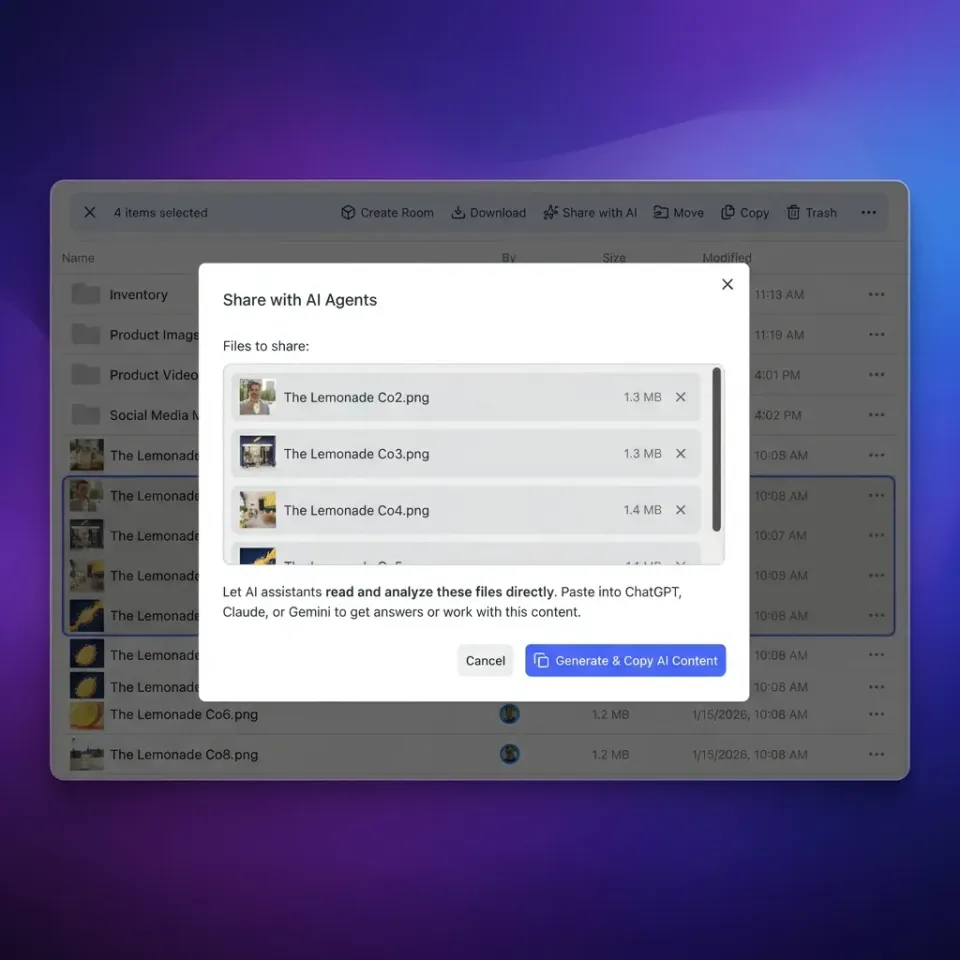
What is an AI Agent Service Mesh?
An AI agent service mesh is an infrastructure layer that automates the observability, routing, and security of communication between AI agents. Unlike a traditional service mesh that manages traffic between microservices, an agent mesh manages the intent and state shared between autonomous actors.
In a standard microservices architecture, Service A calls Service B with a defined API. The inputs and outputs are strict; if Service A sends the wrong schema, the request fails. In an agentic architecture, communication is far more fluid. Agent A might need to "find a researcher," "ask for a code review," or "store a memory." These requests are semantic, not just syntactic.
The mesh ensures these loose, intent-driven requests are routed to the right agent or tool, recorded for audit, and secured against unauthorized access. It acts as the central nervous system for your digital workforce, turning a chaotic swarm of chatbots into a coordinated team.
Why You Need a Mesh for Agents
When you have one or two agents, direct API calls work fine. But as you scale to dozens or hundreds of agents, complexity explodes:
- Observability: How do you know why Agent A tasked Agent B? If the result is wrong, was it the prompt or the execution?
- Loops: How do you prevent two agents from getting stuck in an infinite conversation loop, politely thanking each other until your credit card limit is hit?
- Cost Control: How do you stop a runaway agent from burning through your token budget on a low-priority task?
- Security: How do you ensure Agent C doesn't access sensitive financial data it wasn't authorized for, even if it "thinks" it needs it to answer a question?
A service mesh solves these problems by decoupling the agents from the network. It intercepts every interaction, applies policy, and logs the activity.
Helpful references: Fastio Workspaces, Fastio Collaboration, and Fastio AI.

Related guides
- How to Build an AI Agent Knowledge Vault for Secure StorageAn AI agent knowledge vault is a centralized, secure storage system designed specifically for autonomous agents....
- How to Build an AI Agent Data Enrichment PipelineMost data enrichment pipelines connect to a single API and stop there. An AI agent enrichment pipeline chains multiple...
- How to Build AI Agent GitOps WorkflowsAI agent GitOps workflows use autonomous agents to manage declarative infrastructure from Git repositories. Traditional...
- How to Integrate AI Agents with Argo CDAI agent Argo CD integration enables autonomous continuous deployment management through GitOps principles. Agents can...
- How to Architect Terraform Infrastructure for AI AgentsAutonomous AI agents need infrastructure that's reproducible and scales. This guide explains how to use Terraform to...
- How to Automate AI Agent InfrastructureAI agent infrastructure automation helps you scale agent workflows from one bot to thousands. Most teams focus on...
More on this subject: Agent Infrastructure and Deployment (55 guides)
Traditional vs. AI Agent Service Mesh
It is important to distinguish between the service mesh you use for Kubernetes (like Istio or Linkerd) and the mesh you need for agents. They solve similar problems, connection, security, observability, but at completely different layers of abstraction.
1. The Unit of Traffic
- Traditional Mesh: Manages packets and requests. It cares about TCP connections, HTTP headers, and latency in milliseconds.
- Agent Mesh: Manages prompts, files, and artifacts. It cares about semantic intent, token counts, and task completion, which might take seconds or minutes.
2. State Management
- Traditional Mesh: Ideally stateless. It routes a request to any available pod, and the pod forgets the request as soon as it sends the response.
- Agent Mesh: Inherently stateful. Agents need memory. They need to know what was said five turns ago. The mesh must preserve this context, often by persisting conversation history and intermediate files (artifacts) in a shared storage layer.
3. Failure Modes
- Traditional Mesh: Failures are usually "hard" (multiple errors, connection timeouts). You retry, and it works.
- Agent Mesh: Failures are often "soft" (hallucinations, refusal to complete task, getting stuck in a loop). A simple retry usually fails again. The mesh needs smarter remediation, like changing the prompt or routing to a human supervisor.
Comparison Table
Core Components of an Agent Mesh
Building a resilient agent mesh requires three specific layers. If you miss one, you risk creating a "black box" system where agents act unpredictably.
1. The Transport Layer (MCP & HTTP)
Agents need a standard way to talk. The Model Context Protocol (MCP) has emerged as the standard for this. It allows agents to discover tools and resources dynamically. Your mesh should act as an MCP router, exposing tools via Streamable HTTP that agents can consume without custom integration code. Instead of hard-coding "Call Stripe API," your agent queries the mesh for "payment tools," and the mesh returns the available functions based on the agent's current permissions.
2. The State Layer (The "Memory" Mesh)
Unlike stateless microservices, agents need memory. They produce artifacts, code, reports, images, that must persist. * Hot State: Context windows and active chat logs.
- Cold State: Long-term storage of files and finished outputs. Fastio serves as this state layer. When Agent A generates a marketing plan, it shouldn't just pass text to Agent B. It should write a structured file to a shared workspace. An external orchestrator starts Agent B on a schedule to process the file and write a result. This pattern, known as File-Based State Transfer, makes the mesh resilient. If Agent B crashes, the file is still there, ready for a retry.
3. The Governance Layer
This layer controls who talks to whom. It enforces policies like:
- "Coding agents can read repositories but cannot push to main."
- "Billing agents can write invoices but cannot read user emails."
- "No single agent can spend more than $multiple/day in API credits." According to Red Hat, 25% of breaches in microservices architectures are linked to misconfigurations. In agent networks, where agents have autonomy, these guardrails are the only thing standing between a helpful assistant and a security incident.
3 Agent-Specific Mesh Patterns
Implementing a mesh isn't just about installing software; it's about architectural patterns. Here are three proven patterns for connecting agents effectively, with concrete examples of how to structure the interaction.
The Drop-Off Pattern (Asynchronous)
This is the safest pattern for long-running tasks. It mimics a physical mailroom.
- Scenario: You have a Research Agent that takes multiple minutes to scrape the web and compile a report, and a Summary Agent that summarizes it.
- Workflow:
- Agent A (Researcher) completes a task and writes the output to
/outputs/research/report-multiple.md. - The mesh (Fastio) detects the file creation.
- On its next scheduled check, the external orchestrator starts Agent B (Summarizer) with the file path.
- Agent B reads the file, generates the summary, and writes it to
/outputs/summaries/summary-multiple.md.
- Agent A (Researcher) completes a task and writes the output to
- Why it works: It decouples the agents. Agent A doesn't need to know if Agent B is online, busy, or crashing. It just drops the package and moves on. This is crucial for agents that run at different speeds.
The Supervisor Pattern (Hierarchical)
For complex tasks, use a "Manager" agent that oversees "Worker" agents. This mimics a corporate management structure.
- Scenario: A user wants to "Build a landing page." This requires copy, code, and images.
- Workflow:
- Manager Agent receives the request and creates three ticket files in
/tasks/pending/:copy.json,code.json,design.json. - Worker Agents (Copywriter, Coder, Designer) watch this folder. They claim a ticket by moving it to an agent-specific folder under
/tasks/in-progress/, while version history preserves conflicting changes. - Workers complete the work and write results to
/artifacts/. - Manager Agent watches
/artifacts/, reviews the work, and compiles the final result.
- Manager Agent receives the request and creates three ticket files in
- Why it works: It centralizes control. The Manager can reject work ("This copy is too long") and send it back without the user needing to intervene.
The Bus Pattern (Event-Driven)
Agents subscribe to topics. When an event occurs, the mesh publishes a message. Any agent subscribed to that topic wakes up.
- Scenario: A new customer signs up.
- Workflow:
- The signup system drops a
user-signup.jsonevent into the/events/folder. - Welcome Agent sees the file and sends an email.
- CRM Agent sees the file and creates a Salesforce record.
- Analytics Agent sees the file and logs the conversion.
- The signup system drops a
- Why it works: It is highly extensible. You can add a "Fraud Check Agent" later that also listens to
/events/without changing any of the existing agents.


Give Your Agents a Shared Brain
Stop building fragile point-to-point connections. Deploy a resilient, stateful service mesh for your AI agents with Fastio. Built for agent service mesh workflows.
How to Implement Your Mesh with Fastio
You don't need to build a complex control plane from scratch. You can compose a powerful agent mesh using Fastio as the coordination backbone. Here is a step-by-step implementation guide.
Step 1: Create Shared Workspaces
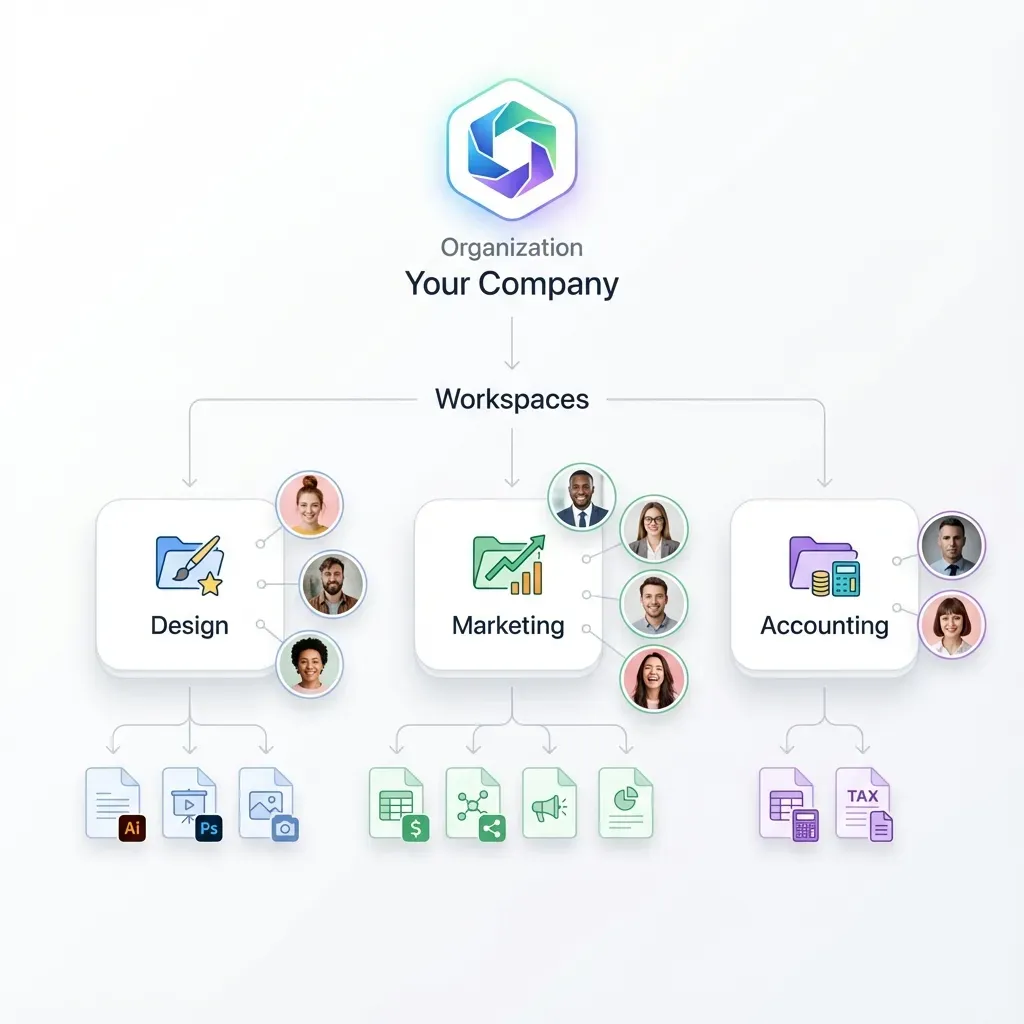
Define your domains. Create separate workspaces for /engineering, /marketing, and /finance. This establishes your security boundaries. An agent with keys to /marketing literally cannot see the files in /finance.
Structure Example:
/marketing
  /campaigns
  /assets
  /drafts (Agents write here)
  /published (Humans approve here)
Step 2: Enable Intelligence Mode
Turn on Intelligence Mode for these workspaces. Now, your mesh is "smart."
- Files are auto-indexed.
- Agents can ask "Where is the Q3 report?" and get a citation, not just a file path.
- RAG is built-in. You don't need a separate vector database.
Step 3: Connect via MCP
Give your agents access to the Fastio MCP server (https://mcp.fast.io/mcp/tools). This gives them a consolidated MCP toolset for working with shared files.
Connecting Claude Desktop: open Customize, then Connectors, and add a custom connector with https://mcp.fast.io/mcp/tools. Select Connect and sign in to Fastio in the window that opens.
Once connected, your agent can discover the available tools for reading, writing, and searching workspace files.
Step 4: Define Scheduled Handoffs
Use your agent orchestrator to check the output folder on a schedule. When it finds a new file in /needs-review, it can start the Quality Assurance agent and record the result in the shared workspace. The agent discovers the relevant read tool through MCP and begins its work.
Pro Tip: Use web import (the
upload_managetool'sweb-importaction) to let agents pull a file from its URL into the mesh without downloading it locally. This saves bandwidth and keeps your agents lightweight.
Observability and Debugging
When an agent network fails, it fails weirdly. Maybe two agents got into an argument, or one hallucinated a file path. Because agents are non-deterministic, reproducing bugs is hard.
Because Fastio treats state as files, debugging is simple: you just look at the file system.
- Audit Logs: See exactly which agent wrote which file and when. "Did Agent A actually write the summary?" Check the logs.
- Versioning: If an agent overwrites good code with bad code, you don't need to revert a database transaction. Just roll back the file version in the Fastio UI.
- Snapshots: The entire state of your agent system is just a directory tree. You can back it up, clone it, or inspect it with standard tools.
multiple% of enterprises use Kubernetes, often for its observability. Fastio brings that same level of visibility to agent data. You can see the flow of information as as you see pods in a cluster. If a process gets stuck, you can inspect the "Inbox" folder of that agent and see exactly what input caused the jam.

Security Considerations for Agent Meshes
Security in an agent mesh must be "zero trust." Assume any agent could be compromised, hallucinate, or get confused.
Least Privilege Access
Never give an agent root access. Use Fastio's granular permissions to restrict agents to specific subfolders. A "Translation Agent" should only have write access to /translations, not your entire /content library. Using separate API keys for each agent allows you to revoke a single compromised agent without taking down the whole mesh.
Human-in-the-Loop Gates
For sensitive actions, insert a human checkpoint.
- Agent drafts a contract -> saves to
/drafts. - Human reviews and moves it to
/approved. - Signing Agent sees file in
/approvedand sends it for signature.
The mesh enforces this workflow physically. The Signing Agent allows only read access to /approved and no access to /drafts. It literally cannot sign a contract that a human hasn't moved. This provides a hard safety guarantee that purely prompt-based guardrails cannot match.
Sources
References used to verify factual claims in this guide.
-
96% of enterprises are using or evaluating Kubernetes for orchestrating containerized workloads, the foundation for most service meshes.
-
25% of breaches in microservices architectures are linked to service mesh misconfigurations.
Frequently Asked Questions
What is the difference between an API gateway and an agent mesh?
An API gateway handles ingress traffic from outside clients to your services. An agent mesh manages the internal, many-to-many communication between your autonomous agents, handling state, memory, and complex routing logic.
Does Fastio replace tools like LangChain or AutoGen?
No, it complements them. LangChain and AutoGen build the agents themselves (the 'brain'). Fastio provides the shared environment (the 'world') where those agents live, store memory, and collaborate with each other.
How do I handle authentication for multiple agents?
Fastio uses token-based authentication. You can generate unique API tokens for each agent, allowing you to track their individual actions in the audit log and revoke access for a single agent if it malfunctions.
Can I use this for local LLMs like Llama 3?
Yes. Because Fastio provides a standard HTTP interface and MCP server, local agents running on your machine (via Ollama or LM Studio) can connect to the cloud mesh just as easily as cloud-hosted agents.
Is there a cost to running an agent mesh on Fastio?
Yes. Monthly plans start with a trial of up to 14 days (credit card required); annual plans have no trial. Plans are Starter at $9.99/mo, Business at $49.99/mo, and Enterprise at $199.99/mo.
Related Resources

Give Your Agents a Shared Brain
Stop building fragile point-to-point connections. Deploy a resilient, stateful service mesh for your AI agents with Fastio. Built for agent service mesh workflows.