How to Design Serverless AI Agent Architecture
Serverless AI agent architecture lets agents run on-demand using FaaS platforms like AWS Lambda, with external services for state and coordination. This design scales automatically for bursty AI workloads, cutting costs compared to always-on servers. You'll learn components, single/multi-agent patterns, state strategies, and how tools like Fastio provide persistent storage for agents.

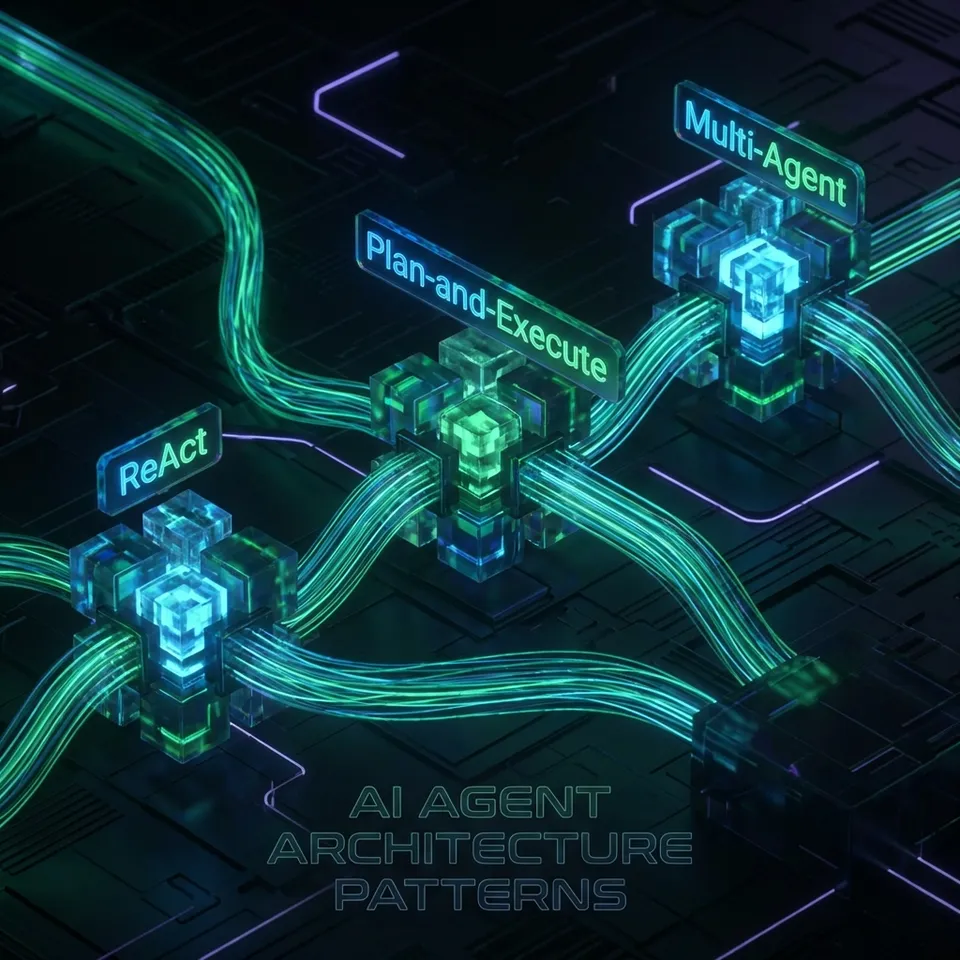
What Is Serverless AI Agent Architecture?
Serverless AI agent architecture runs AI agents on-demand using function-as-a-service (FaaS) platforms. Agents execute in short-lived functions triggered by events, with no server management. Traditional agents run on persistent VMs, incurring idle costs. Serverless shifts compute to providers like AWS Lambda or Cloudflare Workers, billing only for execution time. State lives externally in databases or object storage. This fits AI agents that process queries sporadically. For example, a customer support agent activates on new tickets, calls an LLM, fetches data, and responds, all without provisioning servers.
Helpful references: Fastio Workspaces, Fastio Collaboration, and Fastio AI.
Related guides
- How to Build an AI Agent Service Mesh: A Guide for 2026As enterprises deploy more autonomous agents, managing their communication becomes critical. An AI agent service mesh...
- How to Use AI Agents for KEDA AutoscalingAI agent KEDA autoscaling uses agents to dynamically scale workloads based on events. KEDA, Kubernetes Event-driven...
- How to Integrate Fastio API with Supabase Edge FunctionsConnecting the Fastio API with Supabase Edge Functions lets you process file uploads and metadata without heavy backend...
- How to Design a Data Pipeline Architecture for AI AgentsA data pipeline for AI agents is the backbone of reliable autonomous systems. It moves unstructured data from sources...
- Best Serverless GPU Providers for AI Agents and Scaling WorkflowsServerless GPU platforms let developers run compute-intensive AI workloads like model fine-tuning or inference without...
- Best AI Agent Hosting Platforms in 2026AI agent hosting platforms provide compute, storage, and orchestration for deploying autonomous agents in production....
More on this subject: Agent Infrastructure and Deployment (55 guides)
What to check before scaling serverless ai agent architecture
Serverless AI agent systems include these parts:
Event Triggers: HTTP requests, queues (SQS), or schedules start functions. Activity feeds or WebSocket events from tools like Fastio notify on file changes.
FaaS Compute: Lambda or equivalent runs agent logic: LLM calls, tool execution, decision loops.
LLM Provider: External API like Claude or OpenAI handles reasoning.
Tools: External services for actions. Fastio's MCP server offers a consolidated toolset for file operations via Streamable HTTP.
State Store: Databases (DynamoDB) or files track conversation history, agent memory.
Orchestrator: For multi-agent, a supervisor routes tasks.
The diagram shows flow: trigger → function → LLM/tools → state update → response.

Single-Agent Serverless Patterns
Start with simple single-agent designs.
Stateless Pattern: Each invocation is independent. Use prompt engineering for context. Good for one-shot tasks like summarization.
Stateful with External DB: Save/load state from DynamoDB or Redis. Agent resumes from last checkpoint.
Example AWS Lambda agent:
import boto3
dynamodb = boto3.resource('dynamodb')

def lambda_handler(event, context):
    table = dynamodb.Table('agent-state')
    state = table.get_item(Key={'session_id': event['session_id']})
    ### LLM call, update state
    response = llm_call(state['history'] + event['query'])
    table.put_item(Item={'session_id': event['session_id'], 'history': updated_history})
    return response
Scales to millions of invocations, costs pennies.
Multi-Agent Coordination in Serverless
Multi-agent systems divide tasks: researcher, writer, reviewer. Serverless adds challenges: stateless functions, cold starts, coordination.
Shared State: Use centralized stores like Fastio workspaces. Agents coordinate writes with advisory file locks and automatic version history to avoid overwrites.
File-Based Handoff: Agents write JSON artifacts to shared storage. Fastio supports ownership transfer: agent builds workspace, hands to human.
Event-Driven: Event feeds trigger next agent. Fastio tracks file changes via activity feeds and WebSocket events, perfect for reactive workflows.
Design with clear boundaries. Avoid tight coupling between functions.
Best Practices for State and Memory
Serverless functions are stateless, but agents need memory.
Three-tier state:
- Short-term: Function memory (cleared on exit).
- Medium-term: Key-value stores (DynamoDB, Redis) for conversation context.
- Long-term: Object storage (S3), files. Fastio offers a 14-day Business Trial (credit card required; see pricing).
Mitigate statelessness:
- State hydration: Pass state IDs in events, load on start.
- Vector stores for RAG: Fastio indexes files once Intelligence is enabled for the workspace.
- Durable execution: Use workflows like Step Functions. Fastio example: Agents use MCP tools for URL import, advisory file locks, and activity polling, no local I/O.
Set timeouts properly. AWS Lambda max is 15 minutes. Break big tasks into smaller ones.
Implementation: Serverless Agent Step by Step
Build a document analysis agent:
- Deploy Lambda function: Use Python or Node.js runtime.
- Connect to LLM: Call Claude or OpenAI API.
- Remote MCP integration: connect to
https://mcp.fast.io/mcp/toolswith an API key as a Bearer header for Fastio tools. - Trigger on upload: Activity polling or WebSocket feeds invoke Lambda when files land.
- Process and persist: Agent analyzes, writes output back to Fastio workspace.
- Clean up: Function exits; Fastio preserves version history.
Monitor execution: CloudWatch for Lambda metrics. Fastio audit logs track file access and tool calls.
Security and Monitoring
Secure your architecture:
- IAM roles: Least privilege. Grant S3/Fastio access only to needed paths.
- Secret management: Store API keys in AWS Secrets Manager or Fastio scoped tokens.
- Monitoring: Trace agent runs with CloudWatch or OpenTelemetry. Track LLM costs.
Fastio provides audit logs for every file read/write, plus activity feeds for real-time monitoring.
Pros, Cons, and Cost Analysis
Pros:
- Auto-scale: Handles bursts.
- No ops: Provider manages infra.
Cons:
- Cold starts: startup delay when a new instance starts.
- Limits: 15min timeout, 10,240 MB memory.
- Vendor lock.
Costs: Lambda $0.20 per 1M requests plus duration. Bursty agents save vs EC2.
Sources
References used to verify factual claims in this guide.
-
AWS Lambda charges $0.20 per million requests plus duration
-
90% cost savings for bursty workloads
-
Fastio offers a 14-day Business Trial with paid plans
Frequently Asked Questions
What is serverless AI agent architecture?
Serverless AI agent architecture runs agents in FaaS functions triggered by events, with external state management for scalability. No servers to manage, ideal for sporadic workloads.
Pros and cons of serverless agents?
Pros: auto-scaling, low cost for bursts, no DevOps. Cons: cold starts, execution limits, state complexity. Best for event-driven tasks.
How to handle state in serverless AI agents?
Use external databases or file storage for persistence. Services like Fastio provide agent-native storage with advisory file locks, version history, and event feeds.
Best platforms for serverless AI agents?
AWS Lambda for maturity, Cloudflare Workers for edge, Vercel for web. Choose based on ecosystem.
Can serverless handle multi-agent systems?
Yes, via supervisors, queues, shared state. File-based handoffs with coordination prevent conflicts.
Related Resources

Build Serverless Agents with Persistent Storage
Fastio gives agents shared workspaces, a consolidated MCP toolset, and built-in RAG once Intelligence is enabled.