How to Build an AI Agent Control Plane: Manage Agent Infrastructure at Scale
An AI agent control plane is the centralized management layer that handles agent provisioning, configuration, health monitoring, and lifecycle management across a fleet of autonomous AI agents. As organizations move from single-agent pilots to multi-agent systems, a reliable control plane becomes essential for security, observability, and orchestration. This guide explains how to architect a control plane that scales with your AI ambitions.

What is an AI Agent Control Plane?
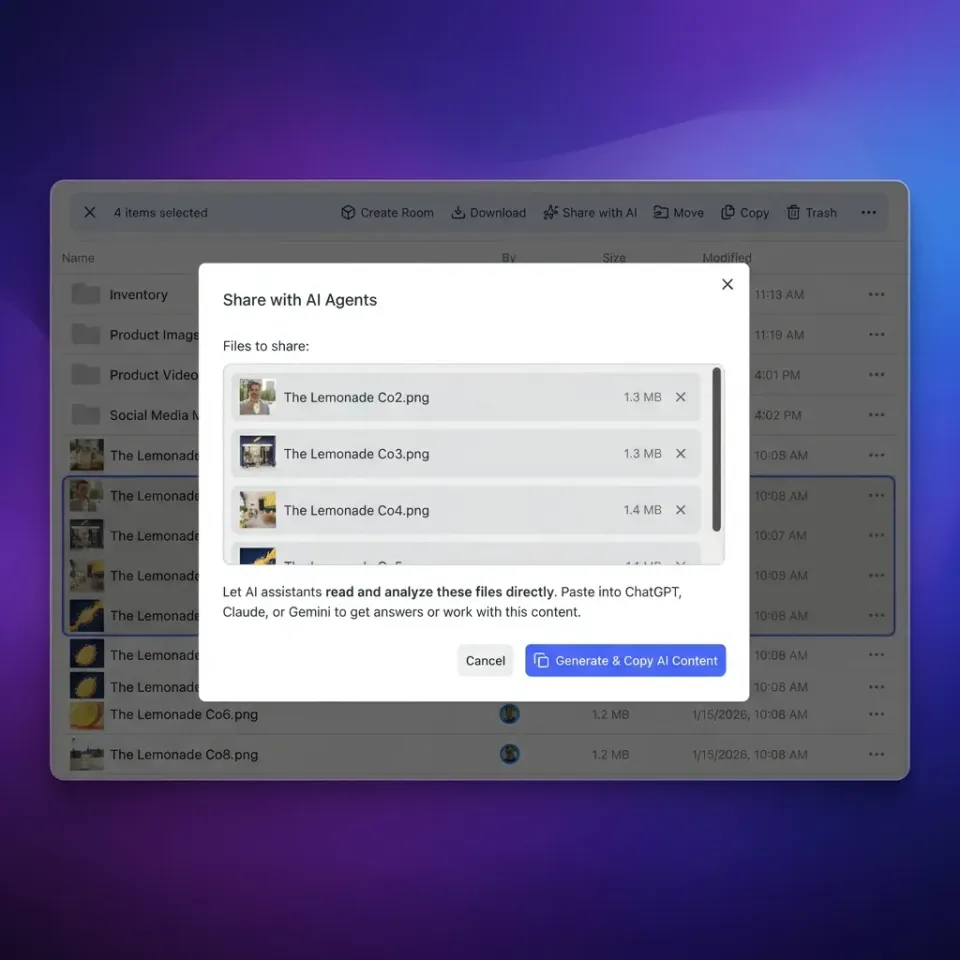
An AI agent control plane is the centralized infrastructure layer responsible for governing, orchestrating, and monitoring a fleet of AI agents. Much like a Kubernetes control plane manages containerized applications, an agent control plane manages the lifecycle, identity, and resources of autonomous agents. It separates the "management" logic from the "execution" logic. The data plane handles execution, while the control plane ensures that agents operate within defined guardrails.
Without a control plane, agents are isolated scripts running in the dark. With one, they become a coordinated workforce. The control plane handles critical functions such as:
- Identity Management: Assigning unique IDs and cryptographic credentials to each agent.
- Configuration Management: Pushing prompt updates, tool definitions, and policy changes to agents in real-time.
- State Persistence: Managing the long-term memory and context of agent interactions. See our guide on AI agent state management for implementation patterns.
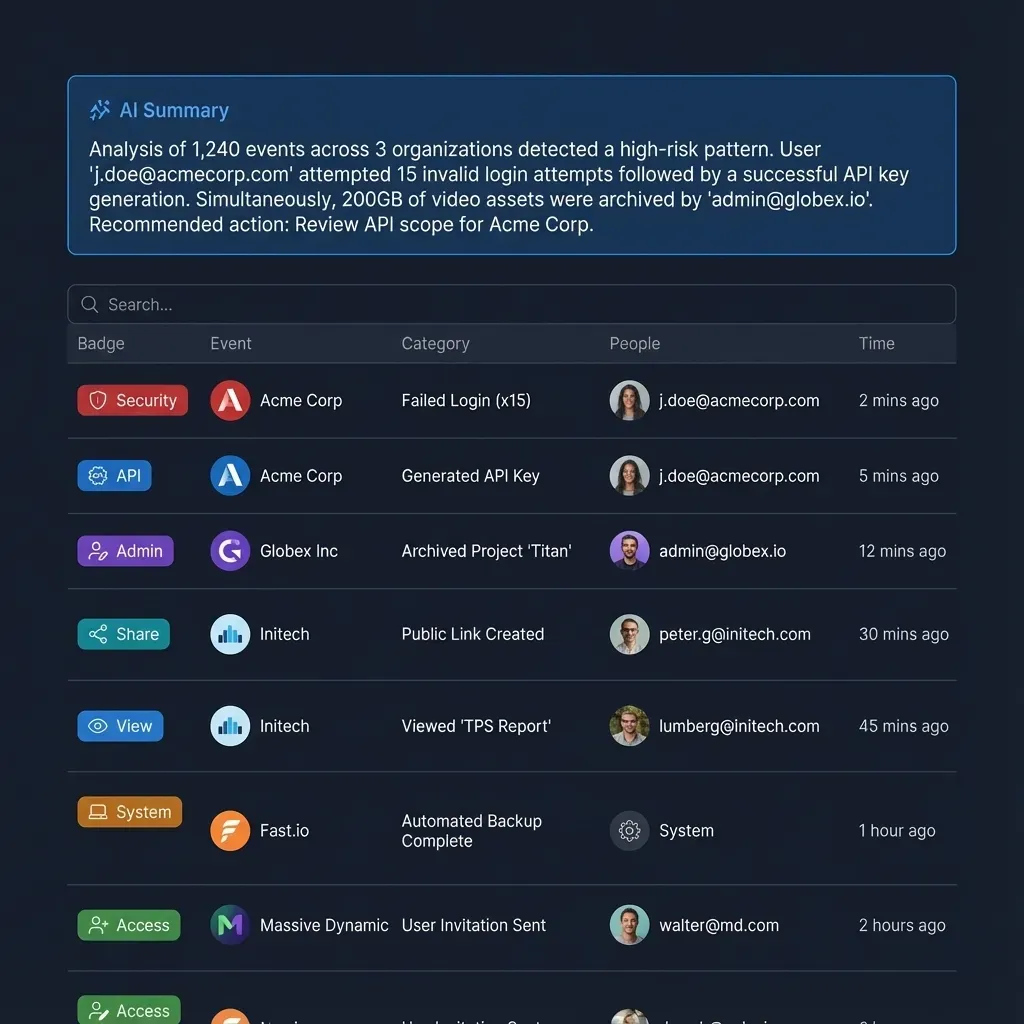
- Observability: Aggregating logs, traces, and "thought processes" to debug agent behavior. For production logging strategies, see AI agent observability.

Related guides
- How to Manage AI Agent Fleets: Operate and Scale Agent DeploymentsManaging a fleet of AI agents requires more than just running a few scripts. You must deploy, monitor, and scale...
- How to Build AI Agent Infrastructure: The Complete Stack GuideAI agent infrastructure is the comprehensive technology stack required to build, deploy, and run autonomous agents in...
- How to Architect Terraform Infrastructure for AI AgentsAutonomous AI agents need infrastructure that's reproducible and scales. This guide explains how to use Terraform to...
- Best AI Agent Infrastructure Stacks in 2026Guide to agent infrastructure stacks: Choosing an AI agent stack means balancing storage, orchestration, and...
- How to Build an AI Agent Service Mesh: A Guide for 2026As enterprises deploy more autonomous agents, managing their communication becomes critical. An AI agent service mesh...
- How to Automate AI Agent InfrastructureAI agent infrastructure automation helps you scale agent workflows from one bot to thousands. Most teams focus on...
More on this subject: Agent Infrastructure and Deployment (55 guides)
Why You Need a Control Plane for Agent Fleets
Running a single agent on a laptop is easy. Managing fifty agents interacting with production data is a different challenge entirely. As agent adoption grows, organizations face the "Shadow AI" problem, where unmanaged agents access sensitive data without audit trails or oversight.
The Cost of Fragmentation When agents operate without a control plane, failures are silent and security gaps are invisible. Enterprises running large fleets of agents report more incidents without centralized control. These incidents range from hallucinated data leaks to run-away loops that consume API credits.
Acceleration Through Standardization Conversely, a control plane standardizes how agents are built, deployed, and monitored. This infrastructure investment pays off in velocity. Control plane adoption accelerates agent deployment cycles, as developers can rely on shared services for logging, auth, and state management instead of building them from scratch for every bot.


Give Your AI Agents Persistent Storage
Stop managing agents in the dark. Detailed audit logs, granular permissions, and a consolidated MCP toolset to orchestrate your AI workforce securely.
Core Capabilities of an Agent Control Plane
To effectively manage a fleet of autonomous agents, your control plane needs to provide specific platform services. These aren't just "nice to have" features; they are the foundational requirements for running agents in production.
1. Orchestration and Routing The control plane must decide which agent handles which task. This involves intelligent routing based on agent capabilities, current load, and available tools. It acts as the traffic controller, preventing any single agent from becoming a bottleneck.
2. Universal State Layer Agents need memory. A control plane provides a unified storage layer where agents can read and write state, share files, and persist context across sessions. This prevents data silos where one agent learns something that the rest of the fleet cannot access.
3. Governance and Security Every action taken by an agent must be authorized and logged. The control plane enforces Access Control Lists (ACLs), ensuring agents only access the files and tools they are explicitly permitted to use. It also maintains an immutable audit log of all agent activities for compliance and debugging.
4. Tool Registry (MCP) Agents need tools to interact with the world. A modern control plane includes a Model Context Protocol (MCP) registry, allowing agents to discover and use standardized tools, from file system access to API integrations, without hard-coded dependencies. Learn about Fastio's MCP server implementation for agent tool connectivity.
Fastio as Your Agent Control Plane
Fastio provides a turn-key control plane for file-centric AI agents. Instead of building the infrastructure from scratch, developers use Fastio to handle the heavy lifting of state, storage, and tool connectivity.
The Workspace as the Control Layer In Fastio, the "Workspace" acts as the boundary for agent control. It unifies human and agent access, meaning you can provision an agent with the exact same permissions as a human team member. This shared environment simplifies hand-offs: an agent can draft a document, and a human can review it in the same folder, with full version history.
Native MCP Integration Fastio's MCP server exposes a consolidated MCP toolset to your agents via Streamable HTTP or SSE. This gives your agents immediate capabilities to manipulate files, manage permissions, and organize data without you writing a single line of integration code. Learn more about Fastio's agent capabilities in our AI integration documentation.
Intelligence Mode & RAG Once Intelligence is enabled for the workspace, Fastio automatically indexes every file in the control plane. This gives your agents built-in RAG (Retrieval-Augmented Generation) capabilities. They can query the state of the entire project, find relevant documents, and cite sources, solving the context window problem automatically.

Step-by-Step: Setting Up Your Control Plane
Building a control plane doesn't have to be a multi-month infrastructure project. You can establish the core pillars of agent management using modern tools in an afternoon.
Step 1: Define Agent Identity Start by creating distinct cryptographic identities for your agents. Avoid sharing API keys. In Fastio, you can generate unique access tokens for each agent, allowing you to revoke access for a specific compromised agent without bringing down the whole fleet.
Step 2: Centralize State Storage
Configure your agents to save all outputs and intermediate states to a central cloud storage location. Use structured naming conventions (e.g., /agent-logs/{agent-id}/{session-id}/) to ensure observability.
Step 3: Implement the Model Context Protocol (MCP) Standardize how your agents access tools. Deploy an MCP server that brokers connections to your database, file system, and third-party APIs. This decouples your agent logic from your infrastructure logic.
Step 4: Establish Human-in-the-Loop Workflows Design your control plane to support human intervention. Use permissions to create "drop zones" where agents submit work for human review before it is published or acted upon. Fastio's granular permissions make this easy to configure.
Sources
References used to verify factual claims in this guide.
-
Fastio MCP server exposes a consolidated toolset to agents via Streamable HTTP
Frequently Asked Questions
What is the difference between an agent orchestration framework and a control plane?
Orchestration frameworks (like LangChain or AutoGen) focus on the logic of how agents think and execute tasks. A control plane focuses on the infrastructure: deploying, monitoring, securing, and managing the state of those agents across a fleet.
How do I monitor the health of my AI agents?
Agent health monitoring requires tracking both system metrics (latency, error rates) and functional metrics (task success rate, hallucination frequency). A control plane aggregates these logs and provides dashboards for real-time visibility.
Can I build a control plane with Kubernetes?
Yes, Kubernetes is often used as the underlying infrastructure for an agent control plane. However, you will need to add agent-specific layers for context management, prompt versioning, and LLM tool routing on top of standard K8s primitives.
What is the role of MCP in an agent control plane?
The Model Context Protocol (MCP) acts as the universal language for tool discovery. It allows the control plane to standardize how agents connect to data and services, making it easier to swap tools or agents without breaking the system.
How does a control plane handle agent security?
A control plane enforces security through identity management, strong access controls (RBAC/ABAC), and comprehensive audit logging. It ensures agents operate with the principle of least privilege, accessing only the data they strictly need.
Related Resources

Give Your AI Agents Persistent Storage
Stop managing agents in the dark. Detailed audit logs, granular permissions, and a consolidated MCP toolset to orchestrate your AI workforce securely.