Agent Security and Governance
Running agents without giving away more than you meant to. These pages cover scoped credentials and key rotation, permission boundaries, prompt injection and tool poisoning, sandboxing, data retention, audit trails, and the review process around autonomous output. Fast.io supports this with scoped API keys, granular workspace permissions, encryption in transit and at rest, and an append-only audit log. It is not SOC 2, ISO 27001, or HIPAA certified, and it runs on certified infrastructure partners rather than claiming those certifications itself.
Coverage assumes an agent with real access rather than a demo, so the pages spend their time on blast radius: what a confused or compromised agent could reach, how to shrink that before it matters, and what evidence you would have afterwards. They describe specific controls rather than certifications, and they say which ones are worth putting in place first when you cannot do everything at once.
62 guides in this topic.
Start here

Best Code Execution Sandboxes for AI Agents in 2026
Code execution sandboxes let AI agents run generated code in isolated environments without risking your host system. This guide compares 9 platforms by isolation technology, session duration, language support, and pricing, with notes on where each fits in a production agent stack.

Best Secret Management Tools for AI Agents
AI agents need API keys, database credentials, and service tokens to do their work. Hardcoding those secrets into agent code is a well-documented path to credential leaks and security breaches. This guide compares seven secret management tools that solve the problem, with a focus on how each one integrates with agent frameworks like LangChain and CrewAI.

Best Guardrails Tools for AI Agents in 2026
AI guardrails are validation layers that sit between the LLM and the application to prevent hallucinations, block prompt injections, and ensure structured output compliance. This guide compares the top production-ready guardrails tools across open-source and commercial options.

How to Configure Perplexity Personal Computer Privacy and Data Controls
Perplexity Personal Computer gives an AI agent persistent access to your local files and apps. That level of access demands tight privacy controls. This guide walks through every privacy and data setting available, from the emergency stop and approval gates on the Personal Computer itself to the broader Perplexity account settings that govern data retention, AI training opt-out, and incognito mode.
How to Set Up an AI Agent Sandbox Environment
An AI agent sandbox is an isolated environment where agents can execute code, access files, and perform actions without affecting production systems.

Best AI Agent Security Tools in 2026
Autonomous AI agents introduce new attack vectors like prompt injection, unauthorized actions, and data exfiltration. As adoption grows, securing these agents is no longer optional. This guide ranks the top 10 AI agent security tools for 2026, helping you choose the right guardrails, firewalls, and secure infrastructure for your autonomous systems.
All guides

Agentic AI Governance: Frameworks, Risks, and How to Get Started
Autonomous AI agents are making real decisions in production, from processing invoices to modifying customer records. Governing these systems requires more than policy documents. This guide covers the regulatory landscape driving governance requirements in 2026, practical frameworks for scoping agent permissions, and the technical controls you need to keep autonomous systems accountable.

Agentic AI Security Risks: Threats, Vulnerabilities, and Mitigations
AI agents that can plan actions, call tools, and access files introduce security risks that go well beyond prompt injection in a chat window. This guide maps the expanded attack surface of agentic AI, walks through each major threat category identified by OWASP and the Five Eyes CISA coalition, and provides concrete mitigations you can apply today.

AI Agent Output Attestation: A Practical Guide
AI agents now write contracts, generate reports, and trigger payments. Before any of that output moves downstream, the receiving system should be able to prove where it came from. This guide covers what output attestation is, how to build a signing pipeline, and how to store attested artifacts so auditors and downstream agents can verify them later.

AI Agent Rate Limiting Strategies: Complete Guide for 2026
AI agents require different rate limiting approaches than traditional APIs because they chain multiple calls per task.

AWS Bedrock Rate Limits: Service Quotas, ThrottlingException, and Document Retrieval
AWS Bedrock rate limits are regional, account-level quotas that cap requests and tokens per minute across foundation models. When applications send large document payloads directly into inference calls, they rapidly exhaust token allowances and trigger ThrottlingException errors. This guide explains how Bedrock quotas work, how to handle throttling with backoff and jitter, and how offloading document retrieval through an intelligent workspace prevents quota exhaustion.

Azure OpenAI Rate Limits: TPM Quotas, PTU Scaling, and 429 Error Resolution
Azure OpenAI rate limits are regional and subscription-level constraints defined by Tokens Per Minute (TPM) and Requests Per Minute (RPM) allocated to specific model deployments. When inference workloads exceed these thresholds, deployments return HTTP 429 responses. Resolving these bottlenecks requires managing TPM allocation, provisioning dedicated throughput units (PTU), implementing exponential backoff, and offloading large enterprise file corpora to an external indexed workspace.
Best AI Agent Sandboxes for Secure Code Execution in 2026
AI agents need a safe place to run code. Sandboxes provide isolated compute environments where agents can execute Python, JavaScript, and shell commands without threatening the host system. This guide compares managed platforms like E2B and Northflank, serverless options like Modal, and self-hosted solutions including Docker and gVisor.
Best AI Agent Security Tools in 2026
Autonomous AI agents introduce new attack vectors like prompt injection, unauthorized actions, and data exfiltration. As adoption grows, securing these agents is no longer optional. This guide ranks the top 10 AI agent security tools for 2026, helping you choose the right guardrails, firewalls, and secure infrastructure for your autonomous systems.

Best AI Compliance Tools for 2026
Gartner projects $492 million in AI governance platform spending for 2026, with regulations set to cover 75% of the world's economies by 2030. This guide compares 8 AI compliance tools by regulation coverage, automation depth, and pricing so compliance officers can pick the right platform for their stack.
Best Code Execution Sandboxes for AI Agents in 2026
Code execution sandboxes let AI agents run generated code in isolated environments without risking your host system. This guide compares 9 platforms by isolation technology, session duration, language support, and pricing, with notes on where each fits in a production agent stack.
Best Guardrails Tools for AI Agents in 2026
AI guardrails are validation layers that sit between the LLM and the application to prevent hallucinations, block prompt injections, and ensure structured output compliance. This guide compares the top production-ready guardrails tools across open-source and commercial options.
Best Secret Management Tools for AI Agents
AI agents need API keys, database credentials, and service tokens to do their work. Hardcoding those secrets into agent code is a well-documented path to credential leaks and security breaches. This guide compares seven secret management tools that solve the problem, with a focus on how each one integrates with agent frameworks like LangChain and CrewAI.

Box API Rate Limits: Tier Thresholds, 429 Errors, and Workarounds
Box API rate limits protect platform stability through per-user request windows, endpoint-specific throttling, and monthly enterprise call quotas. Autonomous workflows and AI agents frequently hit 429 Too Many Requests errors when traversing folders or executing search loops against unmanaged storage. Understanding Box throttling mechanisms and pairing primary cloud storage with synchronized workspaces prevents quota exhaustion while maintaining persistent access.

Cerebras Rate Limits: Wafer-Scale Inference Tiers, TPM Caps, and Payload Optimization
Cerebras rate limits govern the frequency of requests and token throughput permissible per minute when querying Cerebras Wafer-Scale clusters. Enforced through a dual-bucket architecture of uncached and total tokens per minute, limits can be exhausted in seconds at 1,500 tokens per second. Instead of sending multi-file contexts directly into API payloads, engineering teams index documents in shared workspaces for targeted semantic retrieval.

Cohere Rate Limits: API Keys, Production Tiers, and 429 Handling
Cohere rate limits are programmatic caps on the number of requests per minute (RPM) and tokens per minute (TPM) that a client application can submit to Cohere API endpoints. Free trial keys are limited to 1,000 calls per month with strict per-minute caps, while production keys provide 500 requests per minute on Command models. When agents submit large multi-file contexts, token exhaustion triggers HTTP 429 errors. Indexing files in shared workspaces prevents quota exhaustion.

DeepSeek R1 Rate Limits: API Quotas, Concurrency & Server Busy Fixes
DeepSeek R1 rate limits govern the concurrent requests and tokens per minute enforced on the deepseek-reasoner endpoint, which faces aggressive throttling during global peak demand. Unlike standard models, R1 consumes continuous compute during prolonged reasoning chains, causing sudden HTTP 429 and server busy errors. Offloading document context to indexed workspaces and applying backoff retries prevents agent pipelines from stalling.

DeepSeek Rate Limits: API Quotas, Concurrency Caps, and MCP Workarounds
DeepSeek rate limits are API throughput controls that restrict the frequency of client requests (RPM), token processing velocity (TPM), and concurrent active connections to DeepSeek models. When automated agents or data pipelines exceed account concurrency caps, DeepSeek returns HTTP 429 and 503 errors. Instead of overwhelming inference engines by stuffing massive document attachments into prompts, engineering teams index project files in shared workspaces for targeted semantic retrieval.

Dropbox API Rate Limits: Managing 429 Quotas in Agent Workflows
Dropbox API rate limits use dynamic throttling that returns HTTP 429 when autonomous agents burst requests across folder trees. Managing these quotas requires parsing the Retry-After header, adding exponential backoff with jitter, and replacing recursive polling with persistent workspace indexing.

Dynamic Secrets for AI Agents: How to Implement Runtime Injection and Rotation
Static credentials are a major liability for automated systems, especially for agents with broad permissions. This guide explains how to implement dynamic secrets that are generated on-demand, injected at runtime, and revoked after use. By moving to an ephemeral credential model, you can limit the potential damage from a compromised agent and ensure your automated workflows stay secure.

Gemini API Rate Limits: Tier Quotas, 429 Handling, and Large-Payload Workflows
Gemini API rate limits govern requests per minute (RPM), tokens per minute (TPM), and requests per day (RPD) across Google AI Studio tiers. While chat interactions rarely cross request thresholds, multi-agent pipelines and document workflows routinely trigger HTTP 429 errors by exceeding token quotas. Implementing exponential backoff and external workspace indexing prevents throttling.

GitHub API Rate Limit Guide: Best Practices for AI Agents
GitHub API rate limits restrict the number of requests an application or user can make within a specific timeframe to protect service availability and prevent abuse. For developers building autonomous AI agents, handling these limits requires proper implementation of rate monitoring headers, conditional requests, webhooks, and client-side queueing. This guide explains how to avoid 429 Too Many Requests errors and configure resilient agent environments.

Google AI Studio Rate Limits: Free Tier Quotas, TPM, and Handling 429 Errors
Google AI Studio rate limits enforce operational caps across requests per minute, tokens per minute, and daily request volumes. Breaching these thresholds returns a 429 Resource Exhausted error, which developers mitigate using exponential backoff, Batch API processing, or paid tier upgrades. Decoupling document storage into an external intelligent workspace preserves model context while avoiding token exhaustion.

GPT-4o Rate Limits: Tier TPM, RPM, and ChatGPT Message Caps
OpenAI caps GPT-4o API accounts on Tier 1 at 500 requests per minute and 30,000 tokens per minute, while ChatGPT Plus restricts conversational prompts to 80 messages every 3 hours. As agentic applications and document-heavy workflows scale, unmanaged token bursts trigger 429 rate limit errors. Understanding tier thresholds and offloading bulky file retrieval to indexed workspace storage keeps production workloads running without hitting API ceilings.

Grok Rate Limits: xAI API Quotas, Tier Thresholds, and MCP Workarounds
Grok rate limits restrict xAI API throughput through requests per second (RPS) and tokens per minute (TPM) across developer tiers. Pushing raw file text into prompt payloads quickly exhausts per-minute token buckets, triggering HTTP 429 errors. Indexing files in an intelligent workspace and querying them via remote MCP retrieval avoids quota exhaustion while maintaining full document access.

Groq API Rate Limits: LPU Tier Quotas, TPM Ceilings, and Document Handling
Groq rate limit policies govern API throughput across GroqCloud LPUs through concurrent requests, requests per minute, and tokens per minute. While Groq lists generation speeds up to 1,000 tokens per second, strict token-per-minute ceilings create unexpected bottlenecks for document-heavy agent prompts. Managing production throughput requires decoding rate limit headers, configuring exponential backoff, and decoupling file storage from prompt context.

Handling OneDrive API Rate Limits and Graph Throttling in AI Pipelines
Autonomous AI pipelines querying OneDrive via Microsoft Graph frequently trigger HTTP 429 rate limits during recursive folder scans and bulk document downloads. Microsoft Graph throttles requests using dynamic resource units across tenant and user buckets rather than a static per-second ceiling. Handling these limits requires parsing the Retry-After header with exponential backoff or syncing folders into indexed workspaces queried through Model Context Protocol.

How to Build an AI Agent Credential Vault
An AI agent credential vault is a specialized security system designed to manage, rotate, and inject secrets for autonomous workloads. Unlike human password managers, these vaults must handle programmatic access, automated rotation, and non-human identity verification to prevent data breaches.
How to Configure AI Agent Granular Permissions
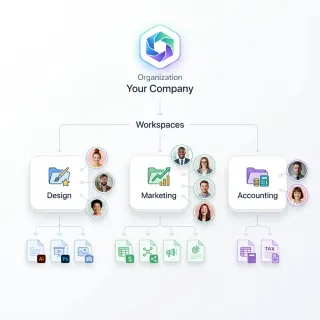
Granular permissions are the defense layer between an autonomous AI agent and your sensitive data. With identity weaknesses playing a material role in nearly 90% of the incidents Palo Alto Networks' Unit 42 investigated, giving an agent "full access" is a critical vulnerability. This guide explains how to implement Role-Based Access Control (RBAC) for agents, manage file-level inheritance, and use Fastio's specialized Agent Workspaces to enforce the principle of least privilege.
How to Configure Perplexity Personal Computer Privacy and Data Controls
Perplexity Personal Computer gives an AI agent persistent access to your local files and apps. That level of access demands tight privacy controls. This guide walks through every privacy and data setting available, from the emergency stop and approval gates on the Personal Computer itself to the broader Perplexity account settings that govern data retention, AI training opt-out, and incognito mode.

How to Fix AutoGen Rate Limits: Handling 429 Errors in Multi-Agent Workflows
An AutoGen rate limit occurs when multiple autonomous agents in a group chat collectively exceed host model request or token quotas due to compounding conversational history. Re-sending accumulated transcripts across multiple turns quickly triggers HTTP 429 errors from LLM providers. Developers can resolve these bottlenecks by setting hard conversation bounds, implementing local disk caching, and moving large document context into an indexed workspace queried via remote MCP.

How to Handle Fastio API Rate Limits and 429 Errors
Properly handling Fastio API rate limits keeps agent applications stable under high load. This guide explains how to read rate limit headers, handle 429 Too Many Requests errors, and build exponential backoff logic. Following these practices prevents integration failures, reduces server load, and keeps AI workspaces running without interruption.

How to Handle Fastio API Rate Limits and Retry Logic
Understanding Fastio API rate limits and retry best practices helps you build reliable integrations. Implementing strong retry logic with exponential backoff allows you to handle Fastio API rate limits and maintain system stability. When multiple AI agents interact with shared workspaces at the same time, they can occasionally hit request limits.
How to Implement AI Agent Cybersecurity Monitoring
AI agent cybersecurity monitoring spots threats as they happen using automatic analysis. Teams set up specialized agents to scan logs, spot anomalies, and respond in shared workspaces. Traditional tools fall short in agentic systems without multi-agent coordination. Fastio handles this with granular permissions, version history, audit logs, and a consolidated MCP toolset for secure collaboration. This guide covers patterns, steps to implement, Fastio workflows, and best practices to set up effective monitoring.
How to Implement AI Agent Data Governance
AI agent data governance controls how autonomous agents access, create, and store data. Without it, organizations risk security breaches, compliance failures, and data sprawl. This guide covers the essential framework for governing agentic workflows and ensuring traceability.
How to Implement AI Agent Guardrails
AI agent guardrails are essential controls that limit autonomous agents' access and actions. Without them, agents can inadvertently modify sensitive data or incur excessive costs. This guide covers the critical layers of protection every AI deployment needs.

How to Implement an AI Agent Audit Trail for Compliance
An AI agent audit trail provides the accountability required by modern regulations. Learn how to track autonomous decisions, file operations, and API calls to ensure your agentic workflows remain transparent and compliant.

How to Implement Audit Logging for AI Agents
Audit logging for AI agents is the practice of recording every action an agent takes, including tool calls, file operations, API requests, and decisions, creating an immutable trail for compliance, debugging, and accountability. This guide covers what to log, how to structure your logging system, and best practices for making audit data searchable and useful for human review.
How to Implement Fastio OAuth2 Flow
Fastio OAuth2 flow allows secure, token-based authorization for third-party applications and AI agents. This guide covers the end-to-end process of setting up OAuth for your Fastio integration, from acquiring an access token to managing agent-specific workflows. Whether you are authenticating a web app or configuring an AI agent with MCP tools, mastering this flow ensures reliable and secure API access.
How to Implement Rate Limiting Strategies for AI Agents
Rate limiting controls how often your AI agents make API requests. This prevents system overload and keeps costs down. Unlike web traffic, autonomous agents can accidentally spike usage, causing expensive bills or IP bans.

How to Implement Secure Data Versioning for AI Agents
Secure AI agent data versioning tracks changes to files and data generated by agents, using access controls and audit trails. Agents produce reports, models, datasets, and other outputs. These need a protected change history to stay reliable and compliant. Without it, overwrites wipe out progress. Unauthorized access can trigger breaches costing $4.4 million on average. And debugging agent problems gets hard.
How to Manage AI Agent Identity: Auth & Security Guide
AI agent identity management is the practice of assigning, verifying, and governing unique identities for autonomous AI agents so they can authenticate to services, maintain audit trails, and operate within defined permission boundaries. As machine identities outnumber humans 45:1, traditional IAM fails to address the speed and scale of agentic workflows.
How to Manage AI Agent Secrets and API Credentials
AI agent secrets management is about securely storing, rotating, and accessing API keys and tokens that autonomous agents need to work with external tools. This guide covers the best strategies for protecting agentic workflows, including vault integration, runtime injection, and the principle of least privilege.

How to Prevent Prompt Injection in AI Agents
Prompt injection is the top security risk for LLM-powered agents, and it gets worse once agents start chaining tools, reading files, and browsing the web. This guide covers practical defenses: input sanitization, trust boundaries between context sources, tool output validation, and workspace-level controls that contain damage when an injection slips through.

How to Prevent Tool Poisoning Attacks on AI Agents
Tool poisoning is an attack where a malicious MCP server or tool registry provides manipulated tool descriptions or responses to hijack an AI agent's behavior. This guide explains how tool poisoning works, why it bypasses traditional security controls, and five practical strategies to protect your agent infrastructure.

How to Secure Agents: Fastio API Authentication Methods Guide
Welcome to the Fastio API authentication methods guide. Securing your developer pipelines is important. This resource explains how to configure Fastio API auth and API tokens. You will learn how to set up Fastio OAuth for programmatic workspace management. This protects both human and AI agent workflows while keeping teams productive.
How to Secure AI Agents: A Practical Security Guide
AI agents operate autonomously, access sensitive files, and call external APIs, which makes them attractive attack targets. This guide covers ten security practices for production agent systems: scoped identities, least-privilege access, environment isolation, secure file handling, monitoring, dependency scanning, human oversight, webhook-based alerting, rate limiting, and lifecycle management.
How to Secure Event Bridges for Fastio with Signature Verification
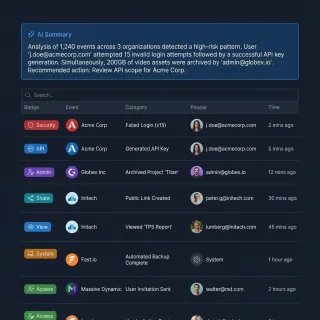
Securing event integrations and webhook bridges ensures incoming payloads are authentic and protects endpoints from malicious requests. Fastio uses scoped API keys and audit logs to secure workspaces, while external webhook bridges use HMAC-SHA256 signatures and timestamps to block replays. This guide covers verification code, replay protection, and best practices for agentic workflows.
How to Set Up an AI Agent Sandbox Environment
An AI agent sandbox is an isolated environment where agents can execute code, access files, and perform actions without affecting production systems.

LiteLLM Rate Limits: RPM, TPM, and Upstream Gateway Workarounds
LiteLLM rate limits define the maximum requests per minute (RPM) and tokens per minute (TPM) enforced on individual users, keys, or upstream provider endpoints within a LiteLLM proxy deployment. When multi-agent systems trigger upstream 429 errors, automated router fallbacks and cooldowns maintain gateway uptime. Connecting agents to an indexed Fast.io workspace via Model Context Protocol retrieves targeted context, cutting payload sizes and preventing token exhaustion.

LlamaIndex Rate Limits: Ingestion Batching, Embedding Quotas, and Offloaded Indexing
LlamaIndex rate limits are API request and token bottlenecks triggered while parsing, chunking, and embedding large file corpora through third-party embedding models. When unthrottled ingestion pipelines process hundreds of documents simultaneously, upstream providers enforce per-minute caps that return HTTP 429 errors. Tuning embedding batch sizes and offloading indexing to intelligent workspaces via remote MCP prevents token exhaustion and stabilizes agent pipelines.

Managing LangGraph Rate Limits, Node Throttling, and State Stores
LangGraph workflows trigger HTTP 429 rate limits when parallel branches and multi-agent graphs exceed upstream provider throughput ceilings. Resolving these bottlenecks requires distinguishing graph recursion bounds from API rate limits, configuring retry policies with backoff, and throttling concurrent node execution. Decoupling document storage from the graph state store prevents checkpoint bloat and token-heavy payload transfers across execution cycles.

Mistral API Rate Limits: La Plateforme Tiers, 429 Errors, and Corpus Retrieval
Mistral API rate limits restrict requests per second, tokens per minute, and monthly consumption across La Plateforme tiers. On the default Free evaluation tier, strict caps trigger 429 Too Many Requests errors when agentic pipelines submit full document contexts. Upgrading through pay-as-you-go tiers scales throughput as cumulative billing increases, while pairing Mistral models with external workspace search eliminates prompt bloat.

Open WebUI Rate Limits: User Throttling, Model API Quotas, and RAG Scaling
Open WebUI rate limits encompass both administrative per-user request constraints configured in the web interface and upstream API rate limits encountered when querying hosted models. While local instances protect compute through reverse proxies and filter functions, multi-user RAG queries compound upstream token usage and trigger HTTP 429 responses. Resolving bottlenecks requires tuning concurrency settings and offloading document retrieval to external workspaces.

OpenAI o1-mini Rate Limits: API Tier Quotas and Usage Caps
OpenAI o1-mini rate limits restrict API throughput across requests per minute and tokens per minute based on organization usage tiers. While Tier 1 starts at 500 RPM and 200,000 TPM, hidden reasoning tokens count directly against per-minute token budgets. Understanding token consumption mechanics, rate limit headers, and external retrieval architectures prevents sudden throughput throttling.

OpenAI o3-mini Rate Limits: RPM, TPM Quotas, and Token Mitigation Strategies
OpenAI o3-mini rate limits enforce throughput constraints measured in requests per minute and tokens per minute across organizational API tiers, with internal reasoning tokens counting directly toward the token quota. Breaching these ceilings triggers HTTP 429 errors that halt autonomous agent loops and automated data pipelines. Understanding tier thresholds, dialing reasoning effort, and decoupling large document corpuses into indexed workspaces prevents token exhaustion.

OpenAI Rate Limits: TPM, RPM, Tiers, and Large Corpus Strategies
OpenAI rate limits restrict API consumption through Requests Per Minute, Requests Per Day, and Tokens Per Minute across account tiers. Attempting to analyze large document collections by pushing raw file text into prompt payloads quickly exhausts TPM allocations and triggers HTTP 429 errors. Decoupling storage from inference by indexing files in an intelligent workspace and querying them through remote MCP retrieval prevents quota exhaustion while maintaining complete document access.

OpenRouter Rate Limits: 20 RPM Caps, 429 Errors, and Agent Storage Workarounds
OpenRouter restricts free models to 20 requests per minute and 50 to 1,000 requests per day based on credit purchases, while paid models remove platform caps in favor of upstream provider capacity. Most HTTP 429 errors stem from downstream provider congestion rather than gateway throttling. For AI agents, dumping raw documents into prompts accelerates limits. Offloading files to indexed storage prevents redundant requests.

Pinecone Rate Limits: Read Units, Write Units, and Vector Indexing Limits
Pinecone rate limits represent throughput caps expressed in Read Units (RUs) and Write Units (WUs) that constrain how fast an agent can query or upsert vector embeddings. Serverless indexes enforce default throughput ceilings of 2,000 query RUs per second per index and 100 upsert requests per second per namespace, returning HTTP 429 errors when thresholds are breached. Pacing vector pipelines with exponential backoff or indexing files in intelligent workspaces eliminates ingestion bottlenecks.

Roo Code Rate Limits: Token Exhaustion, Provider Quotas, and MCP Workspaces
Roo Code rate limit refers to API rate limits (HTTP 429) hit when Roo Code's multi-step agent modes issue rapid sequential tool calls and large context window re-evaluations. Autonomous agent loops re-reading entire directory trees quickly exhaust RPM and TPM quotas across model providers. Connecting Roo Code to remote Fast.io MCP workspaces lets agents query indexed file context on demand instead of stuffing repositories into active prompt history.

Together AI Rate Limits: 1 RPS Free Caps, Tier Quotas, and 429 Error Fixes
Together AI rate limits restrict requests per second (RPS), requests per minute (RPM), and tokens per minute (TPM) sent to serverless inference endpoints. The platform enforces dynamic, per-model limits that scale with sustained traffic, returning HTTP 429 errors during sudden spikes. For AI agents, offloading reference documents to an indexed workspace keeps prompt payloads compact and prevents token exhaustion.

Vertex AI Rate Limits: Understanding Quotas, TPM, RPM, and Token Constraints
A Vertex AI rate limit is a regional Google Cloud project quota that caps API request frequency (RPM) and token processing throughput (TPM) to ensure multi-tenant stability across foundation models. Default Gemini model quotas can throttle production traffic, triggering HTTP 429 resource exhausted errors during batch document embedding. Managing agent workloads requires understanding Google Cloud IAM quota adjustments and offloading large file context to persistent external workspaces.

Why Google Drive Version History Fails for Autonomous Agents
Google Drive version history is designed for human editing, but it fails when autonomous agents write to files at high frequency. Rapid API writes trigger the 100-version rollover limit, purging human revisions and causing review fatigue. Teams can solve this by using isolated workspaces, structured audit logs, and remote Model Context Protocol configurations.