How to Implement AI Agent Data Governance
AI agent data governance controls how autonomous agents access, create, and store data. Without it, organizations risk security breaches, compliance failures, and data sprawl. This guide covers the essential framework for governing agentic workflows and ensuring traceability.


What is AI Agent Data Governance?
AI agent data governance is the set of policies, processes, and tools that control how autonomous agents access, create, transform, and store data, ensuring compliance, traceability, and quality standards. Unlike traditional software that follows rigid rules, AI agents make autonomous decisions that can create unpredictable data outputs.
Governance provides the guardrails that allow these agents to operate safely. It answers critical questions about who (or what) accessed a file, why a decision was made, and where the resulting data lives. If you are building agentic workflows, governance should be part of your architecture from day one.
For developers and IT leaders, this means moving beyond simple access control lists. You must track the entire lifecycle of data as it flows between human users, LLMs, and agentic tools.

Related guides
- Agentic AI Governance: Frameworks, Risks, and How to Get StartedAutonomous AI agents are making real decisions in production, from processing invoices to modifying customer records....
- How to Implement Secure Data Versioning for AI AgentsSecure AI agent data versioning tracks changes to files and data generated by agents, using access controls and audit...
- Dynamic Secrets for AI Agents: How to Implement Runtime Injection and RotationStatic credentials are a major liability for automated systems, especially for agents with broad permissions. This...
- How to Implement an AI Agent Audit Trail for ComplianceAn AI agent audit trail provides the accountability required by modern regulations. Learn how to track autonomous...
- Best Code Execution Sandboxes for AI Agents in 2026Code execution sandboxes let AI agents run generated code in isolated environments without risking your host system....
- Best Secret Management Tools for AI AgentsAI agents need API keys, database credentials, and service tokens to do their work. Hardcoding those secrets into agent...
More on this subject: Agent Security and Governance (65 guides)
Why Agent Data Needs Special Oversight
Agents operate at a speed and scale that human workflows cannot match. This speed creates unique risks. According to recent industry analysis, ungoverned AI agents can generate more data artifacts than manual workflows, creating a massive "dark data" problem if left unchecked.
Traditional users might download a file, edit it, and upload a version. An agent might process hundreds of files, extract summaries from each, and generate numerous new text files in minutes. If these files contain sensitive customer info and are stored in an unsecured location, you have a compliance breach at scale.
Agents also often chain tasks together. Agent A passes data to Agent B. Without strict audit logging and lineage tracking, it becomes impossible to determine the source of an error or a leak.
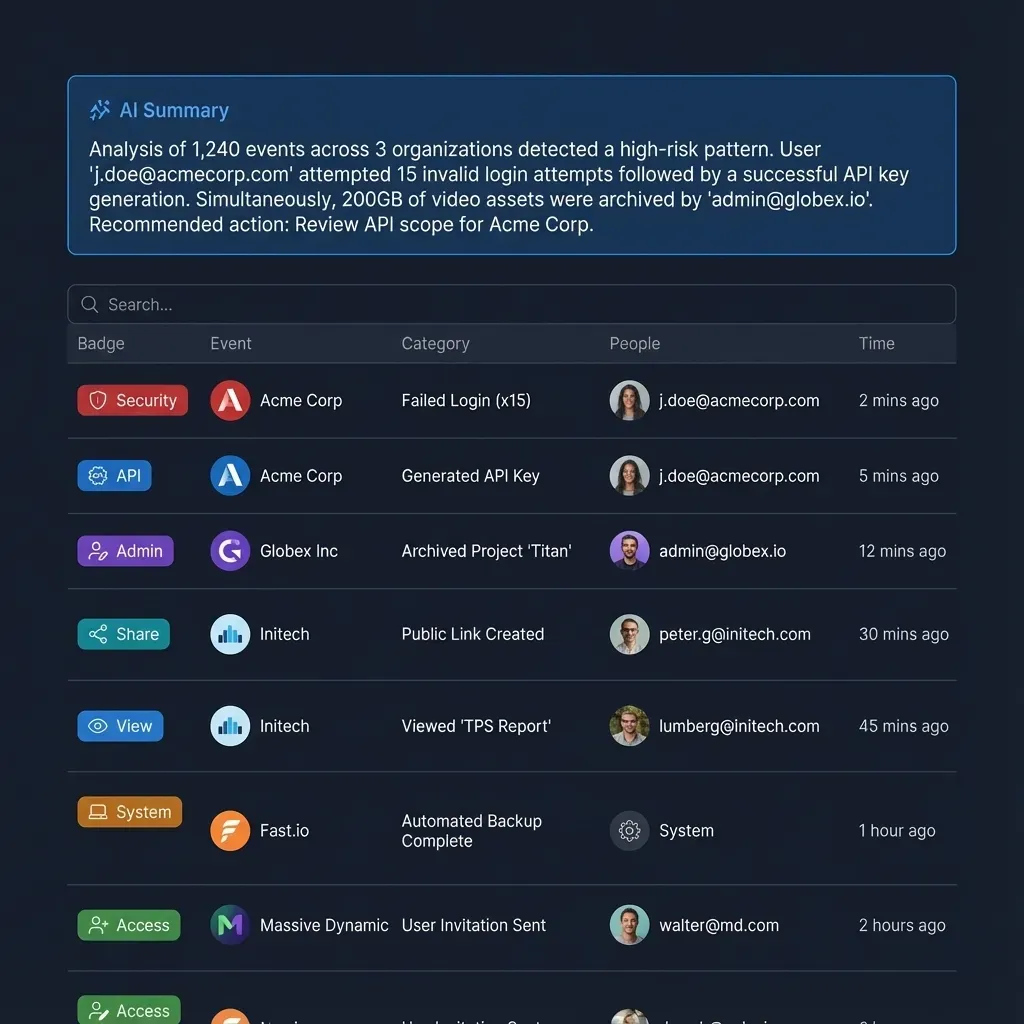
Core Pillars of an Agent Governance Framework
A strong governance strategy rests on three pillars. The first is Identity and Access Management (IAM) for non-human entities. Every agent requires a distinct identity with least-privilege access. You should never share API keys between agents or grant blanket "admin" access to an autonomous script.
The second pillar is Data Lineage. You need a system that records inputs and outputs for every agent action. This is not just for debugging; it is increasingly expected by data protection regulations and emerging AI legislation.
The third pillar is Lifecycle Management. Agents create temporary files, logs, and intermediate states. Your storage system must automatically enforce retention policies to clean up this exhaust data while preserving critical records.


Give Your AI Agents Persistent Storage
Get full visibility, audit trails, and granular permissions for your agent workforce. Start with generous storage.
How to Track Data Lineage in Agent Systems
Tracking lineage starts with a centralized storage layer. If agents store data on local container filesystems or ephemeral drives, you lose visibility. Use a unified workspace that supports metadata indexing.
Configure your agents to write to specific, versioned paths. For example, force agents to save outputs to /outputs/{run_id}/ rather than a generic root folder. This structure allows you to correlate files with specific execution logs.
Fastio supports this naturally through its event-driven architecture. When an agent writes a file via the MCP server or API, the system logs the event, indexes the content, and tags it with the creator's identity. This creates an automatic activity record without extra code. Learn more about Fastio's AI agent capabilities and how they fit into existing workflows.
Solving the 'Black Box' Problem with Audit Logs
The "black box" problem refers to the difficulty of understanding AI decisions. Audit logs provide the necessary transparency. Most enterprises cite data governance as a top concern when deploying AI agents, largely due to this lack of visibility.
Your audit logs must capture more than just file modifications. They should record the prompt or context that triggered the action. While standard filesystem logs show that a file changed, agent-aware logs show why.
Review these logs weekly during the initial deployment phase. Look for patterns of excessive access or unexpected data generation. An agent reading thousands of files in an hour might be hallucinating or stuck in a loop.
Best Practices for Secure Agent Storage
Security begins with storage. Do not let agents store sensitive outputs in public buckets or unencrypted volumes. Use a platform that encrypts data at rest and in transit, with granular file permissions to control exactly what each agent can access.
Implement file locking for multi-agent systems. When Agent A is updating a dataset, Agent B should be blocked from reading it until the write is complete. This prevents race conditions and data corruption.
Finally, establish an ownership protocol. If an agent is decommissioned, its data must be transferred to a human custodian or an archive service immediately. Unowned data becomes a liability that grows silently over time. Fastio simplifies this with built-in ownership transfer tools, ensuring no data is ever orphaned or lost.
Frequently Asked Questions
How do you govern AI agent data access?
Govern access by assigning unique identities to each agent and enforcing least-privilege permissions. Use a storage platform that supports granular Role-Based Access Control (RBAC) so agents can only read the specific datasets they need for their tasks.
What is data governance for AI?
Data governance for AI involves the policies and controls that manage data availability, usability, integrity, and security in AI systems. It ensures that data used by or created by agents remains accurate, secure, and compliant with regulations.
How do you track data lineage in AI agent systems?
Track lineage by forcing all agents to read and write through a centralized, observable storage layer. Use systems that automatically log file events and maintain version histories to show exactly how data transforms from input to final output.
What policies should AI agents follow for data handling?
Agents should follow policies for data minimization, encryption standards, and retention schedules. They must be programmed to respect 'do not train' flags on sensitive documents and to clean up temporary files after task completion.
Can AI agents handle personal data responsibly?
Yes, but they require strict oversight. You must ensure agents do not process PII without consent and that all agent-generated data can be located and deleted upon a user's request, fulfilling data protection requirements like the right to be forgotten.
What is the risk of ungoverned AI agents?
Ungoverned agents can cause data leaks, compliance violations, and massive storage costs due to duplicate data generation. They may also hallucinate and corrupt valid datasets, leading to poor decision-making downstream.
Related Resources

Give Your AI Agents Persistent Storage
Get full visibility, audit trails, and granular permissions for your agent workforce. Start with generous storage.