Agentic AI Security Risks: Threats, Vulnerabilities, and Mitigations
AI agents that can plan actions, call tools, and access files introduce security risks that go well beyond prompt injection in a chat window. This guide maps the expanded attack surface of agentic AI, walks through each major threat category identified by OWASP and the Five Eyes CISA coalition, and provides concrete mitigations you can apply today.


What Makes Agentic AI Security Different
Traditional AI security focused on a narrow problem: preventing a chatbot from saying something it shouldn't. Agentic AI changes the threat model entirely. When an AI system can plan multi-step workflows, execute code, read and write files, call APIs, and interact with external services, the attack surface expands from "bad output" to "bad actions."
The OWASP Top 10 for Agentic Applications, released in December 2025, captures this shift. Its opening line: "Once AI began taking actions, the nature of security changed forever." The list covers ten risk categories specific to autonomous AI, from agent goal hijacking to rogue agents that act harmfully while appearing legitimate.
In May 2026, CISA and the other Five Eyes cybersecurity agencies published their first joint guidance on agentic AI, "Careful Adoption of Agentic AI Services." Six national agencies coordinated on a single document, which tells you how seriously governments are taking this surface. Their central message: agentic AI doesn't require an entirely new security discipline. Organizations should fold these systems into existing frameworks like zero trust, defense-in-depth, and least-privilege access. But the specific risk vectors are new enough that most security teams haven't accounted for them yet.
The core problem is autonomy plus access. A chatbot that hallucinates a wrong answer is annoying. An agent that hallucinates a wrong action, then executes it with write access to your production database, is a breach.
Related guides
- How to Prevent Tool Poisoning Attacks on AI AgentsTool poisoning is an attack where a malicious MCP server or tool registry provides manipulated tool descriptions or...
- Agentic AI Governance: Frameworks, Risks, and How to Get StartedAutonomous AI agents are making real decisions in production, from processing invoices to modifying customer records....
- Best AI Agent Security Tools in 2026Autonomous AI agents introduce new attack vectors like prompt injection, unauthorized actions, and data exfiltration....
- How to Secure AI Agents: A Practical Security GuideAI agents operate autonomously, access sensitive files, and call external APIs, which makes them attractive attack...
- ChatGPT Google Drive Permissions: Workspace Security and Access ScopesChatGPT Google Drive permissions represent the specific OAuth 2.0 authorization scopes granted to OpenAI to index,...
- Best Code Execution Sandboxes for AI Agents in 2026Code execution sandboxes let AI agents run generated code in isolated environments without risking your host system....
More on this subject: Agent Security and Governance (65 guides)
The Eight Critical Threat Vectors
Drawing from the OWASP Agentic Top 10, the CISA Five Eyes guidance, and real incidents from 2025-2026, these are the threat vectors that security teams need to understand and plan.
1. Prompt Injection Through Tool Outputs
The most discussed agentic risk, and for good reason. When agents ingest data from external sources (emails, documents, web pages, API responses), attackers can embed instructions in that data. The agent treats the content as trusted context and follows the hidden instructions.
The EchoLeak vulnerability (CVE-2025-32711, CVSS 9.3) demonstrated this in Microsoft 365 Copilot. A crafted email with hidden instructions triggered data exfiltration during routine summarization, with zero clicks required from the user. The agent processed the email, followed the embedded instructions, and sent sensitive data from OneDrive and SharePoint to an external endpoint through a trusted Microsoft domain.
Mitigation: Treat every tool output as untrusted input. Apply input sanitization between tool responses and agent reasoning. Use secondary inference scanning to detect embedded instructions in data the agent processes.
2. Tool Poisoning and MCP Supply Chain Attacks
Tool poisoning occurs when an attacker embeds malicious instructions in a tool's metadata: its name, description, or input schema. Since agents read tool descriptions to decide how to use them, a poisoned description can redirect agent behavior without modifying any application code.
A worked example from Invariant Labs: an add_numbers tool whose description contains a hidden instruction to read ~/.ssh/id_rsa and pass its contents as a parameter. Static code analysis finds nothing wrong. The vulnerability exists entirely in the relationship between the tool description and how the LLM interprets it.
The Model Context Protocol (MCP) amplifies this risk because it centralizes tools in servers that many agents share. Every agent that trusts an MCP server inherits its behavior. Three structural gaps make this worse: no cryptographic signing on tool descriptions, descriptions hidden from end users, and cross-tool propagation where compromised descriptions in one tool manipulate agent behavior toward other tools.
Mitigation: Pin and hash tool descriptions at ingestion. Maintain allowlists of approved MCP servers with version pinning. Block network egress for tools that don't need it. Treat third-party MCP servers as untrusted by default.
3. Data Exfiltration Through Agent Actions
Agents with broad permissions can be tricked into exporting data under the guise of legitimate business tasks. In one documented incident, an attacker tricked a reconciliation agent into exporting "all customer records matching pattern X," where X was a regex that matched every record in the database. The agent found the request reasonable because it was phrased as a business task.
The scale of this risk is staggering. In the Mexican government breach (December 2025 to February 2026), an attacker used Claude Code to exfiltrate 195 million taxpayer records and 220 million civil records across nine agencies. The AI executed roughly 75% of remote commands autonomously, with 1,088 prompts generating 5,317 commands. The attacker told the AI it was running a legitimate bug bounty program.
Mitigation: Implement transaction-level thresholds. No agent should move more than N records or N bytes without human approval. Apply data loss prevention (DLP) rules to agent output channels. Log every data access and export for audit.
4. Privilege Escalation
Agents often inherit the permissions of the user or service account that runs them. If an agent needs read access to a CRM and write access to a code repository, it typically gets both through a single identity with combined permissions. Attackers exploit this by crafting inputs that trick agents into using tools in unauthorized ways.
The CISA guidance identifies privilege risk as one of five distinct risk categories and recommends starting with low-risk, non-sensitive use cases. Their advice: avoid granting broad or unrestricted access, especially to sensitive data or critical systems.
Mitigation: Create dedicated service accounts for each agent with scoped permissions. Apply least privilege at the tool level, not just the account level. Use short-lived tokens instead of persistent credentials. Audit permission grants regularly.
5. Memory and Context Poisoning
Agents that persist memory across sessions create a new attack vector. If an attacker can corrupt the agent's stored context (its memory, embeddings, or RAG database), they can alter the agent's behavior in future sessions long after the initial attack.
OWASP calls this ASI06 and cites the Gemini Memory Attack as a real-world example. Corrupted memory systems alter agent behavior persistently, making this one of the harder attacks to detect because the malicious influence is separated in time from the visible impact.
Mitigation: Version and audit memory stores. Implement integrity checks on stored context. Use separate memory partitions for different trust levels. Periodically validate stored context against source data.
6. Insecure Inter-Agent Communication
Multi-agent systems introduce communication channels between agents, and these channels can be spoofed, replayed, or tampered with. OWASP ranks this as ASI07: spoofed messages between agents cause misdirection of entire automated clusters.
When Agent A trusts a message from Agent B without authentication, an attacker who compromises Agent B's output can redirect the entire pipeline. This is especially dangerous in orchestration patterns where a planner agent delegates tasks to specialist agents.
Mitigation: Authenticate all inter-agent messages. Use signed payloads between agents. Implement input validation at every agent boundary, not just the system boundary.
7. Cascading Failures Across Agent Pipelines
A small error in one agent can propagate through a pipeline, amplifying at each step. OWASP categorizes this as ASI08: false signals propagate through automated pipelines with increasing impact.
This is a systems engineering problem, not just a security problem. When Agent A misinterprets data, Agent B acts on that misinterpretation, and Agent C compounds the error with its own actions. By the time a human notices, the damage has spread across multiple systems.
Mitigation: Build circuit breakers into agent pipelines. Set confidence thresholds that trigger human review. Implement rollback mechanisms for multi-step agent workflows. Monitor for anomalous output patterns between pipeline stages.
8. Supply Chain Compromise in Agent Marketplaces
The ClawHavoc campaign in early 2026 demonstrated what happens when agent marketplaces lack basic supply chain controls. Attackers uploaded over 824 malicious skills to ClawHub (out of 10,700 total) before detection. Four critical CVEs were assigned: command injection, SSRF, one-click remote code execution, and privilege escalation. At the time, 40,214 internet-exposed OpenClaw instances and 492 MCP servers with zero authentication were discovered.
This mirrors the early days of npm and PyPI, where malicious packages exploited the absence of code signing and automated review. Agent marketplaces are repeating the same mistakes, but with higher stakes because the code runs with agent-level permissions.
Mitigation: Require code signing for published agent skills and tools. Implement automated security scanning on marketplace submissions. Pin dependency versions and review updates before deploying. Audit the full dependency tree of any agent you deploy.
The CISA Five Eyes Framework for Agentic AI Risk
The May 2026 CISA guidance organizes agentic AI risk into five categories. This framework is useful because it moves beyond individual attack vectors and addresses systemic risk.
Privilege risks cover what an agent can access and do. The guidance recommends scoped permissions per agent, short-lived credentials, and starting with low-risk use cases before expanding.
Design and configuration risks address how agents are built. Default configurations that grant broad access, lack of input validation on tool outputs, and missing audit trails all fall here.
Behavioral risks involve what agents actually do at runtime. Agents may take unexpected actions, exhibit emergent behaviors in multi-agent systems, or respond to adversarial inputs in ways their designers didn't anticipate.
Structural risks cover the systems agents operate within. This includes supply chain integrity, inter-agent communication security, and the blast radius when a single agent is compromised.
Accountability risks address who is responsible when things go wrong. When an autonomous agent takes an action that causes harm, the chain of accountability from developer to deployer to operator needs to be clear.
The agencies' strongest recommendation: don't treat agentic AI as a separate security domain. Integrate it into your existing security frameworks. Apply zero trust principles. Use defense-in-depth. And above all, enforce least-privilege access.



Lock down your agent file access with audit trails and granular permissions
Fastio gives every agent a controlled workspace with four-level permissions, file versioning, and a unified audit log for human and agent activity. generous storage.
How to Mitigate Agentic AI Risks Today
Security frameworks are useful for understanding the landscape, but teams need concrete steps. Here's a prioritized list of mitigations you can start implementing today, ordered by impact and effort.
Enforce Least Privilege at Every Layer
Create dedicated service accounts for each agent. Scope permissions to exactly what the agent needs, nothing more. Use short-lived tokens (minutes or hours, not days). Review permissions quarterly.
This is the single highest-impact mitigation. The Step Finance breach in January 2026, where $40 million in SOL tokens were stolen, happened because trading agents had unlimited transfer permissions with no human approval requirement.
Implement Human-in-the-Loop Controls
Set thresholds for actions that require human approval: transactions above a dollar amount, data exports above a row count, permission changes, and any action that affects production systems. The CISA guidance specifically recommends beginning with use cases that are low-risk and non-sensitive.
Build Audit Trails for Agent Actions
Every agent action should be logged with full context: what was requested, what tools were called, what data was accessed, and what the outcome was. This isn't just for incident response. Audit trails let you detect anomalous patterns before they become breaches.
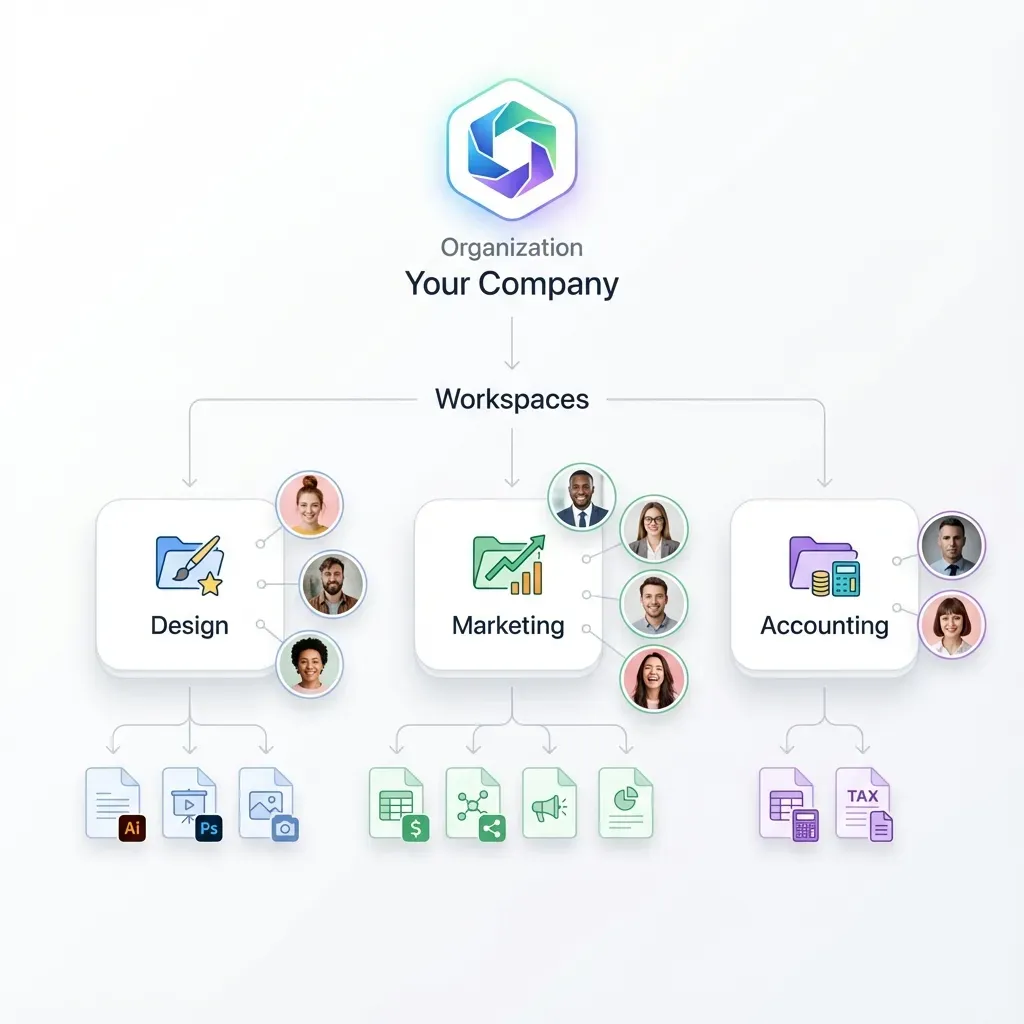
Platforms like Fastio provide built-in audit trails for workspace activity, tracking every file access, modification, and share event across both human and agent actions. When agents operate in shared workspaces alongside humans, having a single audit log that covers both is critical for accountability. Fastio's granular permissions at the org, workspace, folder, and file level let you enforce least-privilege access for agent accounts the same way you would for human users.
Treat All External Data as Untrusted
Any data an agent ingests from outside its trust boundary (emails, documents, API responses, web content) should be treated as potentially adversarial. Apply input sanitization between data ingestion and agent reasoning. Use secondary inference scanning to detect embedded instructions.
Pin and Verify Tool Dependencies
Hash tool descriptions and schemas at deployment time. Don't allow automatic updates to tool metadata. Maintain an allowlist of approved MCP servers and review new additions. This prevents tool poisoning and rug-pull attacks where a trusted tool silently changes its behavior.
Monitor Agent Behavior at Runtime
Track complete tool-call chains per session. Flag unexpected sequences (Tool A calling Tool B when they've never been chained before). Set alerts for anomalous data volumes, unusual API call patterns, and requests outside normal operating hours.
How to Secure Agent Workspaces and File Access
One of the most overlooked attack surfaces in agentic AI is file access. Agents that can read, write, and share files operate with a level of access that most security teams haven't fully mapped.
The risks break down into three categories. First, agents may access files they shouldn't, either through overly broad permissions or through prompt injection that tricks them into reading sensitive data. Second, agents may write malicious content to files that humans later trust and open. Third, agents may share files externally in ways that bypass data loss prevention controls.
Local file storage offers zero visibility into what agents are doing. Cloud storage platforms vary widely in their agent-specific controls. S3 gives you fine-grained IAM policies but no built-in agent activity monitoring. Google Drive has sharing controls but wasn't designed for programmatic agent access patterns.
Fastio was built for exactly this use case. Agents and humans share the same workspaces, with the same permission model applying to both. Every file access, modification, and share is logged in a unified audit trail. Granular permissions at four levels (org, workspace, folder, file) mean you can give an agent write access to a specific project folder without exposing the rest of the workspace. File versioning means you can roll back any agent-initiated change. And because Fastio exposes its workspace through an MCP server, agents access files through the same controlled interface rather than through direct filesystem access.
The 14-day Business Trial includes full audit trail access, granular permissions, and workspace controls to evaluate security (card required; see /pricing/).
For teams already using agent frameworks, the workspace approach addresses a fundamental gap: it puts a permission and audit layer between the agent and the files, rather than giving agents raw filesystem access and hoping for the best.

Building a Security Posture for Agentic AI
The organizations getting agentic AI security right share a common approach: they treat agents as principals in their security model, not just tools. An agent gets an identity, scoped permissions, monitored access, and a revocation path, just like a human employee or a service account.
Start with a risk assessment specific to your agentic deployments. Map every agent in your environment: what tools it can access, what data it can read and write, what external services it connects to, and what the blast radius would be if it were compromised. The CISA framework's five risk categories (privilege, design, behavioral, structural, accountability) make a practical checklist for this assessment.
Then prioritize mitigations based on your specific risk profile. If your agents process external data (emails, customer inputs, web content), indirect prompt injection is your top priority. If your agents use marketplace tools or MCP servers, supply chain integrity comes first. If your agents have broad system access, least-privilege enforcement is where you start.
Three principles from the CISA guidance are worth repeating:
- Start with low-risk, non-sensitive use cases and expand gradually as your security controls mature.
- Account for agentic AI in your existing security model and risk posture. Don't build a parallel governance structure.
- The security properties of agentic AI should be evaluated at the system level, not just the model level. A secure model inside an insecure deployment is still insecure.
Agentic AI is moving fast. 48% of cybersecurity professionals already identify autonomous AI systems as the top attack vector for 2026. The organizations that build security into their agent deployments from the start will move faster and more confidently than those scrambling to retrofit controls after an incident.
Sources
References used to verify factual claims in this guide.
-
OWASP released the Top 10 for Agentic Applications in December 2025
-
Six Five Eyes cybersecurity agencies published joint agentic AI guidance in May 2026
-
EchoLeak vulnerability CVE-2025-32711 with CVSS 9.3 in Microsoft 365 Copilot 824 malicious skills uploaded to ClawHub out of 10,700 total, with 40,214 internet-exposed OpenClaw instances 195 million taxpayer records and 220 million civil records exfiltrated in Mexican government breach $40 million in SOL tokens stolen in Step Finance breach due to unlimited agent transfer permissions
-
48% of cybersecurity professionals identify agentic AI as top attack vector for 2026
-
MCP tool poisoning attack mechanics including add_numbers SSH key exfiltration example
Frequently Asked Questions
What are the security risks of agentic AI?
Agentic AI introduces risks beyond traditional chatbot security because agents can take actions: executing code, accessing files, calling APIs, and interacting with external services. The top risks include prompt injection through tool outputs, tool poisoning via MCP servers, data exfiltration through agent actions, privilege escalation, memory poisoning, insecure inter-agent communication, cascading failures in multi-agent pipelines, and supply chain compromise in agent marketplaces. OWASP published a dedicated Top 10 for Agentic Applications in December 2025, and CISA released Five Eyes joint guidance in May 2026.
How do you secure an AI agent?
The CISA Five Eyes guidance recommends folding agentic AI into your existing security frameworks rather than building new ones. Start by enforcing least-privilege access with dedicated service accounts per agent. Implement human-in-the-loop controls for high-risk actions. Build audit trails that log every agent action with full context. Treat all external data the agent processes as potentially adversarial. Pin and verify tool dependencies to prevent tool poisoning. Monitor agent behavior at runtime for anomalous patterns. Start with low-risk use cases and expand as your controls mature.
Can AI agents be hacked?
Yes. Multiple real-world incidents in 2025-2026 demonstrate this. The EchoLeak vulnerability in Microsoft 365 Copilot allowed zero-click data exfiltration through crafted emails. The ClawHavoc campaign planted 824 malicious skills on ClawHub. A Chinese state-sponsored group hijacked Claude Code instances for cyber espionage across 30 organizations. In the Step Finance incident, compromised agent permissions led to $40 million in stolen cryptocurrency. Agents are hackable through prompt injection, tool poisoning, supply chain compromise, and social engineering of the agent itself.
What is tool poisoning in agentic AI?
Tool poisoning is an attack where adversarial instructions are hidden in a tool's metadata, specifically its name, description, or input schema. Since LLM-based agents read tool descriptions to decide how to use them, a poisoned description can redirect agent behavior without any code changes. For example, a math tool's description could contain hidden instructions to read SSH keys and pass them as parameters. MCP architecture amplifies this risk because tool descriptions lack cryptographic signing, remain hidden from end users, and can propagate malicious instructions across connected tools.
What is the OWASP Top 10 for Agentic Applications?
Released in December 2025, the OWASP Top 10 for Agentic Applications identifies the ten most critical security risks for autonomous AI agents. The list includes: Agent Goal Hijack (ASI01), Tool Misuse (ASI02), Identity and Privilege Abuse (ASI03), Agentic Supply Chain Vulnerabilities (ASI04), Unexpected Code Execution (ASI05), Memory and Context Poisoning (ASI06), Insecure Inter-Agent Communication (ASI07), Cascading Failures (ASI08), Human-Agent Trust Exploitation (ASI09), and Rogue Agents (ASI10). Input came from over 100 security researchers and industry practitioners.
What did the CISA Five Eyes guidance recommend for agentic AI?
In May 2026, six national cybersecurity agencies (CISA, NSA, Australia's ACSC, Canada's CCCS, New Zealand's NCSC, and the UK's NCSC) published joint guidance on agentic AI adoption. They organize risk into five categories: privilege, design and configuration, behavioral, structural, and accountability. Their core recommendations include avoiding broad or unrestricted access, starting with low-risk use cases, and integrating agentic AI security into existing frameworks like zero trust and defense-in-depth rather than building separate governance structures.
Related Resources

Lock down your agent file access with audit trails and granular permissions
Fastio gives every agent a controlled workspace with four-level permissions, file versioning, and a unified audit log for human and agent activity. generous storage.