How to Build an AI Agent Credential Vault
An AI agent credential vault is a specialized security system designed to manage, rotate, and inject secrets for autonomous workloads. Unlike human password managers, these vaults must handle programmatic access, automated rotation, and non-human identity verification to prevent data breaches.

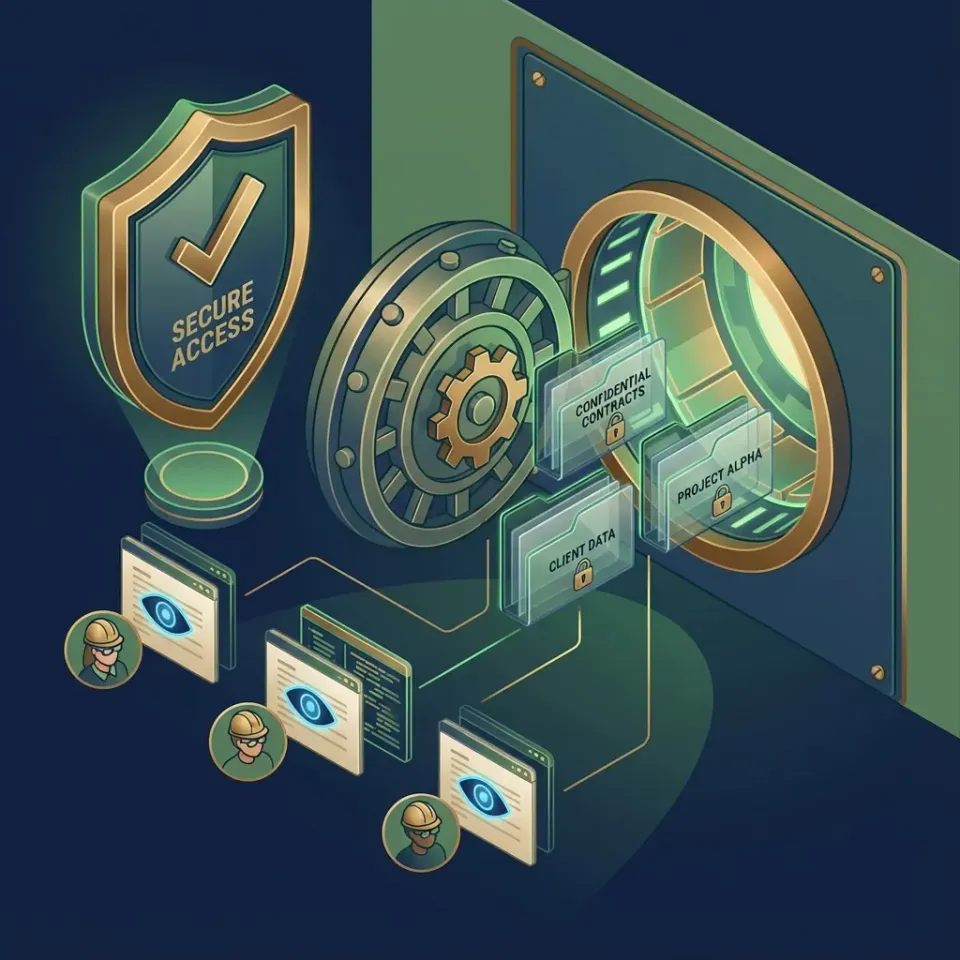
What is an AI Agent Credential Vault?
An AI agent credential vault is a secure, centralized system for storing and rotating API keys, tokens, and secrets that autonomous agents need to access external services. Unlike traditional password managers designed for human copy-paste workflows, agent vaults are built for programmatic retrieval. They ensure that sensitive credentials never exist in plain text within code, logs, or prompt contexts.
These systems bridge the gap between static API keys and dynamic, autonomous workflows. By treating agents as distinct "non-human identities," a credential vault allows organizations to enforce strict access policies, ensuring an agent only accesses the specific resources it needs for the exact duration of a task. This principle aligns with broader AI agent security best practices that treat every agent as an isolated workload with its own trust boundary.
Related guides
- Best Code Execution Sandboxes for AI Agents in 2026Code execution sandboxes let AI agents run generated code in isolated environments without risking your host system....
- Best Secret Management Tools for AI AgentsAI agents need API keys, database credentials, and service tokens to do their work. Hardcoding those secrets into agent...
- How to Manage AI Agent Secrets and API CredentialsAI agent secrets management is about securely storing, rotating, and accessing API keys and tokens that autonomous...
- How to Configure AI Agent Granular PermissionsGranular permissions are the defense layer between an autonomous AI agent and your sensitive data. With identity...
- Dynamic Secrets for AI Agents: How to Implement Runtime Injection and RotationStatic credentials are a major liability for automated systems, especially for agents with broad permissions. This...
- How to Prevent Prompt Injection in AI AgentsPrompt injection is the top security risk for LLM-powered agents, and it gets worse once agents start chaining tools,...
More on this subject: Agent Security and Governance (65 guides)
Why Environment Variables Are No Longer Enough
For years, developers relied on .env files to store secrets. While this works for simple scripts, it fails for autonomous agents. Non-human identities (like AI agents) now vastly outnumber human identities, creating a massive attack surface that static files cannot secure.
Static credentials pose three critical risks:
- Lack of Rotation: An API key in an environment variable often sits unchanged for months. If compromised, attackers have an indefinite window of access.
- Prompt Injection Vulnerability: AI agents processing untrusted input can be tricked into outputting their own configuration context, potentially revealing hardcoded secrets.
- Sprawl: As agents proliferate, keeping track of which agent has which key becomes impossible without a centralized registry. Teams building multi-agent systems face this challenge at even greater scale.
Recent industry data shows that many organizations have experienced security incidents specifically due to vulnerabilities in non-human identities. A vault eliminates these risks by removing the secret from the agent's persistent state entirely.
Core Requirements for Agent Security
To effectively secure autonomous workflows, a credential vault must meet several specific criteria that go beyond standard encryption.
- Automated Rotation: The vault must be able to generate new keys and invalidate old ones without human intervention, reducing the blast radius of a leak.
- Granular Scoping: Access should be limited to specific actions (e.g., "read-only" vs. "admin") rather than granting blanket account access.
- Identity Verification: The system must verify the agent's identity using cryptographic proofs (like mTLS or signed tokens) before releasing a secret.
- Ephemeral Access: Secrets should be "just-in-time" (JIT), existing only for the duration of the specific task or session.
- Comprehensive Audit Trails: Every request for a secret must be logged, detailing which agent requested it, when, and for what purpose. This is especially important for teams running agents in production environments where compliance and incident response depend on knowing exactly what happened and when.
These requirements work together as layers of defense. Rotation limits how long a leaked key is valid. Scoping limits what damage a leaked key can cause. Identity verification prevents unauthorized agents from requesting keys at all. Meeting all of them is what separates a production-grade vault from a glorified config file.
How to Implement Secure Credential Storage
Building a secure environment for your agents involves more than just installing software. Follow this process to establish a reliable credential vault.
Step 1: Inventory and Classify Agents Identify every autonomous agent in your ecosystem. Map out which external services they access (OpenAI, Stripe, GitHub) and classify the sensitivity level of each connection.
Step 2: Establish Non-Human Identities Stop sharing API keys between agents. Create a unique identity for every agent instance. This allows you to revoke access for a single compromised agent without taking down your entire operation.
Step 3: Automate Secret Injection Configure your runtime environment to inject secrets only at execution time. The agent should receive the secret in memory, use it, and clear it. The secret should never be written to disk.
Step 4: Enable Just-in-Time Access Where possible, configure your vault to generate dynamic, short-lived credentials. For example, instead of a static AWS key, the vault requests a temporary session token valid for only a few minutes.


Give Your AI Agents Persistent Storage
Deploy autonomous agents in a secure, managed workspace with built-in audit trails and granular permissions.
Fastio's Approach to Agent Secrets
Fastio provides a secure storage and workspace layer for AI agents with granular permissions and scoped access. By connecting agents via the remote Model Context Protocol (MCP) server or the REST API, Fastio enables secure authentication using scoped, human-granted API keys and PKCE browser login.
Agents access files and tools within strictly defined boundaries rather than holding unmanaged administrative credentials. Fastio's detailed audit logs track every file access and tool execution. You can see exactly when an agent accessed a specific resource, providing the transparency needed for compliance and security reviews.
Industry projections suggest that AI agent misuse will increasingly be involved in enterprise security incidents. Organizations implementing credential vaults have dramatically reduced secret exposure time compared to traditional static storage methods. This dramatic improvement makes vaults an essential component of any serious agent security strategy.
Frequently Asked Questions
How do AI agents store credentials securely?
AI agents should not store credentials themselves. Instead, they should retrieve secrets dynamically from a centralized credential vault at runtime, keeping them in memory only for as long as needed to complete a task.
What is the best way to manage API keys for AI agents?
The best practice is to use a dedicated secret management system that supports automated rotation and dynamic injection. This prevents API keys from being hardcoded in scripts or saved in plain-text configuration files.
How do you rotate secrets for autonomous agents?
Secret rotation should be automated by the credential vault. The vault generates a new key via the provider's API, updates the stored value, and smoothly provides the new key to the agent on its next request, often without restarting the agent.
Can AI agents steal credentials?
Yes, if credentials are exposed in the context window or accessible file systems, a 'prompt injection' attack could trick an agent into revealing them. Using a vault and ensuring secrets are never part of the prompt context mitigates this risk.
Should AI agents have their own credentials?
Yes, every AI agent should have its own unique set of credentials. This isolates risk, allowing you to revoke access for a single compromised agent without affecting others or human users.
Related Resources

Give Your AI Agents Persistent Storage
Deploy autonomous agents in a secure, managed workspace with built-in audit trails and granular permissions.