Best AI Agent Security Tools in 2026
Autonomous AI agents introduce new attack vectors like prompt injection, unauthorized actions, and data exfiltration. As adoption grows, securing these agents is no longer optional. This guide ranks the top 10 AI agent security tools for 2026, helping you choose the right guardrails, firewalls, and secure infrastructure for your autonomous systems.


What Are AI Agent Security Tools?
AI agent security tools protect autonomous systems from threats unique to Large Language Models (LLMs) and agentic workflows. Traditional cybersecurity tools focus on network packets or endpoint malware. These tools are different: they monitor semantic intent, validate agent actions, and enforce guardrails on model outputs.
Key capabilities include:
- Prompt Injection Detection: Preventing attackers from overriding system instructions.
- Action Gating: Blocking agents from executing dangerous commands (e.g.,
DELETE * FROM users). - Data Loss Prevention (DLP): Ensuring agents don't leak PII or secrets in their responses.
- Audit Logging: Recording every thought, action, and file access for forensic analysis. Security is not just about checking boxes on a features list. It requires encryption at rest and in transit, granular access controls, and comprehensive audit logging. Look for platforms that build security into the architecture rather than bolting it on as an afterthought.
Helpful references: Fastio Workspaces, Fastio Collaboration, and Fastio AI.

Related guides
- Best Secret Management Tools for AI AgentsAI agents need API keys, database credentials, and service tokens to do their work. Hardcoding those secrets into agent...
- Best Guardrails Tools for AI Agents in 2026AI guardrails are validation layers that sit between the LLM and the application to prevent hallucinations, block...
- Agentic AI Security Risks: Threats, Vulnerabilities, and MitigationsAI agents that can plan actions, call tools, and access files introduce security risks that go well beyond prompt...
- How to Secure AI Agents: A Practical Security GuideAI agents operate autonomously, access sensitive files, and call external APIs, which makes them attractive attack...
- How to Manage AI Agent Secrets and API CredentialsAI agent secrets management is about securely storing, rotating, and accessing API keys and tokens that autonomous...
- How to Configure AI Agent Granular PermissionsGranular permissions are the defense layer between an autonomous AI agent and your sensitive data. With identity...
More on this subject: Agent Security and Governance (62 guides)
Top 3 Security Risks for Autonomous Agents
Before evaluating tools, you need to understand the threat landscape. The OWASP Top 10 for LLM Applications outlines risks that go well beyond simple text generation. 1. Prompt Injection & Jailbreaking: Attackers use crafted inputs to bypass safety filters, forcing the agent to ignore its instructions. For an autonomous agent, this could mean tricking it into transferring funds or deleting files. 2. Excessive Agency: Agents often have broad permissions to complete tasks. Without granular access controls, a compromised agent could perform actions far beyond its intended scope, such as modifying critical infrastructure. 3. Insecure Direct Object References (IDOR): Agents interacting with files or databases may inadvertently access or retrieve sensitive documents they shouldn't see if the underlying storage doesn't enforce strict ownership and permissions.


Give Your AI Agents Persistent Storage
Give your AI agents a secure, auditable file system. Fastio provides the infrastructure for safe autonomous workflows with generous storage.
1. Fastio
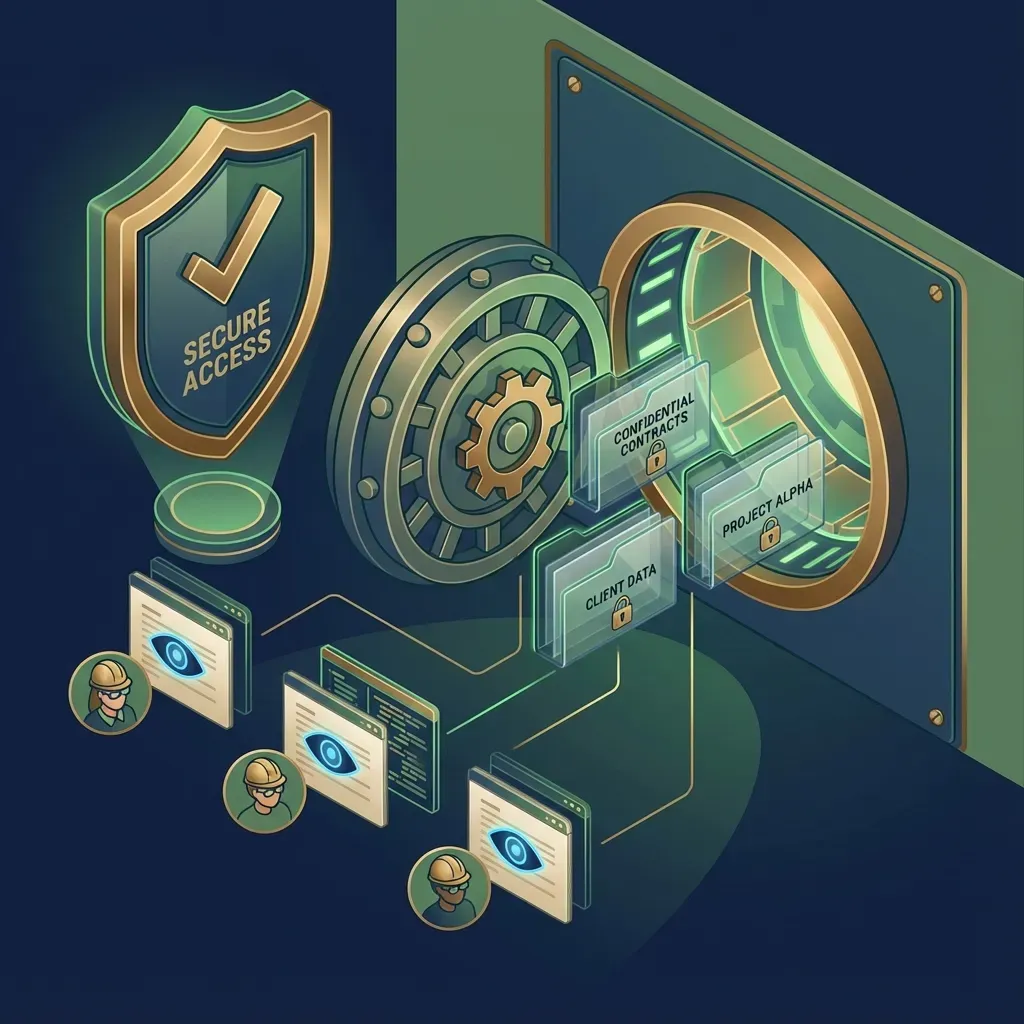
Best For: Secure, auditable file storage and memory for agents. While many tools focus on filtering text, Fastio secures the environment where agents operate. It provides a cloud-native filesystem built for AI agents. When an agent reads, writes, or shares files, every action is authenticated, authorized, and logged.
Key Security Features:
- Granular Permissions: Agents operate with scoped access (Organization, Workspace, or File-level), adhering to the principle of least privilege.
- Detailed Activity Logs: Every file access, download, and modification by an agent is recorded in the activity log, retained according to your plan.
- MCP-Native Governance: The Fastio MCP server authenticates with OAuth or API keys that can be scoped to specific organizations, workspaces or shares, so an agent reaches only what it was granted.
- File Locks: Advisory file locks let agents see who is writing a file and wait their turn, and version history keeps every version.
Verdict: Fastio provides the base infrastructure for secure agent memory. Even if an agent gets tricked by prompt injection, its ability to damage or leak files is contained by the storage permissions underneath.
2. Lakera Guard
Best For: Real-time prompt injection defense. Lakera Guard is a leading AI firewall that sits between your users and your LLM. It analyzes incoming prompts in real-time to detect and block injection attacks, jailbreak attempts, and malicious inputs before they reach the model.
Key Features:
- Pre-configured Database: Draws from a massive database of known jailbreaks (e.g., DAN, Grandma exploits).
- Low Latency: designed to filter traffic with minimal impact on response times.
- Dashboard Analytics: visualizes attack attempts and threat patterns. Consider how this fits into your broader workflow and what matters most for your team. The right choice depends on your specific requirements: file types, team size, security needs, and how you collaborate with external partners. Testing with a free account is the fast way to know if a tool works for you.
3. PromptArmor
Best For: Preventing data exfiltration and shadow AI. PromptArmor specializes in detecting when sensitive data (PII, API keys, proprietary code) is about to be sent to an LLM or leaked in a response. It focuses heavily on the data privacy aspect of agent interactions.
Key Features:
- PII Redaction: Automatically detects and redacts sensitive info before it leaves your environment.
- Response Filtering: Scans model outputs to ensure no secrets are leaked.
- Shadow AI Detection: Identifies unauthorized AI usage within the organization. Consider how this fits into your broader workflow and what matters most for your team. The right choice depends on your specific requirements: file types, team size, security needs, and how you collaborate with external partners. Testing with a free account is the fast way to know if a tool works for you.
4. Amazon Bedrock Guardrails
Best For: Policy enforcement for AWS-hosted agents. For teams building on AWS, Bedrock Guardrails provides a native way to enforce responsible AI policies. It allows you to define denied topics and content filters that apply across multiple foundation models.
Key Features:
- Topic Blocking: preventing agents from discussing competitive or restricted subjects.
- Content Filtering: Filters hate speech, violence, and insults.
- PII Redaction: Native integration with AWS data protection services. Consider how this fits into your broader workflow and what matters most for your team. The right choice depends on your specific requirements: file types, team size, security needs, and how you collaborate with external partners. Testing with a free account is the fast way to know if a tool works for you.
5. Azure AI Content Safety
Best For: Enterprise-grade content moderation. Microsoft's offering focuses on detecting harmful content in both user inputs and model outputs. It is deeply integrated into the Azure OpenAI ecosystem but can be used via API for other models.
Key Features:
- Multimodal Support: Detects issues in both text and images.
- Severity Scoring: Assigns risk scores to content categories (Hate, Self-harm, Violence).
- Blocklists: Custom blocklists for specific terms or phrases. Consider how this fits into your broader workflow and what matters most for your team. The right choice depends on your specific requirements: file types, team size, security needs, and how you collaborate with external partners. Testing with a free account is the fast way to know if a tool works for you.
6. NVIDIA NeMo Guardrails
Best For: Open-source, programmable guardrails. NeMo Guardrails is an open-source toolkit that allows developers to add programmable guardrails to LLM-based conversational systems. It is highly flexible and uses "Colang" to define safe interaction flows.
Key Features:
- Topical Control: Ensuring the agent stays on topic.
- Fact-Checking: Can be configured to verify claims against a knowledge base.
- Open Source: Free to use and modify, making it great for custom deployments. Consider how this fits into your broader workflow and what matters most for your team. The right choice depends on your specific requirements: file types, team size, security needs, and how you collaborate with external partners. Testing with a free account is the fast way to know if a tool works for you.
7. HiddenLayer
Best For: ML model security and scanning. HiddenLayer focuses on the security of the model itself. It scans models for malware (e.g., pickle exploits in Python) and detects adversarial attacks that try to invert or steal the model.
Key Features:
- Model Scanning: Checks model files for embedded malicious code.
- Adversarial Defense: Detects input perturbations designed to fool classifiers.
- MDR for AI: Managed detection and response specifically for AI systems. Consider how this fits into your broader workflow and what matters most for your team. The right choice depends on your specific requirements: file types, team size, security needs, and how you collaborate with external partners. Testing with a free account is the fast way to know if a tool works for you.
8. TrojAI
Best For: AI red teaming and adversarial testing. TrojAI provides a platform for testing and hardening AI models before they are deployed. It simulates attacks to find weaknesses in your agent's defenses.
Key Features:
- Automated Red Teaming: Generates thousands of attack vectors to test robustness.
- Bias Detection: Identifies fairness issues in model responses.
- Risk Scoring: Quantifies the security posture of an agent. Consider how this fits into your broader workflow and what matters most for your team. The right choice depends on your specific requirements: file types, team size, security needs, and how you collaborate with external partners. Testing with a free account is the fast way to know if a tool works for you.
9. Arthur Shield
Best For: LLM firewall and observability. Arthur Shield is an operational firewall for LLMs that helps organizations deploy agents confidently. It validates inputs and outputs to prevent toxic content and sensitive data leaks.
Key Features:
- Rate Limiting: Prevents denial-of-wallet attacks.
- Toxic Content Filter: Blocks harmful language.
- Data Leakage Prevention: Monitors for proprietary information. Consider how this fits into your broader workflow and what matters most for your team. The right choice depends on your specific requirements: file types, team size, security needs, and how you collaborate with external partners. Testing with a free account is the fast way to know if a tool works for you.
10. WhyLabs LangKit
Best For: LLM observability and telemetry. WhyLabs focuses on visibility. LangKit is an open-source library that extracts signals from LLM interactions (like sentiment, toxicity, and relevance) to monitor agent health and security in production.
Key Features:
- Metric Extraction: Convert text logs into trackable metrics.
- Drift Detection: Alert when agent behavior changes over time.
- Privacy Monitoring: Track the volume of PII being processed. Consider how this fits into your broader workflow and what matters most for your team. The right choice depends on your specific requirements: file types, team size, security needs, and how you collaborate with external partners. Testing with a free account is the fast way to know if a tool works for you.
How to Choose the Right Tool
Selecting the best security tool depends on your specific agent architecture and deployment model.
The Future of AI Agent Security
As we move through 2026, the definition of "agent security" is expanding. It is no longer just about preventing prompt injection; it is about identity, provenance, and autonomous remediation.
- Agent Identity (non-human IAM): We expect to see the rise of standardized "Agent IDs", cryptographically verifiable identities for agents that allow them to sign their actions and prove their origin across different platforms.
- Autonomous Remediation: Security tools will evolve from passive monitoring to active intervention. If an agent detects it is being manipulated, it will autonomously rollback its state, alert human admins, and patch its own system prompt instructions.
- Regulatory Frameworks: With the EU AI Act fully enforceable and new US regulations emerging, security tools will increasingly focus on automated compliance reporting, generating proof that an agent has not drifted from its safety alignment.
Sources
References used to verify factual claims in this guide.
-
According to Gartner, over 50% of enterprises will use specialized AI security platforms by 2028.
-
The top 10 AI agent security tools ranked by adoption and effectiveness in 2026. OWASP Top 10 for LLM Applications outlines risks that go well beyond simple text generation. Top 3 security risks for autonomous agents.
-
6. NVIDIA NeMo Guardrails is an open-source toolkit for adding programmable guardrails.
-
8. TrojAI provides a platform for testing and hardening AI models before deployment.
-
9. Arthur Shield is an operational firewall for LLMs.
-
10. WhyLabs LangKit is an open-source library for LLM observability.
Frequently Asked Questions
How do you secure AI agents?
Securing AI agents requires a multi-layered approach: input filtering (to stop prompt injection), output validation (to prevent data leaks), and secure infrastructure (like Fastio for file storage) that enforces strict access controls and audit logging.
What is the biggest security risk with AI agents?
Prompt injection is currently considered the top risk. This occurs when an attacker manipulates the agent's input to override its programming, potentially causing it to execute unauthorized actions or reveal sensitive data.
What is a guardrail in AI security?
A guardrail is a control mechanism that sits between the user and the AI agent. It validates inputs and outputs against a set of safety policies, blocking any interaction that violates rules regarding toxicity, topic, or data privacy.
Why do agents need special file storage?
Agents often process massive amounts of data. Standard cloud storage lacks the granular, programmatic permissions needed for autonomous actors. Specialized storage like Fastio allows you to grant agents specific, auditable access to only the files they need, preventing mass data exfiltration.
Related Resources

Give Your AI Agents Persistent Storage
Give your AI agents a secure, auditable file system. Fastio provides the infrastructure for safe autonomous workflows with generous storage.