Agentic AI Governance: Frameworks, Risks, and How to Get Started
Autonomous AI agents are making real decisions in production, from processing invoices to modifying customer records. Governing these systems requires more than policy documents. This guide covers the regulatory landscape driving governance requirements in 2026, practical frameworks for scoping agent permissions, and the technical controls you need to keep autonomous systems accountable.


What Agentic AI Governance Actually Means
Agentic AI governance is the set of policies, technical controls, and organizational practices that ensure autonomous AI agents operate within defined boundaries. That includes permission management, audit logging, human oversight triggers, and output accountability.
This matters because agents are different from traditional AI. A chatbot answers questions. An agent takes action: it reads files, calls APIs, modifies databases, and triggers downstream workflows. When an agent processes an invoice, it might pull data from three systems, validate amounts, flag discrepancies, and route approvals. Each of those steps is a decision point where things can go wrong.
The governance challenge is straightforward: how do you let agents do useful work while preventing them from doing damage? Too much restriction and agents become useless. Too little and you're one hallucination away from a compliance incident.
Traditional AI governance, built around model training bias and fairness audits, doesn't cover this. Agentic governance needs to address runtime behavior: what the agent can access, what actions it can take, what triggers human review, and how you reconstruct what happened after the fact.
Labs including Meta, Microsoft and Safe Superintelligence say they are working toward superintelligence, but no such system exists today, and the question of which agent can see which files applies to the agents teams run now.
Related guides
- How to Implement AI Agent Data GovernanceAI agent data governance controls how autonomous agents access, create, and store data. Without it, organizations risk...
- How to Implement an AI Agent Audit Trail for ComplianceAn AI agent audit trail provides the accountability required by modern regulations. Learn how to track autonomous...
- Agentic AI Security Risks: Threats, Vulnerabilities, and MitigationsAI agents that can plan actions, call tools, and access files introduce security risks that go well beyond prompt...
- Best Code Execution Sandboxes for AI Agents in 2026Code execution sandboxes let AI agents run generated code in isolated environments without risking your host system....
- Best Secret Management Tools for AI AgentsAI agents need API keys, database credentials, and service tokens to do their work. Hardcoding those secrets into agent...
- How to Manage AI Agent Secrets and API CredentialsAI agent secrets management is about securely storing, rotating, and accessing API keys and tokens that autonomous...
More on this subject: Agent Security and Governance (65 guides)
The Regulatory Landscape Pushing Governance Forward
Three regulatory developments are making agentic AI governance urgent in 2026.
EU AI Act (August 2026 enforcement)
Starting August 2, 2026, any AI agent classified as high-risk must meet specific requirements: detailed technical documentation, human oversight mechanisms, and control systems that can stop, correct, or override agent operations. Article 12 requires automated logging with at least six months of retention for high-risk systems. Article 50 imposes transparency obligations on agents that interact with people or generate content.
The scope is broad. Any business operating in the EU or serving EU nationals must comply. If your agent modifies customer data, makes financial decisions, or interacts with end users, you likely fall under these requirements.
NIST AI Agent Standards Initiative (February 2026)
NIST launched its AI Agent Standards Initiative through the Center for AI Standards and Innovation (CAISI) in February 2026. The initiative focuses on agent identity and authentication, requiring enterprise-grade identities rather than shared API keys. NIST is developing authorization frameworks built around least privilege, just-in-time access, and action-level approvals for high-impact decisions.
The SP 800-53 control overlays for single-agent and multi-agent systems remain in development as of spring 2026, but the direction is clear: monitoring must span functionality, operations, security, compliance, and human factors.
Singapore Model AI Governance Framework (January 2026)
Singapore's IMDA launched the first global governance framework specifically for agentic AI at the World Economic Forum in January 2026. While not legally binding, it identifies eight risk factors specific to agents: domain tolerance for error, access to sensitive data, external system exposure, read vs. write permissions, reversibility of actions, level of autonomy, task complexity, and external threat exposure.
The framework requires organizations to bound risks by design, limiting what agents can do through controlled tool access, permissions, and operational environments.
A Five-Step Governance Framework
Based on the converging guidance from regulators and practitioners, here's a practical framework for governing agentic AI systems.
1. Define agent boundaries and risk tiers
Start by cataloging what each agent can do. Map every tool, API, and data source an agent can access. Then classify agents into risk tiers based on the potential impact of their actions.
A read-only analytics agent that summarizes reports is low risk. An agent that modifies customer records, sends emails, or makes financial commitments is high risk. Higher tiers demand stricter permissions, mandatory approval gates, and more detailed logging.
Singapore's framework suggests evaluating agents against eight factors: domain tolerance for error, data sensitivity, external system exposure, read vs. write permissions, action reversibility, autonomy level, task complexity, and threat exposure. Scoring agents against these dimensions gives you a defensible basis for your risk classification.
2. Implement comprehensive audit trails
Every agent action needs a log entry that captures who acted (agent identity), what triggered it (user prompt, webhook, schedule), what the agent decided (reasoning trace), what it did (the actual API call or file operation), and what happened (success, failure, side effects).
The most common gap is between reasoning and action. An agent might log its chain-of-thought but skip the actual API call it made, making it impossible to verify that the action matched the intent. Close that gap.
For EU AI Act compliance, high-risk system logs need at least six months of retention. The logs must be immutable, meaning no retroactive modification.
3. Set permission controls with least privilege
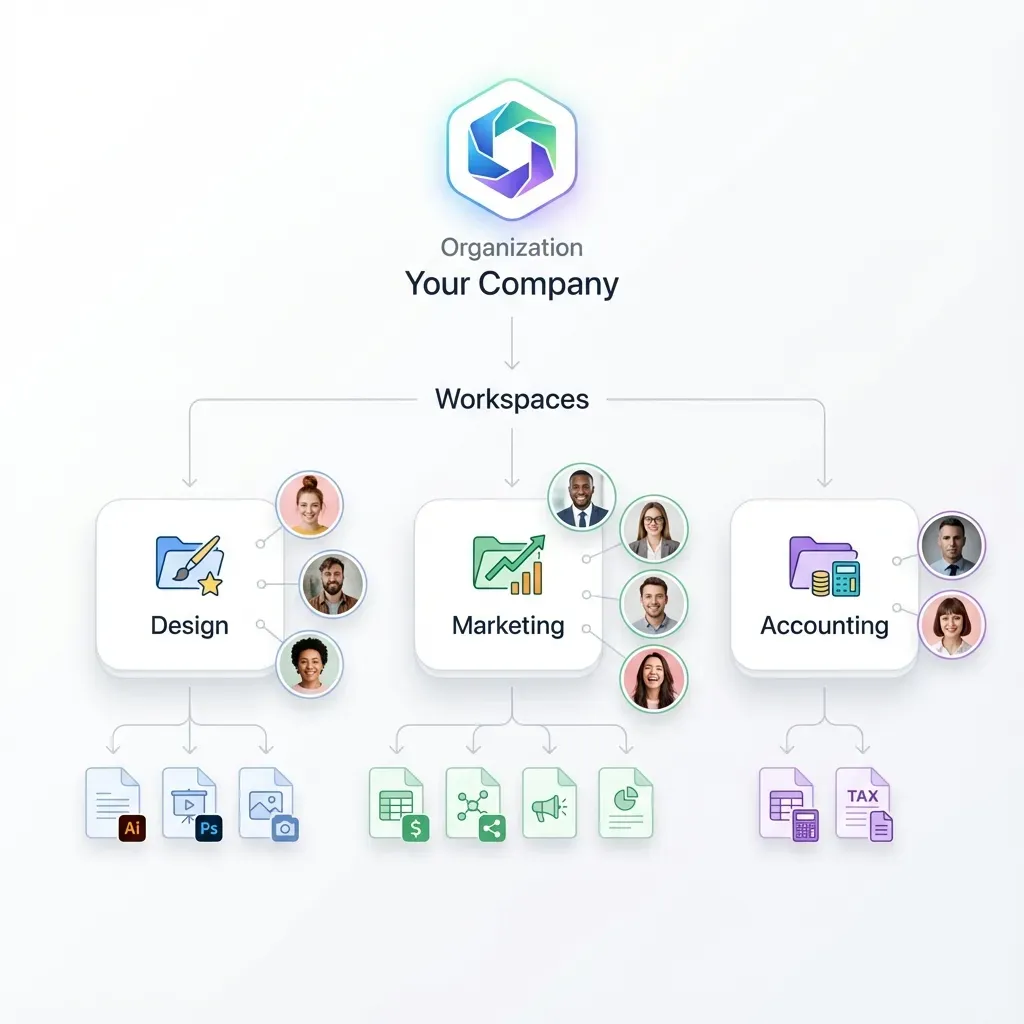
Each agent should have the minimum permissions needed for its task, nothing more. This means scoped API credentials rather than admin tokens, workspace-level access boundaries instead of org-wide access, and rate limits to prevent runaway operations.
The "Permission Paradox" is real: overly restrictive permissions create workarounds and shadow agents. Teams route around tight controls by giving agents broader access through back channels. Better to scope permissions thoughtfully and pair them with strong audit trails than to lock everything down and watch teams circumvent the controls.
Platforms that support granular permissions at the workspace and folder level make this easier. For example, Fastio's workspace model lets you set permissions at the org, workspace, folder, and file level, so an agent processing legal documents can access the legal workspace without touching engineering files. Combined with built-in audit logging, every file read, write, and share is tracked automatically.


Build governed agent workflows with built-in audit trails
Fastio workspaces give every agent its own permission boundary, detailed activity log, and human handoff controls. generous storage.
Human Oversight and Escalation Design
4. Configure human oversight triggers
Not every agent action needs human approval, but some do. The challenge is drawing the line in the right place.
Define escalation triggers based on action impact, not just action type. A good starting set:
- Financial threshold: Any action above a dollar amount (e.g., approving expenses over $5,000)
- Data sensitivity: Operations on personally identifiable information or regulated data
- Irreversibility: Actions that can't be undone, such as deleting records, sending external communications, or modifying production configurations
- Confidence score: When the agent's own confidence falls below a threshold
- Anomaly detection: When an action deviates from the agent's historical behavior pattern
The goal is "meaningful" human oversight, a term Singapore's framework uses deliberately. A human rubber-stamping 500 approval requests per hour isn't oversight. Design the triggers so that humans review a manageable number of genuinely important decisions.
Approval gates should capture who approved, when, what specifically they approved, and the execution context. This audit trail needs to be immutable.
5. Monitor, review, and iterate
Governance isn't a one-time setup. Agent behavior changes as models update, prompts evolve, and business requirements shift.
Build monitoring that tracks:
- Action patterns: Are agents taking more actions than expected? Different types of actions?
- Error rates: Are failures increasing? Are the same errors recurring?
- Permission usage: Are agents using all their permissions, or do some go unused? Unused permissions should be revoked
- Escalation volume: If human oversight triggers fire too often, the thresholds need adjustment. If they never fire, the triggers might be too loose
Schedule regular governance reviews (quarterly is a reasonable starting cadence) where you evaluate whether risk tiers, permissions, and oversight triggers still match reality.
Technical Implementation Patterns
Frameworks are useful, but governance lives in the implementation. Here are the patterns that matter most.
Agent identity management
Every agent needs its own identity, not a shared service account. NIST's guidance is explicit here: agents need enterprise-grade identities with distinct credentials. This lets you attribute every action to a specific agent, revoke access without affecting other agents, and apply per-agent rate limits and permission scopes.
Workspace isolation
Multi-agent systems need isolation boundaries. When multiple agents operate on the same data, you need clear ownership rules and conflict prevention. File locks prevent two agents from modifying the same document simultaneously. Workspace boundaries ensure an agent in one domain can't accidentally access data from another.
Fastio's workspace model handles this natively. Each workspace has its own permission boundary, audit log, and intelligence layer. An agent working in one workspace can't access files in another unless explicitly granted permission. The platform's advisory file locking helps agents coordinate writes to the same file, and granular permissions scope access down to individual folders and files.
Sandbox testing before production
Never deploy an agent directly to production without testing. Run agents in sandboxed environments first, using representative data and realistic scenarios. Test edge cases: what happens when the agent encounters unexpected input, hits a rate limit, or loses access to a dependency?
Singapore's framework recommends staged progressive rollouts with real-time monitoring at each stage. Start with a small scope, measure behavior against your governance policies, and expand gradually.
Immutable audit storage
Audit logs lose their value if they can be modified after the fact. Store logs in append-only systems. Fastio's audit trail capabilities provide a detailed activity log of file operations, share events, and AI interactions within a workspace, retained according to your plan, so your team can review who did what.
Common Governance Failures and How to Avoid Them
Organizations building agentic AI governance tend to hit the same problems. Here's what to watch.
Treating governance as a policy exercise only. Writing a 50-page governance policy doesn't help if there are no technical controls enforcing it. Start with one policy rule, one approval gate, and one audit trail. You can build from there. The minimum viable governance setup is more valuable than the comprehensive framework that never ships.
Shared credentials across agents. When all agents use the same API key, you can't attribute actions to specific agents, can't revoke access granularly, and can't detect when one agent behaves anomalously. Give each agent its own identity.
Logging actions without reasoning. If your audit trail captures "agent deleted file X" but not why the agent decided to delete it, you can't distinguish a correct action from a hallucination-driven mistake. Log the reasoning trace alongside the action.
Setting permissions once and forgetting them. Agent capabilities change. Models get updated. Business requirements shift. An agent that was low-risk six months ago might have gained new tool access that changes its risk profile. Review permissions regularly.
Ignoring the human oversight bottleneck. If every agent action requires human approval, your agents are just slow chatbots. The goal is targeted oversight on high-impact decisions, not blanket approval requirements. Set thresholds that balance safety with operational efficiency.
No incident response plan. When an agent does something wrong (and eventually one will), you need a clear process: how to stop the agent, how to assess the damage, how to trace the root cause through audit logs, and how to prevent recurrence. Build this plan before you need it.
Sources
References used to verify factual claims in this guide.
-
Singapore launched the world's first governance framework for agentic AI at the World Economic Forum in January 2026
-
NIST launched the AI Agent Standards Initiative in February 2026 through the Center for AI Standards and Innovation
-
EU AI Act Article 12 requires at least six months of automated logging for high-risk AI systems
-
77% of banking industry leaders cite data privacy as top scaling barrier for AI agents
-
Singapore's framework identifies eight risk factors specific to agentic AI systems
Frequently Asked Questions
What is agentic AI governance?
Agentic AI governance is the set of policies, technical controls, and organizational practices that ensure autonomous AI agents operate within defined boundaries. It covers permission management, audit logging, human oversight triggers, and output accountability. Unlike traditional AI governance that focuses on model training and bias, agentic governance addresses runtime behavior: what agents can access, what actions they can take, and how you verify what happened after the fact.
How do you govern autonomous AI agents?
Start with three fundamentals: define what each agent can and cannot do (boundaries and permissions), log everything the agent does with enough detail to reconstruct its reasoning (audit trails), and set clear triggers for when a human needs to review or approve an action (oversight gates). From there, classify agents into risk tiers based on the potential impact of their actions, and match the intensity of your controls to each tier. Review and adjust regularly as agents, models, and requirements change.
What are the risks of agentic AI without governance?
Without governance, agents can access data they shouldn't, take irreversible actions based on hallucinated reasoning, and operate without any record of what they did or why. Specific risks include unauthorized data access, uncontrolled decision-making in regulated domains, inability to audit or explain agent behavior, regulatory non-compliance (particularly under the EU AI Act and emerging NIST standards), and reputational damage from agent errors that can't be traced or corrected.
What frameworks exist for AI agent governance?
Three major frameworks emerged in early 2026. Singapore's Model AI Governance Framework for Agentic AI (January 2026) was the first global framework specifically for agents, identifying eight risk factors and four governance dimensions. NIST launched its AI Agent Standards Initiative in February 2026, focusing on agent identity, authentication, and least-privilege authorization. The EU AI Act reaches general application in August 2026, requiring documented compliance programs with audit trails for high-risk AI systems.
Does the EU AI Act apply to AI agents?
Yes. Starting August 2, 2026, AI agents classified as high-risk systems must meet requirements for technical documentation, human oversight, and control mechanisms that can stop or override agent operations. Article 12 mandates automated logging with at least six months of retention. Article 50 requires transparency when agents interact with people or generate content. Any business operating in the EU or serving EU nationals must comply.
How does Fastio help with agentic AI governance?
Fastio provides workspace-level isolation with granular permissions at the org, workspace, folder, and file level, so each agent accesses only the data it needs. Built-in audit trails track every file operation, share event, and AI interaction. Advisory file locks help agents in multi-agent systems coordinate writes, and version history keeps every version. The ownership transfer feature lets agents build workspaces and hand them off to humans for review, creating a natural governance checkpoint.
Related Resources

Build governed agent workflows with built-in audit trails
Fastio workspaces give every agent its own permission boundary, detailed activity log, and human handoff controls. generous storage.