AI for Real Estate Agents: Tools That Actually Save Time
Real estate agents spend roughly a quarter of their workweek on admin, from document prep to photo delivery. This guide covers the AI tools that cut that time down, organized by the tasks they actually handle, with honest assessments of what works and what's hype.


How to implement ai for real estate agents reliably
Before picking tools, it helps to know where the hours go. NAR's 2025 Technology Survey found that 68% of agents now use some form of AI, yet only 17% report a significant positive impact on their business. The gap between adoption and results usually comes down to picking tools that solve the wrong problems.
Administrative work eats roughly 25% of a full-time agent's week. For someone working 50 hours, that's 12 or more hours spent on tasks like:
- Preparing listing presentations and comparative market analyses
- Coordinating with title companies, lenders, and inspectors
- Organizing and delivering property photos, drone footage, and floor plans
- Managing transaction documents across multiple active deals
- Scheduling social media posts and marketing materials
- Following up with leads who filled out a form three weeks ago
The tools that actually save time target these specific bottlenecks. The ones that don't tend to be AI wrappers around tasks that already took five minutes.
Helpful references: Fastio Workspaces, Fastio Collaboration, and Fastio AI.
Related guides
- 8 Best Real Estate Transaction Coordinator Software Tools for Document ManagementGuide to real estate transaction coordinator software: Transaction coordinators juggle 40+ documents per deal across a...
- Best Real Estate Marketing Tools for Agents and BrokeragesReal estate marketing tools help agents and brokerages create listings, distribute property content, manage client...
- How to Create and Share Real Estate 3D Tours That Actually Drive ShowingsA real estate 3D tour is an interactive, navigable digital model of a property that lets prospective buyers explore...
- How to Deliver Real Estate Drone Photography to ClientsMost real estate drone photography guides cover flight planning and camera settings but skip the hardest part: getting...
- How AI Is Changing Commercial Real Estate WorkflowsAI in commercial real estate has moved past the hype cycle into practical deployment. This guide covers the six core...
- How to Set Up a Real Estate Client Portal for Document SharingA real estate client portal is a secure, branded online workspace where agents share transaction documents,...
More on this subject: Real Estate (21 guides)
What to check before scaling ai for real estate agents
Lead gen is where most "AI for real estate" listicles start and stop. It matters, but it's not the whole picture. Here's what's worth evaluating.
Predictive Analytics: Finding Sellers Before They List
SmartZip aggregates data from more than 25 national sources covering 95 million homes to predict which homeowners are likely to sell within the next 6 to 12 months. The company claims up to 72% accuracy on these predictions. For agents focused on farming specific neighborhoods, that's a meaningful edge over cold outreach.
The catch: predictive analytics tools work best with consistent follow-up over months. Buying the data without a contact plan is like subscribing to a gym and never going.
AI-Powered Outreach: Ylopo
Ylopo combines AI voice and text assistants with paid lead generation. Their AI Voice product calls leads up to 14 times over 90 days with a reported 45% answer rate. The AI Text system has processed over 25 million conversations with a 48% response rate.
These numbers sound impressive, but they measure engagement, not closings. An AI assistant that qualifies and warms leads is genuinely useful. One that annoys prospects with robocalls is not. Test the tone and frequency before committing.
Conversational AI for Your Website
Roof AI turns brokerage websites into 24/7 lead capture systems by integrating with MLS data to answer property questions and schedule showings. Unlike generic chatbots, it pulls real listing data, so visitors get actual answers instead of "a team member will get back to you."
For solo agents, even a well-configured ChatGPT-powered chatbot on your site can handle after-hours inquiries. The 2025 NAR survey found ChatGPT was the most common AI tool among agents at 58%, followed by Gemini at 20%.
Content Creation and Marketing Automation
Writing listing descriptions, social media captions, and email campaigns is repetitive work that AI handles well. The key is editing AI output rather than publishing it raw.
Listing Descriptions
Most agents can generate a solid first-draft listing description in under three minutes using ChatGPT, Claude, or Gemini. The workflow that works:
- Feed the AI your property details, square footage, neighborhood highlights, and any unique features
- Ask for three variations in different tones (professional, warm, luxury)
- Pick the best one and edit it with your local knowledge
- Add specific details the AI can't know, like "two blocks from the Saturday farmers market"
The result is faster than writing from scratch but still sounds like you, not like a template.
Social Media and Email
Canva now includes AI features for generating property marketing graphics, social posts, and flyer layouts. For agents without a design background, it turns a 45-minute task into a 10-minute one.
For email sequences, HubSpot's AI assistant (Breeze) drafts follow-ups based on actual CRM data. It can summarize a contact's history, suggest next steps, and write the email. The free CRM tier covers basic contact management, which makes it accessible for independent agents.
Blaze is a newer option for agents who want AI writing assistance that works across platforms, from email to social to listing sites, without switching between tools.
What AI Marketing Can't Do
AI won't replace your local expertise. It can't write "this house backs up to the trail where everyone walks their dogs at sunset" because it doesn't know that. The best agent content blends AI efficiency with neighborhood-level specificity that no algorithm can replicate.
Virtual Staging and Property Visualization
Virtual staging went from a novelty to a standard practice faster than most agents expected. The technology in 2026 produces photorealistic results that genuinely help buyers visualize empty spaces.
Virtual Staging Platforms
REimagineHome specializes in AI-powered virtual staging that can redesign empty rooms in various styles within minutes. Upload a photo of an empty living room, select a style (modern, farmhouse, mid-century), and get back a staged version that looks like a professional shoot.
The cost difference is significant. Traditional physical staging runs $2,000 to $5,000 per listing. AI virtual staging costs $20 to $50 per image. For agents handling multiple listings, that savings compounds fast.
3D Tours and Drone Integration
Matterport remains the industry standard for 3D property tours. Their AI processing creates dollhouse views, floor plans, and guided walkthroughs from a single scan.
DroneDeploy handles the inspection side, using AI to analyze aerial imagery for structural issues like cracks, roof damage, or drainage problems. This is particularly valuable for commercial properties or rural listings where physical inspections are expensive.
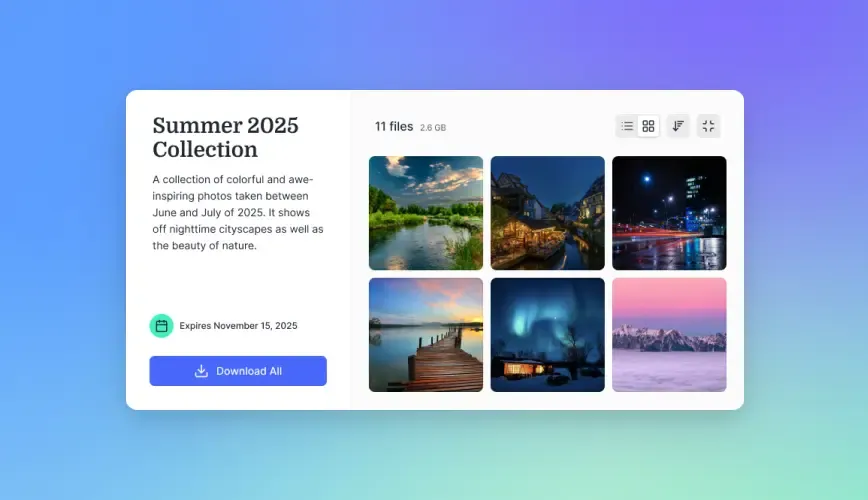
The gap most agents don't think about is what happens after the shoot. You've got 200 drone photos, a Matterport scan, and a virtual staging package. How do you organize, store, and deliver all of that to the listing, the MLS, the marketing team, and the buyer's agent?
That's a file management problem, and it's where most agents default to WeTransfer links and Google Drive folders that get messy fast.


Organize Your Listings and Client Files in One Place
Fastio gives real estate agents secure workspaces for property documents, drone photos, and video tours, with branded sharing links and granular access controls.
Document Management and File Delivery
This is the category most AI tool roundups skip, and it's where agents lose the most cumulative time. Every transaction generates dozens of documents: contracts, disclosures, inspection reports, appraisals, title work, and marketing assets. Managing them across email threads, cloud drives, and text messages is where deals slow down.
The Document Chaos Problem
A typical residential transaction involves 20 to 30 documents exchanged between 5 to 8 parties. When those files live in different places (email attachments, Google Drive links, Dropbox shares, text messages), agents become the bottleneck, fielding "can you resend that?" requests multiple times a week.
DocuSign handles the signing workflow well, but it doesn't solve the broader organization problem. You still need somewhere to store, organize, and share everything else.
Centralized File Workspaces
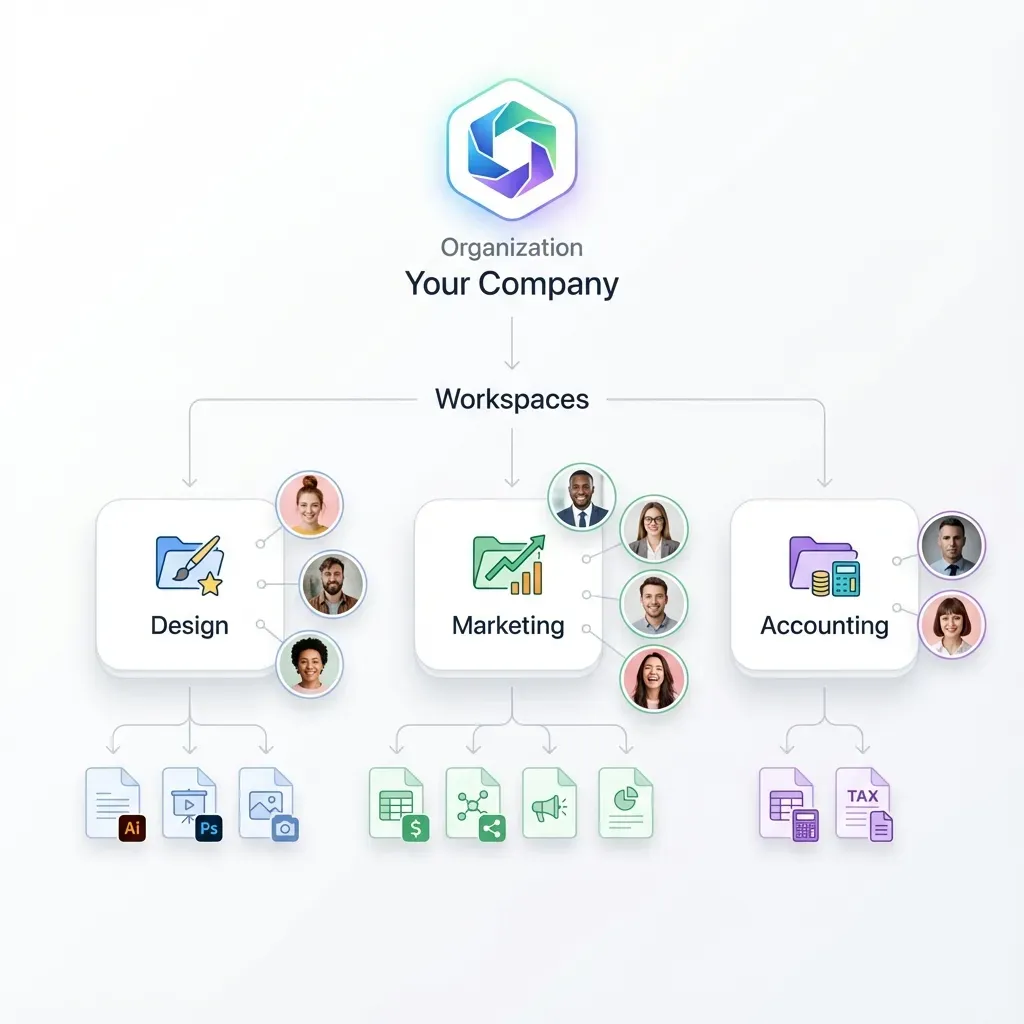
The better approach is a workspace where every document for a transaction lives in one place, with controlled access for each party. Buyers see what they need. The title company gets their folder. The lender gets theirs.
Fastio handles this with shared workspaces that support granular permissions at the folder and file level. You can create a workspace per listing or per transaction, invite parties with specific access levels, and share files through branded delivery links. The audit trail tracks who accessed what and when, which is useful for compliance and dispute resolution.
For agents managing drone photography and video tours, Fastio supports HLS video streaming directly from the workspace. Upload a property walkthrough video once, and anyone with the link can stream it without downloading a massive file.
Teams can evaluate Fastio using the 14-day Business Trial (credit card required) or choose plans starting with Starter at $9.99/month (3 seats, 250 GB, 100,000 credits/mo).
AI-Powered Document Search
Once your files are organized, finding specific documents across dozens of transactions becomes its own problem. Once Intelligence is enabled for the workspace, Fastio auto-indexes uploaded files for semantic search. Instead of remembering which folder has the Phase II environmental report, you search for "environmental report for Oak Street property" and get the result with citations.
This matters more as your transaction volume grows. An agent closing 30 deals a year accumulates hundreds of documents. Being able to search across all of them by meaning, not just filename, saves real time.
Alternatives Worth Considering
Google Drive works fine for basic storage and is free with a Google account. The limitation is that sharing controls are coarse (view, comment, edit) and there's no built-in audit trail for who accessed what.
Dropbox offers better file organization but gets expensive at scale. The Professional plan provides 3 TB on a paid monthly subscription.
Dotloop is real-estate-specific and handles transaction management with built-in e-signatures. It's strong for the transaction workflow but less flexible for marketing asset delivery or drone photo sharing.
AI CRMs Built for Real Estate
A CRM that just stores contacts isn't enough anymore. The useful ones predict which leads need attention, automate follow-up sequences, and surface insights from your interaction history.
HubSpot Smart CRM
HubSpot's free CRM tier is genuinely useful for independent agents. The AI assistant (Breeze) drafts emails, summarizes contact records, and prepares meeting notes based on actual CRM data. For agents who hate writing follow-up emails, this alone justifies the setup time.
The paid tiers add marketing automation, pipeline forecasting, and deeper analytics. Most solo agents won't need them initially.
Real Estate-Specific CRMs
Follow Up Boss works alongside over 250 lead sources and uses AI to prioritize which leads to contact first based on engagement signals. It's popular with teams because it distributes leads automatically.
LionDesk combines CRM functionality with AI-powered text and video messaging. Its AI assistant can respond to leads via text within seconds of an inquiry, which matters because response time is the single biggest factor in lead conversion.
kvCORE is a platform play that bundles CRM, IDX website, marketing automation, and AI lead scoring into one system. It's more expensive but reduces the number of tools you need to manage.
Choosing the Right CRM
The best CRM is the one you'll actually use. A fancy system that sits empty is worse than a spreadsheet you update daily. Start with a free option (HubSpot, the basic tier of Follow Up Boss), get the habit established, then upgrade when you hit real limitations.
Key features to evaluate:
- Lead scoring that reflects your actual criteria (geographic area, budget range, timeline)
- Mobile app quality, because you'll use it from your car between showings
- Integration with your email, calendar, and transaction management tools
- AI-assisted follow-up that sounds like you, not like a robot
Building Your AI Tool Stack
The temptation is to sign up for every tool on this list. Don't. Start with the biggest time sink in your current workflow and address that first.
For New Agents (0-10 Transactions/Year)
Keep it simple and low cost:
- ChatGPT or Claude for listing descriptions and email drafts (free tiers available)
- Canva for marketing graphics (free tier covers basics)
- HubSpot CRM for contact management (free tier available)
- Fastio for file organization and client delivery (14-day Business Trial)
Keep upfront costs low by using free tiers where available and evaluating storage with a 14-day trial before upgrading.
For Established Agents (10-30 Transactions/Year)
Add tools that automate repetitive tasks:
- Everything from the starter stack
- SmartZip or Ylopo for predictive lead generation ($250-500/month)
- Follow Up Boss for CRM with lead routing
- REimagineHome for virtual staging ($30-50/listing)
- Matterport for 3D tours (camera and hosting subscription)
For Teams and Top Producers (30+ Transactions/Year)
Invest in integration and automation:
- kvCORE or equivalent platform ($500-1,000/month)
- Fastio with Intelligence Mode for searchable document archives across all transactions
- DroneDeploy for property inspection automation
- Dedicated virtual staging workflow with branded delivery
The Integration Problem
The biggest headache isn't any individual tool. It's that they don't talk to each other. Your CRM doesn't know about your file workspace. Your virtual staging tool outputs to a local folder. Your drone photographer sends a WeTransfer link that expires in a week.
Look for tools that either integrate directly or support standard connections through Zapier, webhooks, or APIs. Fastio's activity feed and REST API, for example, let you monitor when a client downloads a document, closing the loop between file delivery and client engagement tracking.
Measuring ROI
Track two things: hours saved per week and deals influenced. If a tool saves you three hours a week on admin, that's three hours you can spend on client calls, showings, or prospecting. At a typical commission rate, even one additional closing per year more than pays for your entire tool stack.
The NAR survey found that 24% of agents make substantial monthly investments in technology. For agents closing 20+ deals a year, that investment pays for itself many times over. The agents who report no impact from AI tools are often the ones who adopted them without changing their workflow around them.
Sources
References used to verify factual claims in this guide.
-
68% of agents now use some form of AI 24% of agents spend more than $500 per month on technology
-
Only 17% report a significant positive impact on their business
-
ChatGPT was the most common AI tool among agents at 58%
-
SmartZip claims up to 72% accuracy on seller predictions
-
Ylopo AI Voice calls leads up to 14 times over 90 days with a 45% answer rate
Frequently Asked Questions
What AI tools do real estate agents use?
The most common AI tools among agents are ChatGPT (used by 58% according to NAR's 2025 survey), followed by Google Gemini and Microsoft Copilot. Beyond general AI assistants, agents use specialized tools for predictive lead generation (SmartZip, Ylopo), virtual staging (REimagineHome), 3D tours (Matterport), CRM automation (HubSpot, Follow Up Boss), and file management and delivery (Fastio, Dropbox).
Can AI replace real estate agents?
No. AI handles repetitive tasks like drafting listing descriptions, qualifying leads, and organizing documents, but it can't replace the local market knowledge, relationship building, and negotiation skills that drive real estate transactions. The agents who benefit most from AI use it to free up time for client-facing work, not to automate the entire job.
What is the best AI for real estate marketing?
For listing descriptions and copy, ChatGPT and Claude produce strong first drafts that agents can personalize. For visual marketing, Canva's AI features handle graphics and social posts. For email campaigns, HubSpot's Breeze assistant drafts follow-ups based on your CRM data. The best approach combines a general-purpose AI for writing with a design tool for visuals and a file delivery platform like Fastio for sending marketing packages to clients.
How are real estate agents using AI in 2026?
In 2026, 68% of agents use AI tools according to NAR data, primarily for content creation, lead qualification, and property visualization. Predictive analytics tools identify likely sellers months before they list. Conversational AI handles after-hours website inquiries. Virtual staging creates photorealistic furnished photos for a fraction of physical staging costs. The fastest-growing use case is document and asset management, where AI indexes transaction files for semantic search across an agent's entire deal history.
How much do real estate agents spend on AI tools?
NAR's 2025 Technology Survey found that 24% of agents make substantial monthly investments in technology. A practical stack can start with free tiers of writing and design tools alongside a Fastio 14-day Business Trial. Established agents typically invest $300 or more in paid tools for lead generation, CRM, and virtual staging as their transaction volume scales.
What's the difference between AI CRMs and regular CRMs for real estate?
Traditional CRMs store contact information and track interactions. AI-enhanced CRMs like HubSpot, Follow Up Boss, and LionDesk add predictive lead scoring, automated follow-up sequences, and intelligent prioritization. They analyze engagement signals to tell you which leads to call first, draft personalized emails based on contact history, and flag deals that might be stalling. The practical difference is spending less time deciding what to do next and more time doing it.
Related Resources

Organize Your Listings and Client Files in One Place
Fastio gives real estate agents secure workspaces for property documents, drone photos, and video tours, with branded sharing links and granular access controls.