How AI Is Changing Commercial Real Estate Workflows
AI in commercial real estate has moved past the hype cycle into practical deployment. This guide covers the six core workflow areas where CRE firms are using AI today, the specific tools driving adoption, and how to set up document analysis and data room intelligence for your own deals.


What to check before scaling ai in commercial real estate
Commercial real estate has been slow to adopt technology compared to other financial sectors, but AI is accelerating the shift. Proptech funding hit $16.7 billion in 2025, a 67.9% year-over-year increase, and investment in AI-centered proptech companies grew at an annualized rate of 42%, nearly double the 24% growth rate for non-AI companies.
The reason is straightforward: CRE workflows are document-heavy, data-intensive, and repetitive. Lease review, due diligence, property valuation, and market analysis all involve parsing large volumes of structured and unstructured data. These are exactly the tasks where machine learning and natural language processing deliver measurable time savings.
But most CRE firms are still early. While 92% of commercial real estate firms have started or plan to pilot AI initiatives, only 5% report achieving all their program goals. The gap between experimentation and production-scale deployment is where the real opportunity sits.
This guide focuses on six practical workflow areas where AI is already producing results, not speculative future applications.
Helpful references: Fastio Workspaces, Fastio Collaboration, and Fastio AI.
Related guides
- AI for Real Estate Agents: Tools That Actually Save TimeReal estate agents spend roughly a quarter of their workweek on admin, from document prep to photo delivery. This guide...
- How to Set Up a Real Estate Data Room for Due DiligenceCommercial real estate transactions generate hundreds of documents that multiple parties need to review under tight...
- How to Run Commercial Property Due Diligence with a Secure Data RoomCommercial property due diligence involves reviewing 50 to 100+ documents across financial, legal, environmental, and...
- How to Use AI for Property ManagementAI for property management refers to the use of artificial intelligence tools and agent workflows to automate tenant...
- 8 Best Real Estate Transaction Coordinator Software Tools for Document ManagementGuide to real estate transaction coordinator software: Transaction coordinators juggle 40+ documents per deal across a...
- Real Estate Document Management Guide for AgentsReal estate document management is the systematic organization, storage, and sharing of property transaction documents...
More on this subject: Real Estate (21 guides)
Lease Abstraction and Contract Analysis
Lease abstraction is the clearest AI success story in commercial real estate. Traditional manual abstraction takes 4 to 6 hours per lease. AI-powered tools cut that to under 15 minutes while maintaining 90% to 97% accuracy on standard commercial lease terms.
The workflow goes beyond simple data extraction. Modern lease abstraction platforms parse 200+ variables per document, including rent schedules, escalation clauses, renewal options, CAM charges, and termination provisions. They cross-reference amendments against the base lease, flag conflicts, and link every extracted value back to its source text for human verification.
Tools worth evaluating:
- Prophia offers both a self-serve abstraction tool (Prophia Abstract) for quick lease summaries and an enterprise platform (Prophia Essentials) for ongoing portfolio management. It structures, visualizes, and tracks every detail across your lease portfolio.
- LeaseLens uses machine learning to extract data points and produce abstracts in minutes. It works well for teams that need fast turnaround on individual leases without a full platform commitment.
- Leverton, now part of MRI Software, handles enterprise-scale abstraction with deep learning, OCR, and compliance support for IFRS 16 and ASC 842 accounting standards.
- V7 Go achieves 99% accuracy with a citations feature that links every data point to its document source, cutting QA review time .
The practical challenge is not the extraction itself but organizing the output. Abstracted data needs to flow into your deal management system, your accounting platform, and your investor reporting. Firms that treat lease abstraction as a standalone tool miss the compounding value of connecting extracted data to downstream workflows.
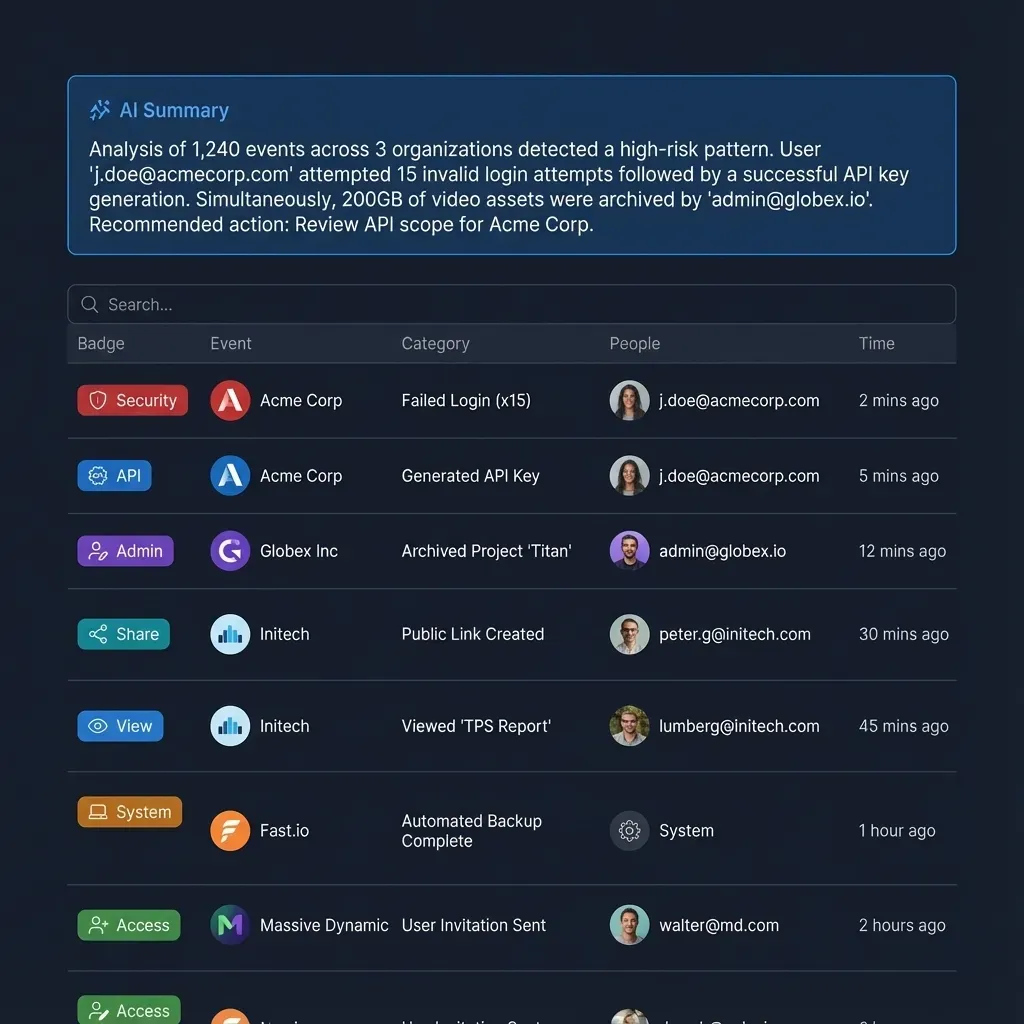
Due Diligence Document Review
A typical commercial real estate acquisition involves reviewing hundreds of documents: leases, environmental reports, title documents, zoning records, financial statements, and tenant correspondence. Manual review is the bottleneck that stretches deal timelines from weeks to months.
AI-powered document review addresses this in three layers:
Classification and sorting. Incoming documents are automatically categorized by type, tagged with relevant metadata, and organized into the appropriate deal room folders. This alone saves analysts hours of manual triage on every transaction.
Key term extraction. Once classified, AI models extract critical data points: lease expiration dates, outstanding liens, environmental remediation obligations, tenant improvement allowances, and financial covenants. The extracted data populates summary dashboards that give deal teams a structured view of the entire document set.
Anomaly detection and risk flagging. This is where AI adds the most value beyond speed. Models trained on thousands of CRE transactions can identify unusual clauses, missing standard provisions, and inconsistencies between documents that human reviewers might miss under time pressure.
The workflow integration matters more than the AI model itself. Your document review system needs to connect to your data room, your deal tracking tools, and your legal team's redlining workflow. A standalone AI extraction tool that dumps results into a spreadsheet creates a new bottleneck instead of removing one.



Build a Smarter Deal Room for Your Next Acquisition
Fastio workspaces auto-index every document you upload for semantic search and AI-powered Q&A. Set up granular permissions, branded shares for external parties, and audit trails for compliance. Built for commercial real estate workflows.
Property Valuation and Market Forecasting
AI-powered automated valuation models (AVMs) now achieve median error rates as low as 2.8%, outperforming traditional appraisal methods where over 33% of appraisals contain material errors. These models analyze comparable sales, rental income, capitalization rates, location data, and macroeconomic indicators simultaneously.
For commercial real estate specifically, AI valuation tools differ from residential AVMs in important ways. CRE valuations must account for lease structures, tenant creditworthiness, building condition, and market-specific demand drivers. The most effective tools combine property-level financial modeling with market-level trend analysis.
Notable platforms in this space:
- HouseCanary offers CanaryAI, a generative AI assistant built specifically for real estate valuation and forecasting. It draws on proprietary sales and rental data to generate property-level valuations and market predictions.
- Reonomy aggregates property and ownership data from public records, offering customizable analytics dashboards that support market trend analysis for portfolio-level strategy.
- CoreLogic provides comprehensive analytics on economic metrics and property trends, monitoring national and local markets with predictive models useful for large-scale investment decisions.
Market forecasting is where these tools become strategic rather than operational. AI models can process satellite imagery to detect construction activity, analyze foot traffic patterns to predict retail performance, and monitor economic indicators that correlate with demand shifts. The output is not a single price estimate but a probability distribution that helps investment committees make better risk-adjusted decisions.
The limitation to acknowledge: AI valuations are only as good as their training data. In thin markets with few comparable transactions, models can produce confident but unreliable estimates. Smart firms use AI valuations as a starting point for human analysis, not a replacement for it.
Deal Sourcing and Investment Analysis
AI is changing how CRE firms build their deal pipeline. Instead of relying on broker relationships and manual market monitoring, investment teams can deploy AI agents that continuously scan for opportunities matching specific investment criteria.
The deal sourcing workflow typically works in three stages:
Market monitoring. AI tools aggregate data from public records, listing platforms, news sources, and regulatory filings to identify properties that match predefined parameters: asset type, location, size, price range, and risk profile. This replaces the manual process of checking multiple listing services and calling broker contacts.
Underwriting acceleration. Once a potential deal is identified, AI tools pull comparable transactions, build pro forma financial models, and generate preliminary investment memos. What used to take an analyst two days can now produce a first-pass evaluation in hours.
Portfolio optimization. Machine learning models analyze your existing portfolio alongside market data to recommend acquisition and disposition strategies. They identify concentration risks, market timing opportunities, and diversification gaps that are difficult to spot in large portfolios through manual analysis.
The firms getting the most value from AI deal sourcing are not replacing their acquisition teams. They are giving those teams better data faster, so they can evaluate more opportunities and make decisions with higher confidence. The competitive advantage comes from seeing deals sooner and underwriting them faster, not from removing humans from the process.

Setting Up AI-Powered Document Intelligence for Your Deals
Most articles about AI in commercial real estate stop at "use AI tools." Here is how to actually set up document intelligence for a deal workflow.
Step 1: Centralize your document repository.
Every deal starts with a document dump: hundreds of PDFs, spreadsheets, and emails from sellers, brokers, and legal teams. Before AI can do anything useful, these documents need to live in one place with consistent access controls.
A cloud workspace with built-in intelligence capabilities is the foundation. Platforms like Fastio automatically index uploaded documents for semantic search and AI-powered chat, so your team can ask questions across the entire document set instead of searching file by file. Enable intelligence on the workspace and every file uploaded becomes queryable immediately.
For comparison, traditional approaches require setting up separate document storage, a vector database, and an ingestion pipeline. An intelligent workspace combines these into a single system where uploading a file is all you need to make it searchable.
Step 2: Set up structured extraction.
Once documents are centralized, configure extraction rules for your deal type. For an office acquisition, you need: lease terms, rent rolls, operating expenses, capital expenditure history, environmental assessments, and title exceptions. Map each document type to a specific extraction template.
AI metadata extraction can pull structured data from documents, spreadsheets, and images automatically. Combine this with lease abstraction tools for the heavy lifting on complex legal documents.
Step 3: Build your review workflow.
Extracted data is only useful if it flows to the right people at the right time. Set up a review workflow where:
- AI flags documents that need attorney review (unusual clauses, missing provisions)
- Extracted financial data feeds into your underwriting model
- Deal team members receive summaries of newly processed documents
- Audit trails track who reviewed what and when
Workspace platforms with granular permissions let you control exactly who sees which documents, which matters when you have multiple parties involved in due diligence. Fastio supports org, workspace, folder, and file-level permissions, plus branded shares for distributing documents to external parties like lenders or equity partners.
Step 4: Connect to your deal management stack.
The final step is connecting your intelligent document repository to the rest of your tools. Fastio's events feed, delivered over WebSocket or long-poll, can trigger actions when new documents are uploaded. For teams using AI agents in their workflow, MCP server access provides programmatic control over workspace operations, file management, and AI queries.
The goal is a system where a new document uploaded to your deal room is automatically classified, extracted, flagged for review, and available for AI-powered Q&A within minutes of arrival.
What AI Will Not Replace in CRE
AI tools excel at processing structured and semi-structured data at scale. They do not replace the judgment calls that make or break commercial real estate deals.
Relationship management. The best deals still come through trusted broker relationships, off-market conversations, and local market knowledge that no AI model can replicate. AI can help you evaluate more opportunities, but it cannot build the relationships that surface them.
Physical inspection. No amount of satellite imagery or document analysis substitutes for walking a property, talking to tenants, and assessing the neighborhood. AI can prioritize which properties deserve an in-person visit, but the visit itself remains essential.
Negotiation and deal structuring. AI can model different deal structures and predict outcomes, but the creative problem-solving that closes complex transactions, finding the terms that work for both parties, requires human skill and judgment.
Local market intuition. Experienced CRE professionals understand the micro-dynamics of their markets in ways that are difficult to encode in training data. They know which neighborhoods are about to turn, which tenants are flight risks, and which zoning changes are coming. AI models trained on historical data can miss inflection points that seasoned brokers sense early.
The winning approach is not AI versus humans. It is AI handling the data processing, document review, and pattern recognition so that experienced professionals can spend more time on the high-judgment activities that actually drive returns.
Sources
References used to verify factual claims in this guide.
-
Proptech funding hit $16.7 billion in 2025, a 67.9% year-over-year increase Investment in AI-centered proptech companies grew at an annualized rate of 42%
-
92% of commercial real estate firms have started or plan to pilot AI initiatives, only 5% have achieved all their program goals
-
AI-powered automated valuation models achieve median error rates as low as 2.8%
-
Leading AI lease abstraction platforms achieve 90 to 97% accuracy, reducing abstraction time from 4 to 6 hours to under 15 minutes
Frequently Asked Questions
How is AI used in commercial real estate?
AI is used in six core CRE workflow areas: lease abstraction and contract analysis, due diligence document review, property valuation and automated valuation models, market forecasting and trend analysis, deal sourcing and pipeline monitoring, and portfolio optimization. The most mature use case is lease abstraction, where AI tools extract 200+ variables per lease in minutes instead of hours.
What AI tools do commercial real estate firms use?
Leading AI tools in CRE include Prophia and LeaseLens for lease abstraction, V7 Go for document extraction with citations, Leverton (MRI Software) for enterprise-scale contract analysis, HouseCanary for property valuation and forecasting, Reonomy for property data analytics, and CoreLogic for market trend analysis. Many firms also use general-purpose AI platforms to build custom extraction and analysis workflows.
Will AI replace commercial real estate brokers?
AI will not replace CRE brokers. It changes what brokers spend their time on. AI handles data processing, document review, and market scanning, freeing brokers to focus on relationship building, deal structuring, physical inspections, and the local market judgment that drives transaction success. Firms using AI effectively are evaluating more deals faster, not reducing headcount.
How does AI help with real estate due diligence?
AI accelerates due diligence by automatically classifying incoming documents, extracting key terms and financial data, and flagging anomalies or missing provisions. This can compress weeks of manual document review into days. AI-powered data rooms add semantic search so deal teams can ask questions across hundreds of documents instead of reviewing them individually.
How accurate are AI property valuations?
AI-powered automated valuation models achieve median error rates as low as 2.8% for properties with sufficient comparable data. This outperforms traditional appraisals, where over 33% contain material errors. However, accuracy drops in thin markets with few comparable transactions, so AI valuations work best as a starting point for human analysis rather than a standalone output.
What does AI-powered lease abstraction cost?
Pricing varies widely. LeaseLens offers a free tier for individual leases. Enterprise platforms like Prophia and Leverton typically charge per lease or on annual subscription models ranging from a few thousand dollars for small portfolios to six figures for institutional-scale deployments. The ROI calculation is straightforward: if manual abstraction costs $200 to $500 per lease in analyst time, even modest automation savings compound quickly across a portfolio.
Related Resources

Build a Smarter Deal Room for Your Next Acquisition
Fastio workspaces auto-index every document you upload for semantic search and AI-powered Q&A. Set up granular permissions, branded shares for external parties, and audit trails for compliance. Built for commercial real estate workflows.