How to Deliver Real Estate Drone Photography to Clients
Most real estate drone photography guides cover flight planning and camera settings but skip the hardest part: getting finished files to clients quickly, organized, and on-brand. This guide walks through a complete delivery workflow, from organizing your shoot files to building branded client galleries and managing large RAW and 4K video assets.

Why Delivery Workflow Matters More Than You Think
Drone photography has become a standard part of real estate marketing. According to the National Association of Realtors, 52% of agents now use drone photography or video in their listings. Homes with aerial images sell 68% faster than homes with standard ground-level photos, according to MLS data tracked by multiple real estate analytics firms.
But here is the gap most photographers miss: the shoot itself takes 20 to 40 minutes. The editing takes a few hours. The delivery, file organization, client back-and-forth, and re-sends can eat up just as much time if you don't have a system.
Real estate agents are juggling dozens of listings. They need files they can grab immediately, in the right format, without hunting through email attachments or deciphering folder names. Your delivery workflow is part of your service, and a messy one costs you repeat business.
A typical drone photography package for a single listing now includes 15 to 30 edited aerial stills, a 60 to 90 second flyover video in 4K, and sometimes a handful of social media clips. That is 2 to 10 GB of files per property. Email can't handle it. USB drives are slow. You need a system built for this.
Helpful references: Fastio Workspaces, Fastio Collaboration, and Fastio AI.
Related guides
- Luxury Real Estate Marketing: How to Present High-End PropertiesLuxury real estate marketing goes beyond standard listing tactics. High-end properties need professional media...
- How to Create and Share Real Estate 3D Tours That Actually Drive ShowingsA real estate 3D tour is an interactive, navigable digital model of a property that lets prospective buyers explore...
- How to Build a Real Estate Social Media Marketing Strategy That Generates LeadsReal estate agents who invest in social media marketing generate more qualified leads than those who rely on MLS...
- How to Organize and Deliver Real Estate Listing PhotosGuide to real estate listing photos: Professional listing photos help homes sell faster and for more money, but the...
- How to Build a Real Estate Listing Presentation That Wins ClientsA listing presentation is the pitch a real estate agent delivers to win the right to sell a homeowner's property. This...
- 8 Best Real Estate Transaction Coordinator Software Tools for Document ManagementGuide to real estate transaction coordinator software: Transaction coordinators juggle 40+ documents per deal across a...
More on this subject: Real Estate (21 guides)
What to check before scaling real estate drone photography
File organization starts on the SD card, not after editing. Here is a folder structure that scales:
/ClientName-PropertyAddress/
  /RAW/
    /Stills/
    /Video/
  /Edited/
    /Stills-HighRes/
    /Stills-Web/
    /Video-4K/
    /Video-Social/
  /Exports/
    /MLS-Ready/
    /Print/
A few rules that save time:
- Name files with the property address and sequence number, not the camera's default naming.
123-Oak-St-Aerial-01.jpgis findable.DJI_0847.jpgis not. - Separate RAW originals from edited exports. Clients almost never need RAW files, but you should keep them for re-edits and insurance.
- Create MLS-ready exports at the dimensions and file size your local MLS requires. Most cap photo uploads at 10 to 15 MB and specific pixel dimensions.
- Export social media clips at 1080x1920 (vertical) for Instagram Reels and TikTok, plus 1920x1080 (landscape) for YouTube and Facebook.
Batch-rename tools like Adobe Bridge, Photo Mechanic, or A-Better-Finder-Rename on Mac can rename hundreds of files in seconds using your property address template.
Choose the Right File Formats for Each Deliverable
Agents don't care about your RAW workflow. They care about getting files they can use right now. Here's what to deliver and when:
Aerial Stills
JPEG is the standard delivery format for real estate stills. Export at quality 90 to 95 from Lightroom or Capture One. This gives agents files they can upload directly to the MLS, Zillow, or their website.
For high-end luxury listings where the agent wants print-quality images, deliver TIFF files alongside JPEGs. TIFFs preserve full color depth for large-format printing.
Shoot in RAW (DNG or the camera's native format) and keep those originals on your end. RAW files store 12 to 14 bits of brightness data compared to JPEG's 8 bits, which gives you room to recover shadows, correct white balance, and fix exposure problems in post. The RAW+JPEG setting on DJI drones lets you capture both simultaneously.
Video
Deliver final videos as H.264 MP4 at 4K resolution (3840x2160). This is universally playable on every device and platform. If the agent's videographer or marketing team requests it, you can also provide ProRes 422 HQ files for further editing, but these are 5 to 10 times larger.
For social media cuts, export at 1080p. The shorter duration and lower resolution keep file sizes manageable, usually under 100 MB per clip.
What Not to Deliver
Don't send RAW files to agents unless they specifically ask. A single RAW image from a DJI Mavic 3 Pro is 40 to 80 MB. A folder of 30 RAW stills plus 4K RAW video can hit 50 GB easily. That is expensive to transfer and useless to someone who just needs photos for an MLS listing.


Deliver Drone Photography With Branded Client Galleries
Fastio gives you branded shares with organized folders, download tracking, and chunked uploads for large 4K files. Set up a professional delivery system for your real estate photography business. Built for real estate drone photography workflows.
Set Up a Client Delivery System That Scales
The delivery method you choose shapes how professional your business looks. Here are the main options, ranked by how well they scale:
Email Attachments
Don't do this. Most email providers cap attachments at 25 MB. Even compressed, a single 4K video won't fit. You'll end up splitting files across multiple emails, and the agent will lose track of half of them.
Generic Cloud Storage (Google Drive, Dropbox)
This works for small operations. Create a shared folder, upload your exports, send the link. The downsides: no branding, limited control over how files are presented, and you're managing dozens of shared folders as your client list grows. Dropbox links expire unless you're on a paid plan.
USB Drives
Some photographers still hand-deliver USB drives. This is fine for a local market where you meet agents at properties, but it doesn't scale beyond a handful of clients. You also lose the ability to update files or add new edits after delivery.
Branded Delivery Portals
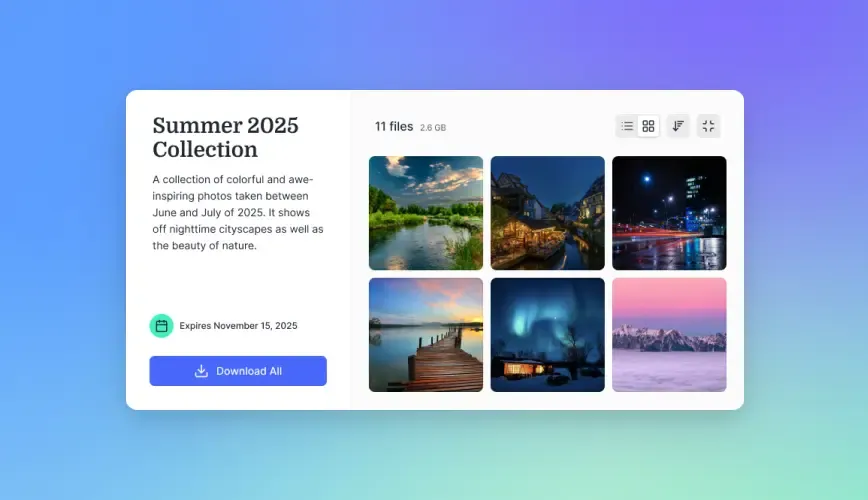
This is where the workflow gets professional. A branded portal lets you upload files to a dedicated space for each listing, add your logo and the agent's branding, control downloads and expiration, and present deliverables in an organized gallery rather than a raw folder dump.
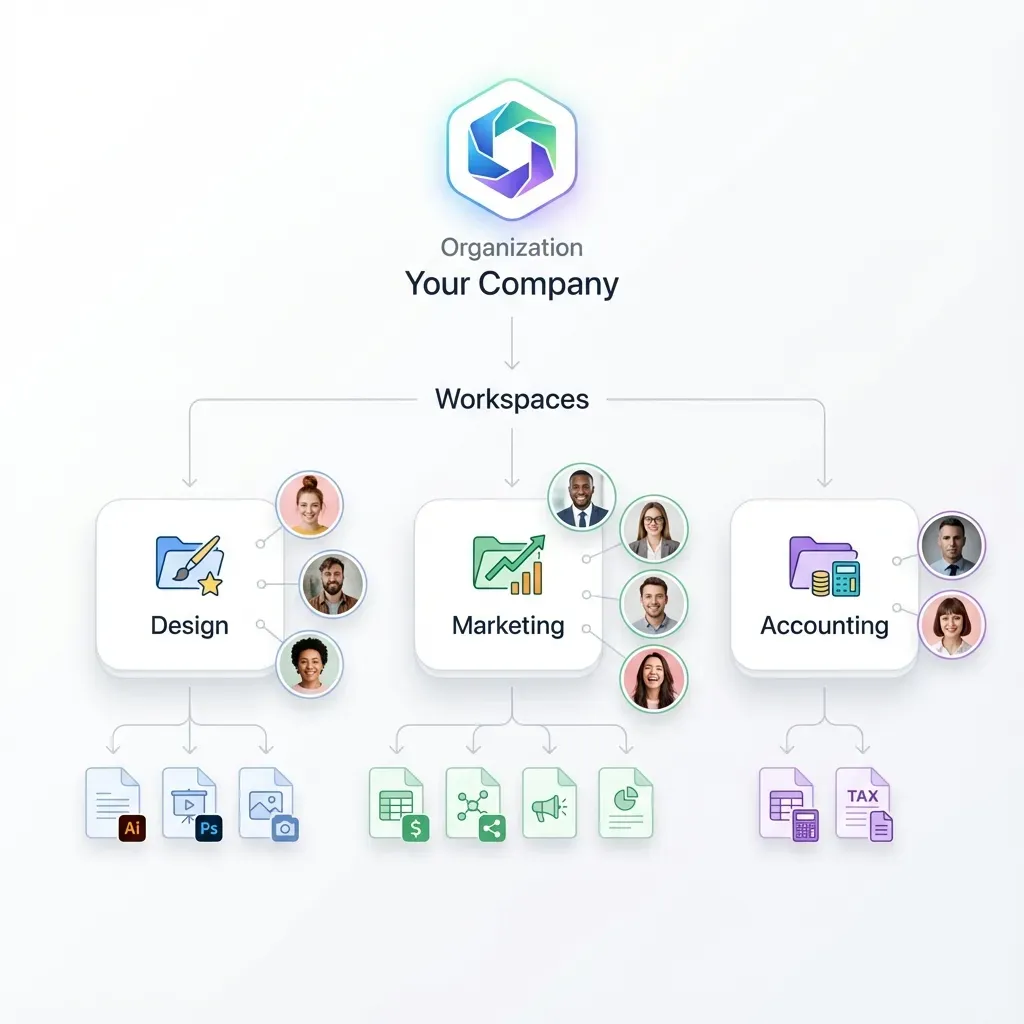
Platforms like Fastio let you set up branded shares with custom branding and organized file structures. You create a share for each listing, upload the edited files in labeled folders, and send the agent a single link. They see a clean gallery rather than a messy file browser. The share tracks downloads so you know when the agent has grabbed their files, and you can set expiration dates for shares you don't want lingering indefinitely.
For photographers managing 10+ listings a month, the time savings from a proper delivery system compounds fast. You stop fielding "can you resend that?" emails and start looking like a polished operation.
Handle Large Files Without Frustrating Your Clients
4K drone video is the biggest bottleneck in delivery. A two-minute flyover at 4K H.264 runs 500 MB to 1 GB. ProRes versions hit 5 to 8 GB. Add 30 high-res stills and you're looking at 2 to 10 GB per listing.
Here's how to keep large file delivery smooth:
Compress Intelligently
For video, H.264 at a bitrate of 50 to 80 Mbps gives excellent quality at reasonable file sizes. HandBrake (free, open source) can batch-compress videos if your editing software exports at unnecessarily high bitrates.
For stills, JPEG at quality 92 in Lightroom is the sweet spot. Going from 92 to 100 roughly doubles file size with no visible difference on screen.
Use Chunked Uploads
If your delivery platform supports chunked uploads, use it. Chunked uploading breaks large files into smaller pieces and reassembles them on the server, which prevents failed uploads on spotty connections. Fastio supports chunked uploads for large files, which matters when you're uploading 4K video over a coffee shop WiFi connection between shoots.
Provide Multiple Resolutions
Deliver both full-resolution originals and web-optimized versions. The agent needs the full-res files for MLS and print, but they also want lightweight versions they can text to clients or drop into an email. Export a second set of stills at 2048px wide and videos at 1080p for this purpose.
Set Expectations on Turnaround
Industry standard for real estate drone photography delivery is 24 to 48 hours for photos-only packages and 3 to 5 business days when edited video is included. If you offer rush delivery (same-day or next-morning), charge for it. A $50 to $150 rush fee is standard and agents expect it.
Build a Repeatable Workflow from Shoot to Delivery
Here's a step-by-step workflow that works for solo operators and small teams:
Day of shoot:
- Fly the property. Capture stills in RAW+JPEG and video in 4K.
- Back up SD cards to two locations immediately (laptop + external drive).
- Create the client folder structure on your local machine.
- Move RAW files into the RAW subfolder.
Editing (same day or next day):
- Cull stills in Lightroom or Photo Mechanic. Select the best 15 to 30 images.
- Edit selected stills: exposure, white balance, lens correction, horizon leveling.
- Export JPEGs to the Edited/Stills-HighRes folder at full resolution.
- Export a second set to Stills-Web at 2048px wide.
- Export MLS-ready versions at your local MLS dimensions.
- Edit video in Premiere, DaVinci Resolve, or Final Cut. Add stabilization, color grade, and trim.
- Export 4K master and 1080p social cuts.
Delivery (within 48 hours of shoot):
- Create a new share or folder in your delivery platform for this listing.
- Upload all edited exports in their labeled folders.
- Add a brief delivery note: what's included, recommended uses for each format, and your contact info for re-edits.
- Send the client a single download link.
- Follow up in 24 hours if the download hasn't been accessed.
This entire process takes 3 to 5 hours per listing once you've done it a few times. The editing is the bottleneck, not the delivery, which is exactly how it should be.

Pricing Your Delivery Into Your Packages
Drone photography for residential real estate typically runs $150 to $500 per property in 2026, depending on property size, location, and what's included. Here's how delivery factors into your pricing:
Basic Package ($150 to $250)
15 to 20 edited aerial stills, JPEG only, delivered via download link within 48 hours. This covers small to mid-size residential properties.
Standard Package ($250 to $400)
20 to 30 edited stills plus a 60 to 90 second 4K flyover video. Includes both full-resolution and web-optimized exports. Delivered within 48 hours for photos, 3 to 5 days for video.
Premium Package ($400 to $600+)
Full aerial stills, extended video (2 to 3 minutes), social media cuts in vertical and landscape formats, and a branded delivery gallery. Rush turnaround available. This is the package for luxury listings and commercial properties.
The delivery infrastructure itself is a business expense. Cloud storage for a working archive typically starts around $10 per month and scales with volume. Budget it into your overhead, not as a line item clients see.
Add Rush Fees
Same-day photo delivery: add $50 to $75. Next-morning video delivery: add $100 to $150. Agents in competitive markets will pay for speed, especially when a listing goes live on a tight timeline.
One detail photographers often overlook: keep your delivery archive for at least 6 months after a listing closes. Agents come back for files when they update their portfolio, pitch new clients, or need shots for social media months later. Having the files ready to re-share instantly builds loyalty.
Sources
References used to verify factual claims in this guide.
-
52% of REALTORS use drone photography or video
-
Homes with aerial images sell 68% faster than those with standard images
-
Drone photography typically costs $150 to $500 per property in 2026
Frequently Asked Questions
How do you deliver drone photos to real estate clients?
The most professional approach is a branded download portal where you upload edited files in organized folders and send the client a single link. This beats email attachments (too small), USB drives (don't scale), and generic cloud storage (no branding or organization). Set up a share for each listing with labeled folders for stills, video, and social media exports.
What file format is best for real estate drone photography?
Deliver aerial stills as JPEG at quality 90 to 95 for MLS and web use. For luxury listings that need print-quality images, include TIFF exports alongside JPEGs. Deliver video as H.264 MP4 at 4K resolution for universal playback. Always shoot in RAW for your own editing flexibility, but don't send RAW files to clients unless they specifically request them.
How much should I charge for real estate drone photography?
Residential drone photography typically costs $150 to $500 per property in 2026. A basic package with 15 to 20 edited stills runs $150 to $250. A standard package with stills plus a 4K flyover video runs $250 to $400. Premium packages with extended video, social cuts, and rush delivery start at $400 and go up from there. Add $50 to $150 for rush turnaround.
Can real estate agents fly drones themselves?
Yes, but they need an FAA Part 107 Remote Pilot Certificate since they're using the footage commercially. The test covers airspace rules, weather, and flight regulations. Many agents find it more cost-effective to hire a licensed drone photographer instead, since the Part 107 prep takes 10 to 20 hours of study and the photographer brings better equipment and editing skills.
How long should real estate drone photography delivery take?
The industry standard is 24 to 48 hours for photos-only packages and 3 to 5 business days when edited video is included. Rush delivery (same-day photos or next-morning video) is available from most photographers for an additional $50 to $150 fee.
Related Resources

Deliver Drone Photography With Branded Client Galleries
Fastio gives you branded shares with organized folders, download tracking, and chunked uploads for large 4K files. Set up a professional delivery system for your real estate photography business. Built for real estate drone photography workflows.