How to Create and Share Real Estate 3D Tours That Actually Drive Showings
A real estate 3D tour is an interactive, navigable digital model of a property that lets prospective buyers explore rooms and spaces remotely as if walking through the home in person. This guide covers the full workflow from capture to client delivery, including equipment choices, platform comparison, file management, and embedding tours on listing sites.


What a 3D Tour Actually Is (and Isn't): real estate tour
A 3D tour stitches together hundreds of panoramic images or LiDAR scans into an interactive model that viewers navigate by clicking through rooms. Unlike a video walkthrough, which follows a fixed path, a 3D tour lets the buyer control where they go and what they look at. They can measure rooms, check sightlines from the kitchen to the living room, or zoom in on finishes.
The technology ranges from simple panorama slideshows to full dimensional "digital twins" where every surface is mapped in 3D space. The distinction matters because it affects cost, file size, and what buyers can do with the tour.
Panorama-based tours stitch 360-degree photos into a clickable walkthrough. They're cheaper and faster to produce, but the viewer teleports between fixed points rather than moving freely through space. Most budget platforms use this approach.
LiDAR-based digital twins map the actual geometry of each room. Viewers get smooth transitions between spaces, accurate measurements, and a dollhouse-style overview of the entire property. Matterport pioneered this category, and iPhone Pro models now offer a consumer-grade version through apps like Polycam.
NAR data shows listings with 3D tours receive more views than those without, and Zillow reports that listings with interactive floor plans or 3D tours get roughly twice the page views and sell about 10% faster. The effect is strongest for out-of-town buyers and properties where physical showings are difficult to schedule.
Helpful references: Fastio Workspaces, Fastio Collaboration, and Fastio AI.
Related guides
- Luxury Real Estate Marketing: How to Present High-End PropertiesLuxury real estate marketing goes beyond standard listing tactics. High-end properties need professional media...
- How to Deliver Real Estate Drone Photography to ClientsMost real estate drone photography guides cover flight planning and camera settings but skip the hardest part: getting...
- How to Build a Real Estate Social Media Marketing Strategy That Generates LeadsReal estate agents who invest in social media marketing generate more qualified leads than those who rely on MLS...
- How to Organize and Share Real Estate Marketing MaterialsReal estate marketing materials pile up fast. Brochures, flyers, listing photos, drone videos, social templates, and...
- AI for Real Estate Agents: Tools That Actually Save TimeReal estate agents spend roughly a quarter of their workweek on admin, from document prep to photo delivery. This guide...
- How to Set Up a Real Estate Client Portal for Document SharingA real estate client portal is a secure, branded online workspace where agents share transaction documents,...
More on this subject: Real Estate (21 guides)
Capture Methods: From Smartphone to Professional Scanner
Your capture method determines tour quality, cost, and the time you spend on each property. Here's what actually works in 2026.
Smartphone Only (Free)
The Zillow 3D Home app runs on iPhone 7 and newer or Samsung S10 and newer. You walk through the property taking panoramas at marked positions, and Zillow stitches them into a tour that automatically appears on your Zillow listing. The quality is acceptable for standard listings but won't impress luxury buyers. The main advantage is zero cost and automatic syndication to Zillow, Trulia, and other portals.
iPhone Pro models (12 and newer) add LiDAR scanning through apps like Polycam. You get a proper 3D mesh with room measurements and floor plans for minimal software costs. This is the biggest shift in the past two years: smartphone LiDAR has made decent 3D capture nearly free.
Consumer 360 Cameras ($340 to $1,100)
Two cameras dominate:
- Ricoh Theta Z1 (around $1,075): Dual 1-inch sensors, 23MP 360-degree photos. The best image quality under $2,000 and compatible with Matterport's platform. Preferred by agents who shoot tours regularly.
- Insta360 X4 (around $340 to $500): 8K 360-degree video, dual 1/1.8-inch sensors, waterproof. Strong for video-forward tours and social media clips. More versatile than the Theta for marketing content beyond just tours.
With either camera, you place it on a tripod at each scan position, capture a 360-degree shot, then move to the next point. A 2,000-square-foot home takes about 20 to 30 positions and roughly 45 minutes to shoot. The raw files need processing through your chosen platform.
Professional LiDAR ($5,500+)
The Matterport Pro3 camera costs about $5,500 and requires a Professional subscription or higher. It captures true LiDAR measurements alongside high-resolution imagery, producing the most accurate digital twins available. For most residential agents, this is overkill. It makes sense for luxury properties, commercial real estate, or photography businesses that shoot tours as a service.
Platform Comparison: Where to Host and Manage Tours
The platform you choose handles processing, hosting, and sharing. Each has different strengths depending on your volume and budget.
Matterport
The industry standard for quality. Free tier gives you one active space. Starter ($9.99/month) supports five spaces, while higher tiers support 25 or more. On top of the subscription, additional active spaces incur hosting fees. That hidden cost adds up fast when managing multiple active listings alongside your subscription.
Best for: Agents who want the highest quality tours and can absorb the per-space hosting cost, or photography businesses that pass costs to clients.
Zillow 3D Home
Completely free. Captures via the Zillow app using your phone camera or a compatible 360 camera. Tours automatically appear on your Zillow listing and syndicate to partner sites. The quality is lower than Matterport, but for standard residential listings where you're already on Zillow, the price-to-value ratio is hard to beat.
Best for: Agents who primarily market through Zillow and want zero additional cost.
CloudPano
Offers plans with strong MLS integration. Provides branded, unbranded (MLS-compliant), and embeddable links for each tour. More affordable than Matterport for agents with many active listings since pricing is per-plan, not per-space.
Best for: High-volume agents who need MLS-compliant tours without per-listing fees.
iGuide
Combines interactive floor plans with 360-degree panoramas. Pricing starts at $29 per property for smaller homes, with larger properties running $310 and up through a certified service provider. Measurement accuracy within 0.5%, which matters for appraisals and commercial listings.
Best for: Agents who need measurement-accurate floor plans alongside their tours.
EyeSpy360
The most affordable paid option. Free tier available, Basic at $9.99/month for five tours, Pro at $24.99/month for unlimited tours. Simple drag-and-drop tour builder with a shorter learning curve than Matterport.
Best for: Agents just starting with 3D tours who want low-risk pricing.
Cupix Homes
Free tier with three tours per month, alongside paid subscription tiers. Cupix also has a separate construction-focused product (CupixWorks) for progress tracking on job sites.
Best for: Agents who occasionally create tours and want a free option beyond Zillow.


Organize Your Property Tours and Client Deliverables
Keep raw captures, processed tours, floor plans, and client files in one workspace with folder-level permissions and audit trails. generous storage. Built for real estate tour workflows.
Managing Tour Files Without Losing Track
A single processed 3D tour for a 10,000-square-foot property can reach 1GB across roughly 30,000 individual files. That includes multi-resolution panorama tiles, depth maps, texture files, and metadata. Even a modest 2,000-square-foot home generates hundreds of megabytes in raw captures and processed output.
Most agents don't think about file management until they have 30 tours scattered across three platforms, a hard drive, and a shared Google Drive folder with no naming convention. Then a past client calls asking for the tour of a property they sold eight months ago, and the search begins.
What You Need to Organize
- Raw capture files from your camera or phone (your archive copy if the platform disappears)
- Processed tour packages exported from your platform (not all platforms allow this)
- Floor plans and measurement reports if your platform generates them
- Marketing assets extracted from tours: still photos, video clips, social media previews
- Client deliverables such as branded and unbranded links, embed codes, and analytics reports
Structuring Your Storage
A folder structure by property address and date works better than organizing by client or platform:
Tours/
  2026-03-15_123-Oak-Street/
    raw/
    processed/
    marketing/
    client-deliverables/
  2026-03-22_456-Elm-Avenue/
    ...
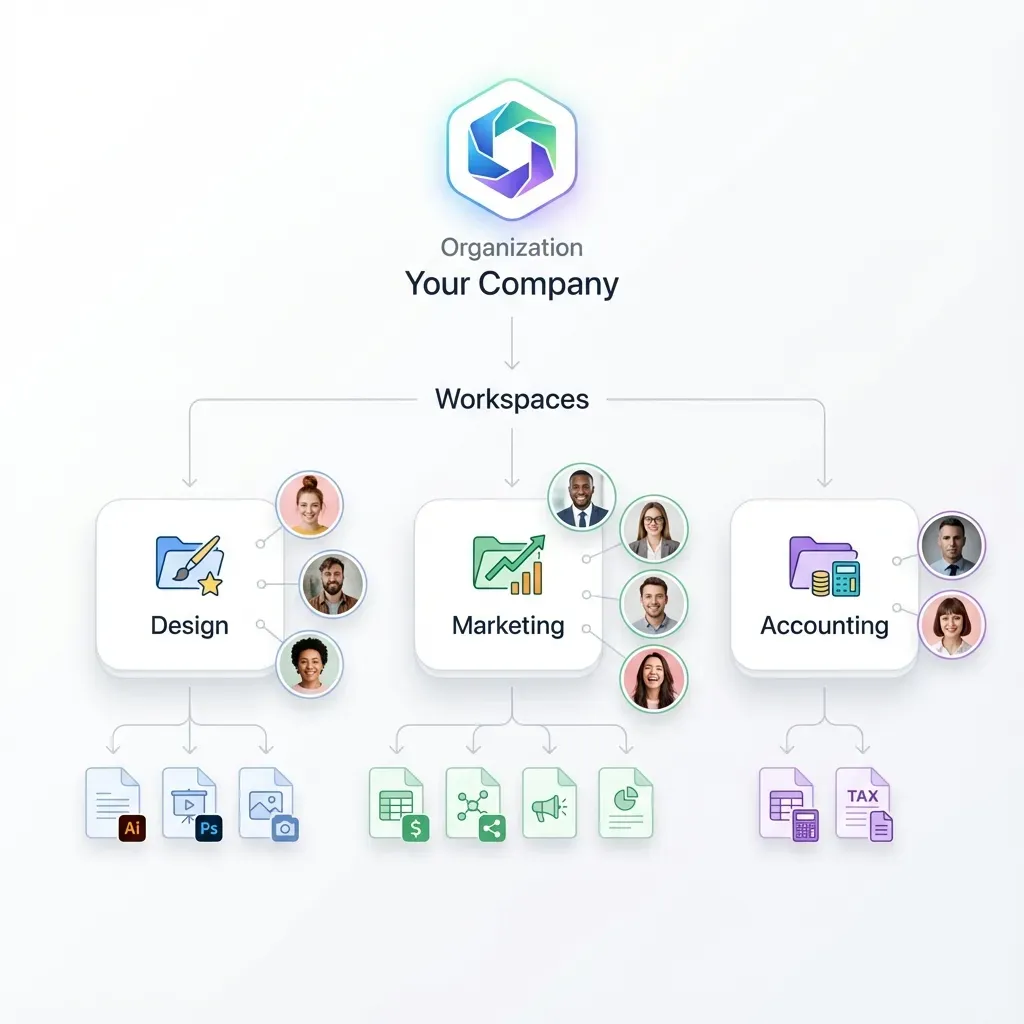
For teams managing larger portfolios, a cloud workspace with folder-level permissions keeps things organized while controlling who sees what. Fastio workspaces support this pattern with granular permissions at the org, workspace, folder, and file level, so you can give a photographer upload access to raw files without exposing client deliverables. The audit trail tracks every upload and download, which matters when multiple team members handle the same listing.
For agents who want to use AI tools to search across their tour files and documents, Fastio's Intelligence Mode auto-indexes uploaded files for semantic search, so you can ask questions across your property documentation without manually tagging everything.
Sharing Tours with Clients and Listing Sites
The best tour in the world is useless if buyers can't find it. Distribution covers four channels, and most agents underuse at least one.
MLS Integration
Your MLS has a "virtual tour URL" field. Most platforms generate three link types:
- Branded link with your name, logo, and contact info. Use this on your own website and marketing materials.
- Unbranded link stripped of agent branding. MLS rules in most markets require this version for the virtual tour field to ensure fair presentation.
- Embed code (iframe) for placing the tour directly on a webpage rather than linking out.
Once the unbranded link is in MLS, tours automatically syndicate to Zillow, Realtor.com, Redfin, and other portals. This is the highest-use distribution step because it puts the tour in front of buyers who are already searching in your market.
Your Website and Listing Pages
Embed the branded version on your listing detail pages using the iframe code your platform provides. Most embed codes are responsive and work on mobile without extra configuration. Place the tour above the fold or immediately after the photo gallery so visitors see it before scrolling past.
Email and Direct Outreach
Include the tour link in listing emails with a static preview image that links to the full interactive experience. A thumbnail of the living room or a dollhouse overview view works better than a generic "click here" link. Many tour platforms generate shareable preview images automatically.
For direct client sharing, especially with out-of-town buyers, you want a clean link that doesn't require account creation or app downloads. Some platforms gate access behind sign-up forms, which kills engagement. Test your sharing links by opening them in an incognito browser to verify the buyer experience.
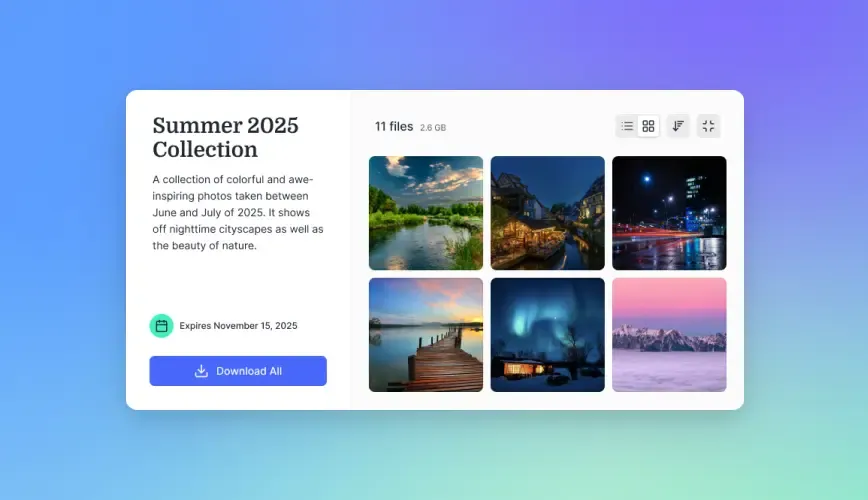
If you're sharing large files alongside tours (inspection reports, floor plans, disclosure packets), a branded share link through a platform like Fastio lets you bundle everything into one professional delivery rather than sending five separate email attachments. Branded shares let you customize the experience with your logo while tracking when clients open and download files.
Social Media
Full 3D tours don't embed natively on Instagram or Facebook. Instead, extract short video clips or animated previews from your tour platform. Most platforms offer a "highlight reel" export that creates a 15 to 30 second flythrough video suitable for Stories, Reels, or feed posts. Link to the full tour in your bio or post caption.
Costs, ROI, and When 3D Tours Make Sense
Not every listing needs a 3D tour. Understanding the real costs and returns helps you decide where to invest.
What You'll Actually Spend
DIY with a smartphone: Free to low-cost software subscriptions. The Zillow app is free, while LiDAR capture apps like Polycam charge modest subscription fees. Your time is the main cost, roughly 30 to 60 minutes per property for capture and upload.
DIY with a 360 camera: $340 to $1,100 upfront for hardware, plus recurring platform fees starting around $10/month. Amortized over 20 listings, the per-tour cost drops to $30 to $80 including your time.
Hiring a professional: $200 to $700 per property for a standard home. Luxury and commercial properties run $600 to $1,500. iGuide through a service provider starts around $310. This option makes sense if your time is better spent on client relationships than learning camera equipment.
The ROI Picture
Industry data from MLS transactions shows listings with 3D tours close up to 31% faster and generate roughly 49% more qualified inquiries. Zillow's own data shows listings with interactive tours get about twice the page views.
Worth noting: a Harvard Business School study of 75,000 home sales found that after controlling for photo quality and listing descriptions, the independent effect of 3D tours on sale price was smaller than the raw numbers suggest. Agents who invest in 3D tours also tend to invest in better photography and more detailed descriptions. The tour isn't magic on its own. It works best as part of a comprehensive marketing approach.
The clearest ROI cases are:
- Out-of-town buyers who can't easily visit in person. Relocation buyers especially rely on virtual tours to narrow their shortlist before flying in for showings.
- Luxury properties where buyers expect a premium presentation and the commission supports the investment.
- High days-on-market listings where a tour can re-energize interest after the initial marketing push.
- New construction and pre-sale where the physical property isn't ready for showings.
For a $500,000 listing with a 3% commission, even a modest reduction in days on market easily covers a $300 to $500 tour investment. The math gets better as property values increase.
Sources
References used to verify factual claims in this guide.
-
Listings with 3D tours generate roughly 49% more qualified inquiries Properties with 3D tours close up to 31% faster
-
Listings with interactive floor plans or 3D tours get roughly twice the page views and sell about 10% faster
-
Harvard Business School study of 75,000 home sales found smaller independent effects after controlling for photo quality
-
Virtual tour software market valued at $507.9M in 2025, projected to reach $1.51B by 2034
Frequently Asked Questions
How much does a 3D tour cost for real estate?
DIY tours using the free Zillow 3D Home app cost nothing. Using a consumer 360 camera like the Insta360 X4 ($340 to $500) with a platform like CloudPano brings the per-tour cost to about $30 to $80 after amortizing equipment. Hiring a professional photographer runs $200 to $700 per standard residential property, with luxury and commercial properties at $600 to $1,500.
What is the best 3D tour software for real estate?
It depends on your volume and budget. Matterport produces the highest quality digital twins but charges hosting fees per active space on top of subscription fees. CloudPano (with flat-rate plans for unlimited tours) is better for high-volume agents who need MLS integration without per-listing costs. Zillow 3D Home is completely free and auto-syndicates to Zillow listings. For agents just starting out, the Zillow app or EyeSpy360's free tier lets you experiment without financial risk.
Do 3D tours help sell houses?
MLS transaction data shows listings with 3D tours close up to 31% faster and generate roughly 49% more qualified leads. However, a Harvard Business School study of 75,000 sales found that much of this effect comes from agents who invest more broadly in marketing, not just from the tour itself. 3D tours are most effective for out-of-town buyers, luxury properties, and listings with extended days on market.
How do you share a 3D tour with clients?
Most platforms generate branded and unbranded links plus embed codes. Put the unbranded link in your MLS virtual tour field for automatic syndication to Zillow, Realtor.com, and Redfin. Embed the branded version on your website. Share direct links via email with a preview thumbnail. For social media, export short video clips from the tour since full 3D tours don't embed natively on Instagram or Facebook.
What equipment do I need to create a 3D tour?
At minimum, a recent smartphone. The Zillow 3D Home app works with iPhone 7 and newer or Samsung S10 and newer. For better quality, a consumer 360 camera like the Ricoh Theta Z1 ($1,075) or Insta360 X4 ($340 to $500) paired with a tripod. iPhone Pro models with LiDAR can create 3D scans using apps like Polycam with a low-cost subscription. Professional-grade scans require a Matterport Pro3 camera at about $5,500.
Can I create a 3D tour with my iPhone?
Yes. The Zillow 3D Home app creates basic panorama-based tours for free on iPhone 7 and newer. If you have an iPhone Pro (12 or newer), the built-in LiDAR scanner works with apps like Polycam to create actual 3D scans with room measurements and floor plans. The LiDAR approach produces better results than panorama stitching alone.
Related Resources

Organize Your Property Tours and Client Deliverables
Keep raw captures, processed tours, floor plans, and client files in one workspace with folder-level permissions and audit trails. generous storage. Built for real estate tour workflows.