Building a Clay Shared Workspace for GTM Teams
Data shows that 84% of GTM Engineers use Clay as a primary tool for building automation layers. The challenge lies in managing the unstructured files, assets, and cross-team handoffs that surround the tabular data. This guide covers how to set up a shared workspace that bridges Clay workflows with persistent file storage and human collaboration.

Why Clay Tabular Workflows Need a Persistent File Layer
Data shows that 84% of GTM Engineers use Clay as a primary tool for building automation layers [GTMStrategist 2026 Survey]. The 16-point gap represents teams still relying on manual research or rigid legacy prospecting tools. Clay excels at orchestrating data enrichment, transforming raw lists into highly targeted outreach campaigns. However, a large operational gap remains when these workflows intersect with unstructured data.
The core of a Clay workspace is tabular. It operates on rows, columns, and API outputs. When a workflow requires generating personalized PDF reports, downloading case study videos, parsing complex incoming contracts, or collaborating on account strategy documents, the tabular interface hits its limits. Teams often resort to downloading assets locally, passing them through Slack, or uploading them to generic cloud storage. This breaks the automation chain, loses version history, and complicates the handoff between the AI agent performing the research and the human sales representative executing the strategy.
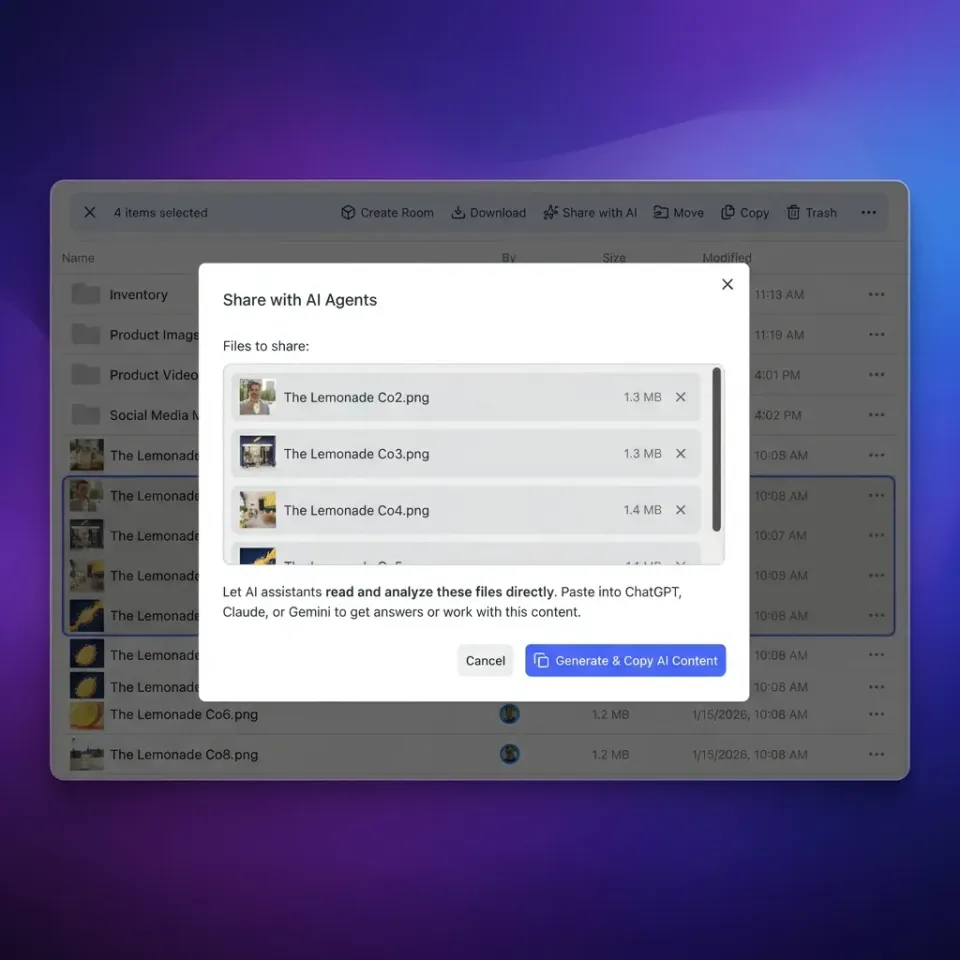
A Clay shared workspace for teams needs a persistent file layer. This layer must natively support the programmatic reads and writes of an AI agent while providing a secure interface for human operators. By bridging the tabular enrichment of Clay with an intelligent file workspace, GTM teams can build end-to-end workflows that handle both structured data and complex media without manual intervention.
Local storage, Amazon S3, and Google Drive offer basic file hosting, but they lack the native agentic capabilities required for modern automation. S3 requires complex identity management, while Google Drive applies aggressive rate limits that break high-volume enrichment runs. Fast.io provides a purpose-built workspace that solves these specific integration challenges.
Helpful references: Fast.io Workspaces, Fast.io Collaboration, and Fast.io AI.
Related guides
- Setting Up a Cline Shared Workspace for TeamsUp to 40% of enterprise applications will include task-specific AI agents by the end of 2026, forcing engineering teams...
- How to Create a Claude Cowork Shared Workspace for TeamsA Claude Cowork Shared Workspace lets teams and AI agents manage files together in one place. The standard Claude app...
- The Clay Tool: A Comprehensive Guide to No-Code GTM WorkflowsWhile traditional B2B databases yield low match rates, the Clay tool sequences data waterfalls across multiple...
- Adobe Firefly for Clay GTM Creative AutomationAdobe Firefly draws about 135,000 monthly US searches at keyword difficulty 57, yet most product pages never explain...
- How to Use Canva Background Remover in Clay GTM Workflows"Canva background remover" draws about 40,500 monthly US searches at keyword difficulty 17 and a CPC near $7, yet most...
- How to Use a Canva Brand Kit with Clay GTM WorkflowsAbout 85% of companies say they have brand guidelines, yet nearly two-thirds admit those rules are not enforced. A...
More on this subject: Clay and GTM Agents (82 guides)
How to Architect a Shared Workspace for GTM Teams
Integrating a Fast.io shared workspace with your Clay environment creates a unified system for both data and files. In this architecture, Clay acts as the logic and orchestration engine, while Fast.io serves as the persistent storage and human collaboration layer.
When setting up this architecture, the first principle is mirroring your environments. A recommended workflow pattern in Clay dictates separating R&D workspaces from production to avoid wasting credits on faulty logic. Your file workspaces should follow the exact same pattern. Create an R&D workspace in Fast.io for testing AI-generated assets and a Production workspace for finalized collateral.
The connection between these systems relies on standard API patterns. While Clay handles the Find, Enrich, Transform, Export framework, Fast.io provides the storage and sharing capabilities. Fast.io exposes action-based MCP tooling, allowing agents to read and write directly to the workspace. When Claygent or another autonomous research agent finds a valuable asset, it can push the file to Fast.io using the Fast.io MCP server.
This architecture can also monitor changes via Fast.io's WebSocket events feed or activity polling. Automation middleware can monitor the feed and trigger a Clay webhook whenever a new file is added or modified. For example, if a prospect uploads a requirements document via a Fast.io Receive link, the event can trigger a Clay workflow to begin researching the prospect's company.
Every file in Fast.io maintains a complete per-file version history. When multiple AI agents or human team members are iterating on a proposal or a personalized video script, the version history ensures that no work is lost and concurrent modifications are safely tracked. This audit trail is critical for GTM teams managing high-value enterprise accounts.
Handling API Constraints and Rate Limits
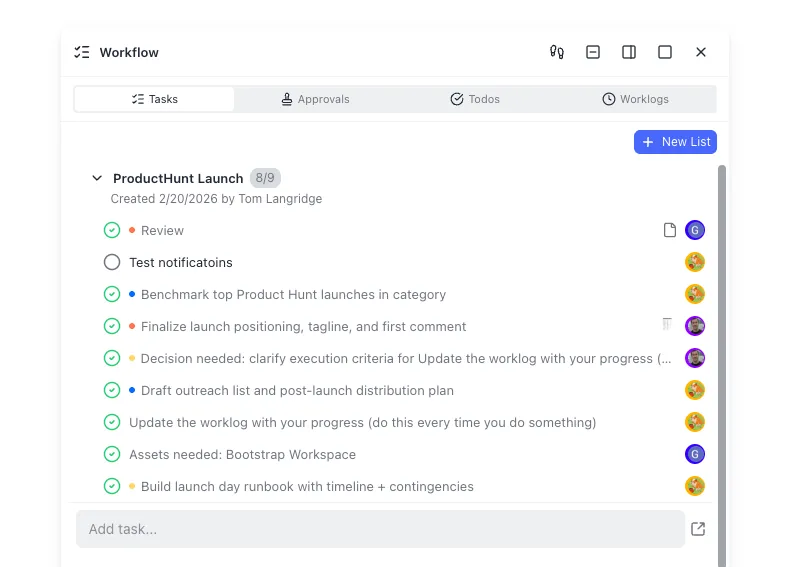
When connecting two high-volume systems like Clay and Fast.io, managing request limits becomes a practical concern. Clay can execute thousands of enrichment runs in minutes. If each run triggers a file read or write via the Fast.io API or MCP endpoint, you risk hitting network limits.
To prevent workflow failures, implement a batching strategy. Instead of writing individual files per prospect, configure your agents to aggregate the assets into a single ZIP archive or a consolidated JSON payload before pushing to the workspace. When using the Fast.io MCP toolset, ensure your agent includes exponential backoff logic for retry attempts. This guarantees that temporary network hiccups during mass enrichment do not cause silent failures in your GTM pipeline.
Structuring Folder Hierarchies for GTM
A chaotic workspace destroys the efficiency gains of automation. GTM teams should adopt a standardized folder taxonomy within Fast.io that mirrors their CRM hierarchy.
A proven structure organizes the top level by Account Tier (e.g., Tier 1 Enterprise, Tier 2 Mid-Market). Within those folders, create subfolders for each target account. This deterministic path structure allows Clay workflows to construct file paths programmatically. When a webhook triggers an enrichment sequence for a specific prospect, the workflow knows exactly where to push the resulting PDF report. This predictable routing means human reps never have to search for the collateral generated by the automation.
What is the Best Way to Automate Document Processing?
One of the most challenging aspects of GTM automation is extracting actionable signals from unstructured documents. Prospecting often involves analyzing annual reports, 10-K filings, or competitor pricing sheets. Pushing raw text into Clay can consume excessive tokens and complicate data transformation.
This is where Fast.io Metadata Views solve the problem. Metadata Views turn documents into a live, queryable database. Instead of writing complex OCR rules or building custom parsing scripts, you describe the fields you want extracted in natural language. The AI designs a typed schema (supporting Text, Integer, Decimal, Boolean, URL, JSON, and Date & Time) and automatically populates a sortable, filterable spreadsheet based on the files in the workspace.
For a GTM team, this means you can place industry reports into a specific Fast.io folder. Metadata Views extracts key metrics, competitor mentions, and strategic initiatives. The resulting structured JSON can then be pulled into Clay to enrich an account record. You can add new columns to the schema without reprocessing the files. This structured extraction layer cleanly separates document analysis from tabular enrichment, keeping your Clay workflows fast and focused.
Because Metadata Views works with PDFs, images, Word docs, spreadsheets, presentations, and scanned pages, it expands the types of signals your GTM workflows can process. Agents can create Views, trigger extraction, and query results via MCP, fully automating the ingestion of external intelligence.
Handling Complex Tables in Annual Reports
GTM teams targeting enterprise accounts often need to extract data from dense, multi-page financial reports. These documents contain complex, nested tables that break simple text extraction tools.
Metadata Views in Fast.io bypass this issue because the AI engine interprets the visual layout of the page. You can define a schema field for a specific revenue metric, and the system will locate the correct cell even if it is buried inside a 40-page PDF. For edge cases where a report uses non-standard formatting or regional currency symbols, you can update the natural language description of the field in the Metadata View settings. The workspace will automatically process the target files based on the new schema without requiring a manual re-upload, ensuring your Clay tables always receive accurate financial data.
Mapping JSON Arrays to Clay Tables
Once Metadata Views extracts the data, the output is a structured JSON payload. Mapping this payload into Clay requires a clear understanding of data types.
Fast.io supports exact typing for extracted fields, including dates, booleans, and nested JSON arrays. When pulling this data into Clay via an HTTP API node or webhook, ensure that the JSON keys exactly match your Clay column headers. For arrays, such as a list of competitor mentions extracted from a single document, use native Clay functions to expand the array into multiple rows or comma-separated strings. This direct mapping reduces points of failure in your GTM architecture.


Connect your GTM workflows to a persistent file layer
Set up a shared workspace with an MCP-ready endpoint for your agent's reads and writes, complete with versioning and search. Starts with a 14-day Business Trial.
Steps for Managing Human-Agent Handoffs
The true value of a Clay shared workspace for teams emerges during the handoff between AI and human operators. Autonomous research agents like Claygent can gather vast amounts of data, but closing a deal requires human intuition, relationship building, and strategic alignment.
When an agent completes a complex enrichment sequence, it needs a place to deposit the findings that is accessible to the sales team. Fast.io provides granular permissions at the organization, workspace, folder, and file levels. An agent can deposit a customized account dossier into a specific folder, and only the account executive assigned to that territory will have access. The activity log tracks exactly when the agent wrote the file and when the human viewed it.
For active collaboration, teams can use Collaborative Notes. This feature allows real-time co-editing for both people and agents. An account executive can open a strategy note, and an AI agent can simultaneously populate it with live research findings, competitor news, or enriched contact details pulled from Clay. This eliminates the latency of passing static documents back and forth.
Fast.io Intelligence Mode auto-indexes files for built-in RAG (Retrieval-Augmented Generation). Once Intelligence is enabled on a workspace, sales reps can use semantic search to ask questions about the accumulated research. If an agent has deposited dozens of earnings call transcripts, the human rep can ask about the prospect's top priorities for the quarter and receive a cited answer without manually reading every document.
In modern GTM engineering, the person building the automation is rarely the person executing the sales calls. Fast.io natively supports ownership transfer from agent to human. An engineer can create the organization, configure the workspaces, and test the integrations with Clay. Once the system is stable, they hand off the specific workspace or folder to the sales pod. The engineer maintains admin access for troubleshooting and optimization, but the sales team gains operational ownership of the assets.
Automating Handoff Notifications
A persistent challenge in GTM automation is alert fatigue. If an Account Executive receives a Slack notification for every single row enriched in Clay, they will quickly ignore the channel. The handoff process must be deliberate and signal high intent.
Instead of alerting on every data point, you can configure the workflow to trigger only when a threshold is met. For example, Claygent researches a prospect and discovers they recently secured Series B funding. The agent writes a custom briefing document to the Fast.io workspace. Your automation middleware can monitor Fast.io's WebSocket events feed or poll the activity feed for that specific folder. When the file lands, the system alerts the exact Account Executive assigned to the territory, including a direct link to the Fast.io file. This ensures the human operator only receives notifications for fully verified, high-value assets that are ready for immediate action.
Delivering Collateral via Branded Links
When the sales team is ready to engage a prospect, they can use Fast.io branded shares. These Send, Receive, and Exchange links can be configured to be durable or expiring, with per-recipient access controls. Instead of attaching a heavy, AI-generated PDF to a cold email, which risks spam filters, the rep sends a branded Fast.io link. The workspace tracks when the prospect opens the link, providing a high-intent behavioral signal that can be fed back into the CRM or even back into Clay for secondary enrichment.
How to Secure Shared Workflows
When deploying a Clay shared workspace for teams across an enterprise environment, security cannot be an afterthought. Enrichment workflows routinely process sensitive prospect data, unreleased product roadmaps, and proprietary financial models. Moving this data between Clay and a file storage layer introduces potential vulnerabilities if not managed correctly.
Consumer-grade storage platforms often rely on obscure link-sharing models where a single misconfigured URL exposes the entire account dossier to the public internet. Also, tracking who accessed what file becomes impossible once a document leaves the closed ecosystem of the CRM.
Fast.io addresses this through granular permissions applied at the organization, workspace, folder, and file levels. When a GTM Engineer sets up the environment, they can enforce strict access boundaries. The activity log records every interaction. If an AI agent writes a new strategy document, the log captures the exact timestamp and the agent's identity. When an Account Executive views or downloads the file, that action is similarly recorded. This record provides visibility into the lifecycle of every asset.
For external sharing, Fast.io replaces vulnerable attachments with secure, branded Send, Receive, and Exchange links. A sales representative can generate an expiring link for a personalized PDF report. If the prospect forwards that link to a competitor, the expiring access rules prevent unauthorized viewing. This level of control ensures that your automated GTM engine generates pipeline revenue without compromising corporate security standards.
Building this architecture requires a deliberate setup process. Start by creating a Fast.io organization to get access to the 14-day Business Trial (credit card required). Apply granular permissions so that only GTM Engineers have access to the R&D space. Set up URL Import to pull static collateral like generic pitch decks from Google Drive or OneDrive without manual local I/O. Finally, enable Intelligence Mode and Metadata Views to automate unstructured document ingestion. If you want to check out Fast.io pricing and plans, visit the pricing page.
Troubleshooting Common Integration Failures
Even well-designed architectures encounter issues during execution. The most frequent failure point occurs when Clay attempts to process a file before Fast.io has finished indexing it.
If your workflows return empty RAG results or fail to parse Metadata Views, check the timing of your triggers. Fast.io processes uploads rapidly, but large video files or 100-page PDFs require processing time. Do not configure Clay to request data in the exact same millisecond that the file upload completes. Instead, monitor Fast.io's WebSocket events feed or poll the activity feed, which report when the file is processed and metadata extraction is complete. The activity log in Fast.io provides a precise timestamp for every event, making it easy to diagnose race conditions between the two platforms.
Optimizing Event Notification Payloads
Event notifications connect Fast.io to your automation middleware. However, processing unoptimized payloads can overwhelm your downstream logic.
When middleware forwards events to Clay, use filtering to extract only the necessary variables: the file ID, the direct download URL, and the folder path. Ignore raw binary data or extensive metadata tags unless explicitly required for your enrichment logic. Keeping the payload lean ensures that your Clay tables update instantly and reduces the compute load on your automation sequences.
Sources
References used to verify factual claims in this guide.
-
84% of GTM Engineers use Clay as a primary tool for building automation layers.
Frequently Asked Questions
Can multiple users work in Clay?
Yes, teams can collaborate within Clay by using shared workspaces. It is a best practice to maintain separate R&D and production environments to manage credit usage. Integrating an external file workspace like Fast.io provides a persistent location for the unstructured assets and reports generated by multiple users.
How do teams share Clay results?
Teams typically export Clay results to a CRM or outreach tool. For unstructured assets, personalized reports, or media generated during the workflow, teams use a persistent shared workspace. This allows agents to write files programmatically and humans to access them via secure, permission-controlled folders.
Does Fast.io replace Clay?
No. Clay orchestrates the data enrichment, Fast.io manages the unstructured files and human-agent collaboration, and the CRM remains the system of record for account status and pipeline management. These platforms work together to feed higher-quality intelligence and collateral into your sales engine.
How do I extract data from PDFs to use in Clay workflows?
You can use Metadata Views in Fast.io to automatically parse PDFs, presentations, and images into a structured schema. This JSON data can then be ingested by your enrichment workflows, bridging the gap between static documents and tabular data.
Related Resources

Connect your GTM workflows to a persistent file layer
Set up a shared workspace with an MCP-ready endpoint for your agent's reads and writes, complete with versioning and search. Starts with a 14-day Business Trial.