Best OpenClaw Workflows for AI Sketch-to-Image and Concept Rendering
OpenClaw's image_generate tool routes sketch inputs through providers like OpenAI gpt-image-2, fal Krea 2, and Gemini, each with different reference image limits and rendering styles. This guide covers seven workflows that turn rough pencil drawings, wireframes, and concept sketches into finished renders, from single-reference editing to multi-provider batch pipelines.

Why Sketch-to-Image Rendering Needs an Agent Pipeline
The AI image generator market reached an estimated $484 million in 2026, according to Fortune Business Insights, but most of that growth comes from browser-based tools where you type a prompt, click generate, and get a single image back. Sketch-to-image rendering works differently. Instead of generating from text alone, you feed a rough pencil drawing, wireframe, or concept sketch into an AI model as a reference input, and the model uses that visual structure to guide its output. The result is a finished render that preserves your original composition, proportions, and layout intent.
Standalone generators handle this one image at a time. Concept artists and design teams typically need to render dozens of variations from a single sketch, test different visual styles against the same composition, or route renders through post-processing steps like vectorization and upscaling. OpenClaw's agent-driven approach addresses this gap. Instead of switching between provider UIs for each variation, you describe what you want in a conversation, pass your sketch as a reference image, and let OpenClaw handle the rendering call. That conversational loop makes it practical to script repeatable pipelines, test multiple providers, and iterate without manual tool-switching.
Related guides
- How to Use DALL-E 3 Image Generation in Clay GTM WorkflowsThe query "dall-e 3 ai image generator" draws about 60,500 monthly US searches at a keyword difficulty of 53 and...
- Image Resizer Workflows for Clay GTM CampaignsPages that rank for "image resizer" almost never show how Clay GTM teams turn one master creative into email, ad, and...
- Best OpenClaw Workflows for AI Image Generation PipelinesOpenClaw 2026.4.5 turned agents into image producers. The native image_generate tool supports 10 providers out of the...
- 8 OpenClaw Workflows for AI Batch Image Generation at ScaleAI platforms produce over 34 million images per day, but most batch generation guides only cover single-tool setups....
- Best OpenClaw Workflows for AI Interior Design and Room RenderingAI rendering runs 100 to 500 times faster than traditional methods, yet only 20% of design professionals have fully...
- Top OpenClaw Workflows for AI Image Generation with Brand ConsistencyAbout one in four companies have AI agents fully integrated into their marketing stack. For the rest, brand consistency...
More on this subject: OpenClaw Workflows and Integrations (69 guides)
How OpenClaw Routes Sketch-to-Image Requests
OpenClaw's image_generate tool handles both text-to-image generation and reference-image editing through the same interface. When you pass a sketch file as a reference image alongside a text prompt, the tool sends both to whichever provider you have configured. The provider uses the sketch to guide composition while the prompt directs content and style.
Each provider handles reference images differently, and the limits matter when planning a workflow. OpenAI gpt-image-2 accepts up to 5 reference images in edit mode and produces strong photorealistic output from rough sketches. Google Gemini also supports up to 5 references with natural lighting characteristics. On the style-transfer side, fal Krea 2 accepts up to 10 style references and treats them as stylistic inputs rather than direct edit targets, which works well when you want to apply a consistent visual treatment across multiple sketches. Fal Flux handles single-image transformations and renders quickly, making it a good choice for rapid iteration.
For teams that need ControlNet-level structural precision, ComfyUI support routes requests through a local instance where sketch inputs can be processed as Canny edge maps or depth maps before generation. The Recraft ClawHub skill adds post-processing capabilities like vectorization, background removal, and upscaling on top of any provider's output.
OpenClaw's configuration supports setting a primary provider with ranked fallbacks. If the primary times out or hits a rate limit, requests automatically route to the next provider in the chain. Check the OpenClaw image generation docs for current provider availability and reference image limits.

Seven OpenClaw Workflows for Sketch-to-Image Rendering
These workflows are ordered from simplest to most complex. Start with single-reference editing to validate your setup, then move to multi-reference and batch approaches as your project demands grow. Each workflow builds on the previous one, so a team that masters single-reference editing can layer on style transfer or batch rendering without rethinking the pipeline from scratch.
1. Single-Reference Sketch Editing
The most straightforward workflow. Upload one sketch as a reference image alongside a descriptive prompt, and let the provider render a finished version.
Pass your sketch file using the image parameter and write a prompt that describes the desired output, not the sketch itself. If your sketch shows a mountain cabin, your prompt should describe "a wooden cabin in a snowy mountain valley at sunset, watercolor style" rather than "turn this sketch into a painting." The AI model infers structure from the sketch and applies the prompt's content and style direction.
Best providers: OpenAI gpt-image-2 for photorealistic output, fal Flux for fast single-image renders.
When to use: Early concept exploration, quick visualization of a single idea, or testing whether a sketch translates well to AI rendering before committing to a larger pipeline.
2. Multi-Reference Style Transfer with fal Krea 2
Fal Krea 2 treats reference images as style inputs rather than direct edit targets. This makes it well suited for a two-part workflow: your sketch defines the composition, while additional reference images define the visual style. You can pass up to 10 style references alongside your sketch.
In practice, this means collecting 3 to 5 images that represent your target aesthetic (a specific illustrator's color palette, a particular lighting mood, a texture treatment) and passing them as references with your sketch. Krea 2 blends the stylistic qualities from those references while preserving your sketch's structural layout. You can also control the creativity level using the "raw", "low", "medium", or "high" settings, which adjusts how closely the output follows your reference inputs versus the model's own interpretation.
Best for: Concept artists who need consistent visual styles across multiple sketches, or teams working to match an established brand aesthetic.
Limitation: Returns one image per request. For batch variations, you will need to run multiple requests with different style reference sets.
3. Provider Fallback Chains for Production Stability
API timeouts and rate limits are a reality when rendering at scale. OpenClaw's fallback chain configuration lets you define a primary provider and a ranked list of alternatives. If the primary provider fails or times out, the tool automatically routes to the next provider in the chain.
A practical fallback chain for sketch work might use gpt-image-2 as the primary (highest quality), Gemini as the first fallback (similar reference image support), and fal Flux as the final fallback (fast, single-reference). Each provider will interpret the same sketch differently, so test your fallback chain with a representative sketch before relying on it for production runs.
You can set timeoutMs per configuration to control how long OpenClaw waits before failing over. For sketch-to-image work, 180 seconds is a reasonable starting point since complex reference-image renders take longer than text-only generation.
When to use: Any production pipeline where rendering interruptions would delay a client delivery or stall an automated workflow.
4. Iterative Single-Element Refinement
Rather than rewriting your entire prompt after each generation, change one element at a time: lighting, background, color palette, or level of detail. This approach converges on the right interpretation faster and uses fewer API credits, since you can identify exactly which prompt change produced which visual change.
A typical iteration loop looks like this: generate an initial render from your sketch, evaluate the output, adjust one prompt element (e.g., change "afternoon sunlight" to "overcast diffused light"), re-generate, and compare. Keep the sketch reference and all other prompt elements constant between iterations.
This workflow pairs well with providers that support higher image counts per request. OpenAI gpt-image-2 generates up to 4 images per call, so you can test multiple lighting variations in a single request by adjusting the count parameter.
Best for: Projects where the composition is right but the mood, lighting, or style needs fine-tuning. Common in architectural visualization and product concept rendering.
5. Batch Rendering Across Providers
Different providers render the same sketch in visibly different ways. OpenAI tends toward clean, photorealistic output. Gemini produces natural lighting with softer edges. Fal Flux generates quickly with a more stylized look. Running the same sketch through multiple providers in a single session gives you a range of concept variations without manually switching tools.
In a batch workflow, you send the same sketch and base prompt to three or four providers sequentially, then compare the outputs. This is especially useful in early-stage concept development where the team has not yet committed to a visual direction. Present the provider variations to stakeholders and let them pick the style that fits.
You can extend this by varying the aspectRatio and size parameters per provider. Generate a 16:9 landscape version for presentation decks and a 1:1 square crop for social previews from the same sketch in one session.
Best for: Early-stage concept exploration, mood board creation, and client presentations where showing multiple directions matters.
6. Recraft Post-Processing Pipeline
The Recraft skill adds post-processing capabilities that the built-in image_generate tool does not cover. After generating a render from your sketch, you can pass the output through Recraft for background removal, vectorization (converting raster renders to scalable SVG), and resolution upscaling.
Install the skill by running /recraft in any OpenClaw conversation and authenticating with your Recraft API key. Once installed, you can chain it with image_generate in a single session: render the sketch first, then process the output through Recraft's editing and upscaling tools.
A common use case is generating a concept render from a sketch, removing the background to isolate the subject, then vectorizing the result for use in a pitch deck or brand guidelines document where scalable graphics are required.
Best for: Teams that need production-ready assets (not just concept renders) from their sketch-to-image pipeline. Particularly useful for logo concepts, icon design, and illustration work.
7. ComfyUI Custom Node Workflows
For teams already running ComfyUI locally, OpenClaw can route image_generate requests through your ComfyUI instance. This opens up ControlNet conditioning, where your sketch is processed as a Canny edge map, depth map, or line-art input before generation. ControlNet gives you more precise structural control than the reference-image approach used by cloud providers.
ComfyUI support accepts one image per workflow node and requires a running instance at your configured endpoint. The tradeoff is setup complexity: you need to install ComfyUI, download the appropriate ControlNet models, and configure the workflow before OpenClaw can route to it. For teams doing high-volume concept rendering with strict structural fidelity requirements, this level of control is worth the setup cost.
Best for: Studios and teams with existing ComfyUI infrastructure who need ControlNet-level sketch conditioning. Not recommended as a first workflow due to setup requirements.


Store and deliver concept renders from one workspace
Upload rendered images, organize by project, and share branded review portals with clients. generous storage.
Delivering Concept Renders to Clients and Stakeholders
Rendering the image is half the job. The other half is getting it to the right people in a format they can review, comment on, and approve. When an agent generates concept renders in an OpenClaw session, those files exist locally or in temporary provider storage. They need a persistent home that both the agent and human reviewers can access.
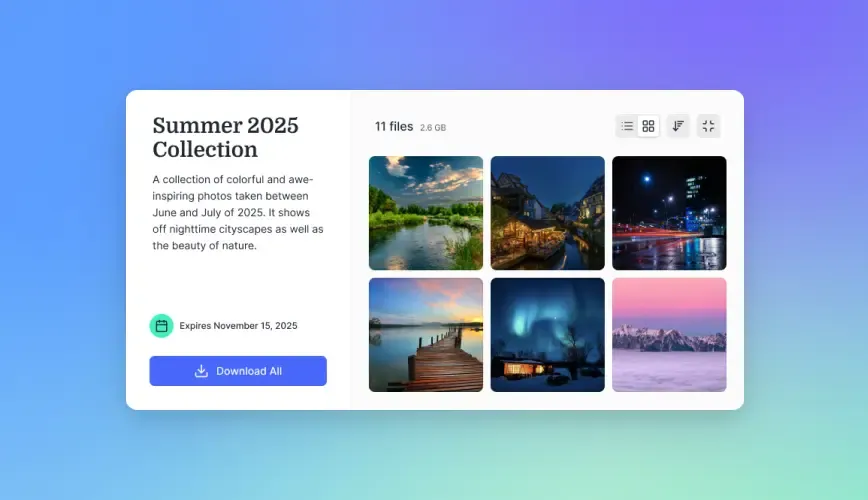
Fastio workspaces solve this by giving agents and humans the same file system. An agent can upload rendered images to a workspace, organize them by project or concept direction, and share a branded portal with clients for review. Comments can be anchored to specific regions of an image, so feedback stays attached to the visual it references rather than floating in an email thread.
For teams using OpenClaw with the Fastio MCP server, the agent can upload renders, create a share link, and send it to stakeholders without leaving the conversation. Fastio offers a 14-day Business Trial (card required; see /pricing/) to run concept rendering projects.
Other storage options work too. S3 or Google Cloud Storage provide raw bucket storage with API access. Google Drive and Dropbox offer folder-based sharing with familiar UIs. Fastio's advantage for this specific workflow is the combination of agent API access, visual file previews, anchored image comments, and ownership transfer where an agent builds the project workspace and hands control to a human client when the work is done.
Choosing the Right Workflow for Your Project
Start with workflow 1 (single-reference editing) to validate that your sketch translates well to AI rendering. If the composition works but the style needs refinement, move to workflow 2 (style transfer with fal Krea 2) or workflow 4 (iterative refinement). For production pipelines, add workflow 3 (fallback chains) to prevent provider outages from stalling your work.
Batch rendering (workflow 5) is best reserved for early-stage exploration where visual direction has not been decided. Post-processing with Recraft (workflow 6) makes sense when you need production-ready vector or high-resolution assets. ComfyUI (workflow 7) is the choice for teams that need ControlNet-level structural precision and already have the infrastructure running.
The provider you choose matters more than the workflow pattern. For most sketch-to-image work, OpenAI gpt-image-2 offers the best balance of reference image support and output quality. Fal Krea 2 is the strongest option when style consistency across renders matters more than photorealism. And for rapid concept iteration where speed is the priority, fal Flux renders faster than any other supported provider.
Sources
References used to verify factual claims in this guide.
-
AI image generator market reached an estimated $484 million in 2026
-
OpenAI supports up to 5 reference images; fal Krea 2 supports up to 10 style references; fal Nano Banana 2 supports up to 14
-
Recraft skill provides raster and vector generation, prompt-based editing, background removal, vectorization, upscaling, and batch jobs
Frequently Asked Questions
How do you convert a sketch to a realistic image with AI?
Upload your sketch as a reference image to an AI image generator that supports image editing mode, like OpenAI's gpt-image-2 or Google Gemini. Write a prompt describing the desired finished result (not the sketch itself), and the model uses your drawing's structure to guide the output composition while applying the visual style from your prompt. In OpenClaw, this uses the image_generate tool with the image parameter pointing to your sketch file.
Can OpenClaw turn drawings into photos?
Yes. OpenClaw's image_generate tool accepts reference images ranging from rough sketches to detailed drawings. When paired with a photorealistic provider like OpenAI gpt-image-2, it generates photo-quality renders that preserve the composition and proportions from your original drawing. The quality depends on the sketch's clarity and the specificity of your text prompt.
What AI model is best for sketch to image?
OpenAI gpt-image-2 is the strongest general-purpose option, supporting up to 5 reference images with high-quality photorealistic output. For style-driven rendering, fal Krea 2 accepts up to 10 style references and blends them with your sketch's composition. For maximum structural fidelity, ControlNet models through ComfyUI give the most precise control over how the AI interprets sketch lines.
How many reference images can OpenClaw use for sketch rendering?
The limit depends on the provider. OpenAI and Google Gemini each support up to 5 references. Fal Krea 2 supports up to 10 style references. Fal Nano Banana 2 supports up to 14. Fal Flux and ComfyUI each support 1 image. Run /tool image_generate action=list in OpenClaw to check your available providers and their current limits.
Do I need a paid API key for OpenClaw sketch-to-image?
You need an API key for whichever image generation provider you configure. OpenAI, Google, and fal each have their own pricing and free-tier allowances. OpenClaw itself is open source and free to use, but it routes requests to these external providers, which bill per image generated. The Recraft skill also requires a separate Recraft API key for post-processing features like vectorization and upscaling.
Related Resources

Store and deliver concept renders from one workspace
Upload rendered images, organize by project, and share branded review portals with clients. generous storage.