8 OpenClaw Workflows for AI Batch Image Generation at Scale
AI platforms produce over 34 million images per day, but most batch generation guides only cover single-tool setups. OpenClaw adds an orchestration layer that routes requests across ComfyUI, fal.ai, OpenAI, and other providers with automatic fallback, so you can queue hundreds of generations without babysitting each one. This guide ranks eight workflows and skills by throughput, cost, and production readiness.


Why Single-Provider Scripts Break at Scale
AI image platforms now produce over 34 million images per day, according to Photoroom's 2026 analysis. That volume does not come from one artist hitting "generate" repeatedly. It comes from automated pipelines that queue prompts, route them to the fast available backend, collect outputs, and store them where a team can actually find them.
Most batch generation tutorials stop at a single provider: run a ComfyUI workflow in a loop, or call the OpenAI API with a script. That works for 20 images. At 200 or 2,000, you hit rate limits, provider outages, and a growing pile of unnamed PNGs scattered across temp directories. OpenClaw sits between your agent and the generation backends. It handles provider selection, fallback routing, and task tracking so the agent focuses on what to generate rather than how to keep the pipeline running.
This list covers eight OpenClaw workflows and skills for batch image generation, organized by backend and use case. Each entry includes verified capabilities from official sources, practical strengths, and honest limitations.

Related guides
- How to Use DALL-E 3 Image Generation in Clay GTM WorkflowsThe query "dall-e 3 ai image generator" draws about 60,500 monthly US searches at a keyword difficulty of 53 and...
- How to Build Scalable Lead Generation Workflows in ClayWaterfall enrichment increases contact find rates by up to 80%, yet many sales teams fail to scale outbound workflows...
- Best OpenClaw Workflows for AI Image Generation PipelinesOpenClaw 2026.4.5 turned agents into image producers. The native image_generate tool supports 10 providers out of the...
- Top OpenClaw Workflows for AI Image Generation with Brand ConsistencyAbout one in four companies have AI agents fully integrated into their marketing stack. For the rest, brand consistency...
- Best OpenClaw Workflows for AI Headshot GenerationOpenClaw turns AI headshot generation into a repeatable, chat-driven workflow. Dedicated skills like...
- Best OpenClaw Workflows for AI Sketch-to-Image and Concept RenderingOpenClaw's image_generate tool routes sketch inputs through providers like OpenAI gpt-image-2, fal Krea 2, and Gemini,...
More on this subject: OpenClaw Workflows and Integrations (69 guides)
How We Evaluated These Workflows
We tested each workflow against five criteria specific to batch image generation at scale:
- Provider coverage: How many generation backends does it support, and can it fall back to alternatives when one provider is unavailable?
- Batch mechanics: Can the workflow queue multiple generations in a single request, or does the agent need to call each one individually?
- Asset handling: Where do generated images end up? Workflows that organize outputs by job or prompt save cleanup time compared to those that scatter files across temp directories.
- Cost efficiency: Price per image matters when you are generating hundreds or thousands. We noted approximate costs where providers publish them.
- Production readiness: How does it handle concurrency limits, errors, and provider outages? These factors separate prototypes from pipelines you can run overnight.
All capabilities were verified against official OpenClaw documentation, ClawHub listings, and provider docs accessed in June 2026.
Comparing OpenClaw Batch Image Workflows


Organize your batch-generated images in one workspace
Fast.io gives OpenClaw agents persistent cloud workspaces with auto-indexing, semantic search, and branded sharing. Start with a 14-day Business Trial.
1. OpenClaw Built-in image_generate Tool
OpenClaw's native image_generate tool is the default starting point for any image generation workflow. It routes requests across 11 providers: OpenAI (GPT Image 2, GPT Image 1.5), Google Gemini, fal.ai (Flux, Krea), DeepInfra, OpenRouter, Microsoft Foundry, ComfyUI, MiniMax, xAI, Vydra, and LiteLLM.
The tool runs asynchronously. It accepts a prompt, returns a task ID immediately, and notifies the agent when the image is ready. For batch work, agents queue multiple generation requests with different prompts, and OpenClaw tracks each one independently.
Key strengths:
- Multi-provider fallback: if one provider rate-limits or goes down, the request automatically routes to the next configured backend
- Supports generating up to 4 images per call, reducing round trips for small batch jobs
- Supports custom sizing from 1024x1024 up to 3840x2160 and aspect ratio control
- Provider config lives in one place, with a primary model and fallback array
- Diagnostic actions (
listandstatus) let agents inspect available providers and track active tasks
Limitations:
- The 4-image-per-call cap means true bulk runs still require looping
- Reference image editing support varies by provider (1 to 5 input images depending on backend)
- Transparent background generation only works with OpenAI's GPT Image 1.5 in PNG/WebP output
Best for: Teams that want one configuration to cover multiple providers without writing per-backend logic.
Setup: Configure your default model and fallbacks in the OpenClaw agent config:
{
  "imageGenerationModel": {
    "primary": "openai/gpt-image-2",
    "fallbacks": ["fal/fal-ai/flux/dev", "deepinfra/..."]
  }
}

2. ComfyUI-OpenClaw Skill
The ComfyUI-OpenClaw skill connects OpenClaw agents to local or cloud ComfyUI servers. Unlike the built-in image_generate tool, this skill is entirely workflow-driven. You point it at a ComfyUI workflow JSON file, specify the prompt input node and output node, and the agent submits jobs through the ComfyUI API.
The skill uses a token-saving architecture: instead of transmitting the full workflow JSON (which can be hundreds of kilobytes for complex Stable Diffusion or Flux pipelines), it references workflow templates by ID from a registry stored in data/templates/. The /run command supports both free-text prompts and structured key=value parameter submission.
Key strengths:
- Full access to any ComfyUI workflow, including custom nodes, LoRAs, ControlNet, and inpainting
- Template registry with
{{key}}placeholder substitution for batch parameter sweeps - Parameter Lab for A/B model comparisons with history tracking and replay
- Supports both local ComfyUI (default
http://127.0.0.1:8188) and Comfy Cloud via API key - Execution budgets cap concurrent submissions (default max 2 inflight) to protect your queue
- Handles image, video, and music output types through separate nested workflow configs
Limitations:
- Requires a running ComfyUI instance with your workflows pre-configured
- Concurrency cap of 2 inflight submissions by default means true parallel batch runs need config tuning
- 512KB max rendered workflow size
Best for: Teams running custom Stable Diffusion or Flux pipelines who need agent-driven parameter sweeps across their existing ComfyUI workflows.
Install: Available on ClawHub and LobeHub. Git clone into your OpenClaw skills directory or install via ClawHub.
3. fal-ai Skill
The fal-ai skill connects OpenClaw to fal.ai's cloud inference platform, which hosts Flux, SDXL, Krea, Seedream, and GPT Image 2 (proxied). It removes the need to run local GPU hardware for Flux-based generation.
Adding a FAL_KEY to your OpenClaw environment unlocks the full model catalog. The default image model is fal/fal-ai/flux/dev, but you can point to any fal-hosted model. For batch work, the fal.ai API supports higher per-call image counts than OpenClaw's built-in tool, though OpenClaw may cap requests at its abstraction layer.
Key strengths:
- No local GPU required for Flux, SDXL, or Seedream generation
- Cloud execution means you can scale without managing infrastructure
- Works as both a primary provider and a fallback in multi-provider configs
- Supports image, video, and audio generation from one skill
- Approximate cost of $0.03-0.05 per image for Flux Dev
Limitations:
- Requires a fal.ai API key and paid account for production volume
- Less workflow customization than ComfyUI (no custom nodes or LoRAs)
- Network latency adds overhead compared to local generation
Best for: Teams that want Flux or SDXL quality without running GPU hardware, especially as a fallback provider behind a local ComfyUI primary.
4. OpenAI Image CLI Skill
The openai-image-cli skill on ClawHub gives OpenClaw agents command-line access to OpenAI's GPT Image 2 and DALL-E models. It handles generation, editing, and image management through the OpenAI API.
GPT Image 2 produces the highest-fidelity results in OpenClaw's provider lineup, particularly for photorealistic content and text rendering within images. The trade-off is cost: at roughly $0.04-0.08 per image depending on resolution and quality settings, it is 10-20x more expensive than budget alternatives.
Key strengths:
- Highest output quality among OpenClaw-accessible providers, especially for text-in-image accuracy
- Reference image editing with up to 5 input images
- Transparent background support (GPT Image 1.5 with PNG/WebP)
- Direct API integration, no proxy or middleware required
Limitations:
- Higher per-image cost limits viability for bulk draft generation
- Sequential generation without native batching beyond the count parameter
- Rate limits can throttle high-volume runs without fallback configuration
Best for: Final-quality passes where fidelity matters more than cost, such as hero images, product shots, or client deliverables.
5. eachlabs-image-generation Skill
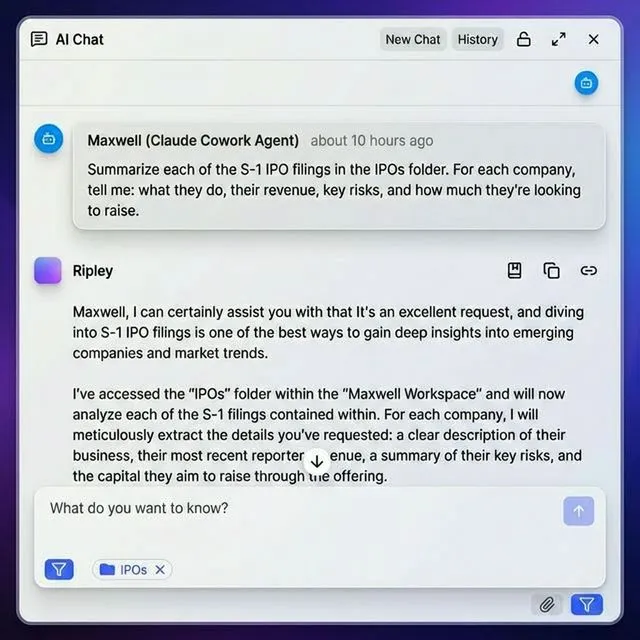
The eachlabs-image-generation skill routes requests through EachLabs to multiple models: Flux, GPT Image, Gemini, and Imagen. Its main value for batch work is model comparison. You can generate the same prompt across different backends and compare results before committing to a single provider for a full run.
Key strengths:
- Access to multiple generation models through one skill
- Useful for A/B testing which model handles your specific prompt style best
- Reduces the setup overhead of configuring each provider separately
Limitations:
- Adds a third-party routing layer between OpenClaw and the generation provider
- Pricing depends on the underlying model selected
- Less control over generation parameters than direct provider skills
Best for: Evaluation runs where you need to compare output quality across providers before scaling up.
6. Budget and Quality Skill Variants
Two ClawHub skills target opposite ends of the cost-quality spectrum for batch generation.
cheapest-image optimizes for volume. At approximately $0.004 per image, it routes to the lowest-cost available provider. For batch runs where you need hundreds of drafts, mood boards, or placeholder images, the cost difference is significant: 1,000 images costs roughly $4 instead of $40-80 through premium providers.
best-image optimizes for quality at roughly $0.12-0.20 per image. It selects from multiple high-fidelity models and is suited for final deliverables where each image needs to be publication-ready.
Key strengths (cheapest-image):
- Lowest per-image cost in the OpenClaw ecosystem
- Practical for high-volume draft generation, texture libraries, or training data collection
Key strengths (best-image):
- Curated model selection for consistent high quality
- Good for final-pass generation after prototyping with cheaper options
Limitations (both):
- Sequential generation without built-in batch queuing
- Provider selection is opaque compared to configuring your own fallback chain
- Quality and cost may shift as underlying providers change pricing
Best for: cheapest-image for volume-first work like asset libraries. best-image for client-facing deliverables.
7. xAI Grok Image CLI Skill
The grok-image-cli skill connects OpenClaw to xAI's Grok image generation API. Grok's image model handles creative and stylized generation well, and the CLI skill provides a straightforward command-line interface for generation and editing tasks.
Key strengths:
- Alternative provider with different aesthetic strengths than Flux or GPT Image
- Command-line interface integrates cleanly with OpenClaw agent workflows
- Useful as a diversity option in multi-provider fallback chains
Limitations:
- Smaller model catalog compared to fal.ai or OpenAI
- Less community tooling and workflow examples than ComfyUI or Flux-based options
Best for: Adding stylistic diversity to multi-provider pipelines, or teams already using xAI infrastructure.
8. Fast.io for Batch Output Storage and Handoff
Generation is half the problem. The other half is storing, organizing, and handing off hundreds or thousands of generated images. Most batch scripts dump outputs to a local directory. That works for a solo developer, but falls apart when multiple agents generate in parallel or when a client needs to review results.
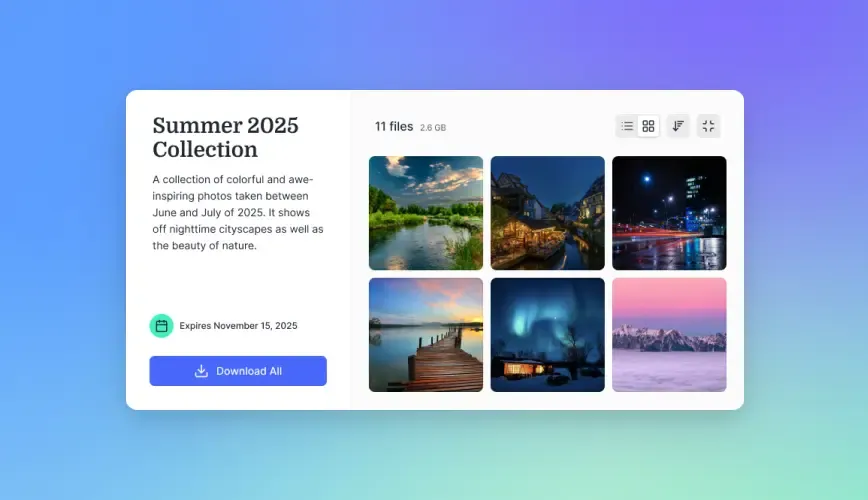
Fast.io adds a persistent workspace layer to any OpenClaw image generation pipeline. Agents upload generated images to organized workspaces, and humans review them through the same interface. Fast.io plans provide scalable storage starting at 250 GB, with a 14-day Business Trial available.
Key strengths:
- Persistent storage across agent sessions, no temp directory cleanup
- Intelligence Mode auto-indexes uploaded images for semantic search and RAG queries
- Branded shares let you send a curated set of generated images to a client for review
- Ownership transfer: an agent builds and organizes the workspace, then hands control to a human
- File versioning tracks generation iterations without overwriting previous outputs
- Works with any OpenClaw provider through the Fast.io MCP server
Limitations:
- Starter tier provides 250 GB of storage, covering massive batches of generated images
- Not a generation provider itself. You still need one of the skills above for the actual image creation
Best for: Teams running batch generation pipelines who need organized storage, client review workflows, and agent-to-human handoff for generated assets.
Which Workflow Should You Choose?
Start with OpenClaw's built-in image_generate tool. It covers 11 providers, handles fallback routing automatically, and requires no additional skill installation. Configure a primary model and a fallback array, and your agent can generate images immediately.
Add the ComfyUI-OpenClaw skill when you need custom pipelines. If you are running Stable Diffusion workflows with specific LoRAs, ControlNet conditioning, or inpainting masks, the template registry and parameter sweep tools justify the setup overhead.
Add the fal-ai skill when you want Flux-quality output without managing GPU hardware. It works well as a primary provider for teams without local compute, or as a fallback behind ComfyUI for when your local GPU queue is full.
Use the cheapest-image skill for volume-first work like mood boards, texture libraries, or training datasets. Switch to best-image or OpenAI Image CLI for final deliverables where per-image quality matters more than throughput.
Layer Fast.io underneath any of these for persistent storage, semantic search across your generated library, and clean handoff to clients or team members. Fast.io plans cover batch generation projects with generous storage limits starting at 250 GB.
The strongest production setup combines two or three of these: a primary provider for quality, a fallback for reliability, and a storage layer for organization. OpenClaw's multi-provider fallback config makes this a one-time setup rather than ongoing maintenance.
Sources
References used to verify factual claims in this guide.
-
AI image platforms produce over 34 million images per day 62% of marketers use generative AI for image creation
-
OpenClaw image_generate tool supports 11 image generation providers
-
ComfyUI-OpenClaw uses token-saving workflow template registry with placeholder substitution
-
cheapest-image skill costs approximately $0.004 per image
Frequently Asked Questions
How do you batch generate images with OpenClaw?
Use OpenClaw's built-in image_generate tool with the count parameter set to generate up to 4 images per call. For larger runs, agents call the tool in a loop with different prompts. OpenClaw tracks each generation as an asynchronous task and notifies the agent when results are ready. Configure a primary provider and fallback array so rate limits on one backend automatically route to the next.
Can OpenClaw connect to ComfyUI for bulk image generation?
Yes. The ComfyUI-OpenClaw skill connects to local or cloud ComfyUI instances. It uses a workflow template registry with placeholder substitution, so agents can submit jobs with different parameters without retransmitting the full workflow JSON each time. The skill supports both local servers (default port 8188) and Comfy Cloud via API key.
What is the best OpenClaw workflow for AI image pipelines?
For most teams, the built-in image_generate tool with multi-provider fallback is the best starting point. It covers 11 providers and handles routing automatically. Teams with custom Stable Diffusion or Flux pipelines should add the ComfyUI-OpenClaw skill for workflow-level control. Teams without GPU hardware should consider the fal-ai skill for cloud-based Flux generation.
How many images can OpenClaw generate at once?
The image_generate tool's count parameter supports up to 4 images per individual call. There is no hard cap on total generation volume per session. Agents can queue hundreds of generation tasks, and OpenClaw manages them asynchronously with provider-specific rate limiting and fallback routing. Actual throughput depends on your provider configuration and API rate limits.
What does batch image generation cost through OpenClaw?
Costs vary by provider. The cheapest-image skill runs approximately $0.004 per image for budget backends. fal.ai Flux generation costs roughly $0.03-0.05 per image. OpenAI GPT Image 2 runs $0.04-0.08 per image depending on resolution. The best-image skill costs $0.12-0.20 per image for premium quality. OpenClaw itself does not add per-image fees beyond provider costs.
How do you store batch-generated images from OpenClaw?
Fast.io provides persistent workspaces where agents upload generated images for organization, semantic search, and client review. Plans start at $9.99/mo (Starter, 250 GB) with a 14-day Business Trial. Agents can also store outputs locally, in S3, or in other cloud storage. The advantage of Fast.io is auto-indexing through Intelligence Mode and branded sharing for client handoff.
Related Resources

Organize your batch-generated images in one workspace
Fast.io gives OpenClaw agents persistent cloud workspaces with auto-indexing, semantic search, and branded sharing. Start with a 14-day Business Trial.