Image Resizer Workflows for Clay GTM Campaigns
Pages that rank for "image resizer" almost never show how Clay GTM teams turn one master creative into email, ad, and social sizes with a durable inventory. This guide covers a channel size checklist and a four-step resize, store, and link loop that keeps Clay rows pointed at the right files for multi-rep campaigns.


Why generic image resizers leave Clay GTM teams stuck
Most "image resizer" results still teach one-off resize clicks instead of how GTM operators package creatives for Clay-driven ads, outbound, and multi-rep ABM. The gap is the reason this guide exists.
An image resizer changes pixel dimensions and file weight so the same master creative can meet email, ad, and social channel limits without re-exporting from design tools each time. Tools such as ImageResizer.com and Adobe Express make that resize step free and browser-based. ImageResizer.com positions itself as a free online resizer with no install, and Adobe Express documents a free image resize flow that starts with a JPG or PNG upload, a target ratio, and a download.
Clay sits on the other side of the same campaign. Clay positions Claygents as AI agents that research the web, orchestrate workflows, and create content to execute GTM plays against first- and third-party data. Claygent Builder is the hub for building, testing, and deploying those agents for research, scoring, outbound copy, and persona work, including document uploads for brand and messaging context. Clay also documents ad audience plays, including how Clay uses Clay Ads to cut LinkedIn cost per lead from $250 to $25 with enriched CRM audiences. Audience quality is only half the launch. The creative package still has to match channel specs and land in a place every rep can find.
Generic resizers ignore that second half. They do not keep a GTM channel matrix, they do not version campaign masters for multi-rep pods, and they do not give Clay tables durable URLs for export views. Clay remains the orchestration layer. The resizer is a production tool. Shared storage is the inventory layer that connects them.
Related guides
- Top OpenClaw Workflows for AI Image-to-Image TransformationNine of OpenClaw's ten image providers accept reference images for editing, but most img2img guides still walk through...
- Best OpenClaw Workflows for AI Image Generation PipelinesOpenClaw 2026.4.5 turned agents into image producers. The native image_generate tool supports 10 providers out of the...
- How to Use Canva Background Remover in Clay GTM Workflows"Canva background remover" draws about 40,500 monthly US searches at keyword difficulty 17 and a CPC near $7, yet most...
- How to Use the GIMP Photo Editor in Clay Creative OpsThe phrase "gimp photo editor" draws 33,100 monthly US searches with keyword difficulty 27 and a CPC of $2.81. Most...
- How to Use Canva Magic Design in Clay Outbound Creative PipelinesUS searchers look up "canva magic design" about 3,600 times per month, and the $7.34 CPC points to commercial...
- How to Use DALL-E 3 Image Generation in Clay GTM WorkflowsThe query "dall-e 3 ai image generator" draws about 60,500 monthly US searches at a keyword difficulty of 53 and...
More on this subject: Clay and GTM Agents (82 guides)
Channel size matrix for Clay-driven GTM creatives
Before you open any image resizer, write down the channels this Clay campaign will actually touch. The matrix below is a practical starting checklist for GTM packages. Always re-check live platform help when a format changes.
LinkedIn single image ads
LinkedIn Marketing Solutions documents single image ad specs clearly:
- Landscape (1.91:1): recommended 1200 x 628 pixels (min 640 x 360)
- Square (1:1): recommended 1200 x 1200 pixels
- Vertical (4:5 preferred for mobile): recommended 720 x 900 pixels
- File type: JPG, PNG, or GIF
- File size: 5 MB maximum
Paid vertical assets primarily serve on mobile. If you only produce a landscape cut, you are not finished for a mobile-heavy LinkedIn test.
Cold email images
Cold email images fail more often from weight and layout than from missing pixels. A safe default for many outbound tools:
- Inline header or product strip: 600 px wide (up to about 1200 px for retina)
- Aspect: usually 2:1 or 3:1 so the image stays short in the inbox
- Format: JPG or compressed PNG
- Weight target: keep under roughly 100 to 200 KB when the ESP or sequencer enforces limits
Prefer hosted image URLs over large binary attachments. Attachments hurt deliverability and leave no single source of truth when a rep swaps a logo variant mid-campaign.
Social and organic supporting cuts
Clay campaigns often need organic or nurture cuts alongside paid:
- LinkedIn organic post image: square 1200 x 1200 or landscape near 1200 x 628
- Meta feed square: 1080 x 1080 as a common safe default when testing Meta audiences Clay synced from CRM data
- Story or vertical social: 1080 x 1920 when the play includes mobile-only placements
- One-pager hero for sales decks: 1920 x 1080, then downsize for email and ads rather than upscaling
Keep the matrix in the campaign folder as a plain markdown or CSV file. Ops should not re-derive dimensions from memory during a Friday launch.
Naming convention that survives multi-rep work
Name every export with channel, ratio, and version:
2026-07-19_q3-fintech_master_v2.png
2026-07-19_q3-fintech_linkedin-landscape_1200x628_v2.jpg
2026-07-19_q3-fintech_linkedin-square_1200x1200_v2.jpg
2026-07-19_q3-fintech_email-header_600w_v2.jpg
The master stays untouched. Channel files are derivatives. Clay rows store URLs, not binaries.
Four-step resize, store, and link workflow for Clay tables
This is the loop that fills the content gap generic resizers leave open. Clay stays the campaign table. The resizer does production. Shared storage holds inventory. Export views in Clay expose only the columns sequencers and ad tools need.
1. Resize from a channel matrix, not from memory
Start with the approved master (design export or brand kit PNG). Open a browser resizer such as ImageResizer.com or Adobe Express Resize, or batch with a design tool when volume is high. For each channel row in your matrix, produce the required pixel size and file weight. ImageResizer.com documents a three-step path: select image, enter target size, resize. Adobe Express documents select, resize to aspect or custom size, then download or continue editing. Neither tool is a campaign DAM. Treat them as production stations.
Prefer resizing down from a high-resolution master. Upscaling soft masters for LinkedIn 1200-wide placements degrades edges and logos. When Adobe Express warns that a larger target may hurt quality, stop and go back to design for a true high-res master.
2. Store masters and derivatives in one campaign tree
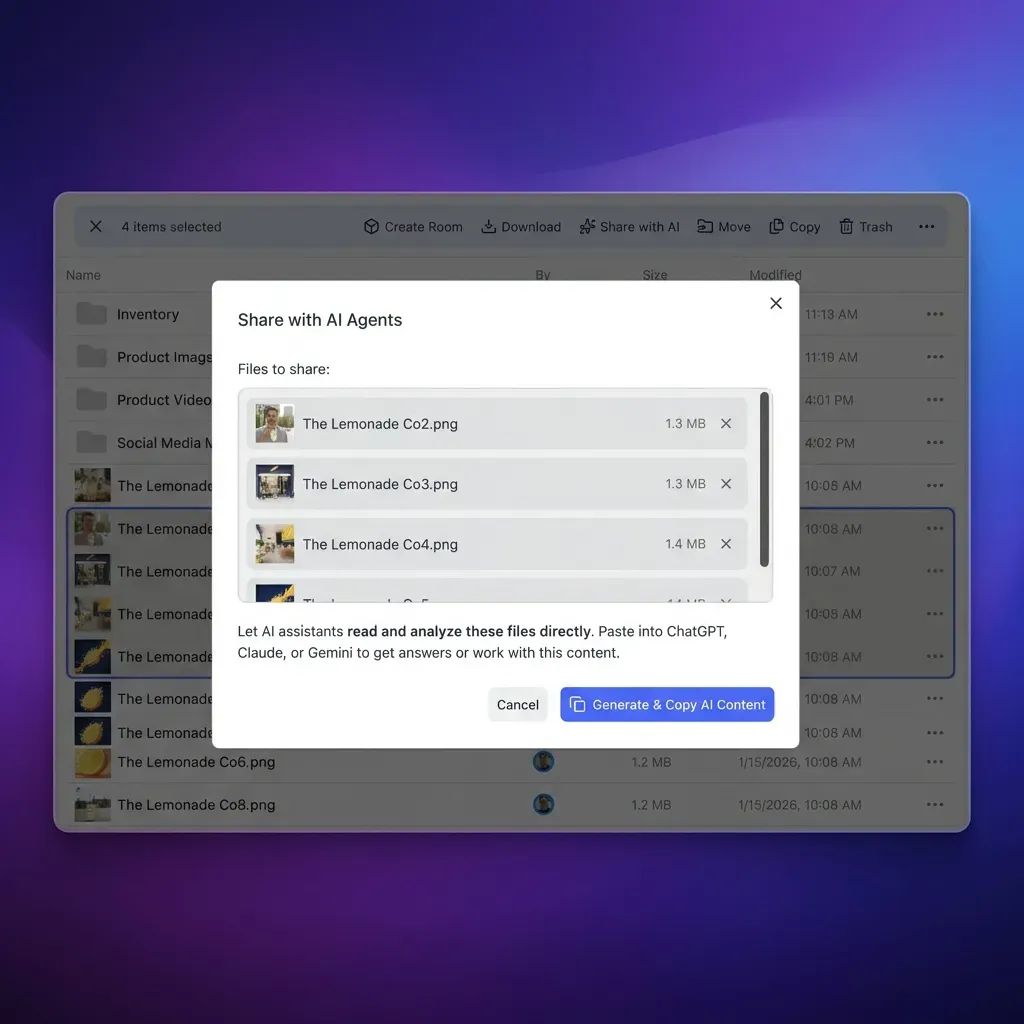
Local Downloads folders break multi-rep campaigns. Google Drive or Dropbox can work as a first home if the org already standardizes brand kits there. Object storage such as Amazon S3 is durable for engineers but weak for SDRs who need previews and share links. When humans and agents need the same permissions model, version history, and branded review shares, put the campaign tree in Fast.io.
A reliable folder layout:
gtm-q3-fintech-creatives/
├── 01-masters/
├── 02-channel-exports/
│   ├── linkedin/
│   ├── email/
│   └── social/
├── 03-reviews/
└── 04-channel-matrix.md
Fast.io workspaces support per-file version history, granular folder permissions, cloud import from Drive, Dropbox, OneDrive, or Box, and branded Send shares for stakeholder review. Agents can also use the Fast.io MCP server over Streamable HTTP at /mcp (or legacy SSE at /sse) to upload exports and organize folders once an org has access. See /storage-for-agents/ for the agent workspace model.
3. Link durable URLs into Clay columns
Clay should not hold large PNG libraries. Clay should hold references. In the working table, add columns such as:
creative_master_urllinkedin_landscape_urllinkedin_square_urlemail_header_urlcreative_statuswith values likeneeds_resize,in_review,approvedcreative_versionsuch asv2channel_packagesuch aslinkedin_plus_email
Paste share or file URLs from the storage layer. For multi-rep pods, grant folder read access once, then keep the same URLs stable across version updates when your storage overwrites with version history.
4. Expose only approved assets in Clay export views
Create a Clay export view for the sequencer or ad handoff that hides helper columns and shows only launch fields: contact identity, personalization, and the approved creative URLs. Claygent work can still generate subject lines and research notes in the full table. The export view is the thin package reps and tools consume.
Clay's ad audience work shows why this discipline matters. When Clay documents cutting LinkedIn CPL from $250 to $25 with enriched CRM audiences, the audience pipeline is automated. Creative handoff should be equally boring and repeatable: one approved landscape URL, one square URL, one email strip, all versioned, all findable from the row.
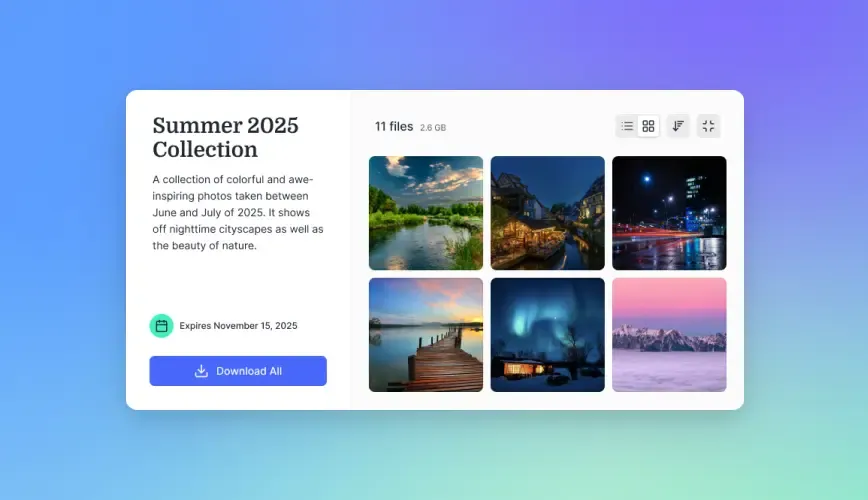


Ship image resizer exports into one Clay-ready workspace
Keep masters and channel-sized image resizer exports in a shared Fast.io workspace with version history, branded review shares, and MCP access for agents. Start a 14-day free trial and paste durable URLs into Clay rows.
Where Clay ops should keep resized campaign creatives
The storage question is not "which free resizer is best." It is "where does inventory live after resize so ops, brand, and reps stay aligned."
Local disks are fine for a solo operator resizing one LinkedIn test and terrible when five AEs each keep a different "final" PNG.
Google Drive or Dropbox work when brand already lives there and Photopea or desktop design tools open those paths. Watch for personal ownership of folders, expiring guest links, and mixed naming.
Amazon S3 or similar object storage is durable and scriptable. Non-engineers still need previews, review shares, and a place to leave comments next to files.
Fast.io is the intelligent workspace option when campaign creatives must be shared by humans and agents under one permission model. Practical fit for this workflow:
- Shared workspaces for masters and channel exports
- Per-file version history so a bad resize can be restored without
final_FINAL_v9filenames - Branded shares for legal or brand review without emailing binaries
- Intelligence Mode for semantic search across brand guidelines and prior campaign notes once indexing is enabled
- Metadata Views when you need structured fields from image packets or brand PDFs, such as campaign codes or dominant colors, via /product/document-data-extraction/
- Consolidated MCP tools so agents can upload, share, and query the same inventory
- Ownership transfer when an agent boots the campaign org and a human GTM lead takes billing ownership
Creating a user account is free, but real work requires an organization on a paid subscription. Monthly plans start with a trial of up to 14 days (credit card required); annual plans have no trial. Plans are Starter at $9.99/mo, Business at $49.99/mo, and Enterprise at $199.99/mo. See /pricing/.
Claygent Builder can attach tone guides and messaging PDFs to agents that write copy for the same campaigns. Keep those context docs next to the creative tree so research agents and creative ops share one brand package. That is a recommended workflow pattern around Clay, not a claim that Clay stores resized ad packages as a first-party DAM.
Multi-rep edge cases that break weak inventory
Wrong ratio uploaded to LinkedIn. Landscape files that should be 1200 x 628 often arrive as 1920 x 1080 screenshots. LinkedIn accepts a range, but crops and letterboxing still hurt. Always resize to the recommended ratio before upload.
Email strip still 2 MB. Sequencers and ESPs choke on heavy PNG headers. Re-export as JPG under a hard weight budget and retest the sequence step with a real send.
Reps edit copies offline. If an AE crops a logo on a laptop and pastes a new file into a sequence, the Clay row still points at the old URL. Enforce "edit master, re-export, overwrite version, keep URL" as the only allowed path.
Agent generates a mockup but never stores it. Clay personalized demo and creative plays often produce per-account visuals. Without immediate upload into 02-channel-exports/, the mockup dies in a chat thread. Prefer agent upload through MCP or a human Receive share into the campaign folder.
Review never closes. Brand reviewers who receive email attachments do not update Clay status. Use a branded Send share for the review package, require a single creative_status flip to approved, and only then open the export view to sequencers.
Putting Claygents, resizers, and inventory on one calendar
A realistic weekly cadence for a Clay GTM pod looks like this.
Monday: matrix and masters. Marketing ops freezes the channel list for the week, confirms LinkedIn and email specs, and places the approved master in 01-masters/. Claygent Builder updates stay separate: if outbound copy agents need a new tone guide, upload that document to the Claygent and store a copy in the campaign folder.
Tuesday: resize batch. One operator runs the image resizer path for every required size. Bulk tools help when ImageResizer.com bulk resize or design batch export is available. Spot-check file weight against the 5 MB LinkedIn cap and email weight budgets.
Wednesday: review share. Create a branded review package for brand or legal. Comments live next to files. Flip Clay creative_status only after approval.
Thursday: Clay export views and launch. Export views expose approved URLs to sequencers and ad tools. Audience syncs in Clay (including Ads audience flows) use the same table context, but creative URLs remain independent columns so a creative swap does not force a full audience rebuild.
Friday: version hygiene. Archive rejected derivatives, bump version labels, and confirm multi-rep folders still point at the current master. If an agent staged the workspace, complete ownership transfer to the human GTM lead when handoff is done so billing and membership sit with the people running the quarter.
The resizer never becomes the system of record. Clay never becomes the file server. Inventory sits between them so ads, email, and social can share one creative system without each rep reinventing sizes.
Sources
References used to verify factual claims in this guide.
-
Clay positions Claygents as AI agents that research the web, orchestrate workflows, and create content to execute GTM plays connected to first- and third-party data.
-
Claygent Builder is the hub for building, testing, and deploying Claygents for judgment-based GTM work, with document uploads, free testing on up to 10 inputs, and centralized deploy.
-
Clay documents using Clay Ads to cut LinkedIn CPL from $250 to $25 with enriched CRM audiences.
-
LinkedIn single image ads recommend 1200 x 628 landscape, 1200 x 1200 square, and 720 x 900 vertical (4:5), with JPG/PNG/GIF and a 5 MB max file size.
-
ImageResizer.com provides a free browser-based image resizer with a simple select, set size, and resize flow.
-
Adobe Express provides a free online image resize flow for JPG/PNG uploads with aspect ratio presets and custom sizes for social channels.
Frequently Asked Questions
What image size should I use for cold email images?
Use roughly 600 px wide for most cold email headers (up to about 1200 px for retina), keep the image short in height, and compress to about 100 to 200 KB when your sequencer or ESP is strict. Host the file at a durable URL instead of attaching large binaries, and store that URL in the Clay row that owns the sequence step.
How do teams keep one master asset and many channel sizes?
Keep a high-resolution master in a masters folder, then produce channel derivatives with an image resizer for each entry in a written size matrix (for example LinkedIn 1200 x 628, 1200 x 1200, and a 600 px email strip). Name exports by channel and version, overwrite through versioned storage when possible, and point Clay columns at the derivative URLs rather than pasting files into the table.
Where should Clay ops store resized campaign creatives?
Store resized creatives in a shared campaign workspace outside Clay, with separate folders for masters, channel exports, and reviews. Google Drive or Dropbox can work for brand kits; Fast.io is a strong fit when multi-rep pods need version history, branded review shares, agent access via MCP, and durable links that Clay rows can reference.
What is an image resizer in a GTM workflow?
An image resizer changes pixel dimensions and file weight so one master creative can meet email, ad, and social limits without a full re-export from design tools for every channel. In Clay GTM work, the resizer is a production step between brand masters and the URLs that live on campaign rows.
Do Clay or Claygents resize images for you?
Clay and Claygents focus on research, enrichment, orchestration, content generation for GTM plays, and related agent workflows. Resizing remains a production step with a dedicated resizer or design tool. Treat Clay as the table that stores status and asset URLs, not as a first-party image resizer.
Related Resources

Ship image resizer exports into one Clay-ready workspace
Keep masters and channel-sized image resizer exports in a shared Fast.io workspace with version history, branded review shares, and MCP access for agents. Start a 14-day free trial and paste durable URLs into Clay rows.