How to Build a Zoho Client Portal (Creator vs Projects vs Desk)
Zoho offers client portal functionality across several products, but each one serves a different purpose. This guide compares Zoho Creator, Zoho Projects, and Zoho Desk portals side by side, explains how to set each one up, and covers what to do when you need capabilities that Zoho's ecosystem doesn't handle well.


Which Zoho Product Has a Client Portal?
The short answer: several of them. Zoho has over 55 products in its ecosystem, and at least four include some form of client-facing portal. The challenge is figuring out which one matches what you actually need.
Here's the breakdown:
- Zoho Creator builds fully custom portals using a low-code app builder. You design the forms, workflows, and data views from scratch. This is the most flexible option, but it requires the most setup work.
- Zoho Projects includes a client user role that gives external users visibility into project tasks, milestones, and timelines. It's project tracking, not a general-purpose portal.
- Zoho Desk provides a self-service support portal where customers can browse knowledge base articles, submit tickets, and participate in community forums. It's purpose-built for support workflows.
- Zoho CRM has a portal feature that lets contacts view and update their CRM records. It's the narrowest option, mostly useful for giving customers access to their own account data.
Most guides cover just one of these products. The problem is that teams searching for "Zoho client portal" often don't know which product they need until they understand the differences.
Helpful references: Fastio Workspaces, Fastio Collaboration, and Fastio AI.
Related guides
- How to Build a Salesforce Client Portal (And What It Actually Costs)Salesforce Experience Cloud lets you build branded customer portals for case management, knowledge bases, and partner...
- How to Build a Client Portal in ClickUp (And Where It Breaks Down)ClickUp does not ship with a dedicated client portal, but you can assemble one using guest permissions, shared views,...
- How to Build a Client Portal in WordPressA WordPress client portal is a password-protected area on your WordPress site where clients access shared files,...
- How to Build a Client Onboarding PortalA client onboarding portal is a dedicated workspace where new clients access welcome materials, submit required...
- How to Build a Wealth Management Client Portal That HNW Clients Actually UseA wealth management client portal is a branded digital workspace where wealth managers securely share portfolio...
- Best Free Client Portal Tools in 2026Most free client portal lists skip the fine print. This guide compares seven free client portal tools with their actual...
More on this subject: Team Collaboration (125 guides)
Zoho Creator Portal, the Custom Builder
Zoho Creator is a low-code platform for building custom apps. Its portal feature lets you create a dedicated login experience where external users (customers, vendors, partners) can interact with your internal data through forms and views you design.
What clients can do
Portal users can submit data through custom forms, view and edit their own records, check order history or project status, track deliveries, make payments, and communicate with your team. The exact capabilities depend entirely on what you build, since Creator gives you a blank canvas rather than a pre-built template.
Customization and branding
You control the login page design, signup flow, and password reset pages. The portal page designer lets you arrange components visually, and portals work as responsive progressive web apps on mobile.
Authentication options
Creator supports standard email/password login, federated authentication through Google, Facebook, and Apple, and SAML-based single sign-on for enterprise deployments. You get granular role-based permissions to control what each user type can read, write, edit, or delete.
Pricing reality
Creator's paid plans start at $8/user/month for internal users (billed annually). Portal access for external users requires a separate add-on priced by the number of portal users. The free edition lets you explore the platform but doesn't include portal capabilities at scale.
Portal features are available on Standard ($8/user/month), Professional ($20/user/month), and Enterprise ($25/user/month) plans, with permission set limits scaling from 10 per app on Standard to 250 per app on Enterprise.
When Creator works well
Creator is the right choice when you need a portal that doesn't match any off-the-shelf template. If your client workflow involves custom data entry, approval chains, or multi-step processes that are specific to your business, Creator gives you the building blocks to construct exactly what you need. Service firms with unique intake processes and agencies managing complex client workflows tend to get the most value here.
Where Creator falls short
The flexibility comes at a cost. Building a Creator portal takes real development time, even with low-code tools. If all you need is a place for clients to check project status or download deliverables, Creator is overkill. You also need someone on your team who can maintain the portal as requirements change.
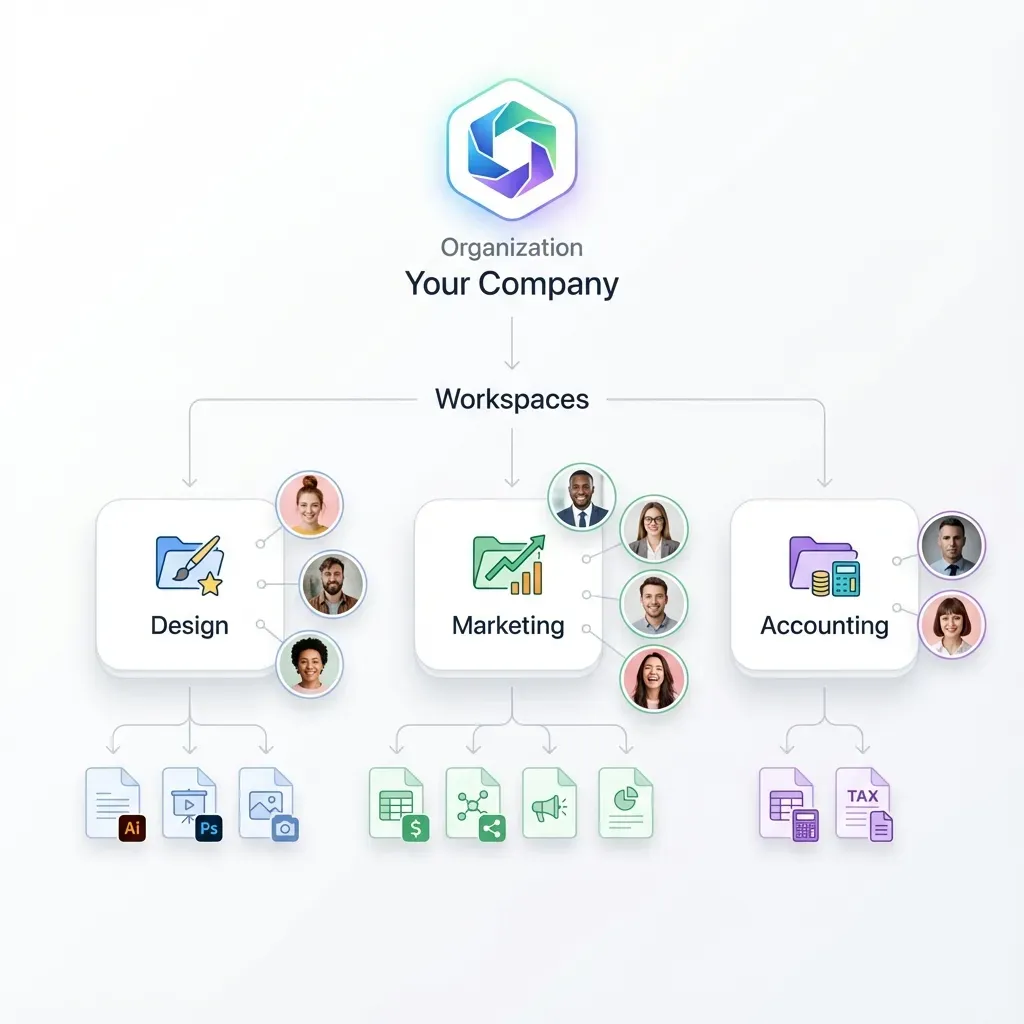


Need a file-first client portal?
Fastio workspaces give your clients branded access to files, deliverables, and documents with granular permissions and full audit trails. Skip the Zoho complexity and set up a client portal in minutes. Start 14-day trial.
Zoho Projects Portal, the Project Tracker
Zoho Projects takes a different approach. Instead of building a custom portal from scratch, you invite clients as "client users" who get a filtered view of your existing project workspace.
What client users see
Client users in Zoho Projects can view tasks assigned to them or marked as visible, track milestone progress, access project-level documents, and communicate through the project feed. The key constraint is that everything flows through the project management structure. Clients see tasks and milestones, not custom dashboards or forms.
Setup process
Adding a client to a Zoho Projects portal is straightforward:
- Go to your project's Users section
- Click Add User and select Client User
- Enter the client's email address
- Configure which project modules they can access (tasks, milestones, documents, forums)
- The client receives an email invitation to join
You control visibility at the module level. A client might see tasks and documents but not timesheets or issues, depending on your configuration.
Pricing
Zoho Projects Premium plan costs $5/user/month (billed annually) and includes client user functionality. The Free plan supports up to 3 users but has limited project features. The Enterprise plan at $10/user/month adds advanced features like custom roles and resource utilization charts.
Best fit
Zoho Projects portals work well when you need clients to track project progress without full team access. Agencies running website builds, consulting firms managing multi-phase engagements, and development shops that want clients to see sprint progress without accessing internal discussions all fit this pattern.
Limitations
The portal is tightly coupled to the project management structure. You can't create custom views, build intake forms, or set up file delivery workflows. If a client needs to upload documents outside of a specific task context, or if they want to browse a library of deliverables, Projects doesn't handle that natively. The customization options are also more limited than competitors like Monday.com or Asana for tailoring the client-facing experience.
Zoho Desk Portal, the Support Hub
Zoho Desk's portal is built for customer support self-service. It's the most opinionated of the three options, designed specifically to reduce incoming support tickets by giving customers tools to help themselves.
Portal capabilities
A Zoho Desk portal includes:
- Knowledge base with searchable articles, FAQs, and how-to guides
- Ticket submission so customers can create and track support requests
- Community forums where customers can discuss issues and share solutions
- Zia AI assistant for automated responses and article suggestions
- Guided Conversations for rule-based chatbot flows
Customers log in to a branded portal where they can search your knowledge base, submit tickets, check ticket status, and participate in community discussions. The portal auto-suggests relevant articles when a customer starts typing a ticket, which helps deflect common questions.
Multi-brand support
On the Enterprise plan, Zoho Desk supports multi-brand help centers. If you operate multiple brands or product lines, each can have its own portal with distinct branding, knowledge base, and community. This is a meaningful differentiator for agencies or holding companies managing several customer-facing brands.
Pricing
Zoho Desk starts with a free tier for up to 3 agents. The Standard plan ($14/agent/month billed annually) includes the knowledge base and basic self-service features. Professional ($23/agent/month) adds multi-department ticket management. Enterprise ($40/agent/month) includes multi-brand help centers and the full self-service toolkit.
When Desk is the right call
If your "client portal" need is a support portal, Desk is purpose-built for it. SaaS companies, service providers, and any business that handles recurring customer questions will find that the knowledge base and ticket management workflow reduces support volume meaningfully.
What Desk doesn't do
Desk portals are not built for file sharing, project tracking, or client onboarding workflows. There's no document library, no shared workspace, and no way for clients to browse project deliverables. If someone searches for "Zoho client portal" because they want to share files with clients, Desk isn't the answer.
Comparing All Three Zoho Portal Options
Here's how the three main Zoho portal products stack up across the features that matter most for client-facing use cases:
Customization
- Creator: Full control over forms, views, workflows, and branding. You build everything from components.
- Projects: Limited to showing/hiding project modules. No custom forms or dashboards for clients.
- Desk: Moderate customization for knowledge base layout, branding, and ticket forms. No custom data views.
File handling
- Creator: Can build file upload/download functionality into custom forms, but there's no built-in file management system.
- Projects: Document sharing tied to project context. Clients can access files attached to tasks or uploaded to the project document section.
- Desk: File attachments on tickets only. No standalone file sharing or document library.
Client onboarding
- Creator: Best option for custom onboarding flows with multi-step forms, approval workflows, and conditional logic.
- Projects: Minimal onboarding support. Add the client as a user and they see the project.
- Desk: Self-registration for support portal access. No guided onboarding workflow.
Pricing entry point
- Creator: Portal add-on on top of the base plan ($8/user/month for internal users)
- Projects: $5/user/month (Premium) includes client access
- Desk: $14/agent/month (Standard) includes basic self-service portal
Integration with Zoho ecosystem
All three works alongside other Zoho products through Zoho Flow and built-in connectors. Creator has the deepest integration flexibility since you can pull data from Zoho CRM, Books, and other apps into custom portal views. Projects integrates naturally with Zoho Sprints and Zoho Analytics. Desk connects to Zoho CRM for customer context and Zoho Analytics for support metrics.
The right choice depends on what "client portal" means for your business. If it means "track projects," use Projects. If it means "get support," use Desk. If it means anything else, you're probably looking at Creator, or at a purpose-built portal tool outside the Zoho ecosystem.
When Zoho's Portals Don't Fit
Zoho's portal options cover project tracking, support self-service, and custom app building. But there are common client portal needs that none of them handle particularly well.
File delivery and document exchange
If your primary need is sharing files with clients, collecting documents from them, or building a branded space where clients browse deliverables, Zoho's portals aren't designed for that. Creator can technically handle file uploads through custom forms, but it wasn't built as a file management system. There's no version control, no preview for large media files, and no built-in audit trail for document access.
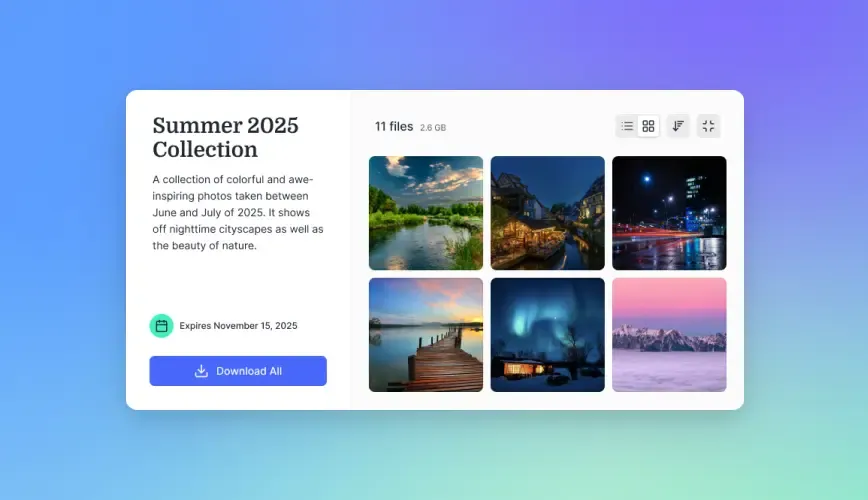
Teams that need file-centric client portals often turn to dedicated platforms. Google Drive shared folders work for simple cases. For branded delivery with access controls, tools like Fastio let you create workspaces with granular permissions at the org, workspace, folder, and file level. You can set up branded Share links for sending deliverables to clients, receiving files from them, or running two-way exchanges, all with audit trails tracking who accessed what and when.
White-label portals
Zoho Creator portals still carry Zoho's design patterns. If you need a fully white-labeled client experience that looks and feels like your own product, dedicated portal software or a custom-built solution typically offers more control.
AI-powered document intelligence
If your client portal workflow involves searching across uploaded documents, summarizing content, or answering questions about files, you'll need a layer that Zoho doesn't provide natively. Platforms with built-in intelligence features can auto-index uploaded files for semantic search and AI chat, which is useful when clients need to find specific information across large document collections. Fastio's Intelligence Mode, for example, enables workspace-level RAG so teams can query documents through natural language without setting up a separate search infrastructure.
Scaling portal users
Zoho Creator's portal pricing scales with the number of external users, which can get expensive for businesses with hundreds or thousands of portal users. If you're building a portal for a large customer base rather than a handful of key clients, the per-user cost structure may push you toward platforms with more predictable pricing.
Sources
References used to verify factual claims in this guide.
-
Zoho has over 55 products in its ecosystem
-
Zoho Creator Standard plan at $8/user/month
-
Zoho Desk Standard plan at $14/agent/month
Frequently Asked Questions
Does Zoho have a client portal?
Yes. Zoho offers portal functionality across several products. Zoho Creator builds fully custom portals with a low-code app builder. Zoho Projects provides client user access to project tasks and milestones. Zoho Desk creates support self-service portals with knowledge bases and ticket tracking. Zoho CRM also includes a basic portal for letting contacts view their own records.
How do I create a client portal in Zoho?
The setup depends on which Zoho product you use. In Zoho Creator, go to the Deploy section, click Portal, then click Create to design a custom portal. In Zoho Projects, navigate to your project's Users section, add a user with the Client User role, and configure module visibility. In Zoho Desk, set up your help center with knowledge base articles and enable customer self-registration.
Which Zoho product is best for client portals?
It depends on your use case. Choose Zoho Projects if clients need to track project progress and milestones. Choose Zoho Desk if you want a support portal with knowledge base articles and ticket management. Choose Zoho Creator if you need a fully custom portal with specific forms, workflows, and data views that don't match any pre-built template.
How much does Zoho Creator portal cost?
Zoho Creator's internal user plans start at $8/user/month (billed annually). Portal access for external users requires a separate add-on, with pricing that scales based on the number of portal users. The Standard ($8/user/month), Professional ($20/user/month), and Enterprise ($25/user/month) tiers all support portal functionality, with increasing permission set limits.
Can I white-label a Zoho client portal?
Zoho Creator supports branding customization for portal login pages, signup flows, and the portal interface itself. However, the underlying design patterns still follow Zoho's framework. For a fully white-labeled experience that looks entirely like your own product, you may need a dedicated portal platform or custom development.
Related Resources

Need a file-first client portal?
Fastio workspaces give your clients branded access to files, deliverables, and documents with granular permissions and full audit trails. Skip the Zoho complexity and set up a client portal in minutes. Start 14-day trial.