How to Build a Salesforce Client Portal (And What It Actually Costs)
Salesforce Experience Cloud lets you build branded customer portals for case management, knowledge bases, and partner collaboration. But the licensing model is complicated, file sharing is limited, and setup requires Salesforce admin expertise. This guide breaks down what the portal actually does, what it costs, and when a dedicated portal tool makes more sense.


What a Salesforce Client Portal Actually Is
A Salesforce client portal is a branded web interface built on Experience Cloud (formerly Community Cloud) that gives customers or partners secure, logged-in access to your Salesforce data. The portal sits on top of your existing Salesforce org, so everything your clients see is pulled from the same CRM records your internal team uses.
When a customer logs into a Salesforce portal, they can typically:
- View and update their support cases
- Browse knowledge base articles for self-service answers
- Access shared files through Salesforce Content Libraries
- Submit new requests through connected forms
- View account details, invoices, or order history (depending on configuration)
For partner portals, the feature set expands to include lead distribution, deal registration, opportunity management, and co-branded marketing resources.
The key thing to understand is that Experience Cloud is a platform, not a turnkey portal product. You get a set of templates and a drag-and-drop builder (Experience Builder), but the portal only becomes useful after you configure the data objects, page layouts, permissions, and Lightning components that match your workflow. This is closer to building a custom app than flipping a switch.
Salesforce retired the legacy "Customer Portal" product years ago and folded its functionality into Experience Cloud. If you see older documentation referencing "Salesforce Customer Portal" as a distinct feature, that is the deprecated version. Everything now runs through Experience Cloud sites.
Related guides
- How to Build a Wealth Management Client Portal That HNW Clients Actually UseA wealth management client portal is a branded digital workspace where wealth managers securely share portfolio...
- How to Build a Client Portal in ClickUp (And Where It Breaks Down)ClickUp does not ship with a dedicated client portal, but you can assemble one using guest permissions, shared views,...
- How to Build a Client Portal in WordPressA WordPress client portal is a password-protected area on your WordPress site where clients access shared files,...
- Best Free Client Portal Tools in 2026Most free client portal lists skip the fine print. This guide compares seven free client portal tools with their actual...
- Best Client Portal Software for Agencies in 2026Client portal software provides a branded, secure space where businesses share files, collect feedback, and collaborate...
- Best Client Portal Apps for Teams and AgenciesA client portal app is a mobile or web application that gives clients a dedicated space to access files, track project...
More on this subject: Team Collaboration (125 guides)
Experience Cloud Pricing Breakdown
Salesforce Experience Cloud pricing is license-based, and the tiers determine what your portal users can do. You pay per external user on top of your existing Salesforce subscription, which already requires Enterprise or Unlimited Edition.
License tiers
Customer Community is the entry point for self-service portals. It costs $2 per login or $5 per member per month. Members pay a flat monthly fee regardless of usage. Login-based pricing charges only when someone actually signs in, which works well for portals with infrequent visitors. This tier covers case management, knowledge base access, and basic community features, but it does not include Salesforce Content Libraries, custom reports, or role-based sharing.
Customer Community Plus costs $6 per login or $15 per member per month. This tier adds role-based sharing rules, delegated administration, custom reports and dashboards, and access to Content Libraries for file sharing. If your portal needs any meaningful file management, this is the minimum viable tier.
Partner Relationship Management costs $10 per login or $25 per member per month. It adds lead and opportunity sharing, deal registration, and channel marketing tools. This tier is designed for B2B partner ecosystems, not end-customer portals.
External Apps costs $15 per login or $35 per member per month. This is the most flexible license, supporting fully custom portal experiences with API access and advanced integration capabilities.
The hidden costs
License fees are only part of the picture. Most organizations also need:
- Salesforce Enterprise or Unlimited Edition as the base ($165-$330 per internal user/month)
- A Salesforce admin or consultant to build and maintain the portal
- Custom Lightning components if the standard templates do not fit your workflow
- Implementation services, which typically run $10,000 to $50,000+ depending on complexity
A small company running Customer Community Plus for 100 portal users at the member rate pays $1,500/month in portal licenses alone, before counting internal Salesforce seats or implementation costs.
Setting Up a Salesforce Portal Step by Step
Building a portal in Salesforce requires admin-level access and a working knowledge of Experience Cloud configuration. Here is the general process.
Enable Digital Experiences
Go to Setup, search for "Digital Experiences" in Quick Find, and toggle the feature on. Choose a domain name for your portal sites. This becomes the base URL for all your Experience Cloud sites. The initial setup uses a Salesforce subdomain.
Create a new site
From the App Launcher, open "Digital Experiences" and click New. Salesforce offers several templates:
- Customer Service for support case portals with knowledge base
- Partner Central for channel partner collaboration
- Help Center for public-facing knowledge base and FAQ
- Build Your Own for custom implementations using Lightning components
Pick the template closest to your use case. You can customize extensively after creation, but the template determines your starting point for page layout and navigation.
Configure data access
This is where most of the real work happens. You need to decide which Salesforce objects (cases, accounts, contacts, files, custom objects) are visible to portal users, and under what conditions. This involves:
- Creating portal user profiles with object-level permissions
- Setting up sharing rules that control record visibility
- Configuring page layouts that show only relevant fields
- Building audience-based page variations if different user types need different views
Customize the experience
Use Experience Builder to modify the portal's look and feel. You can adjust branding (logo, colors, fonts), rearrange page components, add custom Lightning components, and configure navigation menus. The builder is drag-and-drop, but complex layouts or custom functionality often require a developer to build custom components.
Set up authentication
Configure login settings, including self-registration (if you want users to create their own accounts), SSO integration with external identity providers, or admin-provisioned accounts. Most implementations use a combination: existing customers get provisioned accounts, while new users can self-register with email verification.
Test and publish
Preview the site, test with sample portal users across different permission levels, and verify that data visibility works correctly. When ready, activate the site and share the URL with your customers.
The entire process takes a few days to several weeks depending on complexity. Simple case management portals with standard templates can go live in a few days. Portals with custom objects, complex sharing rules, or integrated workflows typically need 4-8 weeks of configuration and testing.


Need a client portal without the CRM licensing overhead?
Fastio gives your clients a branded workspace for file delivery, uploads, and collaboration. generous storage, granular permissions, and audit trails included.
Where Salesforce Portals Fall Short
Experience Cloud is powerful for CRM-connected workflows, but it carries constraints that matter for specific use cases.
File sharing is an afterthought
Salesforce's file handling was designed for internal CRM use, not client-facing file delivery. Individual files are capped at 2GB, and Content Libraries (the closest thing to a shared file repository) are only available on Customer Community Plus and above. There is no folder-based browsing in the traditional sense. Files attach to records or sit in libraries, but building a clean, navigable file delivery experience requires custom development.
Files shared through the portal count against your org's storage limits. Salesforce's base storage allocation is 10GB per org plus additional per-user storage, which fills up quickly if you are sharing media files, design assets, or large documents with clients.
Pricing scales unpredictably
The per-login and per-member model sounds flexible, but it gets expensive as your portal user base grows. A company with 500 portal users on Customer Community Plus at the member rate pays $7,500/month just for portal licenses. Add internal Salesforce seats, storage overages, and ongoing admin costs, and the total cost of ownership can be difficult to forecast.
Login-based pricing helps for low-frequency users, but Salesforce counts each authentication event as a login. If a user logs in on Monday, logs out, and logs in again on Tuesday, that is two logins.
You need Salesforce expertise
Unlike standalone portal tools where you can be up and running in 15 minutes, Salesforce portals require someone who understands sharing rules, profile permissions, Lightning components, and Experience Builder. Most small and mid-size companies hire a Salesforce consultant for the initial build and need ongoing admin support for changes.
It is CRM-first, portal-second
Everything in the portal revolves around Salesforce objects. This is great if your portal workflow maps cleanly to cases, accounts, and opportunities. It is less great if clients just need a branded space to download deliverables, upload source files, or browse a resource library. Bending Salesforce's data model to fit simple file sharing workflows adds complexity without proportional value.

Salesforce Portal vs. Dedicated Portal Tools
The comparison depends on what your clients actually need when they log in. Here is how the two approaches stack up.
CRM integration vs. file delivery
Salesforce portals shine when clients need to interact with CRM data: checking case status, viewing order history, registering deals, or accessing knowledge articles tied to their account. The portal reads directly from your Salesforce org, so data stays in sync without middleware.
Dedicated portal tools like Fastio, Clinked, or Copilot focus on the other side of client interaction: file delivery, document collaboration, branded workspaces, and content management. These platforms treat the portal as a workspace clients use regularly, not just a self-service window into your CRM.
Setup time and maintenance
A Salesforce portal takes days to weeks to configure and requires ongoing admin support. Dedicated portal tools typically offer setup in under an hour, with no specialized technical skills needed.
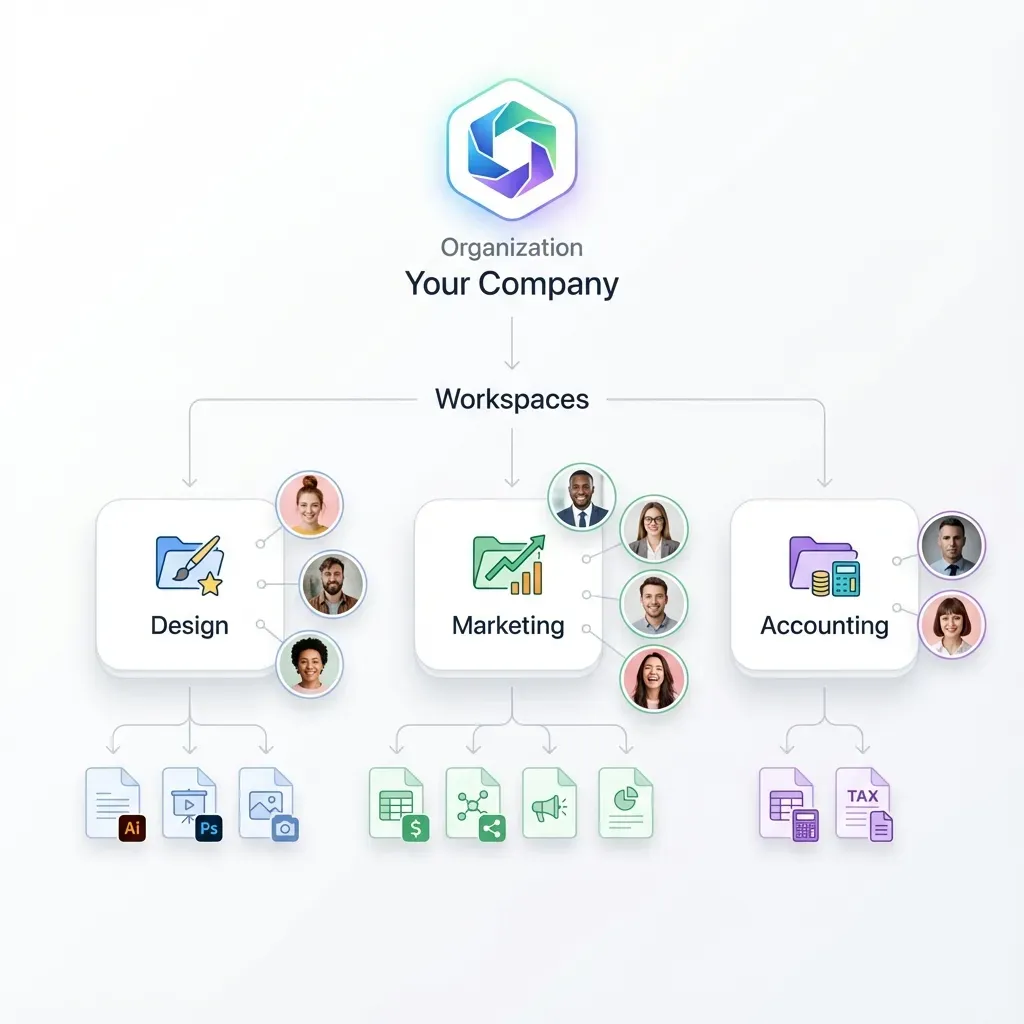
Fastio, for example, lets you create a branded client workspace in about 15 minutes. Create a workspace, upload files, configure a Share link, and send it to your client. Permissions cascade through the folder hierarchy, so new files inherit access controls automatically.
File handling comparison
Cost at scale
For a portal serving 200 external users:
- Salesforce Customer Community Plus: $3,000/month (member rate) plus internal Salesforce seats, implementation, and storage
- Fastio: Plans start at $9.99/mo; the Enterprise plan ($199.99/mo) allows up to 250 share collaborators, and guests on shares do not take a seat
The cost gap widens as your portal user count grows. Per-user licensing means every new client contact adds to your monthly bill, whether they log in once or daily. Usage-based pricing charges for what people actually do.
When Salesforce is the right call
Stick with a Salesforce portal if:
- Your portal workflow is tightly coupled to CRM data (cases, leads, opportunities)
- You already have Salesforce Enterprise or Unlimited Edition with experienced admins
- Your organization has invested in the Salesforce ecosystem and wants to consolidate
- Partner relationship management with deal registration is a core need
When a dedicated tool fits better
Choose a standalone portal if:
- Clients primarily need to browse, download, and upload files
- You want a branded client experience without CRM licensing overhead
- Setup speed matters and you do not have Salesforce admin resources
- You share large files, video, or media assets regularly
- Your team needs granular file-level permissions rather than record-level sharing
Building a Client File Portal with Fastio
If your portal needs center on file delivery, document sharing, or branded client workspaces rather than CRM case management, here is how to set one up with Fastio.
Create a client workspace
Sign up at fast.io/pricing to start a 14-day Business Trial. Create a workspace for your client and organize files into folders by project, deliverable type, or date.
Configure branded sharing
Fastio's Share feature lets you create branded pages for different client interactions:
- Send shares for one-way file delivery to clients
- Receive shares for collecting files, documents, or feedback from clients
- Exchange shares for two-way collaboration where both sides upload and download
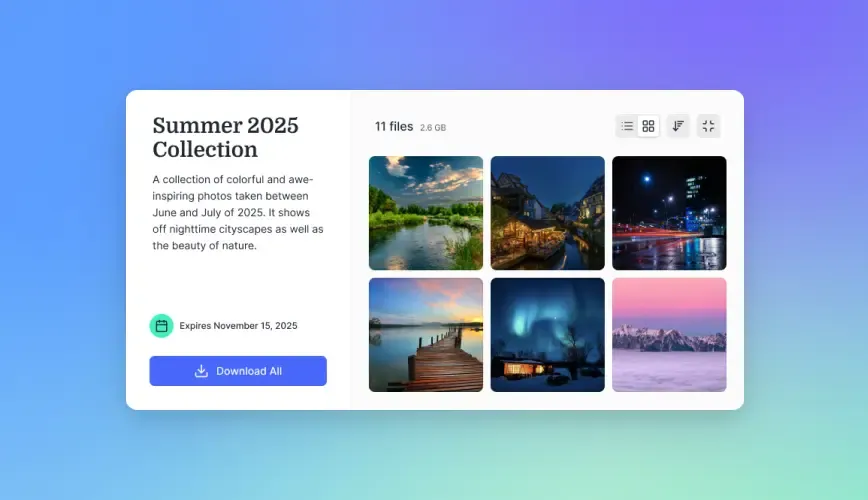
Each share gets a unique URL you can send directly or embed on your website. Shares inherit your branding, including logo and colors.
Set permissions at every level
Permissions in Fastio work at the organization, workspace, folder, and individual file level. Invite client stakeholders with specific roles so they only see files relevant to their project. Permissions cascade through folder hierarchies, so new files automatically inherit the right access level without manual configuration.
This is particularly useful for agencies or consultancies managing multiple projects per client. Create separate folders per project, set different access rules for each, and let clients navigate to exactly what they need.
Track everything with audit trails
Every file action, including uploads, downloads, views, and shares, is logged with timestamps and user identity. For professional services, consulting, or regulated industries, this documentation proves when files were delivered and who accessed them.
Fastio workspaces also support Intelligence Mode, which indexes uploaded files once enabled for the workspace, supporting semantic search and AI-powered chat. If you are building a client knowledge base alongside deliverables, clients can ask questions about documents in natural language instead of manually browsing folders.
For teams using AI agents or automation tools, Fastio provides an MCP server and REST API for building portal workflows programmatically, including automated file delivery, event-triggered notifications via the activity feed, and agent-to-human handoff.
Sources
References used to verify factual claims in this guide.
-
Salesforce Customer Community starts at $2 per login or $5 per member per month Customer Community Plus costs $6 per login or $15 per member per month
-
Individual Salesforce files are capped at 2GB with a maximum of 2,000 shares per file
Frequently Asked Questions
How much does a Salesforce customer portal cost?
Salesforce Experience Cloud portal licensing starts at $2 per login or $5 per member per month for the basic Customer Community tier. Customer Community Plus, which adds Content Libraries and custom reports, costs $6 per login or $15 per member per month. These fees are on top of your existing Salesforce Enterprise or Unlimited Edition subscription ($165-$330 per internal user/month). Most implementations also require consultant or admin time for setup, which adds $10,000-$50,000+ depending on complexity.
Can you build a client portal in Salesforce without Experience Cloud?
Not in any practical sense. Salesforce retired the legacy Customer Portal product and folded its capabilities into Experience Cloud. While you could technically build a Visualforce page with external access, Experience Cloud is the supported path for client-facing portals. It provides templates, Experience Builder, and the licensing framework for external users.
What are the best alternatives to Salesforce client portal?
The best alternative depends on your primary use case. For file delivery and branded client workspaces, Fastio offers organization plans starting at $9.99/mo (250 GB storage) with a 14-day Business Trial and granular permissions. For project management portals, tools like Clinked or SuiteDash combine collaboration features with client-facing interfaces. For CRM-connected self-service without the Salesforce licensing overhead, HubSpot Service Hub and Zendesk offer simpler portal features at lower entry points.
What is the difference between Salesforce Experience Cloud and a client portal?
Experience Cloud is Salesforce's platform for building external-facing digital experiences, including customer portals, partner portals, help centers, and community forums. A client portal is one specific use case built on that platform. Think of Experience Cloud as the construction toolkit and the client portal as one type of building you can construct with it.
How long does it take to set up a Salesforce customer portal?
A basic case management portal using standard templates can go live in a few days if you have an experienced Salesforce admin. Portals with custom objects, complex sharing rules, branded Lightning components, or integrated workflows typically take 4-8 weeks. Most organizations hire a Salesforce implementation partner for the initial build.
Does Salesforce portal support file sharing with clients?
Yes, but with constraints. Files can be attached to records or shared through Content Libraries (available on Customer Community Plus and above). Individual files are capped at 2GB, and files count against your org's storage limits. There is no traditional folder-based file browsing. For teams that need structured file delivery with large files, version history, or media streaming, a dedicated file sharing platform is usually a better fit.
Related Resources

Need a client portal without the CRM licensing overhead?
Fastio gives your clients a branded workspace for file delivery, uploads, and collaboration. generous storage, granular permissions, and audit trails included.