Top OpenClaw Tools for AI TikTok and Short-Form Video Optimization
Short-form video ad spending hit $111 billion in 2025 and is projected to reach $145.8 billion by 2028, yet most TikTok automation tools are standalone apps that handle one step at a time. OpenClaw skills can chain research, scripting, editing, and posting into autonomous pipelines that run without manual intervention. This guide evaluates the best OpenClaw skills for each stage of the short-form video workflow and explains how to connect them to persistent storage for team handoff.


Why Short-Form Video Needs Agent-Driven Automation
TikTok's average engagement rate jumped to 3.7% in 2026, a 49% year-over-year increase, according to SocialPilot's annual benchmarks. Instagram Reels now accounts for roughly 46% of all time spent on Instagram in the US. YouTube Shorts crossed 200 billion daily views as of June 2025. The platforms reward volume and consistency, which means creators and marketing teams face a production bottleneck that manual tools cannot solve.
Most AI video tools on the market address one step. CapCut handles editing. Later handles scheduling. TrendTok handles research. Each requires its own login, its own export workflow, and manual handoff between stages. OpenClaw skills operate differently: they run inside an agent session, accept natural language instructions, and can chain together so that one skill's output feeds the next. A single agent can research trending audio, draft a script, generate video clips, add captions, and schedule posts across TikTok, Reels, and Shorts without you opening a browser.
The ecosystem has grown fast. ClawHub listed over 16,000 skills as of March 2026. Below, we focus on the skills that handle short-form video specifically, organized by workflow stage: research, creation, editing, and distribution.
Related guides
- Best n8n Tools for AI Agents: Top 10 Nodes for 2026n8n changed AI automation with its visual workflow builder. We rank the best nodes and integrations for building...
- Best Tools for CrewAI Agents: Top Picks for 2026CrewAI agents need good tools to be useful. The framework handles coordination, but external integrations let agents...
- Top OpenClaw Tools for AI Video SEO and Metadata OptimizationVideo results are 50 times more likely to rank organically in Google than text, yet most YouTube creators still write...
- Best OpenClaw Tools for AI Video Editing AutomationOpenClaw's ecosystem includes both built-in video generation tools and community-developed editing skills that handle...
- Best OpenClaw Tools for AI Video Upscaling and EnhancementOpenClaw's built-in video_generate tool now supports video-to-video mode with 16 provider backends, but none of them...
- Top OpenClaw Tools for AI Video Background Removal and Scene ReplacementThe AI video background replacement market reached $1.77 billion in 2025, yet most of that spending flows to consumer...
More on this subject: OpenClaw Tools (101 guides)
How We Evaluated These Skills
We tested each skill against five criteria specific to short-form video production:
- Platform targeting: Does it optimize for vertical (9:16) output and platform-specific constraints like TikTok's video length limits?
- Automation depth: Can it run end-to-end without human approval steps, or does it require manual intervention between stages?
- Cross-platform support: Does it handle TikTok, Instagram Reels, and YouTube Shorts from a single workflow?
- Trend awareness: Can it pull current hashtags, trending audio, or viral formats?
- Output persistence: Does it save assets somewhere accessible to the rest of the team, or does output vanish when the session ends?
That last criterion matters more than it seems. An agent that generates a perfect TikTok script but drops the file when the session closes is not production-ready. We note which skills handle file persistence natively and which need an external workspace.
Quick Comparison
Research and Trend Discovery Skills
Short-form video success depends on timing. A trending audio track or hashtag can double reach, but the window is narrow. These skills help agents monitor what is gaining traction before it peaks.
trend-scout
trend-scout connects to TikTok's Trend Discovery API and tools like Minea to identify rising audio tracks and hashtags before they saturate. It scrapes regional data, so you can target specific markets rather than relying on global trending lists. The skill outputs structured data (track name, current usage count, growth rate, region) that downstream skills can consume directly.
Best for: Teams posting daily who need to ride audio trends early. Pair it with a scripting skill to auto-generate hooks around trending sounds.
Limitation: Trend data decays fast. Results from a morning scan may already be stale by afternoon, so schedule frequent runs.
TikTok Crawling (yt-dlp)
This skill uses yt-dlp under the hood to retrieve TikTok content for analysis. It pulls video metadata, captions, engagement metrics, and audio identifiers. With over 1,700 downloads on ClawHub, it is one of the more established TikTok-specific skills in the ecosystem.
Best for: Competitive analysis. Feed a list of competitor accounts and get back structured data on their top-performing content, posting frequency, and caption patterns.
Limitation: Retrieval only. It does not generate or schedule anything, so you need to chain it with creation and posting skills.

Video Creation and Editing Skills
Once you know what to make, these skills handle the production work: generating clips, editing footage, adding captions, and optimizing for vertical formats.
Genviral
Genviral is the closest thing to a complete short-form video pipeline in a single OpenClaw skill. It exposes 42 API commands covering idea generation (with TikTok hashtag scraping), script writing via Gemini, voice-over and TTS in multiple languages, video editing with transitions, thumbnail creation, and scheduling across TikTok, Instagram, YouTube, Facebook, Pinterest, and LinkedIn.
The skill launched in February 2026 and gained attention after its first OpenClaw-generated slideshow posted to TikTok reached 25,000 views. The source code is publicly available on GitHub.
Best for: Solo creators and small teams who want one skill to handle research through posting. The all-in-one design reduces the integration overhead of chaining multiple skills.
Limitation: The all-in-one approach means you are locked into Genviral's choices for each stage. If you prefer a different video generation model or a specific scheduling platform, you will need to swap in dedicated skills for those steps.
Pexo AI Video Agent
Pexo takes a different approach. Instead of bundling everything, it focuses on video generation with model flexibility. The skill auto-selects from 10+ models including Seedance 2.0, Kling 3.0, Veo 3.1, Sora 2, Runway Gen-4, Minimax, and others. It supports five input types: text-to-video, image-to-video, URL-to-video, script-to-video, and audio-to-video.
For short-form content, the multi-shot sequencing feature is the standout. A 15-second 3-shot product ad renders in under 8 minutes. A 60-second brand video takes roughly 20 minutes. The skill handles AI music, transitions, and aspect ratio targeting (including 9:16 for vertical platforms).
Best for: Teams that need high production quality and want to pick the best model for each shot. Product demos and brand ads are the sweet spot.
Limitation: No scheduling or posting. You need a separate distribution skill to get the output onto TikTok.
video-editor-ai
This skill from the official OpenClaw skills registry handles editing existing footage rather than generating new clips. It cuts, trims, and merges video, adds background music with auto-ducking, auto-generates subtitles in any language, applies color grading, and exports in any format. The skill explicitly supports TikTok, Reels, and Shorts creation workflows.
All commands run through natural language chat, so you can say "trim the first 3 seconds, add English subtitles, export at 9:16 for TikTok" and the skill handles the FFmpeg orchestration behind the scenes.
Best for: Repurposing long-form content into short clips. Record a podcast or webinar, then let the skill extract the best segments with captions already baked in.
Limitation: It edits what you give it. It does not generate footage from scratch, so pair it with Pexo or Genviral for net-new content.
WayinVideo
WayinVideo's OpenClaw integration focuses on a specific problem: finding the viral moments in longer footage. The skill scores every possible clip by viral potential, picks the top candidates, auto-crops to 9:16, uses AI reframing to keep the subject centered, and layers animated captions.
The auto-reframing is particularly useful for repurposing horizontal content (interviews, desk recordings, event footage) into vertical clips without manually adjusting framing for each cut.
Best for: Agencies and media teams sitting on hours of horizontal footage that needs to become TikTok-ready clips. The viral scoring saves time compared to manually scrubbing through raw recordings.
Limitation: The skill works best with talking-head and interview content. Fast-paced action footage or screen recordings may not reframe cleanly.


Store and share your short-form video pipeline output
Persistent workspaces with HLS video streaming, granular permissions, and MCP access for your OpenClaw agents. Start your 14-day Business Trial.
Distribution and Scheduling Skills
Creating the video is half the workflow. Getting it onto TikTok, Reels, and Shorts with the right metadata, at the right time, is the other half. These skills handle cross-platform publishing.
Postiz
Postiz is an API-first social scheduling platform that supports 28+ channels, including TikTok, Instagram, YouTube, LinkedIn, Facebook, X, Pinterest, Discord, Slack, Mastodon, and Telegram. It was built with AI agents in mind and has a dedicated OpenClaw TikTok integration page.
The skill handles per-platform customization, so you can adjust caption length, hashtags, and posting times for each channel without running separate commands. Scheduling is timezone-aware with queue management.
Best for: Teams posting to 5+ platforms who need centralized scheduling with per-platform tuning.
SocialClaw
SocialClaw launched on Product Hunt in April 2026 as a social media scheduling CLI and OpenClaw skill. It covers X, LinkedIn, Instagram, Facebook, TikTok, Discord, Telegram, YouTube, Reddit, WordPress, and Pinterest. The skill handles account discovery, media handoff, validation, schedule execution, and basic analytics.
Because it started as a CLI tool, it works well in scripted pipelines. You can chain it after a video creation skill and have the output posted automatically.
Best for: Developer-oriented teams who want scheduling they can script and version control. The CLI-first design makes it easy to integrate into CI/CD-style content pipelines.
PostFast
PostFast covers TikTok, Instagram, Facebook, X, YouTube, LinkedIn, Threads, Bluesky, Pinterest, and Telegram. Setup takes a few minutes through the ClawHub skill registry. Per-platform customization is included, so vertical video going to TikTok gets different metadata than the same clip going to LinkedIn.
Best for: Quick setup. If you need scheduling running in under five minutes and TikTok is a primary target, PostFast has the least friction.
Choosing a Distribution Skill
All three handle TikTok posting and cross-platform scheduling. The differences are in scope and style:
- Postiz has the broadest platform coverage (28+ channels) and the most mature API
- SocialClaw fits best in scripted, developer-driven workflows
- PostFast is the fast to set up for teams that just need scheduling working now
For most short-form video workflows, pick one and stick with it. Swapping later is straightforward since the video files are the same regardless of which skill posts them.
Connecting Skills to Persistent Storage
The biggest gap in most OpenClaw video workflows is file persistence. An agent generates a video, posts it to TikTok, and the session ends. Where did the raw footage go? Where are the caption files? If a client asks for the source file next week, you need it stored somewhere accessible.
Local disk works for solo developers. S3 or Google Cloud Storage works for teams with infrastructure experience. But neither gives you a shareable workspace where agents and humans can both access files, preview video, and hand off deliverables.
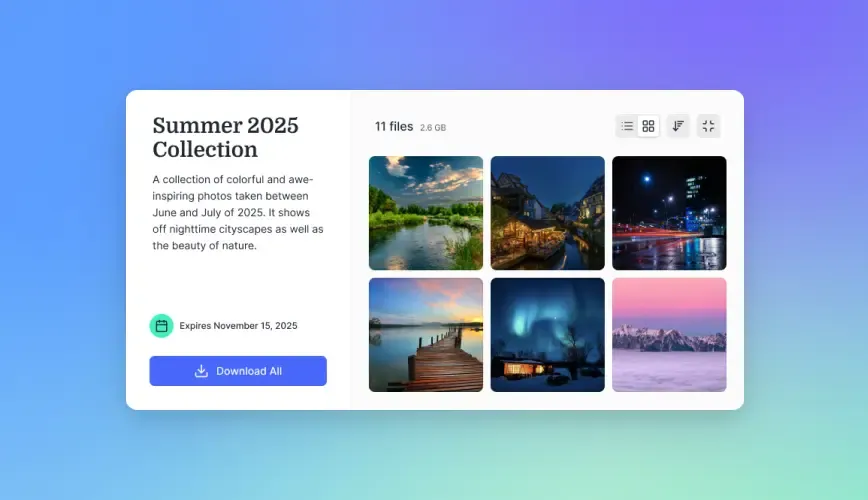
Fast.io solves this layer. The platform provides persistent workspaces that agents access through the MCP server or API, and humans access through the web UI. Upload a generated TikTok video to a workspace, and your client can preview it in-browser with HLS streaming, leave comments and collaborate, all without downloading anything or learning a new tool.
Specific features that matter for short-form video workflows:
- HLS video streaming for in-browser preview. Clients watch the clip without downloading a 200MB file
- Granular permissions at the folder level. Share the "Published" folder with clients and keep "Drafts" internal
- Audit trails that log every upload, download, and share. Know exactly which version of a video went live
- Intelligence Mode auto-indexes uploaded media files once Intelligence is enabled, so you can search across all generated content by meaning rather than filename
- Ownership transfer lets an agent build an entire content library and then hand the workspace to a human account holder
Fast.io offers a 14-day Business Trial, card required; see /pricing/. Paid plans start at $9.99/mo for 250 GB of storage and 3 seats. For a team producing 10-20 short-form videos per week, that provides ample storage to hold months of output.
Example Workflow
Here is what a complete pipeline looks like when you chain OpenClaw skills with Fast.io storage:
- trend-scout scans TikTok for rising audio and hashtags in your target region
- Genviral or Pexo generates video clips matched to the trending content
- video-editor-ai adds subtitles, trims to optimal length, exports at 9:16
- The agent uploads finished files to a Fast.io workspace via MCP
- A human reviews the files in the workspace, approves or requests changes
- Postiz or SocialClaw pulls the approved files and schedules them across TikTok, Reels, and Shorts
Every asset stays in the workspace. Nothing gets lost between sessions. The agent can pick up tomorrow where it left off because the workspace persists.
Which Skills Should You Start With
The right combination depends on your team size and how much of the workflow you want automated.
Solo creator, starting from scratch: Genviral handles the most stages in a single skill. Add PostFast for scheduling and you have a two-skill pipeline that covers research through posting. Upload your best-performing videos to a Fast.io workspace so you can reuse and repurpose them later.
Small team repurposing long-form content: Start with WayinVideo for auto-clipping and video-editor-ai for caption and format adjustments. Add Postiz for cross-platform scheduling. The WayinVideo viral scoring helps prioritize which clips to post first.
Agency managing multiple client accounts: Use trend-scout for market-specific research, Pexo for high-quality generation with model flexibility, and SocialClaw for scriptable, per-client scheduling. Store all assets in separate Fast.io workspaces per client. The granular permissions mean clients see only their own content, and audit trails track exactly what was delivered.
Testing the waters: Install one creation skill (video-editor-ai is the most versatile for existing footage) and one distribution skill (PostFast for speed, Postiz for coverage). Run it for a week. If the output quality and posting consistency improve, add trend research and upgrade to a more sophisticated creation skill.
Regardless of which combination you choose, solve the storage problem early. Short-form video files accumulate fast, and losing a high-performing clip because it was only stored in a temporary agent session is an avoidable mistake. Set up a persistent workspace before your first production run.
Sources
References used to verify factual claims in this guide.
-
Short-form video ad spending hit $111 billion in 2025, projected to reach $145.8 billion by 2028
-
TikTok's average engagement rate reached 3.7% in 2026, a 49% year-over-year increase
-
YouTube Shorts crossed 200 billion daily views as of June 2025
-
Instagram Reels accounts for roughly 46% of all time spent on Instagram in the US
-
ClawHub listed over 16,000 skills as of March 2026
-
Genviral's first OpenClaw-generated slideshow posted to TikTok reached 25,000 views
Frequently Asked Questions
What AI tools optimize TikTok content?
Several OpenClaw skills target TikTok specifically. Genviral provides end-to-end automation from hashtag research to scheduled posting. WayinVideo scores clips by viral potential and auto-crops to 9:16 vertical format. video-editor-ai adds subtitles and reformats existing footage for TikTok. For scheduling, Postiz, SocialClaw, and PostFast all support TikTok publishing with platform-specific metadata optimization.
Can AI help with TikTok algorithm optimization?
AI tools can address several factors the TikTok algorithm weighs. trend-scout identifies rising audio tracks and hashtags before they peak, which the algorithm rewards. Caption generation skills improve accessibility signals. Posting at optimal times (handled by scheduling skills like Postiz) affects initial engagement velocity. The algorithm still prioritizes watch time and completion rate, so the content itself needs to be engaging, but AI tools handle the surrounding optimization that gives content the best chance of surfacing.
How do you automate short-form video creation?
In the OpenClaw ecosystem, you chain skills into a pipeline. A research skill (trend-scout) identifies what to create. A generation skill (Genviral or Pexo) produces the video. An editing skill (video-editor-ai) adds subtitles and reformats. A distribution skill (Postiz or SocialClaw) schedules and posts. Each skill's output feeds the next. Store intermediate and final assets in a persistent workspace like Fast.io so nothing is lost between agent sessions.
What is the best video format for TikTok?
TikTok recommends MP4 or WebM in 9:16 vertical aspect ratio (1080x1920 pixels). Videos up to 10 minutes are supported, but most viral content falls between 15 and 60 seconds. The OpenClaw video-editor-ai skill can export directly to these specs, and WayinVideo auto-crops horizontal footage to 9:16 with AI reframing to keep the subject centered.
Do OpenClaw video skills work with YouTube Shorts and Instagram Reels?
Yes. Most OpenClaw video creation and editing skills produce standard MP4 output that works on any platform. Genviral, Postiz, SocialClaw, and PostFast all support cross-platform posting to TikTok, YouTube, and Instagram from a single workflow. The per-platform customization in these scheduling skills lets you adjust caption length, hashtags, and posting times for each destination.
Related Resources

Store and share your short-form video pipeline output
Persistent workspaces with HLS video streaming, granular permissions, and MCP access for your OpenClaw agents. Start your 14-day Business Trial.