Best n8n Tools for AI Agents: Top 10 Nodes for 2026
n8n changed AI automation with its visual workflow builder. We rank the best nodes and integrations for building autonomous agents, from LLMs like OpenAI to memory tools like Pinecone and storage solutions like Fastio.


What Are n8n Tools for AI Agents?
n8n tools for AI agents provide pre-built nodes and integrations that connect LLMs, vector databases, and agent frameworks within visual workflow automation. Unlike traditional automation scripts, these nodes enable "reasoning" capabilities, allowing workflows to make decisions, process unstructured data, and interact with external environments intelligently.
Building an AI agent in n8n typically requires three core components:
- The Brain (LLM): Nodes that process natural language (e.g., OpenAI, Anthropic).
- The Memory (Vector DB): Nodes that store and retrieve context (e.g., Pinecone, Supabase).
- The Storage (File System): Services that hold persistent files and documents (e.g., Fastio, reached through an HTTP Request node).
Recent data shows n8n workflows using AI nodes surged in 2025. This signals a shift from linear automation to complex agent behaviors.
Helpful references: Fastio Workspaces, Fastio Collaboration, and Fastio AI.
Related guides
- Best Tools for CrewAI Agents: Top Picks for 2026CrewAI agents need good tools to be useful. The framework handles coordination, but external integrations let agents...
- Best Tools for LangChain Development in 2026The LangChain ecosystem has expanded beyond the core library to include specialized tools for observability,...
- How to Automate Perplexity Personal Computer Workflows with n8nPerplexity Personal Computer is an always-on AI agent with access to your local files and apps. n8n is an open-source...
- How to Integrate the Fastio API with n8n WorkflowsGuide to integrate fast api with n8n workflows: Connect n8n workflows to Fastio's API to automate file storage and...
- How to Connect Dropbox to n8n AI Agents and WorkflowsConnecting an n8n AI agent directly to Dropbox using standard node loops forces workflows to download entire binary...
- How to Connect n8n to OneDrive: AI Workflow Integration GuideAn n8n OneDrive integration connects n8n automated workflows and AI agents to Microsoft OneDrive cloud storage,...
More on this subject: Agent Integrations and APIs (191 guides)
1. n8n AI Agent Node
The n8n AI Agent Node is the native orchestrator for building autonomous agents directly within the canvas. It acts as the central "brain" that connects an LLM (Language Model) with a set of tools (functions) and memory.
Key Strengths:
- Native Integration: Designed specifically for n8n's architecture, making it the easiest way to start.
- Tool Calling: Automatically selects which tools to use based on the user's prompt.
- Memory Management: Built-in support for window buffer memory to maintain conversation context.
Best For: Developers building their first conversational agent or chatbot within n8n.
Pricing: Free (included in n8n core).
Define clear tool contracts and fallback behavior so agents fail safely when dependencies are unavailable. This improves reliability in production workflows.
2. OpenAI Node
The OpenAI Node remains the industry standard for intelligence. It provides direct access to GPT-4o and o1 models for text generation, image analysis (Vision), and function calling.
Key Strengths:
- Versatility: Handles everything from simple text summarization to complex reasoning tasks.
- Assistants API: Full support for OpenAI Assistants, including code interpreter and retrieval.
- Reliability: The most mature and stable LLM integration in the ecosystem.
Limitations: High cost at scale compared to open-source models; data privacy concerns for sensitive enterprise data.
Best For: High-intelligence tasks requiring complex reasoning or code generation.
Pricing: Pay-per-token (API costs).
3. Fastio (File Storage & RAG)
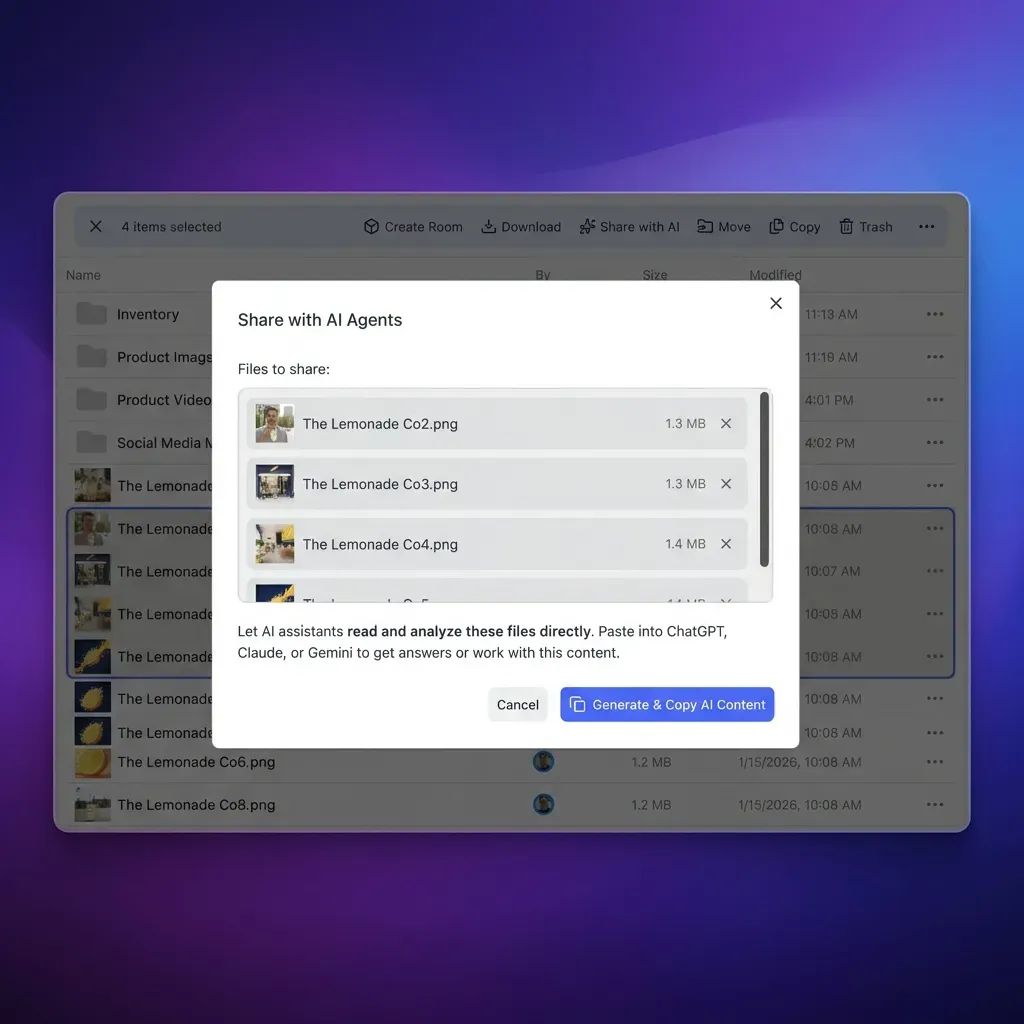
Fastio fills a key gap in the agent stack: persistent file storage. While vector databases store "snippets" of text, Fastio stores the actual files, such as PDF reports, generated images, video render, and datasets, that agents create and consume.
For n8n users, Fastio offers an "Intelligence Mode" that indexes uploaded files once Intelligence is enabled for the workspace. This means you can use an HTTP Request node to upload a file, and query it using Fastio's built-in RAG capabilities, without needing to set up a separate vector database or embedding pipeline.
Key Strengths:
- Persistent Storage: Agents get generous storage to keep files forever (unlike ephemeral temp files).
- Built-in RAG: Files are indexed for semantic search and Q&A once Intelligence is enabled for the workspace.
- Universal Access: Works via standard HTTP API or the remote MCP server at
https://mcp.fast.io/mcp/tools.
Best For: Agents that generate files, process documents, or need long-term storage memory.
Pricing: 14-day Business Trial (card required); Starter ($9.99/mo), Business ($49.99/mo), Enterprise ($199.99/mo). See /pricing/.
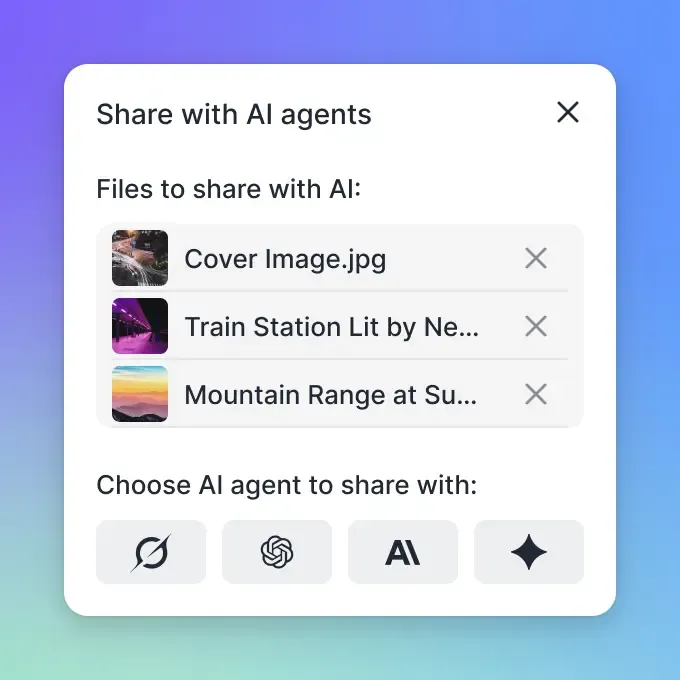


Give Your AI Agents Persistent Storage
Stop losing files in temporary directories. Get persistent, AI-ready cloud storage for your agents with a 14-day trial.
4. LangChain Node
The LangChain Node brings the Python/JavaScript LangChain framework into n8n's visual interface. It allows you to build complex "chains" of thought, enabling agents to break down problems into sequential steps.
Key Strengths:
- Composability: Chain multiple LLM calls together for complex workflows.
- Parsers: Excellent structured output parsers to ensure JSON reliability.
- Ecosystem: Connects with the massive library of LangChain community tools.
Limitations: Can be complex to debug compared to the native AI Agent node.
Best For: Advanced developers needing granular control over agent logic chains.
Pricing: Free (included in n8n).
5. Pinecone Node
Pinecone is the leading vector database for agent long-term memory. The n8n Pinecone node allows agents to store embeddings (numerical representations of text) and retrieve them later based on semantic similarity.
Key Strengths:
- Speed: fast retrieval even with millions of vectors.
- Scalability: Fully managed service that scales automatically.
- Filtering: Strong metadata filtering for precise context retrieval.
Best For: Storing massive knowledge bases for RAG (Retrieval-Augmented Generation).
Pricing: Free tier available; paid plans are available; see the vendor's pricing page.
6. Anthropic Claude Node
For tasks needing large context windows or creative writing, the Anthropic Node (connecting to Claude 3.5 Sonnet) is often better than OpenAI. Claude's massive context window allows it to process entire books or codebases in a single pass.
Key Strengths:
- Context Window: Up to 200k tokens, ideal for analyzing large documents.
- Tone: Less "robotic" output tone than GPT models.
- Code Capabilities: Claude 3.5 Sonnet is currently a top-tier coding assistant.
Best For: Document analysis, creative writing, and coding tasks.
Pricing: Pay-per-token.
7. Apify Node
Data is the fuel for AI agents, and Apify is a top tool for gathering it. The Apify node allows n8n agents to scrape websites, extract data from social media, and crawl documentation to build their own datasets.
Key Strengths:
- Reliability: Handles proxies, captchas, and dynamic content automatically.
- Store: Hundreds of pre-built "Actors" (scrapers) for popular sites like Instagram, Google Maps, and Amazon.
- Structured Data: Returns clean JSON data ready for LLM processing.
Best For: Agents that need real-time data from the web.
Pricing: Usage-based; free tier available.
8. Supabase Node
Supabase offers an open-source alternative to Pinecone using pgvector. It combines a traditional relational database (PostgreSQL) with vector storage, allowing you to query structured data (SQL) and unstructured data (vectors) in the same query.
Key Strengths:
- Hybrid Search: Combine keyword search with semantic search for better results.
- Cost: Much cheaper than dedicated vector DBs.
- Open Source: Built on standard Postgres.
Best For: Applications needing both a standard database and vector memory.
Pricing: Free tier available.
9. Google Gemini Node
Google Gemini is becoming a contender for the top LLM spot, especially with its large 1M+ token context window and native multimodal capabilities. The Gemini node allows agents to process video and audio natively without separate transcription steps.
Key Strengths:
- Multimodal: Can "watch" videos and "listen" to audio files directly.
- Context: Industry-leading context window size.
- Speed: Flash models offer fast inference at low cost.
Best For: Video analysis and processing massive datasets.
Pricing: competitive; free tier available via AI Studio.
10. Code Node
While not strictly an "AI tool," the Code Node is essential for advanced agents. It allows you to run custom JavaScript or Python to process LLM outputs, clean data, or implement custom logic that standard nodes can't handle.
Key Strengths:
- Flexibility: Do anything that code can do.
- Libraries: Import external libraries (like
moment.jsorlodash). - Transformation: The glue that holds complex agent logic together.
Best For: Data transformation and custom business logic.
Pricing: Free (core n8n feature).
Comparison: Storing Agent Data
Choosing where your agent stores data is as important as the model itself. Here is how the top storage options compare:
Verdict: Use Pinecone for conversational memory (chat history). Use Fastio for persistent file storage (reports, generated assets, knowledge bases).
How to Choose Your Stack
To build a reliable AI agent in n8n, you typically need one tool from each category:
- Intelligence: Start with OpenAI for general tasks, or Claude for long documents.
- Logic: Use the AI Agent Node for simplicity, or LangChain for complexity.
- Memory: Add Fastio to store the files your agent creates and reads.
- Input: Use Apify or Webhooks to trigger your agent with data.
This modular approach allows you to swap out components (e.g., changing LLMs) without rewriting your entire workflow.
Sources
References used to verify factual claims in this guide.
-
Agents get generous storage to keep files forever Fastio provides persistent storage for AI agents Fastio offers a 14-day Business Trial for workspaces
-
Anthropic Node connecting to Claude 3.5 Sonnet Context Window Up to 200k tokens ideal for analyzing large documents Claude 3.5 Sonnet is currently a top-tier coding assistant
-
Google Gemini large 1M+ token context window
-
Pinecone free tier 2GB
-
Google Drive 15GB
-
Claude 3.5 Sonnet is often better than OpenAI
-
Claude 3.5 Sonnet excels in code capabilities
-
n8n workflows using AI nodes surged in 2025
Frequently Asked Questions
Which LLM node is best for n8n agents?
OpenAI is generally the best starting point due to its reliability and tool-calling performance. However, Anthropic Claude is better for tasks involving large documents or coding.
Do I need a vector database for my n8n agent?
Not always. If your agent only needs to read a few files, you can use Fastio's Intelligence Mode to query them directly via API without setting up a complex vector database like Pinecone.
Can n8n agents store files permanently?
Yes, but not on the n8n server itself (which uses temporary storage). You should send files to dedicated storage such as Fastio through an HTTP Request node to ensure files persist and are accessible via URL.
Is n8n free for building AI agents?
The self-hosted version of n8n is free and fair-code licensed. The cloud version has a free trial. However, you will still pay API costs for the LLMs (OpenAI, Anthropic) you connect.
How do I trigger an n8n agent?
You can trigger agents via Webhooks (HTTP requests), on a schedule (Cron), or by watching for events in other apps like Slack, Email, or Google Sheets.
Related Resources

Give Your AI Agents Persistent Storage
Stop losing files in temporary directories. Get persistent, AI-ready cloud storage for your agents with a 14-day trial.