Most Powerful AI in 2026: 7 Frontier Models Ranked by Capability
Six AI labs sit within 79 Elo points of each other on the Chatbot Arena leaderboard as of early 2026. This ranking breaks down the seven powerful AI models across five capability dimensions: reasoning depth, code generation, multimodal breadth, agentic task completion, and price-performance ratio.


What Makes an AI Model the Most Powerful in 2026
Six AI labs sit within 79 Elo points of each other on the Chatbot Arena leaderboard as of early 2026: Anthropic at 1,503, xAI at 1,495, Google at 1,494, OpenAI at 1,481, Alibaba at 1,449, and DeepSeek at 1,424. A year ago, one or two labs held clear leads. Now the frontier is a crowded band where the winner changes depending on which benchmark you check.
That parity makes "powerful" harder to pin down. A model that tops a coding benchmark may fall behind on visual reasoning or long-context reliability. So this ranking evaluates models across five dimensions that matter for production work:
- Reasoning depth: Performance on GPQA Diamond and ARC-AGI-2, the benchmarks with meaningful score spread at the frontier
- Code generation: SWE-bench Verified and SWE-bench Pro scores, which test full engineering workflows on real GitHub issues
- Multimodal breadth: Whether the model handles text, images, audio, video, or combinations natively
- Agentic reliability: BrowseComp, OSWorld, and Toolathlon scores for multi-step tool use without human intervention
- Price-performance: Cost per million tokens relative to benchmark placement
Every model listed below was evaluated using publicly reported benchmarks from model vendors and independent leaderboards as of June 2026.
None of these models is superintelligent: labs including Meta, Microsoft and Safe Superintelligence say they are working toward superintelligence, but no such system exists today, and the question of who can see which files applies to the models teams use now.

Related guides
- Fastest AI in 2026: Speed Benchmarks Across Top ModelsCerebras now serves Llama 4 Scout at over 2,600 tokens per second, 38 times faster than closed models from OpenAI and...
- Best AI Assistants for Business in 2026: 8 Tools We Actually Tested91% of Fortune 500 companies now run at least one generative AI project in production, yet most teams still struggle to...
- AI vs AGI vs ASI: What Changes for a Team Working With AgentsToday's AI, including the agents teams already run, does specific jobs well. AGI (artificial general intelligence)...
- SI vs AI: What the Federal "Super Intelligence" Rename Means for Teams and ContractorsThis guide covers SI in its U.S. federal sense: "Super Intelligence", the term executive branch agencies use in place...
- Most Accurate AI in 2026: Which Models Get Facts Right?Frontier AI hallucination rates now range from 3% to 19%, down from 15-45% in 2024. But accuracy varies sharply by...
- How to Integrate Keycloak with AI AgentsSecuring AI agents requires more than just API keys. As agent fleets grow, managing individual access becomes a complex...
More on this subject: AI Agents: General Guides (190 guides)
7 Most Powerful AI Models in 2026
The ranking reflects overall capability across all five dimensions. No single model wins every category, so each entry notes where it leads and where it trails. Scores come from vendor-published benchmarks and independent leaderboards like BenchLM and Artificial Analysis, cross-checked where possible. Where a model lacks a reported score on a given benchmark, that gap counts against it in the ranking.
1. Claude Fable 5 (Anthropic)
Anthropic's newest frontier model, released June 9, 2026, shares the same architecture as Claude Mythos 5 but with standard safety measures applied. It currently holds the #1 position on BenchLM's overall leaderboard across 123 tracked models.
Key strengths:
- 80.3% on SWE-bench Pro, the highest score of any publicly available model
- #1 in both coding and agentic tool use categories on BenchLM
- 94.6% on GPQA Diamond for scientific and technical reasoning
Key limitations:
- recent release with limited production deployment data
- Mythos 5 (unrestricted variant) remains limited to vetted Anthropic partners
Best for: Teams that need the single most capable model for complex reasoning and multi-step code generation.
2. Gemini 3.1 Pro (Google DeepMind)
Google's advanced model, announced February 2026, tops 13 of 16 tracked benchmarks and leads in multimodal input with native text, image, audio, and video processing.
Key strengths:
- 85.9% on BrowseComp and 69.2% on MCP Atlas for agentic task execution
- 80.6% on SWE-bench Verified and 94.3% on GPQA Diamond
- 1M token context window with 65K token output, the largest output capacity at the frontier
Key limitations:
- API pricing is considerably higher than open-weights alternatives
- Production agentic reliability can vary from published benchmark results
Best for: Multimodal pipelines that combine text, images, audio, and video in a single workflow.
3. GPT-5.4 Pro (OpenAI)
Released March 5, 2026, GPT-5.4 is OpenAI's first general-purpose model with native computer-use capabilities. The Pro tier pushes benchmark scores well above the standard version.
Key strengths:
- 75.0% on OSWorld-Verified for computer use, more than doubling GPT-5.2's 47.3% score
- 89.3% on BrowseComp and 83.3% on ARC-AGI-2 in the Pro tier
- 1M token context window with native tool calling and vision
Key limitations:
- SWE-bench Pro score of 57.7% trails both Claude Fable 5 and Kimi K2.6
- Pro tier pricing is substantially higher than standard GPT-5.4
Best for: Computer-use automation and complex browsing tasks where the model controls a desktop environment directly.
4. Claude Opus 4.8 (Anthropic)
Anthropic's previous flagship before Fable 5, Opus 4.8 remains one of the strongest general-purpose models available. The Opus line established high marks across coding, legal reasoning, and knowledge work benchmarks throughout early 2026.
Key strengths:
- Proven production reliability with an extensive deployment track record
- 1M token context window with adaptive thinking for complex problem solving
- Strong performance on legal reasoning (BigLaw) and knowledge work (GDPval-AA)
Key limitations:
- Outperformed by Fable 5 on most headline benchmarks (69.2% vs 80.3% on SWE-bench Pro)
- $5/M input and $25/M output makes it expensive relative to open-weights alternatives
Best for: Production systems that prioritize stability and proven reliability over peak benchmark scores.
5. Grok 4.3 (xAI)
xAI's latest model focuses on reasoning quality, response speed, and tool-use reliability. A 321-point Elo jump on GDPval-AA over its predecessor signals a major improvement in knowledge work.
Key strengths:
- 90.1% on GPQA for scientific and hard reasoning
- 81.3% on IFBench for instruction following
- 1M token context window with vision input and function calling support
Key limitations:
- Smaller third-party integration ecosystem compared to OpenAI or Anthropic
- Limited publicly reported agentic benchmark scores
Best for: Specialized reasoning tasks in science, research, and technical analysis.
6. DeepSeek V4 Pro (DeepSeek)
Released April 24, 2026, DeepSeek V4 Pro is the open-weights model that reset price-performance expectations. At 1.6 trillion total parameters with 49 billion active per token, it delivers frontier-class results at a fraction of commercial API pricing.
Key strengths:
- 80.6% on SWE-bench Verified, tied with Gemini 3.1 Pro as the highest open-weights score
- $0.435/M input and $0.87/M output, roughly 28x cheaper than Opus 4.8 per output token
- 1M token context with 384K max output window
Key limitations:
- Self-hosted deployment requires multi-GPU clusters for full-parameter inference
- Intelligence index of 39.3 trails commercial leaders on pure reasoning tasks
Best for: Cost-sensitive production deployments and organizations that want frontier-class models on their own infrastructure.
Pricing: $0.435 per million input tokens, $0.87 per million output tokens via API. Free weights for self-hosting.
7. Kimi K2.6 (Moonshot AI)
Moonshot AI's 1-trillion-parameter open-source model is purpose-built for agentic workflows. It orchestrates up to 300 specialized sub-agents executing 4,000 coordinated steps, a capability no other open model matches.
Key strengths:
- 58.6% on SWE-bench Pro, ahead of both Claude Opus 4.6 and GPT-5.4 on this benchmark
- 54.0% on Humanity's Last Exam with tools, leading all models tested
- Sustained coherence across thousands of sequential tool calls
Key limitations:
- 256K context window is smaller than the 1M offered by most competitors
- Trails commercial models on pure reasoning benchmarks without tool access
Best for: Complex agentic systems requiring many sub-agents or long sequences of tool calls.
Open-Source Models Are Rewriting the Economics
The gap between open-source and commercial frontier models narrowed sharply in early 2026. DeepSeek V4 Pro matches Gemini 3.1 Pro's SWE-bench Verified score at roughly 1/28th the per-token cost. Kimi K2.6 outperforms GPT-5.4 on SWE-bench Pro. Both ship their weights for anyone to download.
This shift matters for teams building AI-powered products. Running a frontier model on your own GPUs eliminates per-token API costs after the initial infrastructure investment. For high-volume workloads, the break-even point arrives faster than it did six months ago.
The trade-off is operational complexity. A 1.6T parameter model like DeepSeek V4 Pro needs multi-GPU clusters. Managed inference providers like Together AI and Fireworks offer hosted open-model endpoints at prices between self-hosting and commercial APIs, splitting the difference.
For teams that prefer to skip model infrastructure entirely, workspace platforms like Fast.io take a different approach. Once Intelligence is enabled for the workspace, Fast.io's Intelligence Mode auto-indexes files for semantic search and AI chat. It works with any model through its MCP server, so you pick whatever model fits the task while the workspace handles file storage, permissions, and the RAG pipeline. Fastio offers a 14-day Business Trial, card required; see pricing.
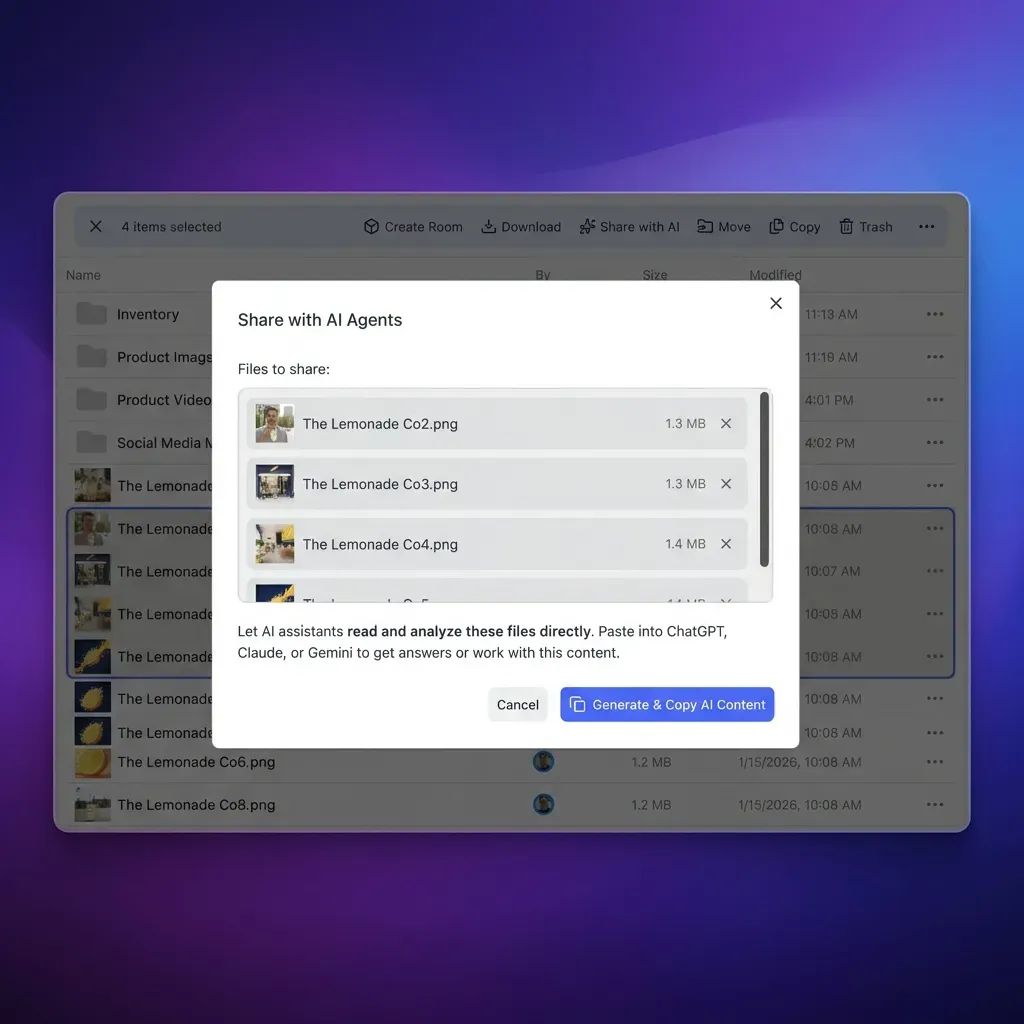


Connect Frontier Models to Your Team's Files
Once Intelligence is enabled for the workspace, Fast.io auto-indexes files for semantic search and AI chat. Bring any model through the MCP server.
How to Choose the Right Model for Your Workload
The right model depends on what you need it to do, not which one tops the most leaderboards.
For coding and software engineering, Claude Fable 5 leads on SWE-bench Pro at 80.3%. DeepSeek V4 Pro is the budget alternative, matching top scores on SWE-bench Verified for roughly 28x less per token.
For computer use and browser automation, GPT-5.4 Pro leads at 75.0% on OSWorld-Verified. No other model comes close to that score.
For multimodal processing, Gemini 3.1 Pro handles text, images, audio, and video natively with the largest output window (65K tokens) at the frontier.
For agentic workflows with many tool calls, Kimi K2.6 sustains coherence across thousands of sequential operations with its sub-agent orchestration system.
For budget-constrained production, DeepSeek V4 Pro delivers frontier-class coding and reasoning at $0.87 per million output tokens.
For general-purpose reliability, Claude Opus 4.8 and GPT-5.4 have the longest production track records and largest integration ecosystems.
The more productive question is often not "which model is powerful" but "which model is powerful for this specific job." Run evaluations on your actual tasks. Benchmark scores correlate with real-world performance, but the correlation is never perfect. A model that scores 5 points lower on a leaderboard may handle your particular workload better because of how it processes your data formats, follows your prompt patterns, or works alongside your toolchain.
Sources
References used to verify factual claims in this guide.
-
Six AI labs sit within 79 Elo points on the Chatbot Arena leaderboard
-
Claude Fable 5 scores 80.3% on SWE-bench Pro
-
GPT-5.4 achieves 75.0% on OSWorld-Verified
-
Gemini 3.1 Pro scores 94.3% on GPQA Diamond and 80.6% on SWE-bench
-
DeepSeek V4 Pro is roughly 28x cheaper than Opus 4.8 per output token
-
Kimi K2.6 scores 58.6% on SWE-bench Pro and 54.0% on Humanity's Last Exam
-
SWE-bench Verified frontier model scores range from 54% to 81%
Frequently Asked Questions
What is the most powerful AI in the world right now?
Claude Fable 5 by Anthropic holds the #1 position on BenchLM's overall leaderboard as of June 2026, with the highest score on SWE-bench Pro (80.3%) and top marks in both coding and agentic tool use categories. Gemini 3.1 Pro and GPT-5.4 Pro lead in specific areas like multimodal processing and computer use, respectively. The answer depends on which capability dimension matters most for your use case.
Which AI model is the most advanced?
Claude Mythos 5, the unrestricted variant of Fable 5 available to vetted Anthropic partners, scores highest across the broadest set of benchmarks. For publicly available models, Fable 5, Gemini 3.1 Pro, and GPT-5.4 Pro form the top tier, with each leading in different capability dimensions. No single model dominates every benchmark category.
Is Claude Opus the most powerful AI?
Claude Opus 4.8 was Anthropic's most capable public model until June 2026, when Claude Fable 5 surpassed it. Fable 5 scores 80.3% on SWE-bench Pro compared to Opus 4.8's 69.2%. Opus 4.8 remains a strong choice for production systems that prioritize stability and a proven deployment track record over peak benchmark performance.
What is the most capable open source AI?
DeepSeek V4 Pro leads on coding benchmarks with 80.6% on SWE-bench Verified, while Kimi K2.6 leads on agentic tasks with 58.6% on SWE-bench Pro and the ability to orchestrate hundreds of sub-agents. Both are open-weights models available for download and self-hosting. DeepSeek V4 Pro is the better choice for raw coding performance, while Kimi K2.6 is stronger for multi-step agentic workflows.
How do AI model benchmarks work?
Benchmarks test models on standardized tasks. SWE-bench gives a model a real GitHub issue and a codebase, then measures whether it produces a working code fix. GPQA Diamond tests scientific reasoning with questions written by domain experts. ARC-AGI-2 measures abstract reasoning. BrowseComp and OSWorld test the ability to use computers and browse the web autonomously. No single benchmark captures overall capability, which is why rankings compare scores across multiple tests.
Are open source AI models as good as commercial ones?
On specific benchmarks, yes. DeepSeek V4 Pro matches Gemini 3.1 Pro on SWE-bench Verified at roughly 28x lower cost per output token. Kimi K2.6 outperforms GPT-5.4 on SWE-bench Pro. The trade-off is operational complexity. Self-hosting a model with over a trillion parameters requires significant GPU infrastructure and engineering effort, while commercial APIs handle inference, scaling, and uptime for you.
Related Resources

Connect Frontier Models to Your Team's Files
Once Intelligence is enabled for the workspace, Fast.io auto-indexes files for semantic search and AI chat. Bring any model through the MCP server.