Manus AI vs Claude: Agent Autonomy Compared
US search demand for "manus ai vs claude" runs about 170 monthly queries with CPC around twenty dollars and sixty-one cents, a commercial signal that buyers are choosing tools, not skimming. Claude is typically chosen for deep reasoning and writing assistance; Manus is chosen when the goal is an autonomous agent that produces finished multi-step work products. This guide maps that split by workflow and covers where agent output should live after the run ends.


Why buyers compare Manus AI and Claude
US search demand for "manus ai vs claude" sits at about 170 monthly queries, with CPC around twenty dollars and sixty-one cents as of July 2026. That CPC is high for a low-volume head term, which usually means buyers are comparing tools before spending money, not browsing out of curiosity.
The comparison is uneven if you treat both products as generic chatbots. Manus positions itself as an autonomous general agent that plans, executes, and returns complete work products inside a cloud sandbox with its own file system and tools. Claude, in Anthropic's public positioning, is a thinking partner for writing, learning, and coding, with agentic modes such as Claude Cowork for multi-step knowledge work and Claude Code for software engineering. Claude is typically chosen for deep reasoning and writing assistance. Manus is chosen when the goal is an autonomous agent that produces finished multi-step work products.
That distinction matters more than feature checklists. A product manager asking for a competitive brief and a PDF deck wants different autonomy than a staff engineer reviewing a multi-file refactor. The rest of this article uses workflow fit, not brand preference, as the pick criteria.
No first-party Manus vs Claude page exists. Manus does publish a first-party Manus vs ChatGPT comparison that stresses finished deliverables over advisory chat. That pattern is the cleanest official frame for this article: conversational assistance versus autonomous production of work products.

Related guides
- Cline vs. Cursor vs. Claude Code: Best Coding Agents ComparedAn in-depth comparison of Cline, Cursor, and Claude Code coding agents. Choosing the right tool depends on your team's...
- Best Claude Code Alternatives in 2026, ComparedEight tools compete with Claude Code for AI-assisted coding in 2026. Cursor dominates IDE-based editing, Aider leads...
- Claude vs Gemini in 2026: Pricing, Coding, and Capabilities ComparedClaude Opus 4.8 scores 88.6% on SWE-bench Verified while Gemini 3.1 Pro sits at 80.6%, but Gemini's API pricing starts...
- Claude Workspace Guide: Projects, Cowork, and Code Environments ComparedClaude now ships three distinct workspace models, each storing context differently: Projects for cloud chat, Cowork for...
- 7 Essential Claude MCP Plugins to Expand Your AI's CapabilitiesClaude MCP plugins (or servers) act as extensions that allow your AI to interface with real-world data and tools. By...
- How to Create a Claude Cowork Shared Workspace for TeamsA Claude Cowork Shared Workspace lets teams and AI agents manage files together in one place. The standard Claude app...
More on this subject: Claude and Claude Code (278 guides)
How Manus and Claude define agent autonomy
Autonomy is not a single switch. It is a stack of environment, planning, tool use, supervision, and delivery format. Manus and Claude sit at different points on that stack.
Manus: sandbox agent for complete deliverables
Official Manus docs describe Manus AI as an autonomous general agent designed to complete tasks and deliver results. Unlike tools that only answer questions, Manus is framed as a virtual colleague with its own computer. It can plan work, execute steps, and return production-ready outputs without you stitching every intermediate artifact by hand.
The environment is the product difference. Manus runs in a complete sandbox: internet access, a persistent file system for the task, terminal and command execution, and the ability to install software and create tools during a run. Manus's ChatGPT comparison page puts the same idea in plain language: other assistants give you pieces to assemble; Manus aims to give you the finished product. That includes research reports, presentations, data analysis packages, and deployed web apps depending on the task.
Manus also markets parallel research through Wide Research, where subagents process many sources in their own sandboxes. For teams that need dozens of source digests at once, that architecture matches the "finished multi-step work product" use case better than a single chat thread.
Claude: reasoning partner with agentic modes
Claude's public product surface starts as a thinking partner for write, learn, and code tasks. Autonomy appears through modes, not as the only interface. Claude Cowork is Anthropic's agentic path for knowledge work: you set a goal, Claude works across folders and tools you allow, and you return to polished work for review. Claude Code is the software-engineering path, focused on writing, debugging, and shipping code in developer environments.
That design keeps a human in the loop more deliberately. Cowork documentation stresses that you choose which folders and tools Claude can reach, that significant actions can require approval, and that you can redirect or stop work. Chat remains the right mode when you want tight iteration on wording, logic, or design without spinning up a long agent run.
Autonomy checklist you can actually use
Use this checklist when a vendor demo claims "full autonomy":
- Goal vs prompt: Does the product accept an outcome ("build a competitor deck") or only a single question?
- Execution environment: Cloud sandbox, local desktop folders, terminal, or chat-only?
- Artifact shape: Markdown reply, editable files, PDF deck, app deploy, or mixed?
- Supervision model: Continuous chat steering, step approvals, or fire-and-check-later?
- Persistence: Where do files live after the session ends, and who on the team can open them?
Manus scores higher when you optimize for unsupervised multi-step production in a cloud computer. Claude scores higher when you optimize for high-quality reasoning, writing craft, and supervised agent runs that stay close to your own files and code.
Strengths by workflow, not brand
Marketing pages collapse everything into "AI assistant." Buyers should reverse that. Start from the job, then pick the autonomy model.
Research decks and multi-source reports
Manus is the clearer default when the deliverable is a packaged report or deck built from many sources. Official materials emphasize wide research, parallel subagents, and complete presentations with professional formatting. If your success metric is "a file I can send to a client without reformatting for an hour," Manus matches the metric.
Claude is stronger when the research is already collected and the hard part is synthesis, argument quality, and careful claims about what the sources actually support. Feed it a source pack, ask for a structured brief, then revise tone and logic in chat. For teams that need both, a common pattern is Manus for first-pass collection and file generation, Claude for editorial pass and risk language.
Coding help
Claude, especially through Claude Code, is the better everyday coding companion for most engineering teams. It is built to live near repositories, diffs, tests, and developer workflows. Claude chat is also a strong place to reason about architecture and tradeoffs before any agent touches the tree.
Manus can write and run code inside its sandbox and can ship working web apps as part of a broader task. That is useful for greenfield prototypes and self-contained builds. It is a weaker fit as a daily pair-programmer inside an existing monorepo with branch policies, code review culture, and local toolchains.
Long writing
Claude is usually the better writer. Long memos, policy language, narrative drafts, and multi-pass editing benefit from a reasoning-first conversation where you can challenge a paragraph, ask for alternatives, and keep voice constraints tight.
Manus can produce long documents as part of a larger job, especially when writing is one step after research and chart generation. Treat those drafts as first cuts. Route them through a human editor or a Claude pass before client delivery when tone and precision matter.
Browser automation and operational multi-step work
Manus's cloud sandbox and action-oriented positioning fit tasks that hop across sites, APIs, scripts, and file exports without you watching every click. Scheduled or recurring agent workflows are part of that story on Manus's product pages.
Claude Cowork also automates multi-step knowledge work and can keep running after you close a laptop, with scheduled cadences on paid plans. The difference is orientation: Cowork is framed as work across your files and connected tools with review at the end; Manus is framed as a general agent that owns a computer and returns complete products. For pure browser-heavy ops with little local file context, Manus often feels more natural. For ops rooted in your desktop folders and internal connectors, Cowork is a better match.
Decision table you can screenshot


Keep Manus and Claude outputs in one shared workspace
Store agent deliverables with version history, permissions, Intelligence Mode search, and MCP access for humans and agents. Start a 14-day free trial and connect your stack at the Fast.io MCP endpoint.
Where agent output should live after the run
Most Manus AI vs Claude pages stop at feature grids. The practical failure mode is downstream: the agent finishes, the human is mobile, and the only copy of the deliverable sits in a chat transcript, a local Downloads folder, or an ephemeral sandbox.
Teams already solve this in a few ways. Some drop files into Google Drive or Dropbox and ping a channel. Others push artifacts to an S3 bucket and attach the object key to a ticket. Solo operators keep everything on disk and email the PDF. Those paths work until two agents overwrite the same name, a contractor needs time-boxed access, or someone asks "which version did the client see?"
Persistent storage is not optional once agents produce real work products. What you need on top of raw storage is shared context: version history, permissions, search across files, and a handoff path from agent to human.
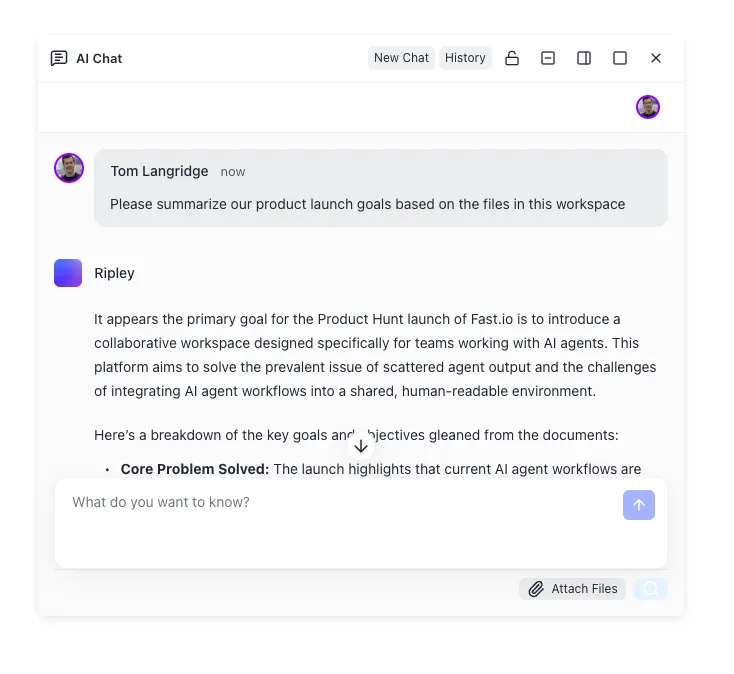
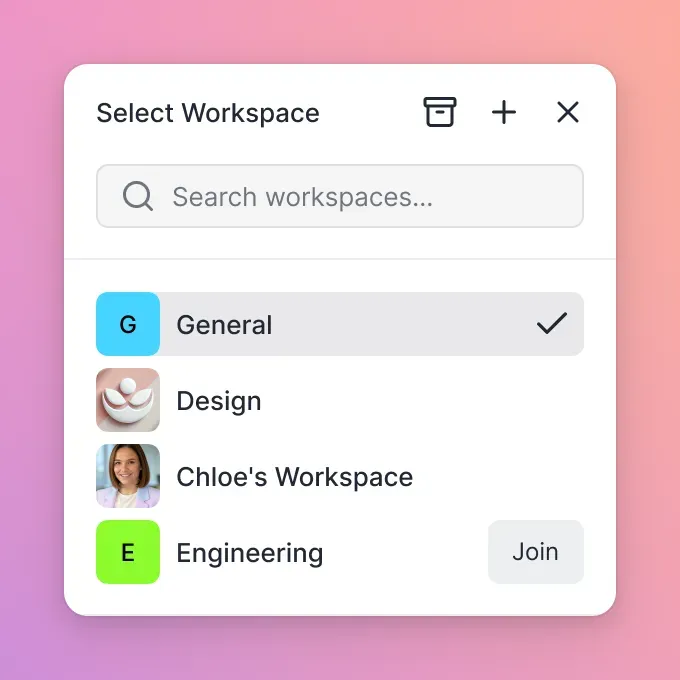
Fast.io is one option in that layer. Alternatives such as Drive, Dropbox, Box, or object storage still hold files well. Fast.io is built as an intelligent workspace for agentic teams rather than as commodity storage with an AI badge. Agents and humans share the same org-owned workspaces. Every file keeps full version history. Permissions can sit at org, workspace, folder, or file level. A detailed activity log records what people and agents did without relying on chat memory.
For agent access, Fast.io exposes a consolidated MCP toolset over Streamable HTTP at /mcp and legacy SSE at /sse. Details live in the storage for agents guide. That means a Claude-based agent stack, a Manus-side integration path you build yourself, or another MCP client can read and write the same workspace without inventing a private sync protocol. Intelligence Mode indexes files for semantic search and citation-backed chat once enabled. When you need structured fields from contracts, invoices, or research PDFs, Metadata Views turn natural-language column definitions into a live, queryable grid.
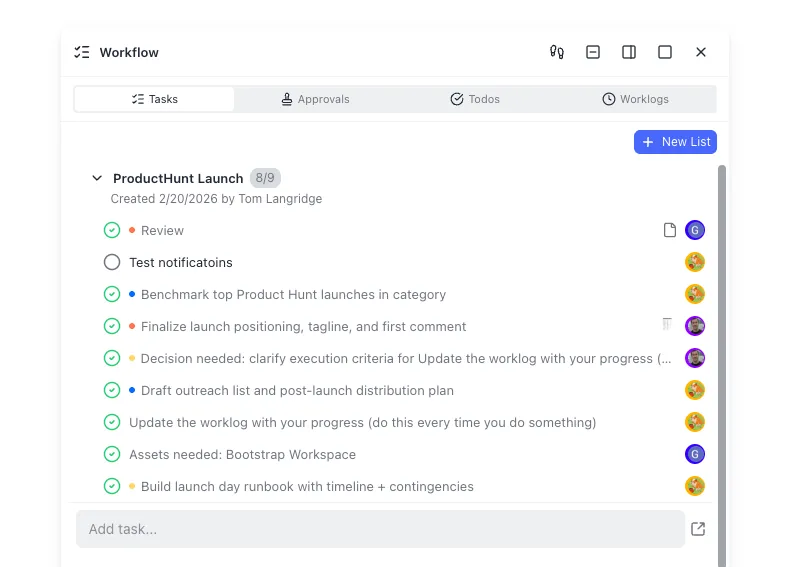
Ownership transfer matters when an agent stands up the workspace first. An agent can create structure, upload deliverables, and open branded Send or Exchange shares, then hand the organization to a human while keeping admin access. Humans review in the UI; agents continue through the API or MCP. That is the missing middle between "Manus finished a deck" and "the account team can find last Tuesday's client-ready version."
Practical handoff pattern:
- Agent completes work in Manus or Claude Cowork/Code.
- Final artifacts land in a project workspace (Fast.io, Drive, or your object store). Prefer a path with version history if agents may re-run the job.
- Apply least-privilege access for internal reviewers and expiring access for clients.
- Collect sign-off in a comment on the deliverable if it is required.
- Keep chat transcripts as context, not as the system of record.
How to choose Manus AI vs Claude for real work
Use a workflow score, not a brand loyalty score. Rate each job low, medium, or high on these axes, then map the pattern to a default tool.
Finished-artifact weight. If success is a file, site, or chart pack that someone else can open without more AI help, raise Manus.
Reasoning and prose weight. If success is argument quality, careful wording, or multi-pass editing, raise Claude.
Environment weight. If the work must touch your local repo, desktop folders, or developer toolchain, raise Claude Code or Claude Cowork. If the work is happier in a disposable cloud computer, raise Manus.
Supervision weight. If you want continuous steering and short loops, raise Claude chat. If you want to assign a goal and come back later, raise Manus or Claude Cowork depending on where the files live.
Team handoff weight. If more than one human must reuse the output, plan storage first. The tool that generates the artifact is not automatically the tool that should host it.
Clear pick rules
Pick Manus for autonomous multi-step production: competitive research packs, data analysis with scripts and charts, presentation-ready decks, and sandbox app builds.
- Pick Claude for deep reasoning, long writing, coding in real repositories, and supervised knowledge-work agents that stay close to your files.
- Use both when budget allows. Many teams already pair a production agent with a reasoning model: Manus for the heavy gather-and-build pass, Claude for critique, rewriting, and engineering.
Can Manus replace Claude?
Rarely as a full replacement. Manus is not positioned as a general thinking partner for every writing and coding conversation. Claude is not positioned as a pure cloud sandbox that exists only to return finished multi-step products. Replacing one with the other usually means changing the shape of the work, not swapping identical widgets.
Is Manus better than Claude?
Only for jobs where autonomous execution and finished deliverables beat conversational depth. For careful analysis, prose craft, and developer collaboration, Claude is often the better primary tool. The honest answer is workflow-dependent, which is why high-CPC commercial searchers keep comparing them instead of defaulting to one winner.
Budget notes without fake precision
Manus uses credit-based plans where complex multi-step runs cost more than short chat. Claude paid plans include chat plus agentic modes such as Cowork, with higher tiers for heavier usage. Price both against the cost of human hours you actually save, not against list price alone. A cheaper plan that still leaves you reformatting slides for an afternoon is not cheaper.
Plans for the workspace layer are separate. Fast.io organizations run on paid subscriptions, and monthly plans start with a trial of up to 14 days (credit card required): Starter at $9.99/mo, Business at $49.99/mo, and Enterprise at $199.99/mo. Real collaborative work requires an organization on a paid subscription after the trial ends. See pricing and storage for agents for current packaging.

A practical setup that keeps both tools useful
If you already pay for Claude and are evaluating Manus (or the reverse), design the system around files and handoffs, not around a single chat window.
For Claude-led work. Keep long writing and coding in Claude. Use Claude Cowork when you want a multi-step knowledge task over folders you select. Export final decks, briefs, and spreadsheets into a shared workspace the same day. Enable Intelligence Mode so later questions cite the files instead of replaying old chat.
For Manus-led work. Give Manus crisp goals with acceptance criteria: audience, format, sources to prefer, and what "done" looks like. Download or push final artifacts to durable storage immediately after success. Do not treat the sandbox as archive storage.
For mixed stacks. Route generation to Manus, critique to Claude, persistence to a workspace both humans and agents can reach. MCP is the glue when your agent runtime supports it. Fast.io's MCP endpoint and agent onboarding notes are one path; raw API upload to your existing bucket is another.
Quality control that actually prevents embarrassment.
- Require a human review step for client-facing claims, numbers, and legal language.
- Keep version history so a bad agent rewrite cannot erase a good draft.
- Prefer branded shares with expiring access for external readers instead of permanent public links.
- Log who uploaded, who approved, and which version left the building.
The comparison between Manus AI and Anthropic Claude will keep shifting as both sides ship agent features. The durable decision rule is simpler: choose Claude when the hard part is thinking and wording; choose Manus when the hard part is autonomous multi-step production of finished work products; choose a shared workspace when the hard part is making agent output usable by the rest of the team.
Sources
References used to verify factual claims in this guide.
-
US search demand for "manus ai vs claude" is about 170 monthly queries with CPC around $20.61 as of July 2026.
-
Manus AI is an autonomous general AI agent designed to complete tasks and deliver results, operating in a complete sandbox with internet access, a persistent file system, and the ability to install software and create tools.
-
Manus positions itself as action-oriented and deliverable-focused versus advisory chat, stating that conversational tools give pieces to assemble while Manus aims to give the finished product.
-
Manus is described as an action engine that goes beyond answers to execute tasks, automate workflows, and extend human reach.
-
Claude Cowork completes multi-step tasks across files and tools you choose and returns polished work for review; Claude Code is positioned for software engineering while Cowork targets non-coding knowledge work. Claude Cowork Pro is listed at $20 if billed monthly ($17 with annual subscription discount).
-
Fast.io Starter is $9.99/mo, Business is $49.99/mo, and Enterprise is $199.99/mo, with a 14-day free trial that requires a credit card.
Frequently Asked Questions
Is Manus better than Claude?
Manus is better when you need an autonomous cloud agent that returns finished multi-step work products such as research packs, decks, analyses, or sandbox app builds. Claude is better when you need deep reasoning, long-form writing quality, or coding help inside real developer workflows. Neither is universally better.
Can Manus replace Claude?
Usually no. Manus is built around autonomous task completion in a sandbox, while Claude is positioned as a thinking partner with agentic modes for knowledge work and coding. Many teams keep both: Manus for production runs, Claude for reasoning, editing, and engineering.
Manus AI vs Claude for work: which wins?
For work that ends in a client-ready file after multi-step execution, Manus often wins. For work that ends in careful analysis, polished prose, or code changes under human supervision, Claude often wins. Score the job by artifact type, environment, and supervision needs before you buy.
What is the main difference in agent autonomy?
Manus centers autonomy in a cloud computer with a file system, tools, and end-to-end delivery of complete results. Claude centers high-quality reasoning and offers agentic modes such as Claude Cowork and Claude Code that complete multi-step work with stronger emphasis on review and controlled access to your files.
Where should Manus or Claude outputs be stored for a team?
Do not leave final deliverables only in chat history or an ephemeral sandbox. Put them in shared storage with version history and access control. Options include Google Drive, Dropbox, object storage such as S3, or an intelligent workspace like Fast.io that agents can reach through MCP or API.
Does Fast.io replace Manus or Claude?
No. Fast.io is the shared workspace layer where agent files, shares, search, and human handoffs live. Manus and Claude generate and refine work. Fast.io keeps that work durable, permissioned, and usable by the rest of the team on paid plans, which on monthly billing start with a trial of up to 14 days.
Related Resources

Keep Manus and Claude outputs in one shared workspace
Store agent deliverables with version history, permissions, Intelligence Mode search, and MCP access for humans and agents. Start a 14-day free trial and connect your stack at the Fast.io MCP endpoint.