Claude vs Gemini in 2026: Pricing, Coding, and Capabilities Compared
Claude Opus 4.8 scores 88.6% on SWE-bench Verified while Gemini 3.1 Pro sits at 80.6%, but Gemini's API pricing starts 6x lower and it processes video and audio natively. This comparison breaks down the real differences in pricing, coding, multimodal support, and writing quality so you can pick the right model for your workload.


The 8-Point Benchmark Gap That Defines This Comparison
Claude Opus 4.8 scores 88.6% on SWE-bench Verified versus Gemini 3.1 Pro's 80.6%, per Anthropic's and Google DeepMind's published system cards. That 8-point spread is the widest gap between two flagship models from major labs in 2026, and it shows up in practice: Claude resolves more complex, multi-file pull requests on the first attempt.
But benchmarks only measure one axis. Gemini 3.1 Pro costs $2.00 per million input tokens at prompts under 200K, while Claude Opus 4.8 costs $5.00. If you're building an application that processes thousands of requests per day, that pricing difference compounds into real money fast.
The question isn't which model is "better." It's which model fits the job you're actually doing. A developer writing an agentic coding assistant needs different capabilities than a team building a multimodal content pipeline. This guide compares the two across the dimensions that matter: API cost, coding performance, multimodal support, writing quality, and ecosystem integration.
Related guides
- Cline vs. Cursor vs. Claude Code: Best Coding Agents ComparedAn in-depth comparison of Cline, Cursor, and Claude Code coding agents. Choosing the right tool depends on your team's...
- Best Claude Code Alternatives in 2026, ComparedEight tools compete with Claude Code for AI-assisted coding in 2026. Cursor dominates IDE-based editing, Aider leads...
- Claude Cowork vs Claude Code: Which One Should You Use?Claude Code now accounts for roughly 4% of all public GitHub commits, and Claude Cowork went generally available in...
- Manus AI vs Claude: Agent Autonomy ComparedUS search demand for "manus ai vs claude" runs about 170 monthly queries with CPC around twenty dollars and sixty-one...
- Claude Code vs OpenCode: Which Terminal AI Agent Fits Your WorkflowClaude Code handles roughly 4% of all public GitHub commits, while OpenCode has collected 179,000 stars as the leading...
- Cline vs. Claude Code: Comparing Agent Memory ArchitecturesLocal AI agent memory architectures like Cline's Memory Bank and Claude Code's Auto-Memory are designed for isolated,...
More on this subject: Claude and Claude Code (278 guides)
API Pricing Breakdown: What You Actually Pay
Pricing is where the two platforms diverge most sharply. Google offers more tiers at lower price points. Anthropic charges more per token but delivers stronger results on reasoning-heavy tasks.
Claude API pricing (per million tokens):
- Claude Opus 4.8: $5.00 input / $25.00 output (1M context)
- Claude Sonnet 4.6: $3.00 input / $15.00 output (1M context)
- Claude Haiku 4.5: $1.00 input / $5.00 output (200K context)
Gemini API pricing (per million tokens):
- Gemini 3.1 Pro Preview: $2.00 input / $12.00 output (1.05M context, prompts under 200K)
- Gemini 3.5 Flash: $1.50 input / $9.00 output (1.05M context)
- Gemini 2.5 Flash: $0.30 input / $2.50 output (1M context)
- Gemini 2.5 Flash-Lite: $0.10 input / $0.40 output (1M context)
The sticker prices tell one story, but real-world costs depend on your usage pattern. Anthropic's prompt caching reduces repeated system prompt charges on subsequent calls. Google offers batch pricing at 50% off standard rates across all models. Both discounts reward high-volume, predictable workloads.
For subscription users, both platforms charge $20/month for their Pro tiers. Claude Pro gives you access to Opus 4.8, Claude Code, and Claude Cowork. Google's equivalent (rebranded from Gemini Advanced to Google AI Pro in early 2026) bundles 2TB of Google One storage, Workspace integration across Gmail, Docs, Sheets, and Drive, and 1,000 monthly image generation credits.
When Gemini wins on price: High-volume inference, batch processing, lightweight classification tasks, or any pipeline where you can use Flash-Lite at $0.10/M input tokens.
When Claude wins on value: Complex reasoning tasks where a cheaper model would require retries, long coding sessions where first-attempt accuracy saves compute, or writing tasks where output quality reduces human editing time.

How Claude and Gemini Compare on Coding
Coding is where Claude holds its clearest lead. On SWE-bench Verified, the industry-standard benchmark for real-world software engineering tasks, the current scores are:
- Claude Opus 4.8: 88.6%
- Claude Opus 4.6: 80.8%
- Claude Sonnet 4.6: 79.6%
- Gemini 3.1 Pro: 80.6%
On SWE-bench Pro, which uses tasks from repositories created after model training cutoffs to prevent memorization, Claude Opus 4.8 scores 69.2% against Gemini 3.1 Pro's 54.2%. That 15-point gap on "unseen" problems suggests Claude generalizes better to novel codebases.
Beyond benchmarks, developers consistently report that Claude produces cleaner, more idiomatic code. It handles large multi-file refactors better, follows complex instructions more precisely, and maintains context across long coding sessions without drifting. Claude Code, Anthropic's terminal-based coding agent, uses these strengths to work directly in your repository with file editing, test running, and git operations.
Gemini's coding story is different but not weak. Gemini 3.1 Pro integrates tightly with Google's developer ecosystem. If your stack runs on Google Cloud, uses Firebase, or leans on Angular or Flutter, Gemini's tooling and code generation align closely with Google's conventions. Its thinking mode also helps it work through multi-step logic problems by showing its reasoning chain before generating code.
For agent-driven development workflows, where an AI writes, tests, and iterates on code across sessions, the workspace layer matters as much as the model itself. Fast.io's MCP server gives both Claude and Gemini agents persistent file storage, version history, and the ability to hand finished work off to a human reviewer. The model generates the code; the workspace preserves and organizes it.
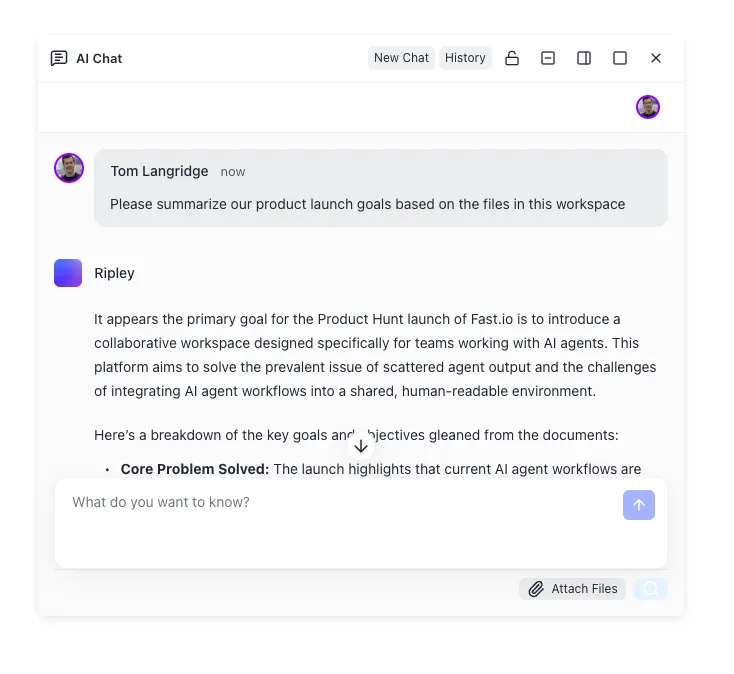


Give your AI agents a shared workspace
Fast.io's MCP server lets Claude, Gemini, or any model read, write, and hand off files in persistent workspaces.
Multimodal Capabilities: Where Gemini Pulls Ahead
Multimodal processing is Gemini's strongest differentiator. Gemini 3.1 Pro natively ingests text, images, audio (up to 8.4 hours), and video (up to one hour) within a single prompt. No separate preprocessing pipeline, no external transcription service. You send the file, the model understands it.
Claude's multimodal support is narrower. It processes images and documents well, handling PDFs, screenshots, diagrams, and charts with strong accuracy. But it lacks native video and audio processing. If your workflow involves analyzing recorded meetings, extracting insights from video lectures, or processing podcast content, you need either Gemini or a separate transcription step before Claude can help.
What Gemini handles natively:
- Images: up to 900 per prompt, with strong visual reasoning for charts, screenshots, diagrams, and photos
- Video: up to one hour of visual data, with frame-by-frame understanding
- Audio: up to 8.4 hours of continuous audio, with speech recognition and sound classification
- Code: syntax-aware processing across dozens of languages
What Claude handles natively:
- Images: screenshots, photos, diagrams, charts, and handwritten notes
- Documents: PDFs, Word docs, spreadsheets, presentations with page-level understanding
- Code: syntax-aware processing with strong multi-file context
For teams working with mixed media, the gap is significant. A marketing team reviewing video ads, a legal team analyzing recorded depositions, or a research team processing interview recordings would all benefit from Gemini's native multimodal pipeline. A development team reviewing code, a finance team analyzing contracts, or a content team editing long-form documents would find Claude's document understanding more than sufficient.
When you need both models working on the same files, a shared workspace keeps everything in one place. Fast.io's Intelligence Mode auto-indexes uploaded documents for semantic search and RAG chat, so either model can query your file library through the MCP server without re-uploading or re-processing content each session.
How Writing Quality Differs Between Claude and Gemini
In blind writing tests conducted by multiple review sites in 2026, Claude consistently outperforms Gemini on prose quality, voice matching, and instruction adherence. One test by Talkory AI found that Claude won 4 out of 8 blind writing rounds and had the lowest AI detection rate at 23%, meaning its output reads the most like human-written text.
Claude's writing advantage comes down to three things. First, it maintains consistent tone across long documents without drifting into repetition or generic phrasing. Second, it adapts to writing samples with surprising accuracy, picking up on rhythm, vocabulary, and sentence structure. Third, it follows complex formatting instructions precisely, which matters when you need structured output like YAML, JSON, or specific editorial templates.
Gemini writes competently but tends toward formulaic output on longer pieces. Where it excels is in research-integrated writing. Gemini's built-in search grounding pulls live web data into responses, which makes it strong for data-heavy reports, market analysis, and content that needs current statistics. Google charges $14 per 1,000 grounding queries after a free monthly tier of 5,000 prompts.
Pick Claude for: Long-form articles, creative writing, technical documentation, client communications, content that needs to match a specific voice, or any writing where "sounds human" is a requirement.
Pick Gemini for: Research summaries that need current data, reports heavy on statistics, content integrated with Google Workspace, or drafts where you plan significant human editing anyway.
For content teams producing articles at scale, the model choice is only half the equation. You also need version control and review workflows around the generated content. Fast.io's workspace collaboration features let editors review AI-generated drafts, leave anchored comments on specific passages, and track version history before publication.
Ecosystem Integration and Developer Experience
Google and Anthropic have taken opposite approaches to ecosystem design. Google bets on breadth: Gemini works alongside Gmail, Google Docs, Sheets, Drive, Android, and Chrome. If your organization runs on Google Workspace, Gemini operates inside the tools your team already uses. It can draft emails, generate spreadsheet formulas, summarize Drive documents, and answer questions about your calendar without leaving the Google interface.
Anthropic focuses on depth. Claude's ecosystem is smaller but more intentional. Claude Code gives developers a terminal-native coding agent. Claude Cowork provides persistent project workspaces where you can upload reference materials and collaborate with Claude across sessions. The API supports tool use, computer use, and multi-agent orchestration patterns that give developers fine-grained control over Claude's behavior.
For API developers, the practical differences matter:
- Context windows: Both support 1M tokens, though Gemini 3.1 Pro charges higher rates above 200K tokens ($4.00/$18.00 per MTok vs. $2.00/$12.00 below)
- Output limits: Gemini 3.1 Pro caps at 64K output tokens; Claude models support up to 128K output with extended thinking
- Free tiers: Google offers a free tier for Gemini API with rate limits. Anthropic provides free credits for new API accounts
- Batch processing: Both support batch APIs at reduced rates. Google's is 50% off; Anthropic offers similar batch discounts
When building agentic applications that need persistent state between sessions, neither model provides built-in file storage. That's where an external workspace layer fits. Fast.io provides shared workspaces and remote MCP server access at https://mcp.fast.io/mcp/tools, giving both Claude and Gemini agents a persistent file system, audit trails, and ownership transfer when work is ready for human review. Teams can start with a 14-day Business Trial across Starter, Business, and Enterprise plans. The workspace works with any LLM, so you can route different parts of a pipeline to whichever model handles that task best.
Which Model Should You Choose?
After comparing pricing, benchmarks, capabilities, and ecosystem fit, the decision comes down to what you're building.
Choose Claude when:
- Coding is your primary use case, especially complex multi-file changes or agentic development
- Writing quality matters and you need human-sounding prose with consistent voice
- You're building applications that require precise instruction following
- Long document analysis and reasoning are core to your workflow
- You need extended thinking for multi-step problem solving
Choose Gemini when:
- Cost efficiency is the top priority and you can use Flash or Flash-Lite tiers
- Your workflow involves video, audio, or heavy image processing
- Your organization runs on Google Workspace and wants native integration
- You need grounded, search-integrated responses with current web data
- You're building high-volume pipelines where per-token cost compounds
Use both when:
Many production systems route different tasks to different models. Use Claude for code generation and content creation where accuracy on the first attempt saves iteration time. Use Gemini for multimodal processing, batch classification, and tasks where its lower per-token cost scales better. A shared workspace like Fast.io gives both models access to the same files, intelligence layer, and audit history, so the output stays organized regardless of which model produced it.
The AI model landscape changes quarterly. Pricing drops, new capabilities ship, and benchmark leaders rotate. The best strategy isn't loyalty to one provider. It's building your workflows on a flexible foundation where swapping models doesn't mean rebuilding your infrastructure.
Sources
References used to verify factual claims in this guide.
-
Claude Opus 4.8 scores 88.6% on SWE-bench Verified
-
Gemini 3.1 Pro scores 80.6% on SWE-bench Verified and 54.2% on SWE-bench Pro
-
Claude Opus 4.8 scores 69.2% on SWE-bench Pro
-
Claude Opus 4.8 API pricing: $5.00 input / $25.00 output per million tokens
-
Gemini 3.1 Pro API pricing: $2.00 input / $12.00 output per million tokens
-
Claude Pro and Gemini Advanced both cost approximately $20/month for consumer subscriptions
-
Claude won 4 of 8 blind writing rounds with 23% AI detection rate
-
Gemini 3.1 Pro processes up to 8.4 hours of audio and one hour of video natively
Frequently Asked Questions
Is Claude better than Gemini for coding?
Claude leads on coding benchmarks. Opus 4.8 scores 88.6% on SWE-bench Verified versus Gemini 3.1 Pro's 80.6%. On SWE-bench Pro, the gap widens to 69.2% versus 54.2%. Developers also report that Claude produces cleaner, more idiomatic code and handles multi-file refactors more reliably. Gemini is still strong for Google-ecosystem projects and lighter coding tasks.
Which is cheaper, Claude or Gemini API?
Gemini is cheaper at every comparable tier. Gemini 2.5 Flash costs $0.30 per million input tokens versus Claude Haiku 4.5 at $1.00. At the flagship level, Gemini 3.1 Pro starts at $2.00 per million input tokens while Claude Opus 4.8 costs $5.00. Google's batch API at 50% off and Anthropic's prompt caching both reduce real-world costs for high-volume use.
Does Gemini have a larger context window than Claude?
Both support roughly 1 million token context windows. Gemini 3.1 Pro supports 1.05M tokens, while Claude Opus 4.8 and Sonnet 4.6 support 1M tokens. The practical difference is minimal. Gemini 3.1 Pro does charge higher per-token rates for prompts above 200K tokens.
Should I use Claude or Gemini for writing?
Claude is the stronger choice for writing. It produces more natural-sounding prose, maintains consistent tone across long documents, and adapts well to sample writing styles. In blind tests, Claude had the lowest AI detection rate among major models at 23%. Gemini is better when your writing needs real-time web data or heavy integration with Google Docs.
Can I use both Claude and Gemini in the same project?
Yes, and many production teams do. A common pattern routes coding tasks to Claude for accuracy and batch processing or multimodal tasks to Gemini for cost efficiency. Using a shared workspace like Fast.io lets both models read and write to the same file system through MCP, keeping output organized regardless of which model generated it.
What multimodal formats does each model support?
Gemini processes images, video (up to one hour), and audio (up to 8.4 hours) natively in a single prompt. Claude handles images and documents (PDFs, Word, spreadsheets, presentations) but lacks native video and audio processing. If your workflow involves analyzing recordings or video content, Gemini has a clear advantage.
Related Resources

Give your AI agents a shared workspace
Fast.io's MCP server lets Claude, Gemini, or any model read, write, and hand off files in persistent workspaces.