Best Claude Code Alternatives in 2026, Compared
Eight tools compete with Claude Code for AI-assisted coding in 2026. Cursor dominates IDE-based editing, Aider leads open-source terminal agents, and GitHub Copilot turns issues into pull requests autonomously. This guide compares all eight on pricing, model flexibility, and real workflow fit so you can pick the right tool for how you actually write code.


Why Developers Are Exploring Claude Code Alternatives
Cursor doubled from $1 billion to $2 billion in annualized revenue in just three months, crossing the milestone in February 2026 according to Bloomberg and TechCrunch. That growth rate tells you something concrete about the AI coding market: developers are spending real money, and they are switching tools fast.
Claude Code earned its position as the top terminal-based coding agent. Its SWE-bench scores, subagent architecture, and deep codebase reasoning set a high bar. But at $20/month for Pro and up to $200/month for Max 20x, it is worth knowing what else exists, especially when some alternatives offer free tiers, open-source licensing, or tighter IDE integration.
The alternatives fall into three categories. IDE-native editors like Cursor and Devin Desktop bake AI into every editing action. Terminal agents like Aider and OpenAI Codex match Claude Code's CLI-first philosophy. Platform-integrated tools like GitHub Copilot and Amazon Q Developer tie AI directly into your existing dev infrastructure.
Here are eight alternatives, ranked by category:
- Cursor, best for IDE-first development
- Devin Desktop (formerly Windsurf), best for autonomous coding
- Cline, best for human-in-the-loop workflows
- OpenAI Codex, best for the ChatGPT ecosystem
- Aider, best open-source terminal agent
- Antigravity CLI, best free terminal option
- GitHub Copilot, best for GitHub-native teams
- Amazon Q Developer, best for AWS-heavy stacks
Related guides
- OpenClaw vs n8n: Agent AI vs Workflow Automation ComparedOpenClaw is an autonomous AI agent that decides what to do next. n8n is a workflow automation tool that runs the steps...
- Best Replit Alternatives in 2026Replit crossed 50 million users in early 2026, but its February pricing overhaul pushed many developers to evaluate...
- Claude vs Gemini in 2026: Pricing, Coding, and Capabilities ComparedClaude Opus 4.8 scores 88.6% on SWE-bench Verified while Gemini 3.1 Pro sits at 80.6%, but Gemini's API pricing starts...
- Claude Model Comparison 2026: Opus vs Sonnet vs Haiku vs FableAnthropic's Claude family spans four model tiers from Haiku 4.5 at $1 per million input tokens to Fable 5 at $10. Each...
- Claude Pro vs Max: Which Plan Fits Your WorkflowClaude Pro and Claude Max share every feature Anthropic offers: Opus, Sonnet, extended thinking, Claude Code, Cowork,...
- Grok vs Claude: Which AI Is Better in 2026?Grok's mobile app market share grew 9.5x in 12 months while Claude quietly captured 70% of enterprise AI deals. Both...
More on this subject: Claude and Claude Code (278 guides)
How We Evaluated These Tools
We compared each alternative across five dimensions:
Autonomy level. Can the tool plan, edit, and test code without constant prompting? Claude Code's strength is multi-step reasoning where it reads, modifies, and validates across files. Any alternative needs to handle at least some of that workflow independently.
Model flexibility. Some tools lock you into a single LLM provider. Others let you bring your own API key or run local models through Ollama. This affects both cost and output quality.
Workflow integration. Does the tool fit into your existing editor, terminal, and CI/CD setup? Switching editors is a bigger ask than installing a CLI tool or VS Code extension.
Pricing transparency. Flat subscription, usage-based credits, or bring-your-own-key all have different cost profiles. We favored tools with predictable pricing and genuine free tiers.
Practical ceiling. What breaks first when you throw a real 500-file refactoring job at it? Autocomplete is table stakes. The question is how well each tool handles complex, multi-step tasks.
Quick pricing reference before the detailed breakdowns:
- Cursor: Free / $20 Pro / $40 Business per user
- Devin Desktop: Free / $20 Pro / $200 Max
- Cline: Free (bring your own API key) / pay-as-you-go credits
- OpenAI Codex: Free / $20 Plus / $100 Pro (5x) / $200 Pro (20x)
- Aider: Free and open source (you pay your LLM provider directly)
- Antigravity CLI: Free for Gemini Code Assist subscribers
- GitHub Copilot: Free / $10 Pro / $39 Pro+ / $100 Max
- Amazon Q Developer: Free / $19 Pro per user
IDE and Editor Alternatives
These three tools embed AI directly into a code editor. If you prefer visual diffs over terminal output, start here.

1. Cursor: Best for IDE-First Development
Cursor is a VS Code fork with AI woven into every editing layer. It crossed 1 million paying users in early 2026, and parent company Anysphere reached a $50 billion valuation by April 2026.
What sets Cursor apart is codebase indexing. Its repo map indexes your entire project so suggestions reference actual functions, types, and file paths rather than hallucinated API calls. Composer mode coordinates multi-file edits in a single operation, and the proprietary Composer 2.5 model runs fast enough that waiting rarely interrupts your flow. You can also choose Claude, GPT, Gemini, or xAI models through a credit system where $1 in credits equals $1 of compute.
Strengths:
- Deep codebase indexing produces accurate, context-aware suggestions
- Multi-file editing through Composer mode handles complex refactors
- Model flexibility across every major LLM provider
- Tab completion feels near-instant
Limitations:
- Credit-based billing can surprise heavy users who pick premium models
- Requires committing to the Cursor IDE (though VS Code extensions carry over)
Best for: Developers who live in their editor and want AI woven into every keystroke, not just in a chat sidebar.
Pricing: Free tier with 2,000 completions/month. Pro at $20/month. Business at $40/user/month. Ultra at $200/month for power users.
2. Devin Desktop (Formerly Windsurf): Best for Autonomous Coding
Cognition acquired Windsurf for $250 million in late 2025 and rebranded it as Devin Desktop in June 2026. The IDE now runs on SWE-1.6, Cognition's proprietary model that reaches 950 tokens per second. Devin, the fully autonomous coding agent, is embedded directly inside the editor.
This is the most autonomous option on the list. Assign it a feature request, and Devin plans the implementation, writes the code, runs tests, and opens a PR with minimal hand-holding. Codemaps, a feature no competitor has replicated, gives the agent a persistent map of your project's architecture that updates as the codebase evolves.
Strengths:
- SWE-1.6 model is purpose-built for software engineering and very fast
- Codemaps provide deep, persistent project understanding
- Devin agent handles complex multi-step tasks end to end
- Cascade mode chains editing actions intelligently
Limitations:
- Proprietary model with no bring-your-own-LLM option
- $200/month Max tier needed for heavy autonomous usage
Best for: Teams that want a fully autonomous agent handling complete features, not just autocomplete and chat.
Pricing: Free tier available. Pro at $20/month. Max at $200/month. Teams at $40/user/month.
3. Cline: Best for Human-in-the-Loop Workflows
Cline started as "Claude Dev" and has grown into a full coding agent available as a VS Code and JetBrains extension. It passed 1.5 million VS Code Marketplace installs and 59,000 GitHub stars by April 2026. The core design principle: the agent proposes every file edit and terminal command, then waits for your explicit approval before executing anything.
This human-in-the-loop model makes Cline the safest choice for production codebases. You see exactly what the agent plans to do, approve or reject each step, and maintain full control. MCP support lets you extend Cline with custom tools for web browsing, search, and external API access.
Strengths:
- Approval workflow prevents unintended changes in production code
- Bring-your-own-key model works with Anthropic, OpenAI, Google, AWS Bedrock, and more
- MCP extensibility for custom tooling and integrations
- Available for both VS Code and JetBrains IDEs
Limitations:
- Manual approval step slows down high-velocity workflows
- No built-in model; quality depends entirely on which API key you connect
Best for: Developers who want agent-level code generation but insist on reviewing every action before it hits the filesystem.
Pricing: Free and open source (Apache 2.0). You pay your LLM provider directly. Optional pay-as-you-go credits for teams that want consolidated billing.
Terminal and CLI Alternatives
These tools run in your terminal, matching Claude Code's CLI-first approach. If you prefer typing commands over clicking through an IDE, these are your options.
4. OpenAI Codex: Best for the ChatGPT Ecosystem
OpenAI rebuilt Codex as a terminal-native coding agent backed by gpt-5.3-codex. It installs via npm or Homebrew, reads your repo, proposes edits, runs commands in a configurable sandbox, and validates changes before applying them. The VS Code extension has 9.8 million installs, and the CLI repo has collected over 88,000 GitHub stars.
Authentication works two ways: use your ChatGPT subscription (Plus at $20/month, Pro at $100+), or bring your own API key and pay per token. The sandbox execution model prevents dangerous commands from running unchecked, which matters when you give an agent terminal access.
Strengths:
- Sandboxed execution prevents destructive commands
- Works with ChatGPT subscription or standalone API key
- Multi-step planning for complex, multi-file tasks
- Massive community with active development
Limitations:
- Pro tier ($100 to $200/month) needed for serious daily use
- Locked to OpenAI models only
Best for: Developers already paying for ChatGPT who want a terminal agent without managing separate API keys.
Pricing: Free tier available. ChatGPT Plus at $20/month. Pro 5x at $100/month. Pro 20x at $200/month. API-key users pay standard OpenAI token rates.
5. Aider: Best Open-Source Terminal Agent
Aider is the open-source purist's pick. Licensed under Apache 2.0, the tool itself costs nothing. You pay only for the LLM API tokens you consume, which typically runs $5 to $60 per month depending on model choice and usage intensity. Running local models through Ollama brings that cost to zero.
Aider's standout feature is git integration. Every edit gets committed automatically with a descriptive message. You can /undo, /diff, and /commit from inside the chat session. It supports over 100 programming languages, runs linters and tests on generated code automatically, and works with any LLM through OpenAI-compatible API endpoints.
Strengths:
- Truly free and open source under Apache 2.0
- Git-native workflow with automatic commits, diffs, and undo
- Works with any LLM, including local models via Ollama
- Automatic lint and test validation catches errors before you review
Limitations:
- Terminal-only with no graphical interface
- Requires configuring your own API keys and model endpoints
Best for: Developers who want full control over their LLM spend and prefer git-first, keyboard-driven workflows.
Pricing: Free. You pay your LLM provider directly. Typical monthly spend: $5 to $20 with Claude Sonnet, $30 to $60 with heavier models.
6. Antigravity CLI: Best Free Terminal Option
Google retired Gemini CLI on June 18, 2026, replacing it with Antigravity CLI. Built in Go instead of Node.js, Antigravity adds asynchronous workflows that orchestrate multiple agents in the background, so you can run large-scale refactors without locking up your terminal session.
If you hold a Gemini Code Assist Standard or Enterprise license, your access carries over unchanged. Antigravity keeps the core Gemini CLI features (Agent Skills, Hooks, Subagents) but repackages them as Antigravity plugins. One notable change: Antigravity CLI is not open source, unlike the original Gemini CLI, which has prompted pushback from the developer community.
Strengths:
- Async multi-agent workflows for parallel tasks
- Faster Go-based runtime compared to Gemini CLI
- MCP plugin support for extensibility
- Access to Gemini models with 1M+ token context windows
Limitations:
- Not open source, unlike its predecessor
- Individual free tier availability is still being finalized
- Feature parity with Gemini CLI is not yet complete
Best for: Google Cloud teams and developers who valued Gemini CLI's free tier and large context window.
Pricing: Free for Gemini Code Assist subscribers. Individual tier pricing is being finalized as part of the transition.


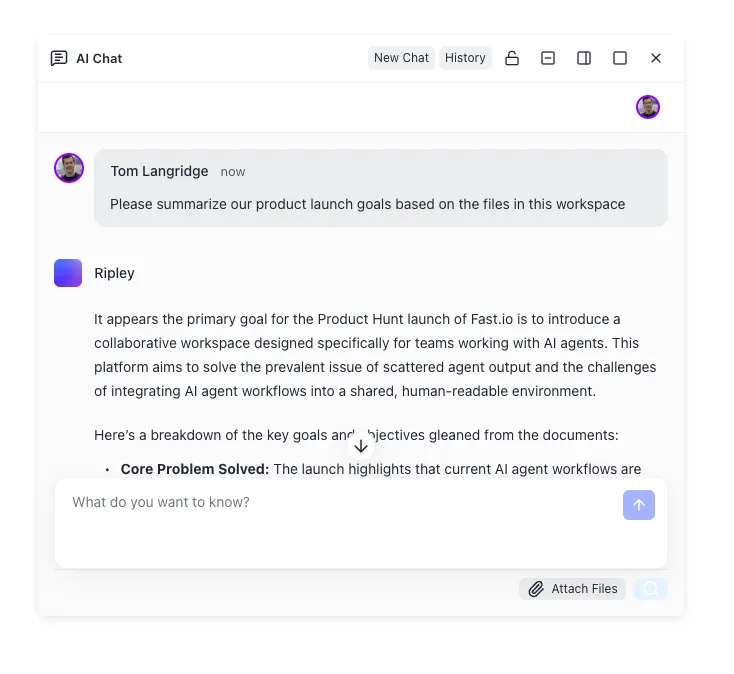
Give your coding agents a shared workspace
Fast.io provides shared storage with MCP access, so your AI coding tools can read, write, and share project files without local-only silos. Starts with a 14-day free trial.
Platform-Integrated Alternatives
These tools tie AI coding directly into the platforms where your code already lives.
7. GitHub Copilot: Best for GitHub-Native Teams
GitHub Copilot shifted to usage-based billing on June 1, 2026. Every plan now includes a monthly pool of AI credits (1 credit = $0.01 in compute). Pro starts at $10/month with $15 in credits included. The standout feature is the coding agent: assign it a GitHub issue, and it generates a pull request asynchronously in the background.
Agentic code review shipped in March 2026. Copilot gathers full project context before suggesting changes and can pass fix suggestions directly to the coding agent, which generates fix PRs automatically. For teams whose entire workflow runs on GitHub, this integration between issues, PRs, and code review is hard to replicate with standalone tools.
Strengths:
- Coding agent converts GitHub issues into pull requests autonomously
- Deep integration across GitHub issues, PRs, and code review
- $10/month entry point is the most affordable paid option on this list
- Enterprise tier includes IP indemnity
Limitations:
- Credit system adds billing complexity for heavy users
- Coding agent quality varies on complex, multi-file tasks
Best for: Teams whose entire development workflow already runs on GitHub.
Pricing: Free tier available. Pro at $10/month. Pro+ at $39/month. Max at $100/month. Business at $19/user/month. Enterprise at $39/user/month.
8. Amazon Q Developer: Best for AWS Teams
Amazon Q Developer offers a perpetual free tier with 50 agentic chat interactions and unlimited code completions per month. The Pro tier costs $19/user/month and includes IP indemnity, a feature that enterprise legal teams care about because it protects you if generated code infringes existing intellectual property.
One important caveat: AWS is sunsetting Q Developer's IDE plugins in favor of Kiro, its next-generation coding tool. New Q Developer signups closed on May 15, 2026, with end of support scheduled for April 30, 2027. If you are evaluating tools from scratch, look at Kiro alongside Q Developer.
Strengths:
- Generous free tier with unlimited code completions
- IP indemnity on the Pro plan
- Deep AWS service integration for cloud-native development
Limitations:
- Being phased out in favor of Kiro (end of support April 2027)
- Effectiveness drops significantly outside AWS ecosystems
Best for: AWS-focused teams that need coding assistance tightly integrated with their cloud services, and who plan to migrate to Kiro when it matures.
Pricing: Free tier with 50 agentic interactions/month. Pro at $19/user/month. No new signups as of May 2026.
Choosing the Right Tool for Your Workflow
Different tools win at different tasks. Picking the right one depends less on benchmark scores and more on how you actually work.
Refactoring large codebases. Cursor and Aider both handle multi-file refactors well, but differently. Cursor gives you visual diffs in the editor and lets you accept or reject changes file by file. Aider commits each change automatically with git, so you can undo cleanly if something breaks.
Debugging production issues. Claude Code's terminal-based reasoning is strong for tracing bugs across files. GitHub Copilot's agentic code review catches issues at the PR level before they merge. Cline's approval model adds a safety net when debugging live systems where an accidental write could cause problems.
Starting new projects from scratch. Devin Desktop and OpenAI Codex can scaffold entire project structures from a description. Both handle the initial boilerplate well, though you will want to review the architectural decisions they make before building on top of them.
Budget-constrained teams. Aider (free, bring your own API key) and GitHub Copilot ($10/month) offer the lowest cost paths into AI-assisted coding. Amazon Q Developer's free tier works if you are building on AWS, though its future is tied to the Kiro transition.
Compliance-sensitive organizations. GitHub Copilot Enterprise and Amazon Q Developer Pro both include IP indemnity. This matters for companies where legal review is part of the shipping process.
Most teams end up using more than one tool. A Cursor user might add Aider for scripted refactors that run in CI. A Claude Code user might keep GitHub Copilot for async PR generation from issues. The tools are more complementary than they first appear.
For teams whose AI coding agents produce deliverables beyond code (documentation, project specs, client-facing assets), a shared workspace like Fast.io provides the persistence layer. Agents write to Fast.io workspaces via the MCP server, and team members review the output through the same interface. Monthly plans start with a trial of up to 14 days, with workspaces and storage scaled to each plan.
Sources
References used to verify factual claims in this guide.
-
Cursor doubled from $1 billion to $2 billion in annualized revenue in three months, crossing the milestone in February 2026 Cursor crossed 1 million paying users and Anysphere reached a $50 billion valuation by April 2026
-
Cline passed 1.5 million VS Code Marketplace installs and 59,000 GitHub stars by April 2026
-
OpenAI Codex CLI has 9.8 million VS Code extension installs and over 88,000 GitHub stars
-
GitHub Copilot shifted to usage-based billing on June 1, 2026
-
Google retired Gemini CLI on June 18, 2026, replacing it with Antigravity CLI
-
Cognition acquired Windsurf for $250 million and rebranded it as Devin Desktop in June 2026
-
AWS is sunsetting Q Developer IDE plugins, new signups closed May 15, 2026, end of support April 30, 2027
Frequently Asked Questions
What is the best alternative to Claude Code?
It depends on your workflow. Cursor is the strongest choice for developers who prefer IDE-based editing with visual diffs and inline suggestions. For terminal-first workflows similar to Claude Code, Aider offers comparable capabilities with open-source licensing and support for any LLM backend. GitHub Copilot is the best pick for teams that want AI tightly integrated into their GitHub issue and PR workflow.
Is there a free alternative to Claude Code?
Several free options exist. Aider is fully open source under Apache 2.0, and you only pay for the LLM API tokens you consume (or nothing at all with local models via Ollama). Cline is a free VS Code extension that works with any API key you provide. GitHub Copilot offers a limited free tier, and Amazon Q Developer includes 50 free agentic interactions per month. Antigravity CLI (the successor to Gemini CLI) offers free access for Gemini Code Assist subscribers.
Is Cursor better than Claude Code?
They solve different problems. Cursor is an IDE where AI is built into every editing action, from tab completion to multi-file refactoring. Claude Code is a terminal agent that reasons through complex tasks across your entire codebase. Cursor feels faster for everyday editing. Claude Code tends to produce higher-quality results on complex, multi-step tasks that require deep architectural reasoning. Many developers use both.
What AI coding tools are similar to Claude Code?
The most direct competitors are OpenAI Codex (terminal-based, backed by gpt-5.3-codex) and Aider (open-source, terminal-based, model-agnostic). Both run in the terminal, read your codebase, and generate multi-file changes. Antigravity CLI from Google offers a similar terminal workflow with access to Gemini models. For a different approach to the same problem, Cline provides Claude Code-style reasoning inside VS Code with human approval at every step.
Can I use multiple AI coding tools at the same time?
Yes, and many developers do. A common setup is Cursor or VS Code with Copilot for daily editing, plus Claude Code or Aider in the terminal for complex refactoring and debugging sessions. The tools rarely conflict because they operate in different environments. The main consideration is cost, since running multiple paid subscriptions adds up. Using one bring-your-own-key tool (like Aider or Cline) alongside one subscription tool keeps costs manageable.
Related Resources

Give your coding agents a shared workspace
Fast.io provides shared storage with MCP access, so your AI coding tools can read, write, and share project files without local-only silos. Starts with a 14-day free trial.