How to Use the GIMP Photo Editor in Clay Creative Ops
The phrase "gimp photo editor" draws 33,100 monthly US searches with keyword difficulty 27 and a CPC of $2.81. Most results teach brush tools, not how GTM teams version GIMP exports next to Clay prospect tables. This guide connects free desktop editing to Clay HTTP API orchestration and shared workspace delivery.


Why GIMP still sits next to Clay in creative ops
The phrase "gimp photo editor" draws 33,100 monthly US searches with a keyword difficulty of 27 and a CPC of $2.81, according to DataForSEO keyword metrics for this topic. That volume is large enough to prove demand, and the moderate difficulty means teams still search for practical answers rather than brand names alone. The gap is operational: pure GIMP tutorials stop at layers and export settings, while Clay content stops at enrichment tables. Neither side explains how personalized outbound creative leaves a designer's machine, lands in a shared folder, and stays linked to the row that triggered it.
GIMP (GNU Image Manipulation Program) is a free, open-source raster editor for Linux, macOS, and Windows. The official project describes it as free software you can change and redistribute, with tools for high-quality photo manipulation, graphic design elements, and scripted image work in languages such as Python and Scheme. Stable release 3.2.4 shipped in April 2026. For creative ops, the useful definition is narrower: GIMP is the free open-source photo editor you open when browser tools cannot handle complex layers, masks, or large production files.
Clay is the GTM spreadsheet where rows become accounts, contacts, and personalization fields. Clay's HTTP API integration lets tables call any endpoint with GET, POST, PUT, or DELETE, even when Clay has no native connector for the tool you need. Clay also publishes templates for GTM patterns such as outbound, CRM enrichment, and personalized landing pages. None of that is a native GIMP plug-in. The point of this guide is the workflow between them: edit assets in GIMP, store versioned project files and exports where the team can find them, then use Clay to personalize and ship.
Local folders, Google Drive, and object storage all work for a single operator. They start to fail when a designer, a GTM engineer, an SDR, and an agent all need the same PNG tied to the same account ID. That is the creative ops problem this article solves.
Related guides
- Top OpenClaw Workflows for AI Photo Batch Processing and Bulk EditingA five-product e-commerce photo batch that took 100 minutes of manual editing dropped to 15 minutes once an OpenClaw...
- Hermes Agent vs Cursor: Always-On Agent vs AI Code EditorNous Research Hermes Agent is an always-on autonomous agent that runs outside the IDE with self-improving skills and...
- How to Use Canva Background Remover in Clay GTM Workflows"Canva background remover" draws about 40,500 monthly US searches at keyword difficulty 17 and a CPC near $7, yet most...
- How to Use Canva Magic Design in Clay Outbound Creative PipelinesUS searchers look up "canva magic design" about 3,600 times per month, and the $7.34 CPC points to commercial...
- Image Resizer Workflows for Clay GTM CampaignsPages that rank for "image resizer" almost never show how Clay GTM teams turn one master creative into email, ad, and...
- How to Convert PDF to PNG for Clay GTM Creative AssetsUS searchers look up "pdf to png" about 74,000 times a month, yet most converters stop at a ZIP download. Clay GTM...
More on this subject: Clay and GTM Agents (82 guides)
GIMP photo editor versus Photopea and Canva for GTM assets
GTM teams rarely need a single editor for every asset. They need a clear split between production files, quick browser edits, and templated social graphics. The free GIMP photo editor, Photopea, and Canva cover different layers of that stack.
GIMP strengths for marketing assets
- Full desktop control over layers, masks, color management, and large source files
- No subscription for the editor itself; licensed under GPL-3.0-or-later
- Scripting and plug-ins for batch work when your team invests the setup time
- Native project files (XCF) that keep layers editable for campaign revisions
- Cross-platform install for mixed Linux and Windows creative desks
GIMP tradeoffs
- Desktop install and local disk until you publish exports to shared storage
- Steeper learning curve than Canva for non-designers
- No built-in brand kit or team comments inside the app
- File handoff must be designed; GIMP does not orchestrate Clay rows
Photopea strengths
- Browser-based Photoshop-style editing without a local install
- Good for quick PSD or multi-layer tweaks on a laptop with limited software rights
- Familiar layer model for freelancers who already think in PSD terms
Photopea tradeoffs
- Browser limits on very large production files
- Less ideal as the long-term system of record for campaign source files
- Still requires an external place for team version history and SDR access
Canva strengths
- Fast templates for social posts, simple one-pagers, and non-designer edits
- Shared brand kits that reduce off-brand outbound graphics
- Easy collaboration for marketers who never open a mask panel
Canva tradeoffs
- Weak fit for heavy photo retouching and complex composite work
- Export-only handoff into GTM systems; not a substitute for layered production files
- Personalization at prospect scale still depends on Clay data, not Canva alone
Practical rule for GTM teams
Use Canva for templated, non-designer volume. Use Photopea for browser-side layer edits when installing software is blocked. Use the GIMP editor when the asset needs production-grade layers, masks, or batch scripting. In all three cases, treat Clay as the row-level brain for who receives which creative, not as the file host for XCF masters.
A five-step GTM asset workflow with GIMP and Clay
The featured workflow below is what most GIMP tutorials skip. It assumes you already know how to crop, mask, and export. The hard part is keeping creative output aligned with Clay personalization without Slack-thread archaeology.
Step 1: Freeze the creative brief as structured fields
Before anyone opens GIMP, put the campaign constants in Clay: ICP segment, offer, hero claim, logo treatment rules, and approved color hex values. Clay templates are useful starting points for outbound and ABM patterns, but creative fields are usually custom columns you add to the working table. Each row should eventually point at a finished asset URL or filename pattern.
Step 2: Build masters in GIMP, not one-offs in chat
Create master XCF files for the campaign: LinkedIn banner base, email header, one-pager hero, and logo lockup variants. Keep text layers separate when you know Clay will inject company names or industry phrases later. Export production PNGs or JPEGs with a naming scheme the table can parse, for example 2026-07-17_acme_series-a_banner_v3.png. Avoid "final_final2.png" on a desktop.
Step 3: Publish exports to shared storage before personalization
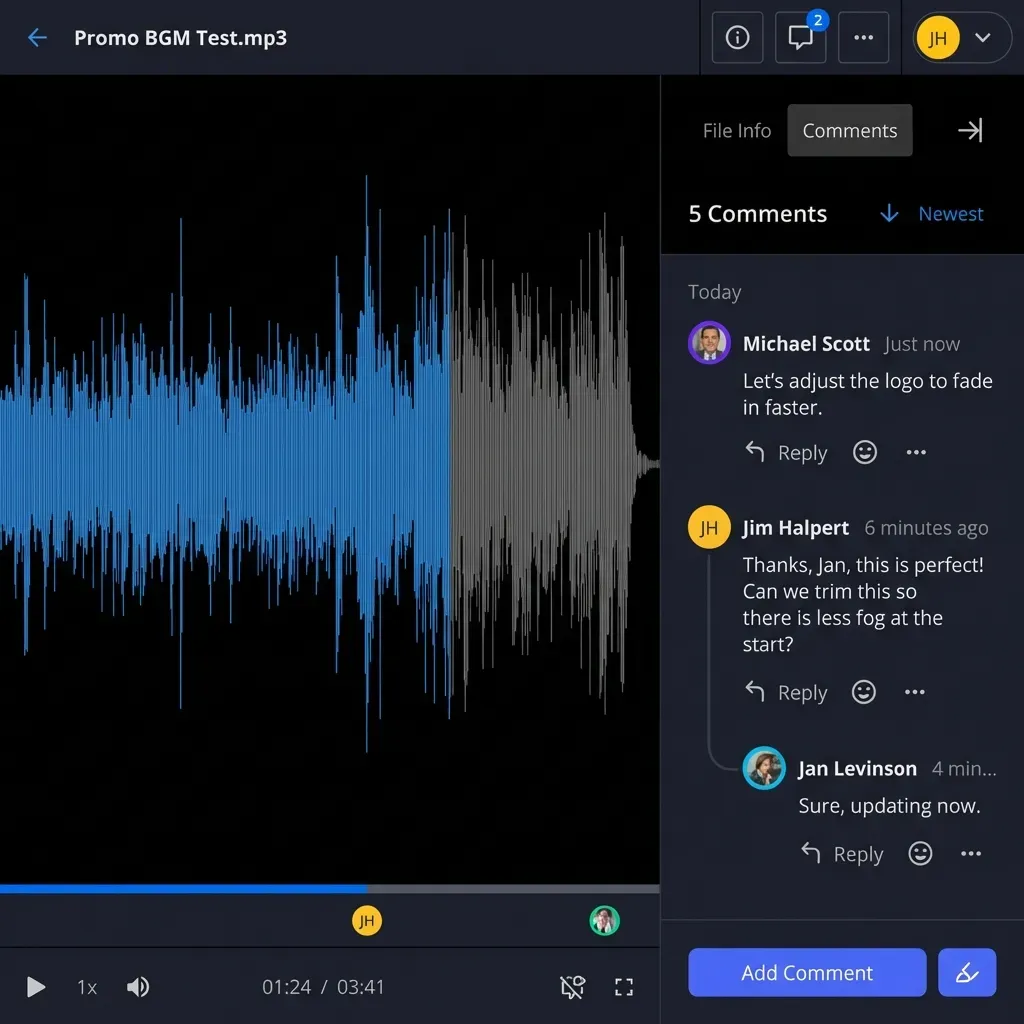
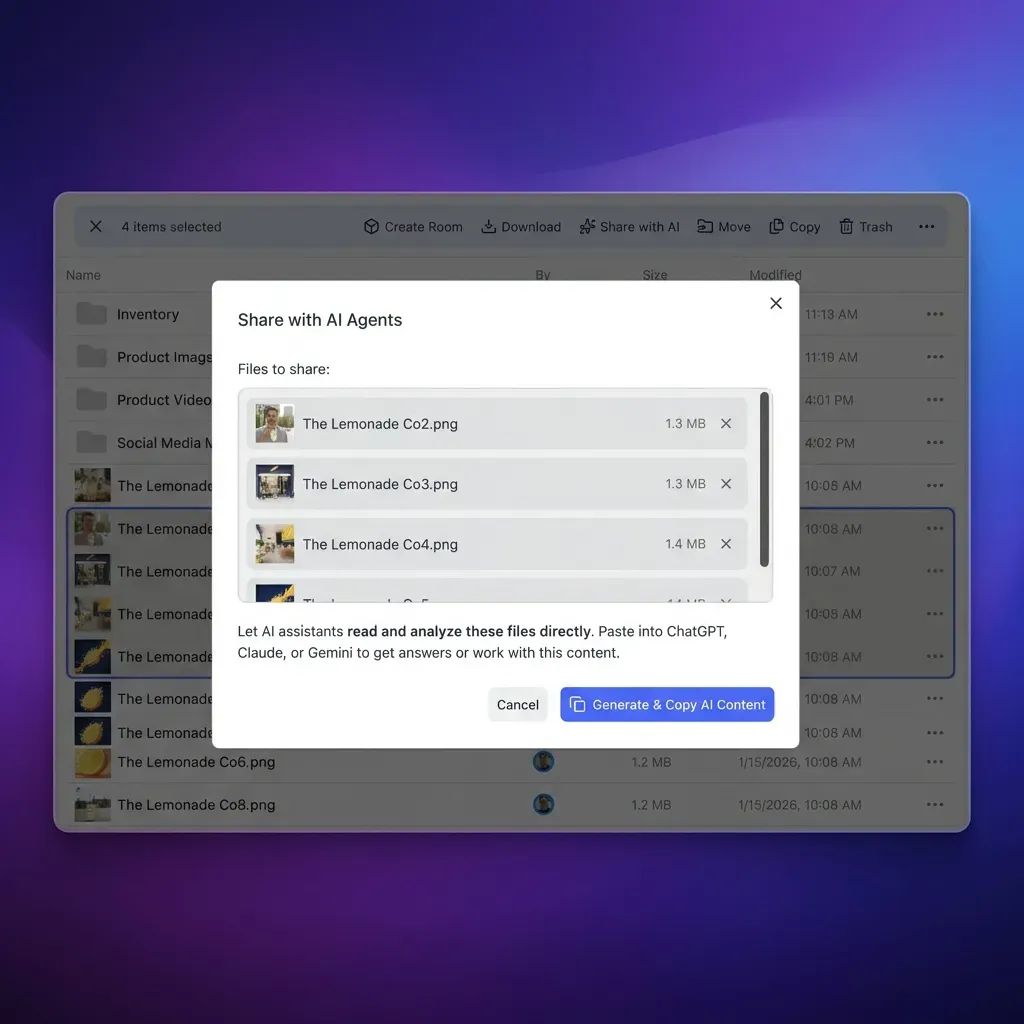
Designers often keep masters on a laptop and paste exports into email. That breaks the audit trail. Upload both the XCF master and the approved export to a shared location the GTM team can open. Local disk, Google Drive, and S3 all function as temporary sinks. For team delivery with per-file version history, granular permissions, and agent access, many teams move the same tree into a Fast.io workspace so humans and automation share one path.
Step 4: Attach asset references to Clay rows
Store the export URL or stable filename in a Clay column next to the prospect fields that drove the creative choice. When you need to call an external system, Clay's HTTP API enrichment can POST or GET against any endpoint: update a CRM, create a lead, or notify a custom tool. Use conditional runs so the call only fires when the asset URL column is populated. Test on one row before running the table.
Step 5: Deliver to SDRs with permissions, not zip dumps
SDRs need the current approved PNG, not a 400 MB XCF. Share the export folder with download rights and keep masters in a restricted folder. Fast.io branded Send shares work well here: durable or expiring links, per-recipient grants, and a clear current version. If an agency built the workspace for a client, ownership transfer hands the org to a human while the builder can keep admin access.
That five-step loop is the real gimp for marketing assets story: production editing stays free and powerful, Clay owns prospect logic, and shared storage owns truth for which file shipped.
Example folder layout for one outbound series
clay-creative-ops/
├── 01-briefs/
│   └── 2026-07-17_series-a_brief.md
├── 02-gimp-masters/
│   ├── series-a_banner_master.xcf
│   └── series-a_email_header_master.xcf
├── 03-exports/
│   ├── 2026-07-17_series-a_banner_v3.png
│   └── 2026-07-17_series-a_email_header_v3.png
└── 04-clay-references/
    └── table-column-map.md
Keep 02-gimp-masters/ write-limited to designers. Keep 03-exports/ readable by SDRs and ops. Put the Clay table URL and column map in 04-clay-references/ so nobody guesses which column holds the asset link.


Keep GIMP exports next to the Clay rows that need them
Use a shared Fast.io workspace for masters, versioned exports, and agent-ready MCP access, then start a 14-day free trial to wire creative ops into one place.
Where GIMP project files should live for outbound
Teams ask where to store GIMP project files for outbound campaigns because XCF masters are large, sensitive to brand rules, and easy to lose in personal Drive folders. Three common patterns exist.
Local disk plus email handoff
Fast for a solo designer. Fails as soon as a second person needs last week's master, an agent needs a path, or compliance asks who exported the customer logo treatment. No shared version history.
Google Drive or Dropbox
Fine for human browsing and light collaboration. Weak for agent-native workflows: rate limits, seat cost for external freelancers, and limited structured metadata over image sets. Still better than desktop-only if the folder tree is strict.
Object storage such as Amazon S3
Strong for bulk binaries and signed URLs. Weak for SDRs who need previews, comments, and simple permissions without a console. You will rebuild a UI layer or leave sales out of the loop.
Shared intelligent workspace (recommended pattern)
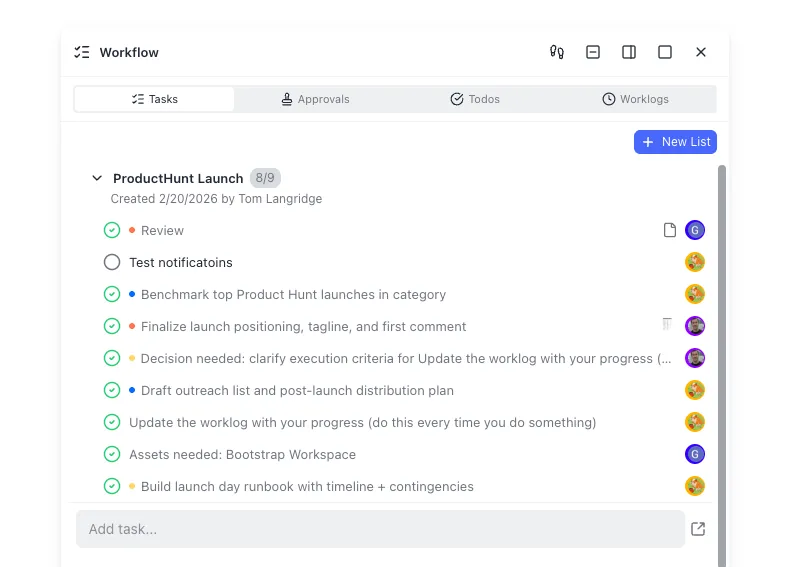
Put masters and exports in an org-owned workspace with folder permissions, per-file version history, and a detailed activity log. Fast.io fits this pattern for agentic GTM teams: humans use the UI, agents use the API or MCP server over Streamable HTTP at /mcp (legacy SSE at /sse). Enable Intelligence Mode so files become searchable by meaning, not only by filename. When you need structured fields from briefs or PDF brand kits, use Metadata Views to extract values such as brand colors, offer names, and approval dates into a queryable grid. Metadata Views are the structured extraction layer; Intelligence Mode is the search and summarization layer.
Pricing context matters for ops planning. Real work on Fast.io requires an organization on a paid subscription. Plans include Starter at $9.99/mo, Business at $49.99/mo, and Enterprise at $199.99/mo. Monthly plans start with a trial of up to 14 days (credit card required); annual plans have no trial. Agents can create an account, then transfer ownership to a human who starts the trial. Details live on the pricing page and the storage for agents overview.
Naming conventions beat clever folder names. Prefer YYYY-MM-DD_campaign_asset_vN.ext. When Clay personalizes at the account level, include a stable account key in the export name only when privacy rules allow; otherwise keep the map inside Clay and store generic creative variants in the workspace.
Orchestrating Clay tables around GIMP outputs
Clay is not a photo editor. GIMP is not a CRM. The join is orchestration.
Clay's HTTP API docs describe two primary modes. HTTP API enrichment processes rows you already have and can add data from external tools. HTTP API as a source imports datasets into a new table, with pagination support up to 50,000 rows. For creative ops, enrichment is the usual path: each prospect row already exists, and you need to attach or trigger work around the finished PNG.
Common patterns that stay within official Clay capabilities:
- Store a public or authenticated asset URL in a column, then POST that URL into a sequencer or CRM custom field via HTTP API
- Use conditional runs so enrichment only executes when
asset_readyis true - Save successful HTTP API configurations as templates for the next campaign
- Keep API credentials in Clay's encrypted HTTP API header accounts instead of pasting tokens into plain header fields
- Browse Clay's public template library for GTM building blocks, then add your creative columns rather than inventing a full table from scratch
Do not claim a native GIMP integration. There is not one in Clay's published HTTP API overview or templates catalog. The verified infrastructure is "call any API" plus reusable GTM templates. Your middleware might be a small internal service that reads a Fast.io share, or a human ops step that pastes the export URL after design approval. Both are valid. The mistake is treating Clay as the binary store for XCF files.
Agents fit cleanly once files live in a workspace with MCP access. An agent can list exports, open the latest version, and write a note that the banner for segment B is ready. Humans still approve creative judgment. When you want a formal check before SDRs receive a Send share, keep the export in a review folder until a reviewer signs off in a comment, then create the share. The activity feed, over WebSocket or long-poll, can notify downstream systems when a new export lands, so you avoid polling folders.
Edge cases worth planning for:
- Logo rights: keep customer logos in a restricted folder; export only approved composites
- Revision churn: bump
vNon every export and leave the Clay URL column pointing at the current file path, not a snapshot ID buried in chat - Partial table runs: test HTTP API on one row; Clay's docs emphasize single-row tests to save credits and catch body formatting errors early
- Mixed tool stacks: a freelancer Photopea export can land in the same
03-exports/folder as GIMP output if the naming convention is identical - Handoff: when an agency finishes the creative system, transfer org ownership to the client rather than forever emailing zip archives
Failure modes that kill personalized creative at scale
Most GIMP tutorials never mention the failure modes that burn GTM teams. Watch for these.
Masters and exports diverge
Someone edits the PNG in Canva after GIMP export. The XCF no longer matches what shipped. Fix: only SDRs download from 03-exports/, and only designers write masters. If a last-minute fix is required, re-export from GIMP and replace the file so version history records the change.
Clay rows point at dead links
Drive permissions change or a local path was pasted. Fix: store durable share URLs or stable workspace paths, and re-test the first five rows of every campaign.
Personalization text baked into the wrong layer
A company name is flattened into the PNG for one prospect, then reused for fifty others. Fix: keep generic bases in GIMP and inject text in the sequencer when possible. When you must render unique images, generate one export per row with a unique filename and a matching Clay column.
Credit burn on bad HTTP configs
A POST body is malformed and runs across thousands of rows. Clay's HTTP API guidance is explicit: test one row, configure rate limits from the target API docs, and use conditional runs when required fields are empty.
No audit trail for brand misuse
A contractor downloads a restricted logo pack. Fix: granular folder permissions and a detailed activity log in the shared workspace so you can see downloads and permission changes later.
When those controls exist, free GIMP production work and Clay-scale personalization can share a desk without chaos. The editor stays free. The table stays the source of prospect truth. The workspace stays the source of file truth.
Sources
References used to verify factual claims in this guide.
-
The phrase "gimp photo editor" draws 33,100 monthly US searches with a keyword difficulty of 27 and a CPC of $2.81.
-
GIMP is free and open-source software under the GNU General Public License, available for Linux, macOS, and Windows.
-
GIMP stable release 3.2.4 was published on 19 April 2026. GIMP is licensed under GPL-3.0-or-later.
-
Clay HTTP API lets tables send or retrieve data from any tool using GET, POST, PUT, or DELETE even without a native Clay integration. Clay HTTP API as a source supports automatic pagination up to 50,000 rows.
-
Clay publishes reusable GTM workflow templates such as outbound, CRM enrichment, and personalized landing page patterns.
-
Plans include Starter at $9.99/mo, Business at $49.99/mo, and Enterprise at $199.99/mo. Monthly plans start with a trial of up to 14 days (credit card required); annual plans have no trial.
Frequently Asked Questions
Is GIMP free?
Yes. GIMP is free and open-source software under the GNU General Public License. You can download it from the official GIMP site for Linux, macOS, and Windows, change the source code, and redistribute your changes under the license terms. There is no paid license required to use the core editor.
Is GIMP better than Photopea for GTM teams?
GIMP is usually better when you need heavy layers, masks, color management, large production files, or offline desktop work. Photopea is usually better for quick browser edits without installing software. Many GTM teams use both: GIMP for masters, Photopea for emergency tweaks, and a shared workspace for the approved exports Clay rows reference.
How should teams store GIMP project files for outbound campaigns?
Keep XCF masters in a restricted folder and PNG or JPEG exports in a readable export folder with a date-campaign-version naming scheme. Local disk and consumer Drive folders work for solo work. For multi-person outbound, use shared storage with version history and permissions so SDRs never edit masters and designers never lose the last approved export.
Does Clay integrate natively with GIMP?
No native GIMP integration is documented in Clay's HTTP API overview. Clay can still orchestrate external creative tooling by calling any HTTP endpoint, storing asset URLs on rows, and reusing GTM templates. Treat GIMP as the production editor and Clay as the prospect and personalization system.
What file formats should GTM teams keep from GIMP?
Keep editable XCF masters for revisions, then export the formats your channels require, usually PNG for UI and transparency, JPEG for photo-heavy email headers, and sometimes PDF for print one-pagers. Only put delivery formats in the folder SDRs and sequencers consume.
How do agents fit into a GIMP and Clay creative ops stack?
Agents should not replace design judgment. They can watch export folders, update Clay-ready status fields via APIs, open workspace files through MCP, and prepare Send shares after human approval. Fast.io workspaces give agents and humans the same file context with version history and Intelligence Mode search when enabled.
Related Resources

Keep GIMP exports next to the Clay rows that need them
Use a shared Fast.io workspace for masters, versioned exports, and agent-ready MCP access, then start a 14-day free trial to wire creative ops into one place.