How to Build a Customer Self-Service Portal That Reduces Support Tickets
A customer self-service portal is a secure web interface where customers independently access documents, submit requests, and find answers without contacting support. This guide covers how to plan, build, and maintain a file-centric self-service portal that actually reduces ticket volume, with practical steps for document organization, access controls, and AI-powered search.


What Is a Customer Self-Service Portal?
A customer self-service portal is a secure web interface where customers independently access documents, submit requests, and find answers without contacting support. Think of it as a private front door to your business where clients can help themselves to the information they need, any time of day.
Most people associate self-service portals with help desk ticket systems and knowledge base articles. That covers part of the picture. But for businesses that deliver files to clients (agencies, law firms, accounting practices, construction companies, real estate brokers), the bigger win is a file-centric portal where customers pull their own documents instead of emailing you to ask for them.
The core components of a self-service portal include:
- Document library: Organized files that customers can browse and download on demand
- Knowledge base: FAQs, how-to guides, and troubleshooting articles
- Account management: Profile updates, billing history, and subscription controls
- Request submission: Structured forms for support tickets or document requests
- Search: Full-text and semantic search across all portal content
According to Zendesk research, 67% of customers prefer self-service over speaking to a company representative for routine tasks. The gap between what customers want and what most businesses offer is still wide. Most companies default to email-based file delivery, which creates unnecessary support load and makes it harder for clients to find what they already received.
Helpful references: Fastio Workspaces, Fastio Collaboration, and Fastio AI.
Related guides
- How to Build a Salesforce Client Portal (And What It Actually Costs)Salesforce Experience Cloud lets you build branded customer portals for case management, knowledge bases, and partner...
- How to Build a Client Portal in ClickUp (And Where It Breaks Down)ClickUp does not ship with a dedicated client portal, but you can assemble one using guest permissions, shared views,...
- How to Build a Client Portal in WordPressA WordPress client portal is a password-protected area on your WordPress site where clients access shared files,...
- How to Build a Wealth Management Client Portal That HNW Clients Actually UseA wealth management client portal is a branded digital workspace where wealth managers securely share portfolio...
- Best Free Client Portal Tools in 2026Most free client portal lists skip the fine print. This guide compares seven free client portal tools with their actual...
- Best Client Portal Software for Agencies in 2026Client portal software provides a branded, secure space where businesses share files, collect feedback, and collaborate...
More on this subject: Team Collaboration (125 guides)
Why File-Centric Portals Beat Email-Based Delivery
The typical support ticket for a file-based business looks something like this: "Can you resend the Q3 report?" or "I can't find the latest version of the contract." These aren't real support issues. They're retrieval problems caused by poor file delivery.
Email fails as a document delivery channel for several reasons. Attachments get buried in inboxes. Version confusion multiplies when you send updated files in follow-up threads. File size limits force you to use third-party transfer links that expire. And there's no audit trail showing whether the client actually opened what you sent.
A self-service portal solves all of these by giving clients a persistent, organized location for their files. The benefits compound over time:
Fewer repetitive tickets. When clients can find their own documents, your team stops fielding "where is my file?" requests. Organizations that implement self-service portals report 30-50% reductions in support ticket volume, according to industry benchmarks.
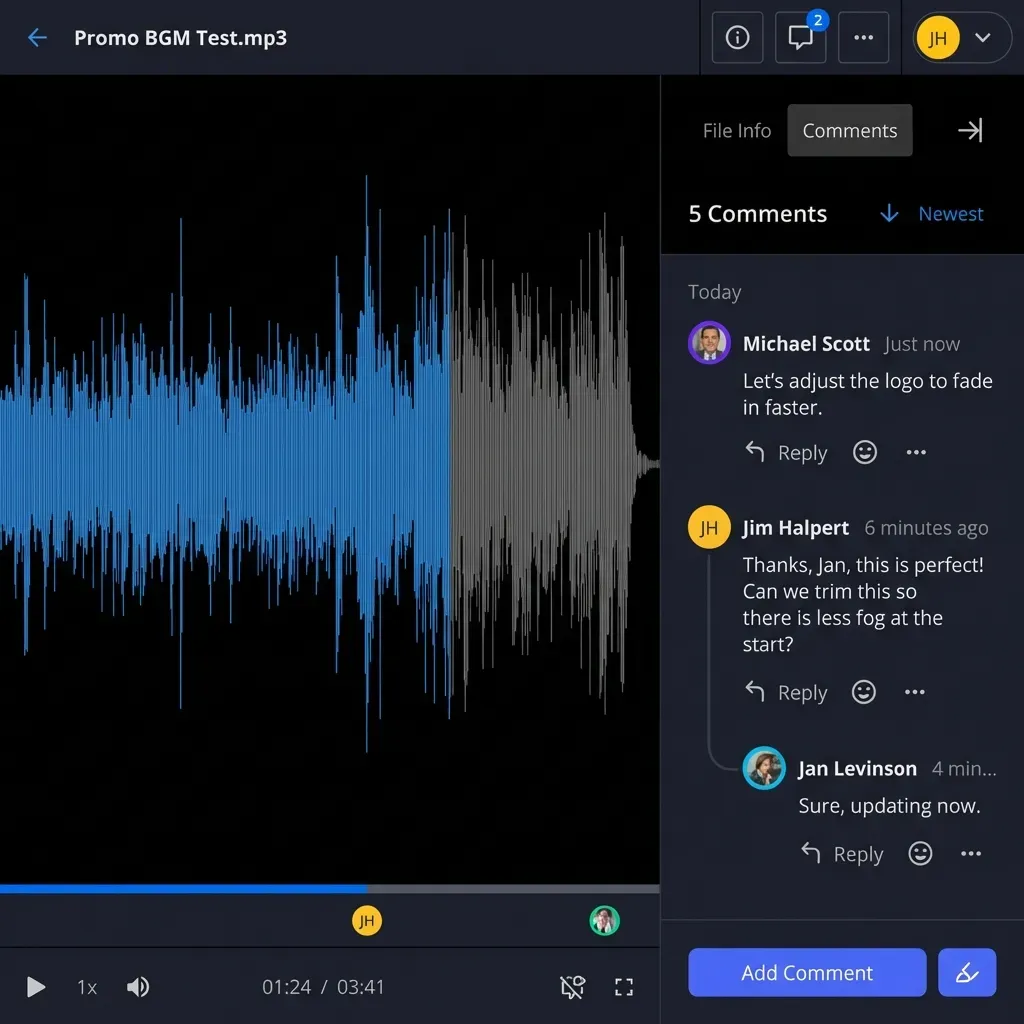
Version clarity. Instead of guessing which email attachment is current, clients see the latest version in the portal. File versioning keeps previous versions accessible without cluttering the main view.
24/7 access. Clients in different time zones or working outside business hours can download what they need immediately. No waiting for someone on your team to wake up and forward a PDF.
Audit trails. You can see who accessed which file and when. This matters for compliance-heavy industries and for confirming that a client received a critical document.
Scalability. Sending files to 5 clients via email is manageable. Sending files to 50 or 500 clients through email is a full-time job. A portal handles the same workload with zero incremental effort.
Essential Features for Your Self-Service Portal
Not every self-service portal needs the same feature set. A SaaS company running a help center has different requirements than a law firm delivering case documents. But certain capabilities are table stakes regardless of your industry.
Organized File Structure
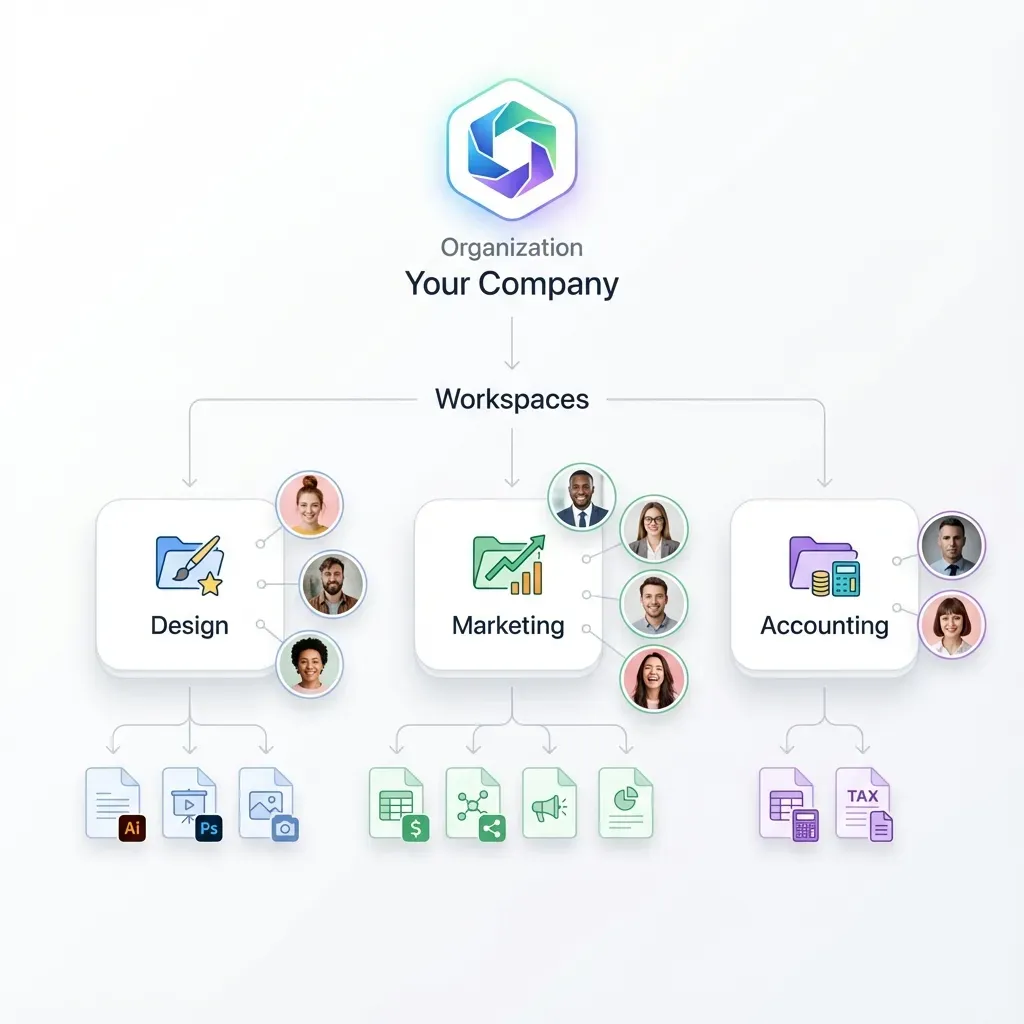
Your portal needs a logical folder hierarchy that mirrors how your clients think about their work. For an accounting firm, that might mean folders organized by tax year and document type. For a construction company, folders per project phase. The structure should be obvious enough that a new client can find what they need without a tutorial.
Granular Access Controls
Different clients should only see their own files. Within a client's portal, different stakeholders may need different permission levels. A project manager might have full access while a contractor sees only their relevant deliverables. Role-based permissions prevent accidental data exposure and keep the portal clean for each user.
Search That Actually Works
A basic filename search isn't enough when your portal holds hundreds of documents. Full-text search across document contents helps clients find what they need even when they don't remember the exact file name. Semantic search goes further by understanding intent, so a search for "insurance certificate" finds the document even if it's titled "COI_2026_renewal.pdf."
Branding and Customization
Your portal should look like an extension of your business, not a generic SaaS tool. Custom logos and color schemes make the portal feel professional and trustworthy. Clients should recognize your brand the moment they log in.
Upload and Collection Workflows
Self-service isn't just about clients downloading files. Many businesses need to collect documents from clients too: tax forms, signed contracts, project briefs, insurance certificates. A good portal lets clients upload files into designated folders with clear instructions about what's needed.
Notifications and Activity Tracking
Clients should get notified when new files are available. Your team should know when clients access or download documents. This two-way visibility replaces the "did you get my email?" follow-up cycle with concrete data.


Give Your Clients a Portal They'll Actually Use
Fastio Content Portals give your clients branded, AI-powered access to their files. Organize documents, track engagement, and let Ripley AI answer their questions with a 14-day Business Trial. Built for customer self service portal workflows.
How to Plan and Build Your Portal
Building a self-service portal doesn't require a six-month software project. The fast path is choosing a platform that handles the infrastructure while you focus on content organization and client onboarding.
Step 1: Audit Your Current Support Requests
Before building anything, categorize your last 100 support tickets. How many are file requests? How many are "where do I find X?" questions? How many are genuine support issues that require human judgment? This breakdown tells you what your portal needs to solve first.
If 40% of your tickets are file retrieval requests, prioritize document organization and access. If 30% are how-to questions, invest in a knowledge base. Start with whatever removes the most ticket volume.
Step 2: Design Your Information Architecture
Map out the folder structure and content categories before uploading anything. Interview three or four clients about how they look for files. Their mental model of your deliverables is probably different from your internal project structure.
Common organizational patterns include:
- By project or engagement: Each client project gets its own folder with subfolders for deliverables, correspondence, and reference materials
- By document type: Contracts in one area, reports in another, invoices in a third
- By timeline: Monthly or quarterly folders that mirror your delivery cadence
- Hybrid: Top-level project folders with document-type subfolders inside each
Step 3: Choose Your Platform
You have three broad options for self-service portal infrastructure:
Custom-built portals. Maximum flexibility, maximum development cost. Makes sense for companies with unique workflows and in-house development teams. Expect 3-6 months of development time and ongoing maintenance.
Help desk platforms. Tools like Zendesk, Freshdesk, and HubSpot Service Hub offer self-service portals built around ticket management and knowledge bases. Strong for FAQ-heavy support but limited for file-centric workflows.
File-sharing platforms with portal features. Solutions like Fastio, SharePoint, and Clinked provide branded portals built around document management. These work well when your primary self-service need is file delivery and collection rather than ticket routing.
For file-centric use cases, Fastio's Content Portals provide branded, password-protected spaces where clients access documents through a customized interface. The portal includes AI-powered search through Ripley, which lets clients ask natural-language questions about their documents instead of browsing folder structures. Portals support custom branding with your logo, colors, and background, plus analytics showing who accessed which files and when.
Step 4: Migrate and Organize Content
Once you've chosen a platform, migrate your existing client files into the portal structure you designed. This is the most time-consuming step, but it determines whether clients actually adopt the portal. A disorganized portal is worse than email because it adds a login step without reducing confusion.
Clean up file names during migration. "Final_v3_REAL_FINAL.pdf" should become "Q4-2025-Financial-Report.pdf." Consistent naming conventions help both search and browsability.
Step 5: Onboard Clients Gradually
Don't flip the switch for all clients at once. Start with 5-10 clients who have the most frequent file requests. Walk them through the portal, collect feedback, and refine the experience before rolling out broadly. Early adopters will surface usability issues you didn't anticipate.
Send a short welcome email with the portal link, their login credentials, and a 60-second video showing how to find their files. Skip the detailed user manual. If the portal needs a manual, the portal needs to be simpler.
Making Your Portal Smarter with AI
The biggest friction point in any self-service portal is search. Clients don't always know the exact name of the file they're looking for, and keyword-based search fails when the search term doesn't match the filename or metadata.
AI-powered search changes the equation. Instead of matching keywords, semantic search understands what the client is asking for. A client searching "latest tax filing" finds the right document even if it's labeled "2025-Form-1120S-Filed.pdf." This alone can eliminate a significant chunk of remaining support requests.
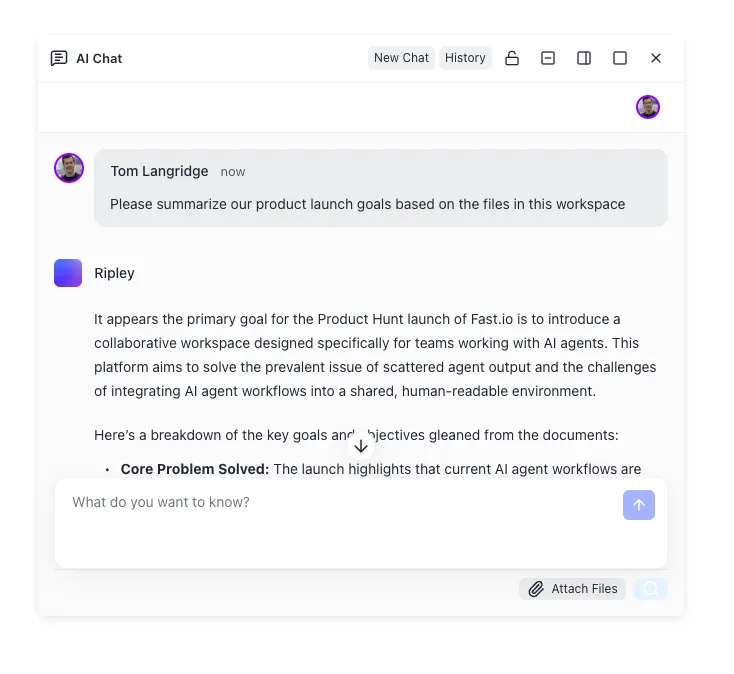
Beyond search, AI can power a document Q&A layer on top of your portal. Instead of downloading a 50-page report and scanning for the relevant section, a client can ask "What was our revenue growth in Q3?" and get an answer with a citation pointing to the specific page. This is particularly valuable for portals that handle complex deliverables like audit reports, legal documents, or technical specifications.
Fastio's portals include Ripley AI, which indexes uploaded documents and answers client questions with citations. When Intelligence is enabled on a workspace, every file becomes searchable by meaning, not just by name. Clients interact with a chat interface inside the portal rather than digging through folders manually.
If you're building on a platform without built-in AI, you can layer semantic search on top using third-party tools, but this adds integration complexity and another service to maintain. The advantage of platforms with native AI is that indexing happens automatically when files are uploaded, with no separate pipeline to configure.
When AI Adds Value vs. When It Doesn't
AI search shines for portals with large document volumes (50+ files per client) and complex content like legal contracts, financial reports, or technical documentation. For portals with a handful of labeled files per client, simple folder organization is sufficient.
The same applies to document Q&A. If your clients regularly need to extract specific data points from dense reports, AI chat is a meaningful time-saver. If they just need to download the latest invoice, a clean folder structure does the job without the added complexity.
Measuring Portal Success and Reducing Ticket Volume
Launching a portal is the starting line. The real work is tracking adoption and iterating on the experience until it genuinely reduces your support burden.
Key Metrics to Track
Portal adoption rate. What percentage of your clients have logged in at least once? Aim for 80% adoption within 90 days of onboarding. If adoption stalls, the portal is either hard to find, hard to use, or doesn't contain what clients need.
Ticket deflection rate. Compare your monthly ticket volume before and after the portal launch. Track specifically the categories of tickets the portal was designed to eliminate (file requests, "where is X?" questions). A well-implemented portal should reduce these categories by 30-50% within the first quarter.
Search success rate. How often do clients find what they're looking for on the first search? If your search logs show repeated queries or query refinements, your content organization or search functionality needs improvement.
Time to resolution. For tickets that still come in, are they resolving faster because the agent can reference portal content? Support staff should be linking clients to portal resources instead of re-sending files manually.
Content freshness. How many portal documents are older than 90 days? Stale content erodes trust. If clients find outdated files, they'll stop checking the portal and go back to emailing your team.
Common Adoption Blockers
Too many clicks to find files. If clients need more than three clicks from login to their most-accessed files, restructure your folder hierarchy. Consider pinning frequently accessed documents to the portal landing page.
No notifications for new content. Clients won't check the portal proactively unless you train them to expect updates there. Send email notifications when new files are uploaded, especially during the first few months when you're building the habit.
Login friction. Every additional authentication step reduces portal usage. Use auto-expiring access links or single sign-on where possible. If clients need to reset their password every time they visit, they'll call you instead.
Missing content. The portal only works if it contains everything clients need. If you upload reports to the portal but send invoices via email, clients learn that the portal is incomplete and stop trusting it as the single source of truth.
Continuous Improvement
Review your portal metrics monthly for the first quarter, then quarterly afterward. Add new content categories based on remaining ticket patterns. Survey clients after their first month of portal use to identify specific pain points.
The goal isn't zero tickets. Some requests genuinely need human attention. The goal is making sure that every ticket represents a real problem that the portal can't solve, not a retrieval request that a better search result would have handled.
Sources
References used to verify factual claims in this guide.
-
67% of customers prefer self-service over speaking to a company representative
-
Self-service portals can reduce support ticket volume by 30-50%
Frequently Asked Questions
What is a customer self-service portal?
A customer self-service portal is a secure web interface where customers independently access documents, submit requests, and find answers without contacting support. It typically includes a document library, knowledge base, account management tools, and search functionality. File-centric portals focus on document delivery and collection, while helpdesk-style portals emphasize ticket management and FAQ articles.
How do I create a self-service portal?
Start by auditing your current support tickets to identify what types of requests the portal should handle. Design an information architecture that matches how your clients think about their files. Choose a platform based on whether you need file-centric delivery (like Fastio or SharePoint) or ticket-focused support (like Zendesk or Freshdesk). Migrate and organize your content with clean file names, then onboard clients in small batches to collect feedback before a full rollout.
What should a self-service portal include?
At minimum, a self-service portal should include organized file storage with a logical folder structure, granular access controls so each client sees only their own content, full-text search, branding that matches your business identity, upload workflows for collecting documents from clients, and notifications when new content is available. For document-heavy portals, AI-powered semantic search and document Q&A add significant value.
How much does a customer self-service portal cost?
Costs range from tens of dollars to thousands per month depending on your approach. Fastio plans start at Starter ($9.99/month for 250 GB) with a 14-day Business Trial. Mid-range solutions run $15-80 per user per month, while custom-built portals can cost $20,000-100,000+ to develop. For most small to mid-size businesses, a platform-based solution provides the best value.
How do self-service portals reduce support tickets?
Self-service portals reduce tickets by making information accessible without human intervention. When clients can find their own files, download documents on demand, and search portal content, they stop submitting retrieval requests. Organizations typically see 30-50% reductions in ticket volume after implementing a self-service portal, with the biggest gains coming from eliminating 'can you resend that file?' and 'where do I find X?' requests.
Can AI improve a self-service portal?
Yes. AI-powered semantic search helps clients find documents even when they don't remember the exact file name, understanding intent rather than matching keywords. Document Q&A lets clients ask questions about uploaded files and get answers with citations to specific pages. AI is most valuable for portals with large document volumes (50+ files per client) or complex content like legal, financial, or technical documents.
Related Resources

Give Your Clients a Portal They'll Actually Use
Fastio Content Portals give your clients branded, AI-powered access to their files. Organize documents, track engagement, and let Ripley AI answer their questions with a 14-day Business Trial. Built for customer self service portal workflows.