Grok vs Claude: Which AI Is Better in 2026?
Grok's mobile app market share grew 9.5x in 12 months while Claude quietly captured 70% of enterprise AI deals. Both models are strong, but they solve different problems. This comparison breaks down Grok and Claude across eight dimensions, from context windows to API pricing, so you can pick the right tool for your actual workflow.


The Real Split Between Grok and Claude
Grok's mobile app market share jumped from 1.6% to 15.2% in 12 months, a 9.5x increase driven almost entirely by its integration with X (formerly Twitter). Meanwhile, Claude's enterprise adoption tells a different story: Anthropic now serves over 300,000 business customers and wins roughly 70% of enterprise deals against OpenAI, according to AI Business Weekly's 2026 market share report.
That split captures the core difference. Grok grows through distribution and real-time data access. Claude grows through depth, reliability, and developer tooling. Choosing between them depends on whether you need live information or deep reasoning.
Here's a quick comparison across eight key dimensions:
- Context window: Claude supports 1M tokens. Grok offers 128K to 2M depending on plan and API tier.
- Real-time data: Grok pulls live X posts and web results natively. Claude relies on tool-based web search.
- Coding: Claude leads on multi-file refactoring and agentic tasks. Grok holds its own for scripts and API integrations.
- Writing: Claude produces more consistent long-form prose. Grok is faster for short conversational responses.
- Reasoning: Claude's extended thinking mode excels at multi-step problems. Grok's Big Brain Mode targets complex tasks.
- Multimodal: Grok generates images (Aurora) and processes video natively. Claude handles image and document input but does not generate images.
- Price (consumer): Claude Pro starts at $20/month. SuperGrok starts at $30/month.
- Price (API): Claude Sonnet 4.6 runs $3/$15 per million tokens. Grok 4.3 runs $1.25/$2.50 per million tokens.
Related guides
- Copilot vs Gemini: Which AI Assistant Is Better in 2026?Gemini's 2-million-token context window is 5x larger than Copilot's, and it scores nearly double on SWE-bench coding...
- OpenClaw on Raspberry Pi vs Orange Pi: Which SBC Runs Your AI Agent Better?Raspberry Pi has official OpenClaw support and a massive ecosystem. Orange Pi offers more RAM and an onboard NPU for...
- Claude Code vs OpenCode: Which Terminal AI Agent Fits Your WorkflowClaude Code handles roughly 4% of all public GitHub commits, while OpenCode has collected 179,000 stars as the leading...
- Claude Cowork vs Claude Code: Which One Should You Use?Claude Code now accounts for roughly 4% of all public GitHub commits, and Claude Cowork went generally available in...
- Best Claude Code Alternatives in 2026, ComparedEight tools compete with Claude Code for AI-assisted coding in 2026. Cursor dominates IDE-based editing, Aider leads...
- Cline vs. Claude Code: Comparing Agent Memory ArchitecturesLocal AI agent memory architectures like Cline's Memory Bank and Claude Code's Auto-Memory are designed for isolated,...
More on this subject: Claude and Claude Code (278 guides)
Model Lineups: What Each Platform Offers
Both xAI and Anthropic ship multiple model tiers. Here's what's current as of June 2026.
xAI's Grok lineup:
- Grok 4.3 (April 2026): The latest flagship. Native tool use, video input, structured outputs, and Skills support across grok.com and mobile apps. Available on the SuperGrok Heavy tier ($300/month) first, rolling out to other tiers.
- Grok 4.20: A developer-focused variant with a 2M token context window and $2/$6 per million token API pricing.
- Grok 4 Fast: Optimized for speed at $0.20/$1.00 per million tokens with a 2M context window.
Anthropic's Claude lineup:
- Claude Opus 4.8 (May 2026): The most capable model. $5/$25 per million tokens. 1M token context window. Excels at complex reasoning, coding, and agentic workflows.
- Claude Sonnet 4.6 (February 2026): The workhorse. $3/$15 per million tokens. Strong coding, instruction following, and prompt injection resistance.
- Claude Haiku 4.5: The speed tier. $1/$5 per million tokens. Good for classification, routing, and high-volume tasks.
The key architectural difference: Anthropic maintains a clear good-better-best model hierarchy. xAI experiments more freely, releasing specialized variants (Fast, Code) alongside numbered versions.

Context Windows and Reasoning Depth
Context window size determines how much information a model can hold in a single conversation. For developers working with large codebases or long documents, this matters more than benchmark scores.
Claude's advantage here is clear. All current Claude models (Opus, Sonnet, Haiku) support a 1M token context window at standard pricing, with no long-context surcharge. That's roughly 555,000 words of input in a single prompt. Extended thinking mode lets Claude work through complex problems step by step before responding, which improves accuracy on tasks like debugging multi-file issues or analyzing lengthy contracts.
Grok's context window varies by tier. The consumer chatbot (SuperGrok at $30/month) offers 128K tokens. SuperGrok Heavy ($300/month) extends that to 256K tokens. The API tier is where Grok competes: Grok 4 Fast and Grok 4.20 both support 2M tokens, though this is a developer-only feature, not available in the consumer chatbot.
For practical purposes, if you're using the chatbot interface, Claude gives you roughly 4x to 8x more context than Grok's consumer plans. If you're building on the API, Grok 4.20's 2M window is larger than Claude's 1M, though independent testing of retrieval quality at that scale is still limited.
One concrete example: feeding an entire medium-sized codebase (50,000+ lines) into a single prompt works reliably with Claude's 1M window. Grok's 128K consumer window would require splitting that into multiple conversations.


Give your AI agents persistent, shared storage
Fast.io workspaces connect to both Claude and Grok through MCP and REST API with versioning, audit trails, and a 14-day Business Trial.
Real-Time Data and Web Access
This is Grok's strongest differentiator. Because xAI owns X (Twitter), Grok has native access to live public posts, trending topics, breaking news, and real-time sentiment data. DeepSearch takes this further by synthesizing web results and X data into research-quality answers.
What this looks like in practice:
- Ask Grok "What are developers saying about the new React release?" and it pulls live X posts from the last hour.
- Ask about a stock price or breaking news event and Grok reflects current information, not training data from months ago.
- DeepSearch can follow citation chains across multiple sources to build a research summary.
Claude does not have native real-time data access. It can use tool-based web search when available (through MCP integrations or Claude's built-in web search), but it's not the same as having live social media data baked into every response. Claude's training data has a cutoff, and while it's regularly updated, there's always a gap.
When this matters: Monitoring brand mentions, tracking trending topics, researching current events, competitive intelligence. If your workflow depends on what's happening right now, Grok wins this category outright.
When it doesn't: Code generation, document analysis, structured reasoning, content creation from existing sources. For these tasks, real-time data is irrelevant, and Claude's deeper reasoning becomes the advantage.
Coding and Technical Performance
Both models handle coding tasks, but they approach them differently.
Claude has built its reputation on developer tooling. Claude Code runs directly in your terminal, editing files, running tests, and managing git operations. SWE-bench scores put Claude in the 74-75% range for real-world software engineering tasks. Where Claude excels is multi-file refactoring, navigating large codebases, and following detailed technical instructions across long conversations. The 1M context window means you can load an entire project and ask Claude to trace a bug across files without losing context.
Grok performs well on isolated coding tasks, particularly one-off scripts, API integrations, and quick automations. Grok 3 scored 93.3% on the 2025 AIME math competition, and Grok 4 Heavy reportedly achieved a perfect score. For algorithmic and mathematical reasoning, Grok competes at the top. But multi-step engineering tasks that require maintaining context across files and following complex instructions still favor Claude.
For developers who use AI as a daily coding partner, the tooling around the model matters as much as the model itself. Claude's ecosystem (Claude Code, MCP support, Cowork, extended thinking) is purpose-built for development workflows. Grok's developer experience is newer and less integrated with existing development environments.
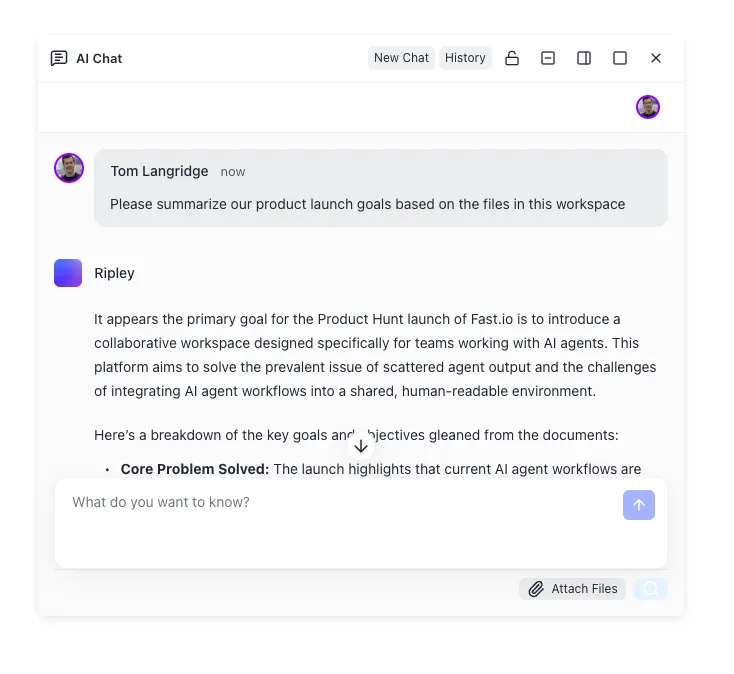
If your team's AI agents need persistent file storage between sessions, Fast.io workspaces work with both Claude and Grok through its MCP server and REST API. Agents can read, write, search, and organize files in shared workspaces, then hand off completed work to humans with full version history and audit trails.
Pricing: What You Actually Pay
Pricing has three layers: consumer subscriptions, API costs, and what you get for free.
Free tiers:
- Claude Free: Access to Sonnet 4.6 with usage limits. No credit card required.
- Grok Free: Basic Grok 3 access on X and grok.com with daily usage caps.
Consumer subscriptions:
- Claude Pro: $20/month ($17/month annual). Full model access, Claude Code, priority during high traffic, extended thinking.
- SuperGrok: $30/month ($300/year). Full Grok access with DeepSearch, Think Mode, image generation. 128K context.
- SuperGrok Heavy: $300/month. Grok 4.3 access, 256K context, maximum rate limits.
API pricing (per million tokens, input/output):
- Claude Sonnet 4.6: $3/$15
- Claude Opus 4.8: $5/$25
- Grok 4.3: $1.25/$2.50
- Grok 4.20: $2/$6
- Grok 4 Fast: $0.20/$1.00
Grok's API pricing is significantly cheaper. At $1.25/$2.50, Grok 4.3 costs roughly 40% of what Claude Sonnet charges and a fraction of Opus. For high-volume API use cases where cost is the primary constraint, Grok's pricing is hard to beat.
Claude's API cost is higher but comes with prompt caching (90% savings on cached inputs) and batch processing (50% discount). For applications that reuse context, like chatbots with long system prompts, caching can close the price gap.
For teams running AI agents that need persistent storage alongside either model, Fast.io provides shared workspaces on Starter ($9.99/mo), Business ($49.99/mo), and Enterprise ($199.99/mo) plans, starting with a 14-day Business Trial (credit card required).
Which One Should You Choose?
The honest answer: it depends on three things.
Choose Grok if:
- You need real-time data from X or the web baked into every response
- API cost is your primary constraint and you're running high-volume workloads
- You want image generation and video processing in the same model
- Your use case is conversational, fast-turnaround, or monitoring-focused
Choose Claude if:
- You're building agentic coding workflows or need a daily coding partner
- You work with large codebases or documents that need 200K+ tokens of context in the consumer product
- You need extended thinking for multi-step reasoning problems
- Your team requires enterprise-grade safety and structured deployment (SSO, audit logs, role-based permissions)
Use both if:
- You need Grok's real-time monitoring alongside Claude's deep analysis
- Different team members have different workflows (marketing might prefer Grok's X insights while engineering prefers Claude Code)
- You're building pipelines where one model's strength feeds into another's
Neither model is strictly better. Grok is faster, cheaper on the API, and has unmatched real-time data access. Claude is deeper, more consistent for long-form work, and has a more mature developer ecosystem. The best choice is the one that matches what you actually build every day.
Sources
References used to verify factual claims in this guide.
-
Grok's mobile app market share grew from 1.6% to 15.2% in 12 months
-
Anthropic serves more than 300,000 business customers and wins roughly 70% of enterprise deals against OpenAI
-
Grok 3 scored 93.3% on the 2025 AIME math competition
-
Grok 4 Heavy reportedly achieved 100% on AIME 2025
-
Grok 4.3 API pricing is $1.25/$2.50 per million tokens
-
Claude Opus 4.8 costs $5.00/$25.00 per million tokens with a 1M token context window
-
Claude's prompt caching cuts cached input cost by 90%
Frequently Asked Questions
Is Grok better than Claude?
It depends on the task. Grok is better for real-time data access, lower API costs, and quick conversational tasks. Claude is better for coding, long-form writing, multi-step reasoning, and working with large context windows. For enterprise deployments, Claude currently wins more deals, while Grok's growth comes from consumer adoption through X.
What can Grok do that Claude cannot?
Grok has native access to live X (Twitter) data, including real-time posts and trending topics. It also generates images through Aurora and processes video input natively. Claude does not generate images and relies on tool-based web search rather than having live social media data built in.
Which AI is smarter, Grok or Claude?
On math benchmarks, Grok 4 Heavy reportedly scored 100% on AIME 2025. On software engineering benchmarks like SWE-bench, both models score in the 72-75% range. Claude tends to perform better on tasks requiring sustained reasoning across long contexts, while Grok excels at rapid mathematical computation.
Should I use Grok or Claude for coding?
Claude is the stronger choice for most coding workflows. Claude Code runs in your terminal with file editing and git integration, and Claude's 1M token context window handles large codebases in a single session. Grok is competitive for quick scripts, API integrations, and mathematical problem-solving, but lacks the integrated development environment tooling that Claude offers.
How much does Grok cost compared to Claude?
Claude Pro costs $20/month. SuperGrok costs $30/month, with a $300/month Heavy tier for maximum access. On the API side, Grok is significantly cheaper: Grok 4.3 charges $1.25/$2.50 per million tokens versus Claude Sonnet 4.6 at $3/$15. However, Claude's prompt caching can reduce costs by up to 90% for applications that reuse context.
Can I use both Grok and Claude with the same file storage?
Yes. Fast.io workspaces work with any AI model through a REST API and MCP server. You can have Claude agents and Grok-based tools both reading and writing to the same shared workspaces, with versioning and audit trails tracking which agent made which changes.
Related Resources

Give your AI agents persistent, shared storage
Fast.io workspaces connect to both Claude and Grok through MCP and REST API with versioning, audit trails, and a 14-day Business Trial.