Claude Pro vs Max: Which Plan Fits Your Workflow
Claude Pro and Claude Max share every feature Anthropic offers: Opus, Sonnet, extended thinking, Claude Code, Cowork, and web search all ship with both plans. The difference is how much you can use them before hitting a rate limit. Pro costs $20/month with standard usage limits. Max costs $100/month for 5x capacity or $200/month for 20x. This comparison breaks down where that extra headroom matters and gives you a framework for deciding whether the upgrade pays for itself.


Where Most Comparisons Get It Wrong
Tasks involving code rose 210% at the team level in 2026, according to Faros's AI Engineering Report analyzing telemetry from 22,000 developers. That surge in AI-assisted coding is pushing more users into Claude's rate limits than at any point in the platform's history, turning a simple pricing question into a daily workflow decision.
Most Claude Pro vs Max comparisons frame the choice as a feature battle. They line up checkmarks in columns: extended thinking, Claude Code, Claude Cowork, web search, projects, memory. Every box gets checked for both plans. The comparison ends there, and you're no closer to a decision.
The actual difference between the two plans is one variable: how much you can use them in a given time window. Claude Pro costs $20/month, or $17/month if you pay annually. Claude Max comes in two tiers: $100/month for 5x Pro's usage capacity, or $200/month for 20x. Anthropic bundles every feature into both plans. Max subscribers don't get exclusive models, bonus tools, or special capabilities. They get more room before the rate limit banner shows up.
That simplicity makes the choice both easier and harder. Easier because there's exactly one factor to evaluate. Harder because usage is personal, variable, and difficult to predict until you've spent a few weeks on a plan.
Related guides
- OpenClaw vs Manus: Which AI Agent Platform Fits Your WorkflowOpenClaw crossed 370,000 GitHub stars in under six months while Manus AI hit $100M ARR before its $2B Meta acquisition...
- Claude Code vs OpenCode: Which Terminal AI Agent Fits Your WorkflowClaude Code handles roughly 4% of all public GitHub commits, while OpenCode has collected 179,000 stars as the leading...
- Claude Cowork vs Claude Code: Which One Should You Use?Claude Code now accounts for roughly 4% of all public GitHub commits, and Claude Cowork went generally available in...
- Best Claude Code Alternatives in 2026, ComparedEight tools compete with Claude Code for AI-assisted coding in 2026. Cursor dominates IDE-based editing, Aider leads...
- Cline vs. Claude Code: Comparing Agent Memory ArchitecturesLocal AI agent memory architectures like Cline's Memory Bank and Claude Code's Auto-Memory are designed for isolated,...
- Grok vs Claude: Which AI Is Better in 2026?Grok's mobile app market share grew 9.5x in 12 months while Claude quietly captured 70% of enterprise AI deals. Both...
More on this subject: Claude and Claude Code (278 guides)
What Features Do Pro and Max Actually Share
Both Claude Pro and Max unlock the full model lineup: Opus 4.8 with a 1M token context window and 128K max output, Sonnet 4.6, and Haiku 4.5. Free-tier users only get Sonnet 4.6, so the meaningful unlock happens when you move from Free to Pro. Going from Pro to Max adds nothing to the model roster.
The shared feature list covers everything Anthropic currently ships:
- Extended thinking on Opus and Sonnet
- Claude Code for terminal-based coding
- Cowork for background task execution and sub-agent coordination
- Web search
- Projects and memory
- File uploads and analysis
- Voice mode
- Google Workspace integration
- Claude Design
- Research mode
- MCP integrations
- Artifacts
This parity is deliberate. Anthropic designed Max as a usage multiplier, not a premium feature tier. The only concrete exclusives Max subscribers get are priority access during peak hours and early access to new features. Both affect availability rather than capability.
If you rarely hit rate limits on Pro, switching to Max gives you nothing new. Your messages don't produce longer responses. The models don't think harder. Your code doesn't compile faster. You just get to send more prompts before waiting.

What the 5x and 20x Multipliers Mean in Practice
Anthropic stopped publishing exact message counts per window in 2026, so the official comparison is relative: Pro gets 1x capacity, Max 5x gets 5x, Max 20x gets 20x. Community benchmarks from users tracking their own sessions fill in the approximate numbers.
Estimated Opus messages per 5-hour rolling window:
- Pro: approximately 45 messages
- Max 5x: approximately 225 messages
- Max 20x: approximately 900 messages
Estimated Sonnet messages per 5-hour window:
- Pro: approximately 225 messages
- Max 5x: approximately 1,125 messages
- Max 20x: approximately 4,500 messages
Haiku is generous across all tiers and rarely a bottleneck.
These numbers shifted on May 6, 2026, when Anthropic doubled Claude Code's 5-hour rate limits and eliminated peak-hour reductions across all paid plans. The capacity expansion came from a compute agreement covering more than 300 megawatts and over 220,000 NVIDIA GPUs. Pro users who previously hit their ceiling by mid-morning gained substantially more runway after the change.
Two layers of limits govern your usage. The 5-hour rolling window caps how much you can do in any continuous stretch. A separate weekly cap sits on top, limiting total throughput regardless of when you work. Max subscribers get two weekly limits: one for all models combined and a separate Sonnet-only pool, giving more flexibility to spread heavy work across the week.
Priority access is the other tangible Max benefit. During high-traffic periods, typically US business hours, Max subscribers maintain full speed while Pro users may experience slower responses or temporary throttling. If you work primarily during peak hours and depend on Claude for time-sensitive output, priority access alone can change the daily experience.


Agent files that persist across Claude sessions
Files survive session resets and are ready for handoff to other agents or humans.
Claude Code and Cowork: Where Limits Hit First
Claude Code is where the Pro vs Max decision usually gets forced. Regular chat conversations use a moderate number of tokens per exchange. Claude Code sessions consume far more. A coding session that reads files, writes implementations, runs tests, and iterates on errors can burn through an entire Pro allocation in two to three hours of focused work.
Faros's analysis of 22,000 developers found that the typical developer using Claude Code through an API spends approximately $6 per day, with the 90th percentile hitting $12 per day. Those figures map to token volumes that chew through Pro-tier allocations quickly during intensive sessions.
Cowork sessions compound the pressure. Background task execution, sub-agent coordination, and multi-step automation all draw from the same usage pool as chat and Claude Code. A single Cowork task that takes screenshots, processes files, and chains actions can consume more tokens than an hour of regular conversation. Running multiple Cowork tasks alongside a Claude Code session makes Pro limits a real constraint.
The practical breakpoint: if you see the rate limit message more than three times per week, the context-rebuilding cost alone makes Max worth calculating. Each interruption means reloading project context, re-establishing working state, and often re-explaining what you were trying to accomplish. That recovery costs 15 to 30 minutes per interruption, time that adds up fast over a working week.
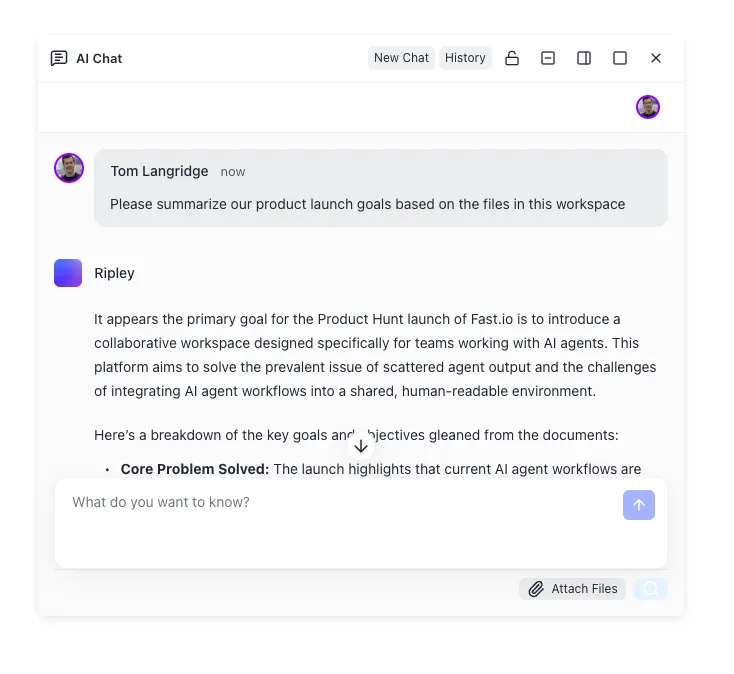
For workflows where Claude agents produce files or deliverables that need to persist between sessions, the storage layer matters once you've solved the usage ceiling. Local filesystems work for solo sessions, but multi-agent or Cowork-driven workflows benefit from shared storage where outputs survive session boundaries. Fast.io provides MCP-native workspace storage that works alongside Claude Code and Cowork, keeping agent-produced files accessible across sessions and handoffs. Google Drive and S3 also work, though they require more setup for MCP connectivity.
How to Calculate Whether Max Pays for Itself
The cost-per-message math reveals a counterintuitive pattern. Pro's Opus messages cost approximately $0.44 each ($20 divided by roughly 45 messages). Max 5x messages cost the same $0.44 ($100 divided by 225 messages). Only Max 20x delivers a genuine volume discount at approximately $0.22 per message. If raw cost efficiency is your goal, the 5x tier offers no savings over Pro.
But per-message cost misses the real value. You're paying for uninterrupted workflow, not cheaper messages.
Track your actual usage for one week before deciding:
- How many times did you hit a rate limit?
- How long did each interruption cost you in context rebuilding?
- What percentage of your work happens during US business hours?
- How much of your usage is Claude Code or Cowork vs. regular chat?
If you hit zero limits, stay on Pro. Paying $80 or $180 more per month for unused headroom is waste.
If you hit limits once or twice per week, the math depends on your hourly value. Two interruptions at 20 minutes each cost about 40 minutes per week, roughly 2.5 hours per month. If your time is worth more than $32/hour, the 5x plan saves money through recovered productivity. If it's worth more than $72/hour, 20x starts to make financial sense.
If you hit limits daily, Max 20x is almost the right fit. With approximately 900 Opus messages per 5-hour window, you're unlikely to encounter rate limits during normal work. This tier exists for developers who treat Claude as their primary tool for the full working day.
One important timing note: if you last evaluated Pro vs Max before May 6, 2026, re-run the analysis. The limit doubling changed the equation . Workflows that previously demanded Max 5x may now fit within Pro's expanded allocation, especially for Sonnet-heavy work.
The annual Pro discount saves $36/year ($17/month vs. $20/month). Max plans don't currently offer annual pricing, so there's no equivalent savings at the higher tiers. For many users, starting on Pro annual and upgrading to Max only after confirming that limits are a real problem is the most cost-effective path.
Sources
References used to verify factual claims in this guide.
-
Tasks involving code rose 210% at the team level across 22,000 developers Typical developer using Claude Code spends approximately $6 per day, 90th percentile hitting $12 per day
-
Anthropic doubled Claude Code's 5-hour rate limits on May 6, 2026 and eliminated peak-hour reductions
-
Pro costs $20/month or $17/month annual, Max 5x costs $100/month, Max 20x costs $200/month
Frequently Asked Questions
Is Claude Max worth it compared to Pro?
Max is worth it if you regularly hit rate limits on Pro. The features are identical across both plans, so the only value Max adds is higher usage capacity and priority access during peak hours. Track how often you see the rate limit message for a week. If it happens more than three times, the time lost to context rebuilding likely exceeds the $80-180/month price difference.
What is the difference between Claude Pro and Max?
The difference is usage volume, not features. Both plans include the same models (Opus 4.8, Sonnet 4.6, Haiku 4.5), the same tools (Claude Code, Cowork, extended thinking, web search, projects, memory), and the same capabilities. Max provides 5x or 20x the usage capacity of Pro per 5-hour rolling window, plus priority access during high-traffic periods and early access to new features.
How much more usage does Claude Max give you?
Max 5x provides approximately five times Pro's usage capacity per 5-hour window, and Max 20x provides approximately twenty times. Community estimates put Pro at around 45 Opus or 225 Sonnet messages per window, Max 5x at roughly 225 Opus or 1,125 Sonnet, and Max 20x at about 900 Opus or 4,500 Sonnet. Anthropic publishes relative multipliers rather than exact counts, so these figures are approximate.
Should I upgrade from Claude Pro to Max?
Upgrade if you hit rate limits frequently enough that the context-rebuilding time costs more than the subscription difference. At $80/month more for Max 5x, you need to recover at least 2 to 3 hours of productivity per month to break even. Heavy Claude Code users and those running Cowork automations are the most likely to benefit, since coding and agentic tasks consume tokens faster than regular chat.
Does Claude Max include exclusive features that Pro doesn't have?
No. Both Pro and Max include every feature Anthropic offers, from extended thinking to Claude Code to MCP integrations. Max adds higher usage limits, priority access during peak demand, and early access to new features. There are no exclusive models, tools, or capabilities reserved for Max subscribers. The value proposition is more capacity, not more capability.
Related Resources

Agent files that persist across Claude sessions
Files survive session resets and are ready for handoff to other agents or humans.