Best OpenClaw Tools for AI Form and Survey Building
The online form builder software market hit $696 million in 2026, but most AI form tools stop at creation and leave distribution and response processing to manual steps. This guide ranks seven OpenClaw skills that cover the full pipeline, from survey design and browser-based form creation to multi-channel distribution and structured data extraction from completed responses.


How We Evaluated These OpenClaw Form and Survey Skills
The online form builder software market reached $696 million in 2026, growing at 9.8% annually toward a projected $1.95 billion by 2035 (Global Market Statistics). That growth reflects how many organizations still wrestle with manual form creation and data collection. Standalone AI form builders like Jotform AI, Typeform, and Tally have simplified the creation step, but they treat distribution and response processing as separate problems you solve elsewhere.
OpenClaw's skill ecosystem approaches forms differently. Instead of one monolithic tool, you compose multiple skills into a pipeline: one designs the survey, another fills or distributes it, a third processes responses. The ClawHub registry hosts over 13,700 community-built skills as of early 2026, and at least a dozen target form-adjacent workflows directly.
We tested each skill against four criteria:
Workflow Coverage Does the skill handle one stage of the form pipeline (design, fill, distribute, or collect), or does it span multiple stages? Skills that chain cleanly with others scored higher.
Output Quality For generation skills, we checked whether the output needed significant rework. For automation skills, we looked at reliability across different form platforms.
Install Simplicity Skills that install from ClawHub with minimal configuration beat those requiring manual API key setup and extra dependencies.
Agent Integration Can the skill run inside an automated OpenClaw pipeline triggered by Telegram, Slack, or a cron job? Skills that require interactive prompting scored lower than those that accept structured parameters.
Here is how the top skills compare:

Related guides
- Best n8n Tools for AI Agents: Top 10 Nodes for 2026n8n changed AI automation with its visual workflow builder. We rank the best nodes and integrations for building...
- Best Tools for CrewAI Agents: Top Picks for 2026CrewAI agents need good tools to be useful. The framework handles coordination, but external integrations let agents...
- Best OpenClaw Tools for Legal Teams: Top 7 IntegrationsLegal teams use autonomous agents to handle repetitive tasks, and early adopters report significant efficiency gains....
- 7 Best OpenClaw Tools for AI Travel Itinerary Planning and Booking AutomationOpenClaw's skill registry includes over 110 transportation skills and 29 dedicated travel tools, but most agents cobble...
- Best OpenClaw Tools for AI Spreadsheet Analysis AutomationManual reporting still eats hours every week, even when the analysis itself takes minutes. OpenClaw skills for...
- Best OpenClaw Tools for AI Video Editing AutomationOpenClaw's ecosystem includes both built-in video generation tools and community-developed editing skills that handle...
More on this subject: OpenClaw Tools (101 guides)
1. Survey Design
The Survey Design skill handles the methodological work that most AI form builders skip. Instead of generating a flat list of questions from a prompt, it builds measurement instruments with validated question types, appropriate response scales, and skip logic.
You describe your measurement objective, target audience, and how you plan to use the data. The skill generates a complete survey structure including question wording, response formats, and administration protocols. It follows evidence-based practices: simple language at an eighth-grade reading level, no double-barreled questions, balanced response scales, general-to-specific ordering, and demographic questions placed at the end.
Four parameters control the output:
- Purpose: academic research, customer feedback, employee engagement, or market analysis
- Duration: short (5 minutes), medium (10 minutes), or extended (20+ minutes)
- Delivery method: online, telephone, face-to-face, or combined
- Data use: descriptive analysis, comparative studies, or predictive modeling
The skill also includes attention-check items and pilot testing recommendations. For customer satisfaction surveys with branching logic or academic instruments using Likert scales, this is the starting point before you move to a form platform for actual deployment.
Key Strengths:
- Evidence-based survey methodology built into the generation process
- Supports multiple research contexts and delivery methods
- Includes bias prevention and attention-check item placement
Limitations:
- Produces survey designs, not interactive web forms
- You still need a form platform or document skill to deploy the survey
Best For: Teams that need methodologically sound survey instruments before building the actual form.
2. autofillin
The autofillin skill automates the tedious part of form workflows: filling them out. Built on Playwright browser automation, it handles login persistence, form field detection, dropdown selection, file uploads, and multi-field submissions.
The core workflow runs in three phases. First, login persistence: the skill authenticates once and maintains the session across submissions. Second, auto-fill: it detects form fields and populates text inputs, selects dropdown options, and uploads files to the correct input positions. Third, confirmation: it waits for manual approval before final submission, so you keep oversight of what gets sent.
This matters for repetitive form workflows. If your team fills the same vendor onboarding form 50 times a month or submits weekly compliance reports through a web portal, autofillin turns a manual process into one your OpenClaw agent handles. Prepare a data file with the field values, point the agent at the form URL, and it fills everything in.
The skill pairs well with Survey Design. Design the survey instrument with Survey Design, deploy it on a form platform, then use autofillin to pre-populate test submissions or seed initial data for validation.
For response data that needs to persist across sessions, store the filled form outputs in a Fastio workspace. The workspace indexes uploaded documents automatically once Intelligence Mode is enabled, so your agent can search and query completed form data without building a separate database.
Key Strengths:
- Handles login persistence across multiple form submissions
- Supports file and folder uploads to specific input positions
- Manual confirmation step prevents accidental submissions
Limitations:
- Requires Playwright as a binary dependency
- Works best with standard HTML forms; heavily custom JavaScript widgets may need browser-cdp instead
Best For: Teams submitting the same form repeatedly with different data.
3. Browser-CDP
When a form platform uses non-standard widgets, shadow DOM elements, or heavy JavaScript rendering, the browser-cdp skill gives your agent direct Chrome DevTools Protocol access. This is the low-level option. Instead of relying on Playwright selectors, your agent sends raw CDP commands to click, type, scroll, and extract data from any page.
OpenClaw's browser control runs in three modes. Extension Relay connects to your existing Chrome tabs, preserving login sessions and cookies. OpenClaw Managed launches isolated Chromium instances for safe automation. Remote CDP connects to cloud-hosted browser infrastructure for parallel execution.
For form building specifically, browser-cdp lets your agent interact with platforms like Typeform, Jotform, Google Forms, or any custom web application. The agent navigates to the form builder, clicks through the UI to add questions, configures conditional logic, and publishes the form. The skill achieves millisecond response times according to LaoZhang AI Blog's testing, making it practical for production pipelines where you build forms programmatically based on incoming data.
The typical pattern chains Survey Design with browser-cdp: Survey Design produces the question structure and response types, then browser-cdp opens a form builder and creates the form by interacting with the builder's UI directly.
Key Strengths:
- Works with any web form platform, including custom and proprietary ones
- Three browser control modes for different security and isolation needs
- Millisecond response times suitable for production automation
Limitations:
- Requires more setup than higher-level skills
- CDP commands are platform-specific, so scripts need updating when form builders change their UI
Best For: Automating form creation on platforms that lack an API, or interacting with heavily customized form widgets.
4. pls-office-docs
Not every form needs to live on a web platform. The pls-office-docs skill generates DOCX, XLSX, PDF, and PPTX documents, which covers offline form workflows like printable intake forms, structured spreadsheet templates for data collection, and PDF survey instruments for email distribution.
The skill accepts a prompt describing the document you need and generates the file in your chosen format. For forms, the XLSX output is particularly useful: you can create spreadsheet templates with data validation rules, dropdown lists, and conditional formatting that guide respondents through structured data entry. The PDF output works for compliance forms that need to be printed, signed, and scanned back.
This fills a gap that web-only form builders miss entirely. Government agencies, healthcare facilities, and legal teams often need paper forms alongside digital ones. With pls-office-docs, your OpenClaw agent generates both from the same survey design: a web form via browser-cdp and a matching PDF via pls-office-docs.
Generated documents can be stored in a Fastio workspace and distributed through branded shares. Fastio's Metadata Views can then extract structured data from completed PDF or DOCX forms once respondents fill them out and upload them back, closing the loop between form creation and response collection.
Key Strengths:
- Generates forms in DOCX, XLSX, PDF, and PPTX formats
- XLSX output supports data validation rules for guided entry
- Covers offline and hybrid digital/paper form workflows
Limitations:
- No interactive web form output
- Generated documents may need formatting adjustments for brand compliance
Best For: Teams that distribute forms as documents via email, print, or file share rather than as web links.


Store and extract form responses without building a database
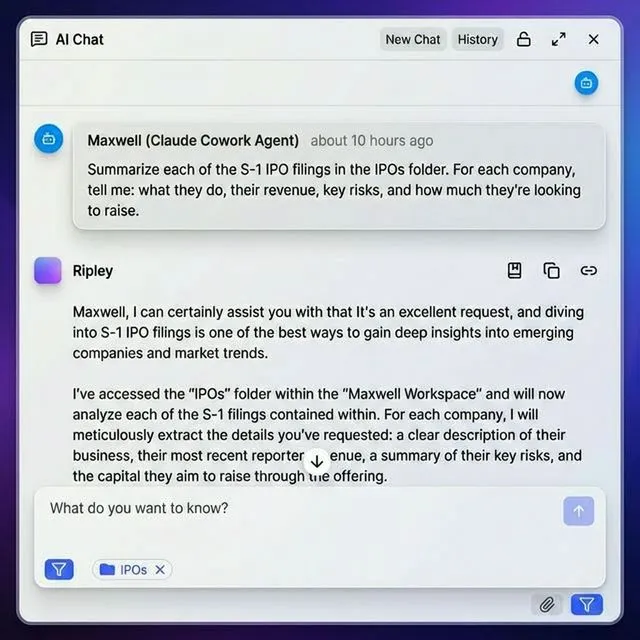
Fastio Metadata Views turns uploaded PDF and DOCX forms into structured, queryable data. Persistent workspace with an MCP-ready endpoint for your OpenClaw agent.
5. n8n Workflow Automation
The n8n Workflow Automation skill connects OpenClaw to n8n's library of over 400 service integrations, turning your agent into the orchestration layer for multi-step form workflows.
The integration works in both directions. OpenClaw can trigger n8n workflows by calling webhooks: your agent designs a survey, builds it on a form platform, then triggers an n8n workflow that distributes the form link via email, Slack, SMS, or any channel n8n supports. Going the other way, n8n can trigger OpenClaw actions when form responses arrive, so a new Typeform submission triggers your agent to process, validate, and store the response.
The skill provides programmatic control through the n8n REST API: listing and inspecting workflows, activating or deactivating them, triggering via webhooks, and creating new workflows from JSON definitions. Operations teams can add new distribution channels or processing steps by building a new n8n workflow without touching the agent configuration.
This is where standalone AI form builders fall short. They create the form, but distributing it across channels and processing responses across systems requires manual integration work. The n8n skill bridges that gap. Build a form with browser-cdp, distribute it with n8n, collect responses with n8n triggers, and store them in a Fastio workspace for analysis.
Key Strengths:
- Access to 400+ service integrations for form distribution and collection
- Bidirectional triggering between OpenClaw and n8n
- No-code workflow creation for non-technical team members
Limitations:
- Requires a running n8n instance (self-hosted or cloud)
- Initial automation hooks configuration has a learning curve
Best For: Teams that need multi-channel form distribution and automated response processing across business systems.
6. Google Workspace CLI (gog-workspace)
For teams already in the Google ecosystem, the Google Workspace CLI skill gives your OpenClaw agent direct access to Google Forms alongside Gmail, Drive, Sheets, Calendar, and Docs through a single integration. The skill earned a 9.50 impact score on ClawHub's productivity rankings.
The skill uses OAuth 2.0 authentication and exposes Google Workspace APIs as command-line operations. Your agent can create Google Forms, add questions, configure response validation, and publish forms without opening a browser. Responses flow directly into Google Sheets, where your agent can read and process them programmatically.
This approach is simpler than browser-cdp for Google Forms specifically. Instead of navigating the Google Forms UI through CDP commands, your agent calls the Forms API directly. The tradeoff is platform lock-in: this skill only works with Google Forms, while browser-cdp works with any form platform.
The practical workflow chains multiple Google services. Your agent creates the form, distributes it via Gmail, collects responses in Sheets, and uses Drive for file upload questions. For organizations that standardize on Google Workspace, this is the most friction-free path to automated form workflows.
Key Strengths:
- Native API access to Google Forms without browser automation
- Responses flow directly into Google Sheets for processing
- Single OAuth setup covers all Google Workspace services
Limitations:
- Limited to Google Forms only
- Requires Google Workspace account with API access enabled
Best For: Google Workspace organizations that want API-level form automation without browser dependencies.
7. Fastio
Fastio is not a form builder. It is the storage and extraction layer where form responses live after collection and where form documents are stored before distribution.
The reason it belongs on this list is Metadata Views. When respondents fill out PDF or DOCX forms and upload them to a Fastio workspace, Metadata Views extracts structured data from those documents without OCR rules or templates. You describe the fields you want in natural language, and the AI designs a typed schema (text, integer, decimal, boolean, URL, date) and populates a sortable, filterable spreadsheet. Add new columns without reprocessing existing files.
For the agent workflow, Fastio's MCP server provides a consolidated MCP toolset that OpenClaw agents can access via Streamable HTTP or legacy SSE. Your agent stores generated forms, distributes them through branded shares with tracking, and processes uploaded responses through Metadata Views. Intelligence Mode auto-indexes uploaded documents, so your agent can search form responses by meaning and answer questions about collected data with citations.
Fastio offers a 14-day Business Trial with paid plans starting at $9.99/mo (see pricing). Ownership transfer lets an agent build the entire form workspace and hand it off to a human team member when the project is ready.
Key Strengths:
- Metadata Views extracts structured data from filled PDF and DOCX forms
- Consolidated MCP toolset for agent-driven file operations
- Branded shares with tracking for form distribution
Limitations:
- Not a form builder itself; it handles storage, extraction, and distribution
- Metadata Views works with uploaded documents, not live web form responses
Best For: Processing offline form responses, distributing form documents, and querying collected data through AI-powered search.

How to Choose the Right Skill Combination
The right skill set depends on where your forms live and how you collect responses.
Web forms on a single platform: Pair Survey Design with browser-cdp or Google Workspace CLI. Survey Design produces the question structure, and the browser or API skill builds it on your chosen platform. Store response exports in Fastio for long-term search and analysis.
Repetitive form filling: autofillin plus a data source. If your team submits the same form regularly with different data, autofillin handles the filling while you maintain a spreadsheet or database of field values.
Multi-channel distribution: Chain Survey Design, browser-cdp, and n8n Workflow Automation. Build the form, then use n8n to distribute it across email, Slack, SMS, and other channels. n8n triggers can also route responses back to your agent for processing.
Offline or hybrid workflows: pls-office-docs for document generation plus Fastio for collection and extraction. Generate PDF or XLSX forms, distribute them as branded shares, and use Metadata Views to extract structured data when filled forms come back.
Full pipeline automation: Survey Design creates the instrument. Browser-cdp or Google Workspace CLI builds the web form. n8n handles distribution. Fastio stores responses and extracts structured data via Metadata Views. This four-skill pipeline covers creation, deployment, distribution, and collection without leaving the OpenClaw agent environment.
The advantage over standalone AI form builders is that each step in the pipeline is independently replaceable. Swap Google Forms for Typeform without changing your distribution workflow. Switch from email distribution to SMS without rebuilding the form. That modularity is what makes an agent-driven approach worth the initial setup cost.
Sources
References used to verify factual claims in this guide.
-
Online form builder software market reached $696 million in 2026, projected to reach $1.95 billion by 2035 at 9.8% CAGR
-
ClawHub registry hosts over 13,700 community-built skills as of February 2026
-
OpenClaw browser control achieves millisecond response times for automation
-
n8n provides integrations with over 400 services for workflow automation
Frequently Asked Questions
Can OpenClaw create online forms?
OpenClaw creates online forms through two paths. The browser-cdp skill navigates form builder platforms like Google Forms, Typeform, or Jotform and creates forms by interacting with the builder UI. For Google-native teams, the Google Workspace CLI skill calls the Google Forms API directly without browser automation. In both cases, pairing the creation skill with the Survey Design skill adds validated question methodology and skip logic before the form is built.
How do I build a survey with OpenClaw?
Install the Survey Design skill from ClawHub and provide your measurement objective, target audience, survey duration, and intended data use. The skill generates a complete survey structure with validated question types, response formats, and skip logic. Then use browser-cdp or the Google Workspace CLI skill to build the survey on your chosen form platform, or use pls-office-docs to generate it as a PDF or spreadsheet for offline distribution.
What OpenClaw skills support form generation?
Several skills cover different parts of the form pipeline. Survey Design creates survey instruments with validated methodology. pls-office-docs generates form documents in DOCX, PDF, XLSX, and PPTX formats for offline distribution. autofillin automates filling existing web forms using Playwright. browser-cdp provides raw Chrome DevTools Protocol access for building forms on any web platform. The Google Workspace CLI gives API access to Google Forms specifically.
Can OpenClaw fill out existing web forms automatically?
Yes. The autofillin skill uses Playwright browser automation to detect form fields, fill text inputs, select dropdown options, and upload files. It maintains login persistence across sessions and includes a manual confirmation step before final submission. For forms with non-standard widgets or heavy JavaScript rendering, the browser-cdp skill provides lower-level Chrome DevTools Protocol access that works with any web form regardless of implementation.
How does OpenClaw handle form response data?
OpenClaw does not include a built-in form response database. Instead, you route responses through integration skills. The n8n Workflow Automation skill can trigger when form platforms receive submissions, routing data to any of n8n's 400+ connected services. For document-based forms (PDF or DOCX), store completed forms in a Fastio workspace where Metadata Views extracts structured fields into a sortable spreadsheet without OCR rules or templates.
Related Resources

Store and extract form responses without building a database
Fastio Metadata Views turns uploaded PDF and DOCX forms into structured, queryable data. Persistent workspace with an MCP-ready endpoint for your OpenClaw agent.