Best OpenClaw Tools for AI Spreadsheet Analysis Automation
Manual reporting still eats hours every week, even when the analysis itself takes minutes. OpenClaw skills for spreadsheet automation handle the full cycle: reading raw data, building formatted Excel workbooks with charts and conditional formatting, and delivering finished reports on a schedule. This guide ranks the best ClawHub skills for spreadsheet work and shows how to connect them into an end-to-end pipeline.

Why Spreadsheet Automation Still Matters for AI Agents
Oh My OpenClaw's benchmarks show that a manual monthly close report takes roughly 71 minutes to assemble. With OpenClaw's Excel automation skill, the same report finishes in about 3 minutes. That gap explains why spreadsheet skills are among the most-installed categories on ClawHub, even as dashboards and BI tools proliferate.
The reason is simple: stakeholders still want Excel files. Finance teams need workbooks they can audit cell by cell. Sales managers want a .xlsx they can forward. Compliance officers need printable reports with frozen headers and page breaks. No amount of dashboard investment changes the fact that the spreadsheet is the delivery format for most recurring business reports.
OpenClaw skills handle this by writing code (typically using openpyxl or SheetJS) to manipulate files programmatically. Your agent never opens Excel directly. Instead, it generates the workbook, applies formatting, and saves the output. This means the same automation works on a headless server, a Raspberry Pi, or a laptop, without any GUI dependency.
Related guides
- Best n8n Tools for AI Agents: Top 10 Nodes for 2026n8n changed AI automation with its visual workflow builder. We rank the best nodes and integrations for building...
- Best Tools for CrewAI Agents: Top Picks for 2026CrewAI agents need good tools to be useful. The framework handles coordination, but external integrations let agents...
- 7 Best OpenClaw Tools for AI Travel Itinerary Planning and Booking AutomationOpenClaw's skill registry includes over 110 transportation skills and 29 dedicated travel tools, but most agents cobble...
- Best OpenClaw Tools for AI Video Editing AutomationOpenClaw's ecosystem includes both built-in video generation tools and community-developed editing skills that handle...
- 7 OpenClaw Tools That Automate Employee Onboarding ContentGartner projects that 40% of enterprise applications will embed task-specific AI agents by the end of 2026, up from...
- 7 Best OpenClaw Tools for Accountants and Financial Workflow AutomationCPAs recover an estimated 240 hours per year in billable capacity when AI handles routine preparation, according to the...
More on this subject: OpenClaw Tools (101 guides)
How We Evaluated These Tools
We tested ClawHub skills against five criteria specific to spreadsheet workflows:
- Format fidelity: Can the skill produce workbooks with merged cells, conditional formatting, charts, and print-ready layouts? A CSV dump is not a report.
- Data source flexibility: Does the skill read from local files, APIs, databases, or cloud storage? The best pipelines pull data from where it already lives.
- Scheduling support: Can you set up recurring report generation without a separate cron wrapper? Automated delivery to Slack, email, or a shared workspace is a bonus.
- Error handling: Does the skill validate data types, catch formula errors (#REF!, #DIV/0!), and flag outliers before generating the final file?
- Setup friction: How many steps from install to first working report? Skills that require extensive OAuth configuration or API key management scored lower.
We also checked for overlap. Several skills on ClawHub handle spreadsheets as a secondary feature. We focused on skills where spreadsheet work is the primary function, plus a few that fill specific gaps (Google Sheets access, persistent storage, data validation).
The Top OpenClaw Spreadsheet Skills
Here is a summary of the skills covered in this guide:
Each skill handles a different part of the spreadsheet lifecycle. The xlsx skill builds workbooks. Gog reads and writes Google Sheets. The data-analyst skill handles upstream analysis. Composio's Excel MCP connects to Office 365. Fastio stores and distributes the finished files. Most production pipelines combine two or three of these.
1. xlsx: The Core Excel Skill
The xlsx skill by seanphan is the most direct way to give your OpenClaw agent full Excel capabilities. It handles .xlsx.xlsm.csv, and .tsv files with support for formulas, formatting, charts, and pivot tables.
Available on ClawHub as seanphan/xlsx, the skill installs in one step from the registry.
What sets this skill apart from generic file-handling tools is its approach to formulas. The skill enforces a rule: always use Excel formulas instead of calculating values in Python and hardcoding them. This keeps workbooks dynamic. When someone opens the file and changes an input, the formulas recalculate. Every generated workbook must have zero formula errors (#REF!, #DIV/0!, #VALUE!, #N/A, #NAME?) before the skill considers it complete.
For formatting, the skill uses pandas for bulk data operations and openpyxl for cell-level styling. You can describe formatting in natural language ("alternating gray rows, bold headers, NT$ currency format") and the agent translates that into the appropriate openpyxl calls. The Meta Intelligence guide documents the full range of supported formatting: merged cells, adjustable row heights, background colors, frozen panes, print area configuration, and header/footer customization.
Best for: Teams that need formatted, formula-driven Excel reports generated from local data files.
Limitation: Works with local files only. For Office 365 or SharePoint-hosted spreadsheets, you need the Composio Excel MCP.


Store and share your agent-generated reports in one workspace
Fastio gives your OpenClaw agent persistent storage with built-in search, advisory file locks, and branded sharing. Upload spreadsheets, index them for AI queries, and hand off finished workspaces to your team.
2. Gog: Google Sheets and Full Workspace Access
Gog, built by Peter Steinberger, bundles Gmail, Calendar, Drive, Contacts, Sheets, and Docs into a single OpenClaw skill. With over 33,800 downloads on ClawHub, it is one of the most widely adopted productivity skills in the ecosystem.
Available on ClawHub at steipete/gog, Gog installs from the registry in one step.
For spreadsheet work specifically, Gog provides direct Google Sheets API access through natural language commands. You can update cell ranges, append rows, clear data, and read sheet metadata. The commands map to the Sheets API:
- Update cells: Write to a specific range with user-entered formatting
- Append rows: Add new data to the bottom of a sheet without overwriting existing content
- Clear ranges: Wipe a specific area while preserving structure
- Read metadata: Pull sheet names, dimensions, and properties
The real power shows up in cross-service workflows. Your agent can pull data from Gmail attachments, analyze it, push results to a Google Sheet, and create a Calendar event for the review meeting, all in one conversation. That kind of orchestration is hard to replicate with single-purpose spreadsheet tools.
Best for: Teams already on Google Workspace who want their OpenClaw agent to read and write Sheets alongside email, calendar, and Drive operations.
Limitation: Google Sheets only. No Excel file generation. Pair with the xlsx skill if you need to produce downloadable .xlsx files from Sheets data.
3. data-analyst: From Raw Data to Finished Report
The data-analyst skill turns your OpenClaw agent into a full analysis pipeline. It handles SQL queries against relational databases and data warehouses, CSV and Excel file processing, statistical analysis, data cleaning, and visualization. Where the xlsx skill focuses on building workbooks, data-analyst focuses on the analysis that feeds into them.
Install:
clawhub install oyi77/data-analyst
A typical workflow starts with a database query, runs aggregations and cleaning in pandas, generates charts, and exports everything to a formatted spreadsheet. The skill handles each step without requiring you to write glue code between tools.
For spreadsheet-specific tasks, the skill provides data validation that catches common quality issues: text values in numeric columns, duplicate records, formula errors, and missing data. This validation layer runs before the final export, so you catch problems before the report reaches stakeholders.
Best for: Analysts who need end-to-end pipelines from database to formatted report.
Limitation: The skill is optimized for analysis workflows, not presentation-grade formatting. For complex cell styling (merged headers, alternating row colors, custom print layouts), combine it with the xlsx skill.
4. Excel MCP via Composio: Office 365 Integration
Composio's Excel MCP skill connects OpenClaw to Microsoft Excel through the Microsoft Graph API. This is the same API that powers Microsoft 365's web interface, which means your agent works with cloud-hosted spreadsheets directly rather than downloading, modifying, and re-uploading files.
The skill supports reading and writing cell ranges, creating worksheets, applying formatting, and running table operations against Excel files stored in OneDrive or SharePoint. For teams whose spreadsheets live in Microsoft's ecosystem, this eliminates the local file shuffle.
Best for: Organizations on Microsoft 365 that need their OpenClaw agent to edit shared Excel files in place.
Limitation: Requires Microsoft Graph API credentials and OAuth setup. More configuration than local file skills.
Storing and Distributing Reports with Fastio
Generated spreadsheets need to go somewhere useful. Saving them to a local directory works for personal use, but team workflows need persistent storage, access controls, and a way to share finished reports without emailing attachments.
Fastio fills this gap as a shared workspace where agents store output and humans retrieve it. Connect your agent via the remote MCP server:
https://mcp.fast.io/mcp/tools
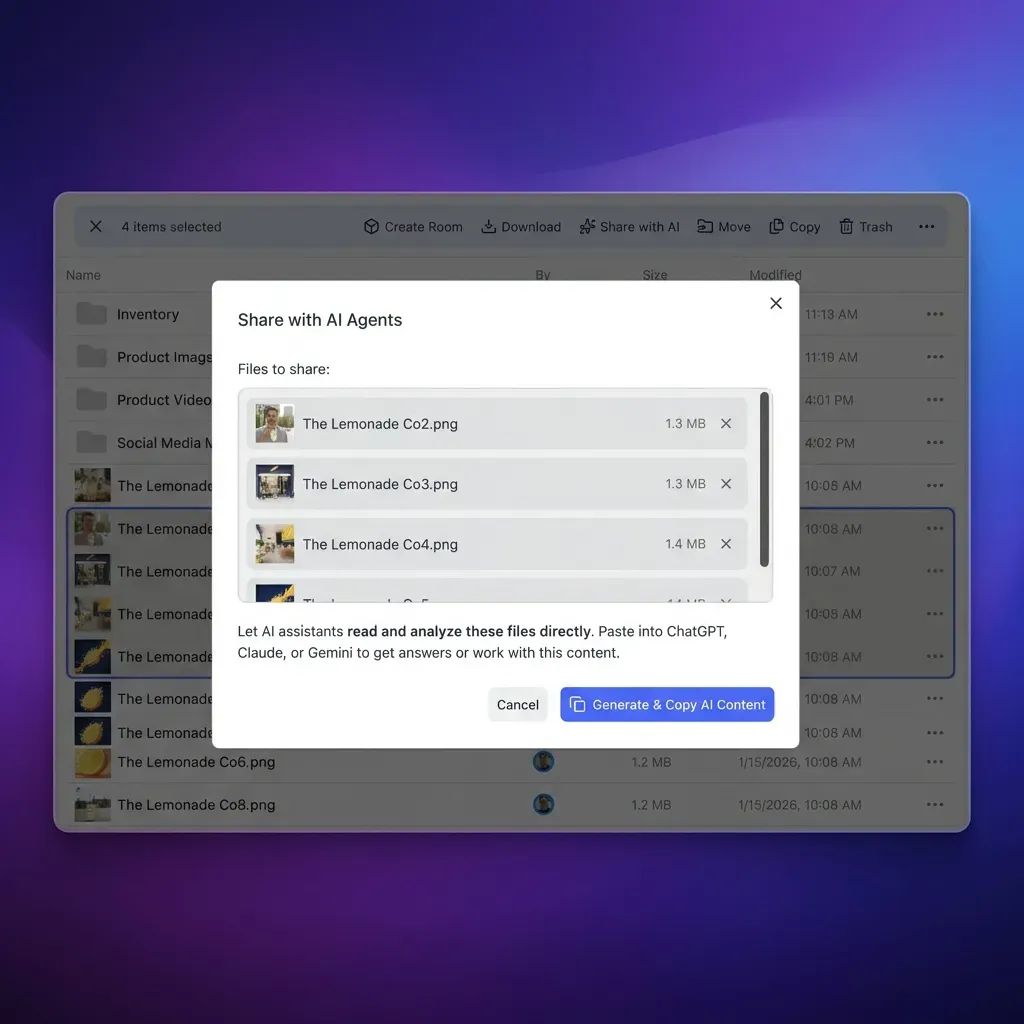
Fastio provides a consolidated MCP toolset covering file uploads, workspace management, sharing, and AI-powered search. Your agent uploads the finished Excel report to a workspace, and team members access it through the web UI or API. Advisory file locks allow an agent to lease a spreadsheet while writing, while automatic version history and audit logs keep every revision safe if multiple agents collaborate.
For spreadsheet pipelines specifically, Fastio adds two features that local storage cannot match:
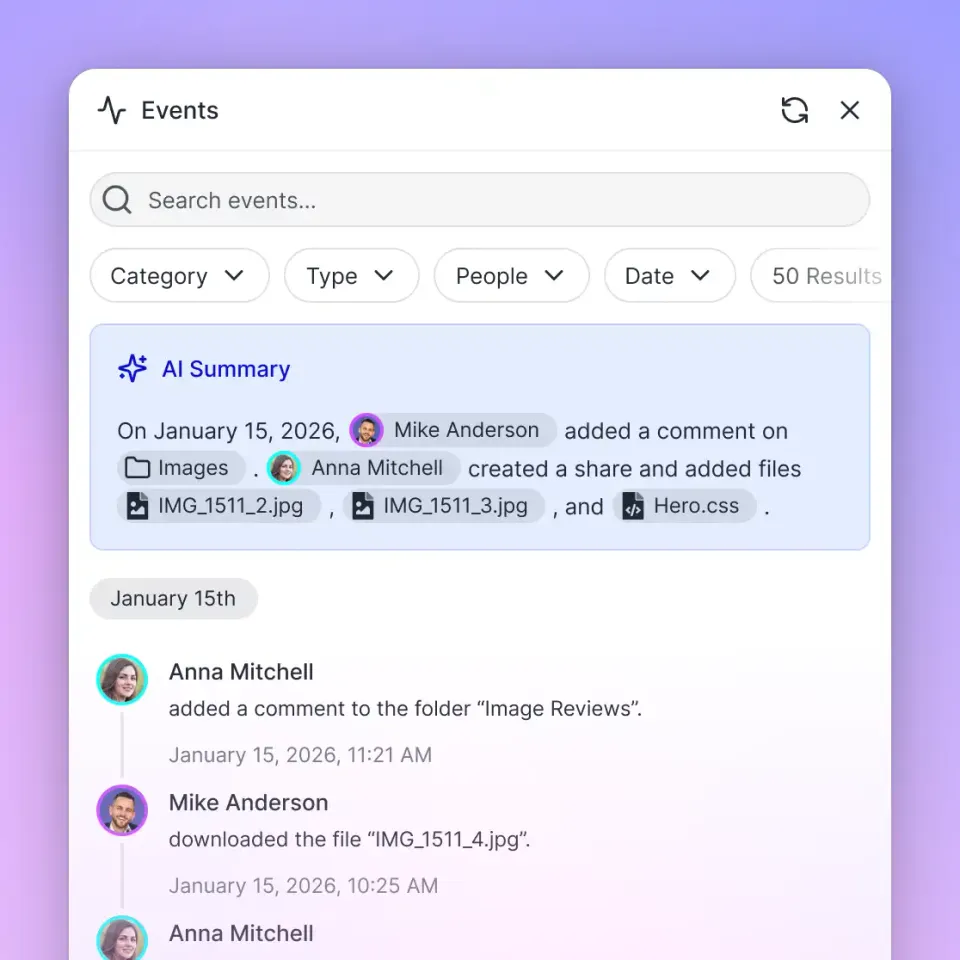
- Intelligence Mode: Enable it on a workspace and uploaded files are automatically indexed. Team members can ask questions about report contents through the AI chat interface, with citation-backed answers. Instead of opening every weekly report to find a specific metric, search across all of them.
- Branded shares: Create a share link for a client or stakeholder that includes your company branding, password protection, and expiration dates. Better than emailing a .xlsx attachment that lives in someone's inbox forever.
Fastio offers a 14-day Business Trial with paid plans starting at $9.99/mo (see pricing).
Alternatives: For teams already on AWS, the S3 ClawHub skill handles object storage with lifecycle policies and presigned URLs. Google Drive users can rely on the Gog skill for file storage alongside Sheets access. Fastio is the fast path if you want built-in RAG and team sharing without configuring cloud provider credentials.
Building a Scheduled Report Pipeline
The highest-value spreadsheet automation is the one that runs without you. OpenClaw's cron scheduling lets you set up recurring report generation and delivery. A weekly sales report, a monthly financial consolidation, or a daily inventory check can all run on schedule.
The workflow combines several skills into a pipeline:
- Data collection: The data-analyst skill queries your database or reads source files
- Analysis and formatting: The xlsx skill builds a formatted workbook with charts, conditional formatting, and summary sections
- Storage: The agent uploads the finished report to a shared Fastio workspace via MCP
- Delivery: A messaging skill (Slack, email, or Teams) posts a link or attachment to the right channel
Oh My OpenClaw documents this pattern: "You send one message to your AI agent. Two minutes later, the formatted spreadsheet arrives in Slack with charts, conditional formatting, and a summary paragraph at the top."
For teams running multiple scheduled reports, OpenClaw's auto-stagger feature prevents API rate-limit errors by spacing out reports that share the same trigger time. If you have ten reports scheduled for Monday at 7am, they run sequentially instead of simultaneously.
A practical caution: Run any new scheduled report manually for two or three cycles before enabling automation. Verify the data sources are stable, the formatting is correct, and the delivery channel is right. Automated reports that send bad data erode trust faster than manual reports that arrive late.
Sources
References used to verify factual claims in this guide.
-
Manual monthly close reporting took 71 minutes; with OpenClaw automation, the same task completes in approximately 3 minutes
-
Gog has over 33,800 downloads on ClawHub
-
OpenClaw skills registry contains 13,729 total community-built skills with 5,211 curated in the awesome list
Frequently Asked Questions
Can OpenClaw analyze Excel files?
Yes. The xlsx skill reads .xlsx.xlsm.csv, and .tsv files using pandas and openpyxl. Your agent can summarize data, run statistical analysis, identify outliers, and generate formatted reports from existing spreadsheets. The data-analyst skill adds SQL query capabilities and visualization on top of basic file reading.
How do I automate spreadsheet reports with OpenClaw?
Install the xlsx skill for Excel generation and configure a cron schedule in your OpenClaw setup. The agent runs the analysis, builds the workbook with formatting, and can deliver the finished file via Slack, email, or a shared workspace like Fastio. Start by running the report manually a few times to verify accuracy before enabling the schedule.
What Google Sheets skills are on ClawHub?
The primary Google Sheets skill is Gog (clawhub.ai/steipete/gog), which provides full Google Workspace access including Sheets read, write, append, and clear operations. It has over 33,800 downloads. There is also a dedicated google-sheets skill in the OpenClaw skills registry that provides a managed OAuth gateway specifically for Sheets API access.
Can OpenClaw create charts and conditional formatting in Excel?
Yes. The xlsx skill and the broader Excel automation workflow support chart generation, conditional formatting, merged cells, alternating row colors, frozen panes, and print-area configuration. The agent writes openpyxl code to apply these styles, producing files that are presentation-ready when opened in Excel.
How do I share OpenClaw-generated spreadsheets with my team?
Upload finished reports to a shared workspace using the Fastio remote MCP server or the S3 skill. Fastio adds Intelligence Mode (semantic search across uploaded reports) and branded share links with access controls. For Google Sheets output, the Gog skill can write directly to a shared Sheet that team members already have access.
Related Resources

Store and share your agent-generated reports in one workspace
Fastio gives your OpenClaw agent persistent storage with built-in search, advisory file locks, and branded sharing. Upload spreadsheets, index them for AI queries, and hand off finished workspaces to your team.