7 Best OpenClaw Skills for AI Market Research and Audience Analysis
OpenClaw market research skills are community-built extensions that automate competitor analysis, audience profiling, and trend monitoring directly from your local AI assistant. With 40% of marketers already using AI for research and ClawHub hosting thousands of installable skills, the gap between a generic chatbot and a working research pipeline is often just a few install commands. This guide ranks the seven most useful OpenClaw skills for market research and audience analysis workflows.


Why Market Researchers Are Adopting OpenClaw Skills
Forty percent of marketers already use AI to conduct research, according to HubSpot's 2026 marketing report. Yet most of that usage is basic: pasting competitor URLs into ChatGPT, asking for keyword lists, or summarizing articles one at a time. The market research services industry hit $96.77 billion in 2026, but the tools powering most research teams still require manual data pulls, expensive platform subscriptions, and hours of spreadsheet wrangling.
OpenClaw skills change the equation by turning a local AI agent into a research automation layer. Instead of switching between five SaaS dashboards, you install a skill from ClawHub and give your agent a plain-language instruction: "Find competitor keywords we're missing" or "Profile the audience for this product category." The agent handles web searches, data extraction, and report formatting on its own.
The VoltAgent/awesome-openclaw-skills repository catalogs over 5,400 skills from the OpenClaw Skills Registry, sorted by category. The marketing and sales category alone covers competitor monitoring, keyword research, audience analysis, social listening, and lead scoring. This guide focuses on the seven skills most useful for market research and audience analysis workflows.
Related guides
- How to Use Claude Code Skills in ClineAccording to GitHub's Octoverse 2024 report, the number of developers building with generative AI on the platform...
- How to Install and Manage Cline Agent SkillsAI coding agents boost code volume by 180%, but shipped code rises by only 30%, showing a critical gap in development...
- Best OpenClaw Skills for Web ResearchWeb research skills let OpenClaw agents find and read information on the live web. Without them, your AI is stuck with...
- Best OpenClaw Skills for AI Customer Feedback Sentiment AnalysisThe sentiment analysis software market hit $2.73 billion in 2026, but nearly all of that spending goes to standalone...
- 5 Best OpenClaw Skills for Document Comparison and Diff AnalysisThe ClawHub registry passed 44,000 skills in April 2026, yet finding the right ones for document comparison still...
- Top OpenClaw Skills for AI Contract Review and AnalysisLegal departments doubled their generative AI adoption in a single year, but most contract review still happens...
More on this subject: OpenClaw Skills (109 guides)
How We Evaluated These Skills
We tested each skill against three criteria specific to research work:
- Data access breadth. Can the skill pull from multiple sources (web pages, social platforms, APIs, structured datasets) or is it limited to a single channel?
- Output quality. Does the skill return raw data dumps or structured, analysis-ready output that an agent can process further?
- Workflow composability. Can the skill chain with other skills to build multi-step research pipelines, or does it only work in isolation?
Skills that required excessive manual configuration or returned inconsistent results were excluded. We also verified that each skill listed here is available on ClawHub or in the official OpenClaw skills registry as of May 2026.

Comparison: Top OpenClaw Market Research Skills
Here is a quick comparison of the top OpenClaw skills for market research and audience analysis.
1. Brave Search
Brave Search is the default web search provider for OpenClaw agents. It connects your agent to Brave's independent search index, which covers over 40 billion web pages and adds more than 100 million new pages daily. For market research, that means your agent can pull real-time search results, extract content from competitor pages, and identify trending topics without relying on Google's API or running a headless browser.
Key Capabilities:
- Web search with configurable result counts and region filtering
- Page content extraction as clean markdown, ready for LLM analysis
- Direct URL content fetching for deep-dive competitor page analysis
- Keyword discovery by querying variations and analyzing SERP composition
Best For: Research agents that need real-time web access as a foundation for competitor monitoring, trend spotting, or content gap analysis.
Pricing: Free to use. No API key required for basic search via OpenClaw, despite documentation suggesting otherwise.
ClawHub Page: clawhub.ai/steipete/brave-search


Store and Search Your Market Research in One Workspace
Upload competitor reports, audience profiles, and trend data, then query everything with natural language.
2. Open Market Data
The Open Market Data skill gives your agent access to audience demographic data, market sizing, and industry benchmarks without paid subscriptions. Point it at a product category or market segment and it returns structured profiles covering age distribution, geographic concentration, income brackets, and platform preferences. The data comes from public datasets and aggregated market reports.
Key Capabilities:
- Audience demographic profiling by product category or industry vertical
- Market size estimates and growth trend data
- Geographic distribution and regional market breakdowns
- Competitive landscape overviews with key player identification
Best For: Early-stage research when you need a quick audience profile before committing to a paid data provider. Works well as the first step in a multi-skill pipeline where Brave Search or Firecrawl handles the follow-up deep dives.
Pricing: Free.
ClawHub Page: clawbot.ai/skills/open-market-data.html
3. Competitor Analysis
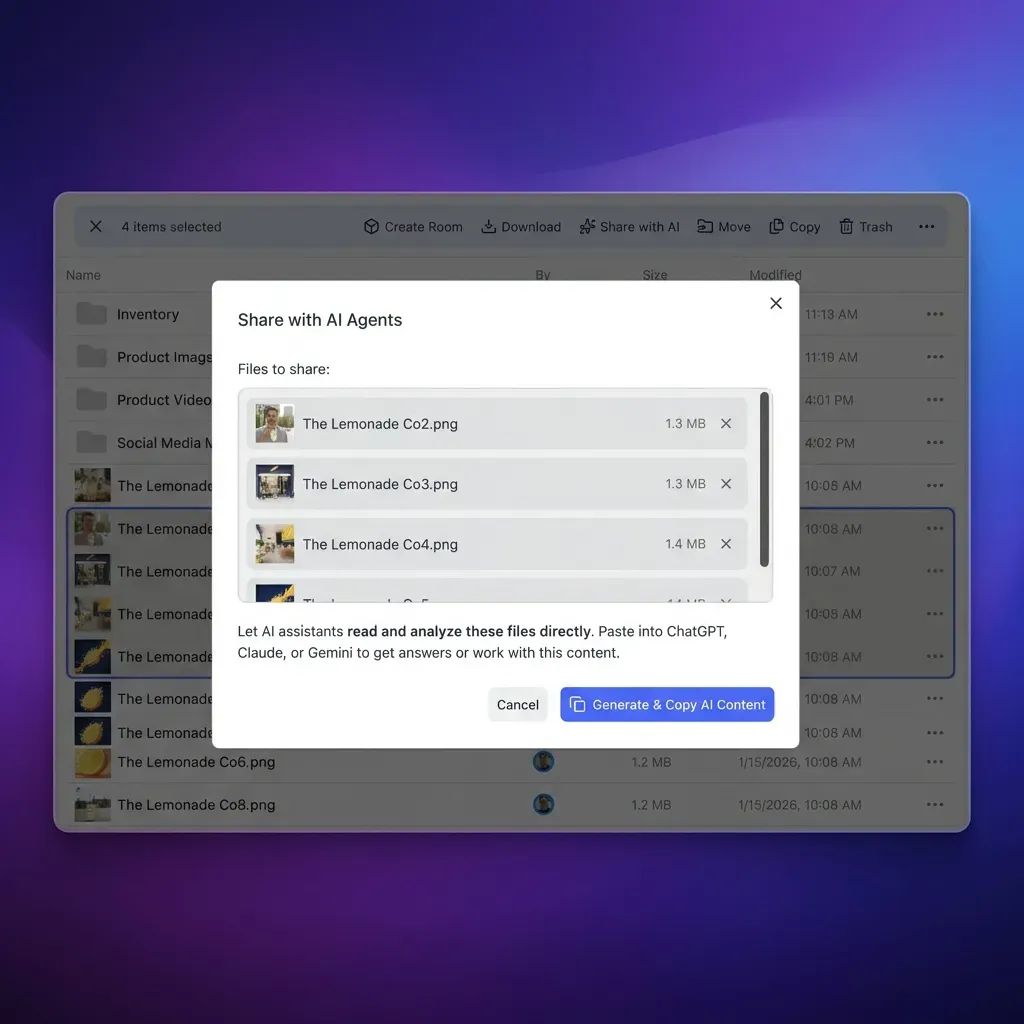
The Competitor Analysis skill by aaron-he-zhu automates SEO and content gap analysis across competing domains. It scrapes competitor pages, extracts heading structures, cross-references Google's "People Also Ask" data, and identifies keyword opportunities your site is missing. Version 8.0.0 of this skill is available under the Apache 2.0 license and works with Claude Code, the ClawHub marketplace, and the Vercel Labs skills ecosystem.
Key Capabilities:
- Automated competitor keyword ranking comparison
- Content gap identification based on SERP heading analysis
- Backlink profile benchmarking (when connected to an SEO data source)
- AI citation pattern monitoring for GEO (Generative Engine Optimization) strategies
All integrations are optional. The skill works without API keys by letting you provide data manually. Connect an SEO tool and it pulls competitor data automatically.
Best For: Content teams that need to identify what competitors rank for and where the gaps are. Pairs well with the SEO-GEO Claude Skills pack for a more comprehensive research workflow.
Pricing: Free and open source (Apache 2.0).
ClawHub Page: github.com/openclaw/skills/.../competitor-analysis
4. Firecrawl
Firecrawl handles the heavy lifting when your research requires data from JavaScript-heavy websites, dynamic dashboards, or pages that block standard scrapers. It returns clean markdown optimized for LLM context windows, which means your agent can process scraped content directly instead of parsing messy HTML.
Key Capabilities:
- Six commands: search, scrape, crawl, map, browser, and credit-usage
- JavaScript rendering for single-page apps and dynamic content
- Structured data extraction from web pages
- Full-site crawling with configurable depth and scope controls
- Clean markdown output ready for agent processing
For competitive intelligence, Firecrawl excels at extracting pricing pages, feature comparison tables, and product documentation from competitor sites. The crawl command can map an entire competitor domain, giving your agent a structured view of their content strategy.
Best For: Research workflows that need data from sites that block basic scraping or rely heavily on client-side rendering.
Pricing: Free tier available. Requires FIRECRAWL_API_KEY environment variable.
ClawHub Page: lobehub.com/skills/openclaw-skills-firecrawl-search
5. Fastio
Research output is only useful if you can store, search, and share it. Most OpenClaw agents lose context between sessions because they write to local files that no one else can access. Fastio solves this by giving agents persistent cloud workspaces where research reports, competitor analyses, and audience profiles live permanently.
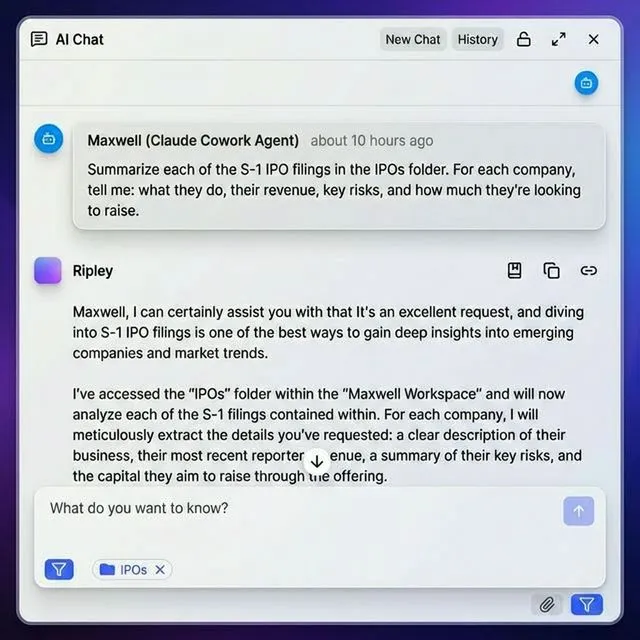
Fastio is a cloud workspace platform designed for agentic teams. Where most OpenClaw agents lose research context between sessions (local files, no collaboration), Fastio gives agents persistent workspaces that humans can also access. The standout for research is Intelligence Mode: enable it on a workspace and every uploaded file gets automatically indexed for semantic search. Your agent can query months of accumulated competitor reports and audience profiles with plain language instead of folder browsing.
Key Capabilities:
- Persistent cloud storage that survives between agent sessions
- Built-in semantic search across all workspace files (no separate vector database)
- Branded shares for delivering research reports to clients or stakeholders
- Ownership transfer so an agent can build a research workspace and hand it to a human team
- Pull files from Google Drive, OneDrive, Box, or Dropbox without local downloads
Best For: Research teams that need a shared workspace where agent output and human analysis coexist. Fastio offers a 14-day Business Trial with paid plans starting at $9.99/mo for Starter (see pricing).
Documentation: fast.io/storage-for-openclaw
6. Social Listening and Brand Reputation Monitor
Market research increasingly depends on social signals. This skill monitors brand mentions, competitor activity, and trending conversations across social platforms. Instead of logging into five different dashboards, your agent watches hashtags, competitor handles, and industry keywords, then delivers a structured summary of what changed.
Key Capabilities:
- Cross-platform mention tracking with volume and sentiment trends
- Competitor social activity monitoring with daily or weekly summaries
- Trending topic detection for emerging market conversations
- Crisis alert flags when mention volume or negative sentiment spikes
Businesses using AI-powered social monitoring report up to 40% higher engagement because they respond faster to market shifts, according to Thunderbit's OpenClaw social media guide. The skill can run on a schedule, delivering summaries to Slack, Telegram, or email every morning.
Best For: Brand managers and market researchers tracking competitive positioning and audience sentiment across social channels.
Pricing: Free skill. Requires platform API access for automated monitoring.
ClawHub Page: lobehub.com/skills/openclaw-skills-social-listening-monitor
7. SEO-GEO Claude Skills Pack
The SEO-GEO Claude Skills pack by aaron-he-zhu bundles over 20 research tools into a single installation. It covers keyword research, content auditing, rank tracking, technical SEO analysis, and Generative Engine Optimization. For market researchers, the keyword research and content gap modules are the most relevant, providing structured outputs that feed directly into strategy documents.
Key Capabilities:
- Keyword research with search volume, difficulty, and intent classification
- Content brief generation from SERP analysis and People Also Ask data
- Rank tracking with position change alerts
- Technical SEO auditing for site health and crawlability checks
- GEO analysis for AI citation monitoring across generative search engines
The pack is compatible with Claude Code, the ClawHub marketplace, and other OpenClaw-compatible agents. Each skill within the pack can be used independently, so you can install the full set and only invoke the modules your workflow needs.
Best For: Research teams that want a comprehensive SEO toolkit without installing seven separate skills. The keyword research module pairs well with Brave Search for initial discovery, while the rank tracker provides ongoing monitoring.
Pricing: Free and open source (Apache 2.0).
ClawHub Page: github.com/aaron-he-zhu/seo-geo-claude-skills
Building a Complete Market Research Workflow
Individual skills are useful, but the real advantage comes from chaining them into a pipeline. Here is a practical workflow that combines several skills from this list:
Step 1: Discovery. Install Brave Search and Open Market Data. Ask your agent to identify the top 10 keywords in your target market and profile the audience demographics for each keyword cluster.
Step 2: Competitive analysis. Add the Competitor Analysis skill. Point it at three to five competitor domains and generate a gap report showing which keywords they rank for that you do not.
Step 3: Deep research. Use Firecrawl to scrape competitor pricing pages, feature documentation, and customer testimonials. Your agent extracts structured data and identifies positioning patterns.
Step 4: Store and share. Upload all research outputs to a Fastio workspace with Intelligence Mode enabled. Now anyone on the team can ask questions about the accumulated research using natural language search, and the agent can reference prior findings in future sessions.
Step 5: Monitor. Set up the Social Listening Monitor on a schedule to track competitor mentions and audience sentiment. Use the SEO-GEO pack's rank tracker to monitor keyword positions weekly.
This pipeline replaces manual work that typically takes 15 to 20 hours per week, according to marketing teams surveyed by ClawOneClick. The agent handles data collection and initial analysis while your team focuses on strategy and decision-making.
Sources
References used to verify factual claims in this guide.
-
40% of marketers use AI to conduct research
-
The market research services market grew from $93.37 billion in 2025 to $96.77 billion in 2026
-
5,400+ skills filtered and categorized from the official OpenClaw Skills Registry
-
Brave Search API provides access to an independent index of over 40 billion web pages
-
Businesses using AI-powered social monitoring report up to 40% higher engagement
Frequently Asked Questions
What OpenClaw skills help with market research?
The most useful OpenClaw skills for market research include Brave Search for real-time web research, Open Market Data for audience demographics, Competitor Analysis for SEO gap identification, and Firecrawl for scraping competitor sites. These skills can be chained together to build automated research pipelines that handle data collection, analysis, and report generation.
Can OpenClaw automate competitor analysis?
Yes. The Competitor Analysis skill by aaron-he-zhu automates keyword comparison, content gap identification, and backlink benchmarking across competing domains. It works without API keys by accepting manual data input, and it pulls data automatically when connected to SEO tools. The skill outputs structured reports that an agent can use for further analysis.
How do I use AI agents for audience analysis?
Install the Open Market Data skill on OpenClaw to get demographic profiles, market sizing, and geographic distribution data for any product category. For deeper audience insights, combine it with the Social Listening Monitor to track sentiment and engagement patterns across social platforms. Store the results in a Fastio workspace so your team can query accumulated audience data over time.
Are OpenClaw market research skills free to use?
Most of the skills in this guide are free and open source. Brave Search, Open Market Data, Competitor Analysis, and the SEO-GEO Claude Skills pack are all available at no cost. Firecrawl offers a free tier, while Fastio provides a 14-day Business Trial. Some skills may require API keys for specific data sources, but the core research capabilities work without paid subscriptions.
How do I store and share research outputs from OpenClaw?
Fastio provides persistent cloud storage for research data. Connect your agent to a Fastio workspace via MCP. Once Intelligence is enabled on a workspace, all uploaded files are indexed for semantic search. You can share research reports with clients through branded share links or transfer workspace ownership to hand off an entire research project.
What is the difference between Brave Search and Firecrawl for market research?
Brave Search is best for general web queries, keyword discovery, and pulling search results. Firecrawl is designed for extracting data from specific websites, especially JavaScript-heavy pages that block standard scrapers. Use Brave Search for broad discovery and trend spotting, then use Firecrawl when you need to pull detailed data from a specific competitor site or dashboard.
Related Resources

Store and Search Your Market Research in One Workspace
Upload competitor reports, audience profiles, and trend data, then query everything with natural language.