Best OpenClaw Skills for AI Customer Feedback Sentiment Analysis
The sentiment analysis software market hit $2.73 billion in 2026, but nearly all of that spending goes to standalone SaaS platforms that live outside your agent workflow. OpenClaw skills bring sentiment classification, review mining, and social listening directly into an agent's toolkit, so feedback analysis runs as one step in a larger pipeline rather than a separate login.


Why Feedback Sentiment Analysis Needs an Agent Workflow
The sentiment analysis software market reached $2.73 billion in 2026, growing at a 14.1% compound annual growth rate toward a projected $8.92 billion by 2035. About 75% of retail companies already use sentiment tools to extract consumer insights from reviews, surveys, and social mentions. Yet almost every dollar flows to SaaS platforms like Brandwatch, MonkeyLearn, and Chattermill, tools that run in their own browser tabs and require manual data import.
The gap is integration. A product manager who wants to track customer sentiment across app reviews, social media, and support tickets today has to export CSV files from three platforms, merge them in a spreadsheet, and write a summary by hand. An autonomous agent can do all of that in a single session if it has the right skills installed.
OpenClaw's ClawHub registry hosts over 13,700 community-built skills, with a growing subset focused on data analysis and NLP. The five skills in this guide handle different parts of the feedback analysis lifecycle: raw text classification, thematic insight extraction, social brand monitoring, lead scoring, and automated review responses. Each one works as a standalone tool, but the real value comes from chaining them together inside a single agent session where context and data persist across steps.
Related guides
- How to Use Claude Code Skills in ClineAccording to GitHub's Octoverse 2024 report, the number of developers building with generative AI on the platform...
- How to Install and Manage Cline Agent SkillsAI coding agents boost code volume by 180%, but shipped code rises by only 30%, showing a critical gap in development...
- Best OpenClaw Skills for Web ResearchWeb research skills let OpenClaw agents find and read information on the live web. Without them, your AI is stuck with...
- Top OpenClaw Skills for Real Estate AgentsOpenClaw skills help real estate agents automate routine tasks and focus on closing deals. From instant lead...
- Best OpenClaw Skills for AI Presentation CreationOpenClaw presentation skills let you generate, edit, and export slide decks through natural language commands in any...
- 7 Best OpenClaw Skills for AI Bookkeeping and Receipt ProcessingManual invoice processing still costs $15 to $16 per document for businesses running paper-based workflows, according...
More on this subject: OpenClaw Skills (109 guides)
How We Evaluated These Skills
We tested each skill against five criteria specific to customer feedback workflows:
- Classification accuracy. Does the skill use a purpose-built NLP model, or does it rely on a general-purpose LLM for sentiment scoring?
- Input flexibility. Can it process CSV exports, JSON files, raw text, and live URLs without manual reformatting?
- Output structure. Does it produce machine-readable results (JSON, scored datasets) that downstream skills or dashboards can consume?
- Batch capability. Can it process thousands of reviews in a single run, or does it handle one text at a time?
- Pipeline fit. Does it integrate cleanly with other OpenClaw skills, or does it operate as a standalone dead end?
We also checked ClawHub update frequency, publisher documentation, and whether each skill handles PII responsibly. Skills that stopped receiving updates before 2026 or lacked clear data handling documentation were excluded.
Quick comparison:
- hf-sentiment: Best for raw text classification at scale. Uses a dedicated Hugging Face sentiment classifier. Binary positive/negative with confidence scores.
- review-to-marketing-insight-extractor: Best for turning reviews into marketing copy angles. Produces structured reports with evidence grounding and automatic PII redaction.
- social-sentiment: Best for brand monitoring across Twitter, Reddit, Instagram, and TikTok. Engagement-weighted scoring that prioritizes high-visibility posts.
- sentiment-priority-scorer: Best for sales teams scoring leads by sentiment and urgency signals alongside intent and recency factors.
- review-reply: Best for automated App Store review responses targeting low-star feedback with on-brand messaging.
1. hf-sentiment and 2. review-to-marketing-insight-extractor
1. hf-sentiment: Dedicated NLP Classification
The hf-sentiment skill routes text through a dedicated Hugging Face sentiment model rather than relying on a general-purpose LLM to estimate polarity. The distinction matters for feedback pipelines: a purpose-built classifier returns consistent scores across runs, so you can compare sentiment trends over time without worrying about prompt drift or model updates changing your baseline.
Key strengths:
- Uses a dedicated sentiment classifier instead of prompting a general-purpose LLM, which keeps scoring consistent and reproducible across runs
- Handles both single texts and batch files, so it fits into automated pipelines that process review exports at scale
- Outputs structured results that downstream skills or dashboards can consume without reformatting
- Runs via the Hugging Face Inference API, so there is no local GPU requirement
Best for: Developers building data pipelines or monitoring systems that need reproducible sentiment scoring they can trend over time.
Limitations: The classifier produces binary positive/negative labels without a neutral category. Feedback datasets with a high proportion of mixed or ambivalent reviews will need a secondary filtering step. The skill scores polarity only, so it does not extract the themes or reasons behind the sentiment.
2. review-to-marketing-insight-extractor: From Reviews to Copy Angles
Where hf-sentiment scores how customers feel, review-to-marketing-insight-extractor identifies why and surfaces what to do about it. The skill ingests raw customer reviews, deduplicates them, strips personally identifiable information, and runs thematic analysis. It produces both a structured report for programmatic consumption and a formatted summary for stakeholder review.
Key strengths:
- Accepts multiple input formats including CSV, JSON, and live product page URLs with structured review markup
- Strips personally identifiable information before analysis, making output safe to share with stakeholders
- Grounds every recommendation in actual customer snippets rather than generating generic summaries
- Produces dual outputs: structured data for downstream automation and a human-readable report
Best for: Marketing teams that want to extract messaging patterns, hidden objections, and conversion-driving language from customer feedback without reading every review manually.
Limitations: The skill focuses on marketing angles rather than operational insights. If you need to route feedback to engineering or support teams by issue type, you will need a separate classification layer. URL-based review scraping works on standard structured markup but may miss reviews rendered entirely by JavaScript frameworks.
3. social-sentiment and 4. sentiment-priority-scorer
3. social-sentiment: Brand Monitoring Across Social Platforms
The social-sentiment skill aggregates brand perception data across major social platforms including Twitter, Reddit, Instagram, and TikTok. Rather than classifying one review at a time, it pulls large volumes of public posts and returns an engagement-weighted composite sentiment score, giving more weight to posts that attract likes, shares, and replies.
Key strengths:
- Covers multiple social platforms in a single analysis run
- Weights sentiment by engagement rather than raw post count, so high-visibility complaints surface first
- Supports competitor benchmarking through parallel keyword searches
- Flags viral complaints and trending positive mentions by urgency
Best for: Brand managers and marketing teams tracking public perception shifts, catching PR problems early, and benchmarking against competitors.
Limitations: The skill depends on an external API for social data access, so you will need an account with the data provider. Analysis quality scales with the volume of public posts mentioning your brand. Smaller brands with limited social mentions will get thinner datasets and less reliable composite scores.
4. sentiment-priority-scorer: Lead Scoring with Sentiment Signals
The sentiment-priority-scorer skill takes a different approach to sentiment data. Rather than analyzing feedback for insights, it uses sentiment as one input in a multi-factor lead scoring model. The skill evaluates normalized leads across sentiment, urgency, intent, recency, and record type to produce a prioritized queue.
Key strengths:
- Combines sentiment with four other scoring dimensions for a more complete lead picture
- Produces a single priority score that sales teams can sort and act on immediately
- Works on structured lead data from CRMs and feedback forms
Best for: Sales teams in industries where inbound leads carry emotional signals (frustration with current tools, urgency language, competitive comparisons) that indicate deal readiness.
Limitations: The skill is designed for lead prioritization, not general-purpose feedback analysis. It works best when sentiment is one factor among many rather than the sole analysis dimension. You will need to feed it structured lead records rather than raw review text.


Turn customer feedback into a searchable knowledge base
Fastio gives your OpenClaw agent persistent storage with semantic search across your feedback archive. Query reviews by meaning, not filename.
5. review-reply and Building a Feedback Analysis Pipeline
5. review-reply: Closing the Loop on Negative Reviews
The review-reply skill by nicholasrae closes the feedback loop by monitoring App Store reviews and drafting on-brand responses for one to three star reviews. While the previous skills analyze and extract insights from feedback, this one acts on it directly.
Key strengths:
- Monitors App Store reviews automatically and flags low-star entries
- Drafts warm, brand-consistent replies that acknowledge the specific issue raised
- Focuses on the most impactful reviews (1-3 stars) rather than wasting effort on positive ones
Best for: App developers and product teams that want to respond to negative reviews quickly without assigning someone to monitor the App Store manually.
Limitations: Currently focused on the Apple App Store. Google Play Store reviews require a different integration. The skill drafts replies but does not submit them automatically, giving you a review step before publishing.
Chaining Skills into a Complete Pipeline
Individual skills handle individual steps. The real workflow value comes from running them in sequence inside a single agent session:
Step 1: Collect. Use review-to-marketing-insight-extractor to scrape reviews from product pages via schema.org JSON-LD, or export review data from your app store dashboard as CSV.
Step 2: Classify. Run hf-sentiment on the collected reviews for binary sentiment scoring. Filter by confidence threshold to separate clear positive/negative signals from ambiguous feedback.
Step 3: Extract insights. Feed the classified reviews back into review-to-marketing-insight-extractor for thematic analysis. The dual JSON/Markdown output gives your marketing team copy angles grounded in real customer language.
Step 4: Monitor social. Run social-sentiment in parallel to track brand perception across social platforms. Compare social sentiment trends with app review sentiment to spot emerging issues before they hit your support queue.
Step 5: Respond. Use review-reply to draft responses to negative reviews while the analysis is still fresh.
Storing Feedback Data Between Sessions
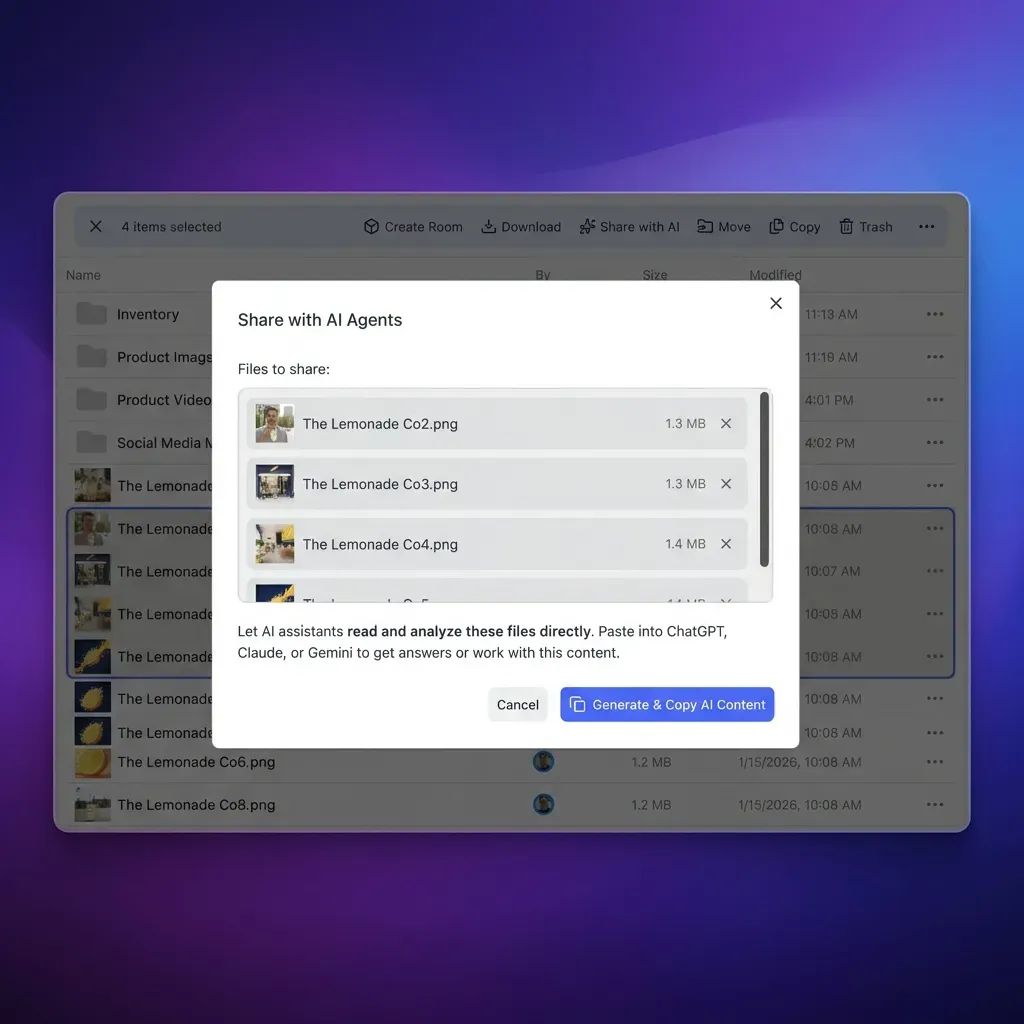
Sentiment pipelines generate artifacts that need to persist: raw review datasets, classification results, insight reports, and response drafts. Fastio provides persistent workspaces where your OpenClaw agent can store and retrieve these files through the MCP server. Upload your review exports and classification results to a workspace, and your agent can pull them into any skill across sessions.
Fastio's Intelligence Mode auto-indexes uploaded files for semantic search, so your agent can query "find all negative reviews mentioning onboarding from Q1" and get cited results from your feedback archive. Fastio offers a 14-day Business Trial, card required; see /pricing/. Set up your workspace at fast.io/storage-for-openclaw.
For teams that want alternatives, local file storage works for single-session analysis, and S3 or Google Drive handles persistence if you prefer to manage your own infrastructure. Fastio's advantage is that Intelligence Mode turns your stored feedback into a searchable knowledge base that your agent can query by meaning rather than filename.
Which Skill Should You Start With?
Your starting point depends on what you are trying to learn from customer feedback.
If you need raw sentiment scores for a data pipeline, start with hf-sentiment. It runs a purpose-built transformer model that returns consistent, reproducible classifications with confidence scores. Layer it into an existing data workflow as the classification step.
If you want to extract marketing copy from reviews, start with review-to-marketing-insight-extractor. It goes beyond polarity classification to find the specific language, objections, and conversion angles hidden in customer feedback. The PII redaction and evidence grounding make its output safe to share directly with stakeholders.
If you need to track brand perception across social media, social-sentiment is the right first install. Its engagement-weighted scoring catches the posts that actually shape public opinion rather than treating every mention equally.
If you are a sales team scoring inbound leads, sentiment-priority-scorer combines sentiment with urgency and intent signals to prioritize your queue by deal readiness.
If you ship a mobile app, review-reply handles the response side of feedback management so negative reviews do not sit unanswered while your team works through a backlog.
Most teams will eventually install two or three of these skills and chain them together. Start with the one that addresses your most immediate feedback blind spot, then expand the pipeline as your agent workflow matures.
Sources
References used to verify factual claims in this guide.
-
Sentiment analysis software market reached $2.73 billion in 2026, growing at 14.1% CAGR to $8.92 billion by 2035 75% of retail companies actively leverage sentiment analysis tools for consumer insights
-
ClawHub hosts over 13,700 community-built skills as of 2026
-
hf-sentiment skill uses a dedicated Hugging Face sentiment classifier for binary text classification
-
social-sentiment skill aggregates brand perception across social platforms with engagement-weighted scoring
-
review-to-marketing-insight-extractor produces dual outputs with automatic PII redaction
Frequently Asked Questions
Can OpenClaw analyze customer sentiment?
Yes. OpenClaw skills like hf-sentiment use dedicated sentiment classifiers via the Hugging Face Inference API to score text as positive or negative with confidence values. The social-sentiment skill extends this to brand monitoring across Twitter, Reddit, Instagram, and TikTok with engagement-weighted composite scoring that prioritizes high-visibility posts.
What OpenClaw skills detect customer feedback trends?
The review-to-marketing-insight-extractor skill runs thematic analysis on customer reviews to surface recurring language patterns, hidden objections, and emerging trends. It produces structured JSON and Markdown reports grounded in actual customer snippets. For social trend detection, the social-sentiment skill tracks sentiment shifts over time and flags viral complaints across four major platforms.
How do you automate review analysis with OpenClaw?
Install review-to-marketing-insight-extractor and point it at your review data (CSV, JSON, or live product page URLs with schema.org markup). The skill validates, deduplicates, redacts PII, and runs thematic analysis automatically. For binary sentiment classification, add hf-sentiment to score each review before analysis. Store results in a persistent workspace like Fastio so your agent can access historical data across sessions.
What NLP models do OpenClaw sentiment skills use?
The hf-sentiment skill routes text through a dedicated Hugging Face sentiment classifier optimized for binary positive/negative scoring. It runs via the Hugging Face Inference API, so you do not need local GPU resources. The social-sentiment skill uses engagement-weighted aggregation across social platforms, applying sentiment classification to large volumes of public posts.
How many sentiment analysis skills are on ClawHub?
ClawHub hosts over 13,700 skills total. The Data and Analytics category in the curated awesome-openclaw-skills repository lists 22 skills, with dedicated sentiment tools including hf-sentiment and social-sentiment. Additional review analysis skills appear in the Marketing and Sales category, including review-to-marketing-insight-extractor and sentiment-priority-scorer.
Do OpenClaw sentiment skills handle PII in customer reviews?
The review-to-marketing-insight-extractor skill includes automatic PII redaction as part of its processing pipeline. It strips personally identifiable information before running thematic analysis, making its output safe for team sharing and stakeholder presentations. Other skills like hf-sentiment process text as-is, so you should pre-filter sensitive data before batch classification if your review dataset contains customer names, emails, or account numbers.
Related Resources

Turn customer feedback into a searchable knowledge base
Fastio gives your OpenClaw agent persistent storage with semantic search across your feedback archive. Query reviews by meaning, not filename.