Best OpenClaw Skills for AI Presentation Creation
OpenClaw presentation skills let you generate, edit, and export slide decks through natural language commands in any chat app. This guide ranks seven skills by output quality, export format support, and workflow integration, with honest limitations and a decision framework for picking the right tool for your team.


How We Evaluated These OpenClaw Presentation Skills
OpenClaw's skill registry lists dozens of presentation tools, and the parent keyword "ai presentation maker" pulls 12,100 monthly searches. That demand creates noise. Not every skill that claims to make slides actually produces something you can present.
We tested each skill against five criteria:
Output Quality Does the generated deck contain real content, or just placeholder bullets? We looked for skills that produce usable decks after light editing, not decks that need a full rewrite.
Export Format Support PPTX is the baseline. Skills that also export to PDF or Google Slides scored higher because they fit into more team workflows without manual conversion steps.
Template and Branding Enterprise teams need decks that match corporate guidelines. Skills with template upload or brand color persistence save hours of reformatting that would otherwise eat into the time you saved by automating in the first place.
Agent Integration How well does the skill work inside an automated OpenClaw workflow? We prioritized skills that handle async generation, support messaging app triggers through WhatsApp, Telegram, or Slack, and chain cleanly with other skills.
Ease of Install A one-step registry install beats a multi-step setup with API keys and manual configuration. Install friction matters when you are evaluating several options.
Here is how the top skills compare at a glance:
Related guides
- How to Use Claude Code Skills in ClineAccording to GitHub's Octoverse 2024 report, the number of developers building with generative AI on the platform...
- How to Create Custom Skills for Hermes AgentHermes Agent skills are reusable procedural knowledge documents that follow the agentskills.io open standard. This...
- Best OpenClaw Skills for Web ResearchWeb research skills let OpenClaw agents find and read information on the live web. Without them, your AI is stuck with...
- Top OpenClaw Skills for Real Estate AgentsOpenClaw skills help real estate agents automate routine tasks and focus on closing deals. From instant lead...
- 7 Best OpenClaw Skills for AI Bookkeeping and Receipt ProcessingManual invoice processing still costs $15 to $16 per document for businesses running paper-based workflows, according...
- Best OpenClaw Skills for AI Business Plan and Pitch Deck GenerationMost OpenClaw presentation skills produce generic slides that need heavy editing before they are investor-ready. This...
More on this subject: OpenClaw Skills (109 guides)
1. Felo Slides
Felo Slides scored highest in Felo's independent ranking of OpenClaw presentation skills, earning 56 out of 60 points. The differentiator is a built-in research engine. When you give it a topic, it runs a live web search, pulls relevant data points, and structures them into a narrative before generating slides. That means your deck contains current information, not recycled training data.
Setup requires a Felo API key. Once configured through the ClawHub skill registry, it handles pitch decks, board updates, client presentations, and research reports. You give it a one-line prompt, and it returns an editable .pptx file, usually in under three minutes. Every element in the output is fully unlocked, so you can adjust layouts, swap images, or rewrite individual bullet points without fighting locked objects.
Where Felo Slides stands apart is in agent workflow chaining. It processes generation asynchronously, so your terminal is not blocked while the deck builds. You can pipe data from a Firecrawl scrape into Felo Slides, then store the result in a Fastio workspace for distribution. The skill supports over 50 languages and lets you upload brand templates for consistent styling across generated decks.
Messaging app integration is another strong point. Because OpenClaw routes through WhatsApp, Telegram, Slack, and other apps, you can request a deck from your phone and receive the finished .pptx without opening a laptop.
Key Strengths:
- Live web research grounds slide content in current data
- Async processing keeps your terminal free during generation
- Brand template upload for consistent styling across decks
Limitations:
- Requires a Felo API key (free tier available)
- Export limited to PPTX only, no PDF or Google Slides output
Best For: Teams that need decks backed by current research without a separate data-gathering step.
2. SlideSpeak
SlideSpeak focuses on document-to-slides conversion and enterprise template compliance. According to SlideSpeak's official OpenClaw guide, you can feed it a PDF, Word document, Excel file, or URL, and it generates a structured deck from the content. This is useful when you need to turn a quarterly report or a technical specification into a presentation without starting from scratch.
The skill supports three export formats: PPTX, PDF, and Google Slides. That flexibility is its main edge over Felo Slides, which only exports to PPTX. If your team works across Google Workspace and Microsoft 365, SlideSpeak removes the conversion step.
Installation involves adding the SlideSpeak skill from its GitHub repository and configuring API credentials during the initial setup prompt. The process takes a few more steps than a single registry install, but the flexibility is worth it for teams that need fine-grained control over their presentation pipeline.
Template persistence is a strong point. You can tell SlideSpeak to remember your preferences ("always use 16:9, minimal text per slide, professional dark theme"), and it applies those settings to every future generation. Enterprise teams with strict brand guidelines save real time here because each new deck starts with the right fonts, colors, and layout ratios.
SlideSpeak also supports scheduled generation. You can set up recurring decks that pull from external sources on a cadence. A weekly team update that generates every Monday morning from your project management tool is one example. The skill handles the trigger, generation, and export automatically.
Key Strengths:
- Converts PDFs, Word docs, spreadsheets, and URLs directly to slides
- Three export formats: PPTX, PDF, Google Slides
- Template persistence remembers brand preferences across sessions
Limitations:
- Multi-step installation compared to single-command registry skills
- Content generation is less sophisticated than Felo's research-backed approach
Best For: Enterprise teams that convert existing documents into brand-compliant decks on a regular basis.


Store and share your generated slide decks
Fastio gives your OpenClaw agents persistent workspace storage with auto-indexing, branded sharing links, and remote MCP access. Learn more at fast.io/pricing.
What Other OpenClaw Skills Cover Specific Needs?
Beyond the top two, several other skills fill specific gaps in presentation workflows. Each one trades breadth for a particular strength.
The practical question is whether you need full AI generation or just format conversion. A team that already writes detailed project updates in Markdown, for example, does not need a research-backed generator. A lightweight converter gets them from doc to deck in seconds. On the other end, a finance team that needs decks triggered by quarterly close events needs event-driven automation, not a chat prompt.
The skills below each solve one part of the presentation pipeline well. Test the one that matches your tightest bottleneck before committing to a workflow around it.
3. AiPPT
AiPPT takes a different approach from prompt-based generators. Instead of responding to one-off commands, it monitors data sources and triggers presentation generation based on business events. When a KPI milestone hits or an audit completes, AiPPT pulls the relevant metrics, structures a narrative, and renders a polished deck automatically.
The skill exports to PPTX and Google Slides, and applies designer-level layouts from a template library spanning business, medical, education, marketing, and sales categories. It also works alongside NanoBanana for custom AI-generated images within slides, which is useful for data visualizations that need to look polished without a designer.
Best For: Automated recurring reports triggered by business data events.
Pricing: Free tier with limited credits. Paid plans unlock unlimited exports and premium templates.
4. Tosea.ai Slides
Tosea.ai scored 46 out of 60 in Felo's ranking, landing third overall. Its focus is data accuracy. When you give it a research-heavy topic, it verifies claims and includes source citations in the slide notes. The tradeoff is design quality: slides look functional rather than polished, so expect to spend time on visual cleanup after generation.
This skill works well for internal presentations where the audience cares more about the numbers than the layout. Analyst briefings, research summaries, and technical reviews are its sweet spot.
Best For: Researchers and analysts who prioritize factual accuracy over visual design.
5. Skywork PPT
Skywork PPT (listed as skywork-ppt on ClawHub) is the fast option in this list. Most decks generate in under two minutes. The catch is content depth: output tends toward generic bullet points that need manual editing. Think of Skywork as a formatting tool. Bring your own content outline, and it handles the slide structure and layout.
The skill also supports PowerPoint editing and imitation of existing slide styles, which is useful if you want new decks to match an existing deck's visual language.
Best For: Quick structural drafts when you already have the content and need slides formatted fast.
6. Markdown-to-Slides
Markdown-to-Slides is the most lightweight option on this list. If your team already writes documentation in Markdown, this skill converts .md files directly to PPTX. There is minimal AI involvement because it is essentially a format conversion tool. That simplicity is also its advantage: no API keys, no research overhead, and predictable output every time.
The skill handles async generation smoothly and produces clean slide layouts. The visual style looks dated compared to Felo or AiPPT output, but for internal team meetings or documentation walkthroughs, it gets the job done with zero configuration.
Best For: Teams that maintain Markdown documentation and want quick conversion to presentation format.
How to Store and Share Generated Decks
Generating a deck is half the problem. The other half is storing it where your team can find it and sharing it with people outside your organization. Local filesystems work for personal use, but they break down when you need to version presentations, search across dozens of generated decks, or send branded links to clients.
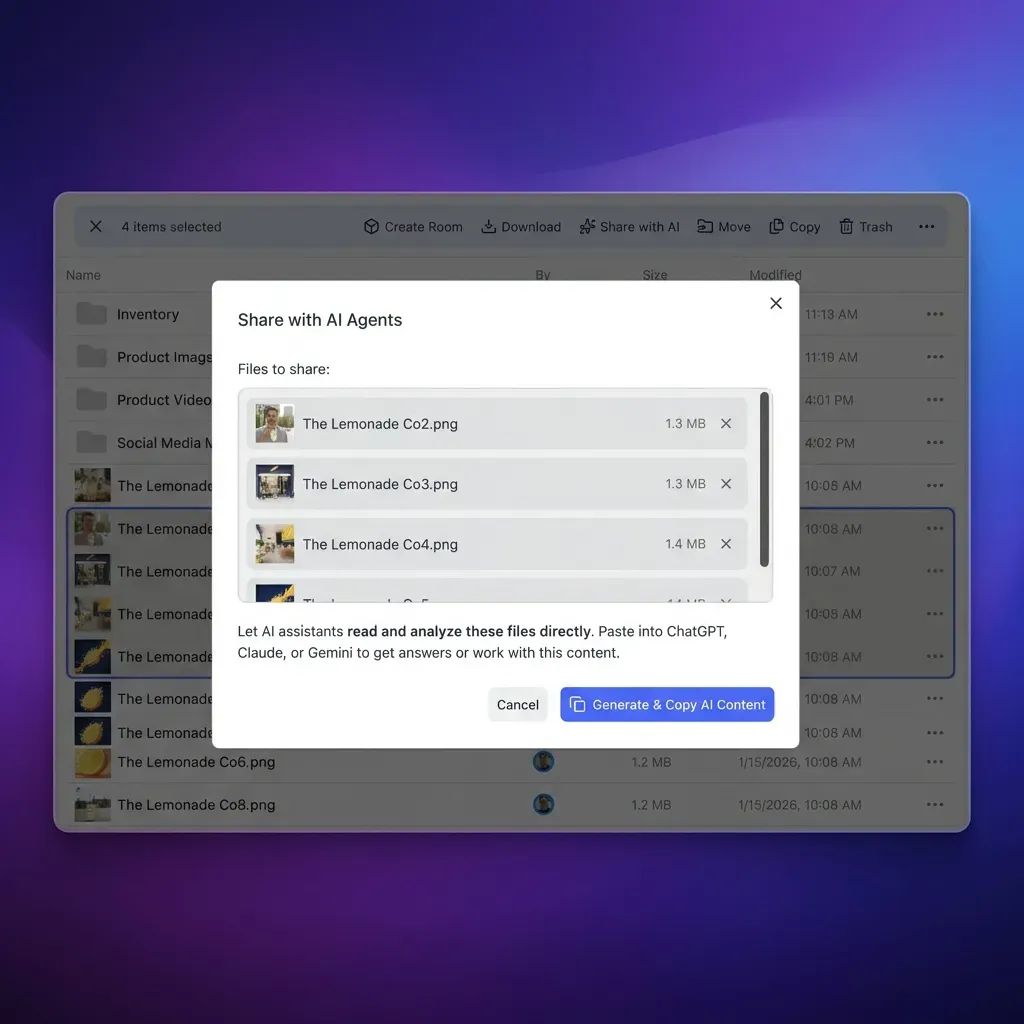
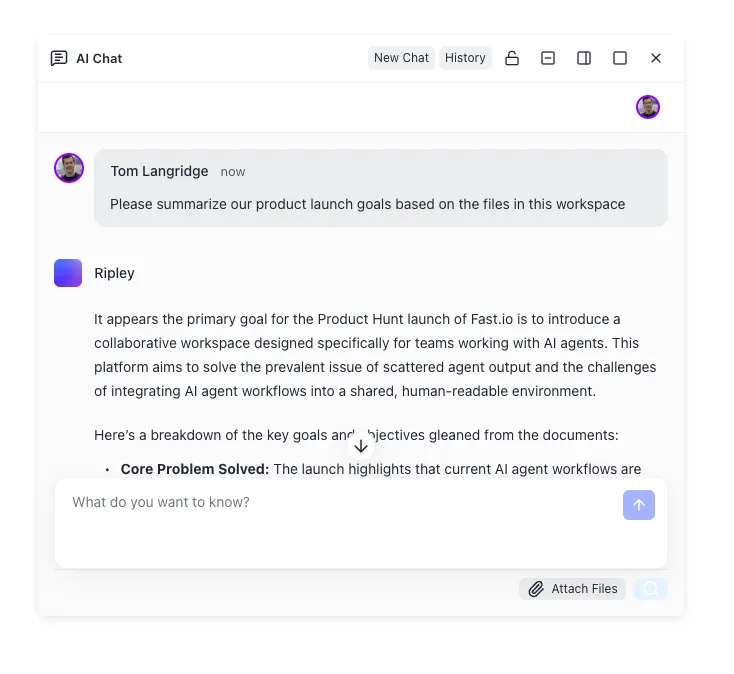
Fastio works as a persistent storage layer for OpenClaw presentation workflows. When your agent uploads a generated PPTX to a Fastio workspace, the file is automatically indexed once Intelligence is enabled. That means you can search across all your decks by content ("find the Q1 revenue slide") rather than guessing at filenames.
Connecting your OpenClaw agent to the remote MCP server at https://mcp.fast.io/mcp/tools connects your agent to the workspace API. The practical workflow chains tools together: Felo Slides or SlideSpeak generates the deck, your agent uploads it to a Fastio workspace through the MCP server, and you distribute it via a branded share link. Share links include access controls like password protection, expiration dates, and download permissions, so you do not need to email attachments or worry about outdated versions circulating.
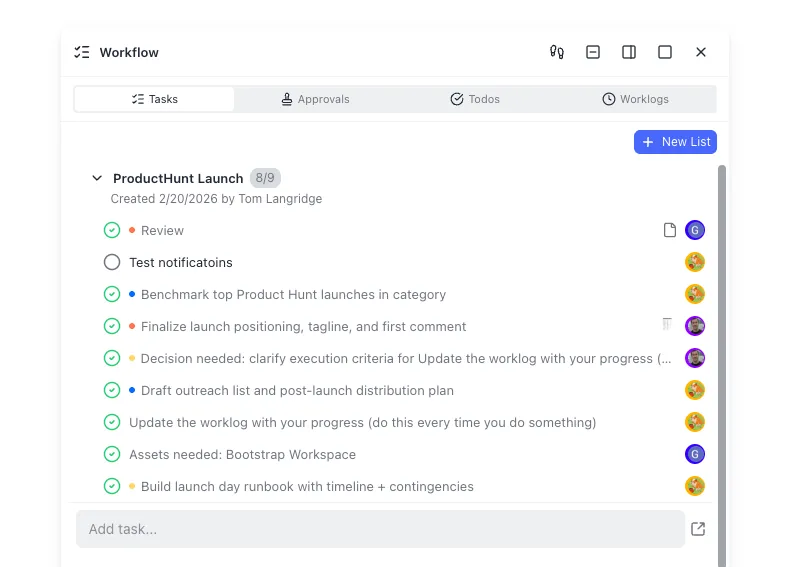
For teams that generate presentations on a schedule, this pattern scales without extra effort. Each deck lives in a versioned workspace. Team members and agents access the same files. Audit trails track who created, viewed, or downloaded each presentation. Fastio offers a 14-day Business Trial (card required; see pricing) with paid plans starting at $9.99/month.
Key Strengths:
- Auto-indexing lets you search presentation content across your entire library
- Branded shares replace email attachments with controlled access links
- Ownership transfer lets an agent build the workspace and hand it off to a human
Limitations:
- Storage and distribution layer only, not a presentation generator
- Intelligence Mode consumes credits for document ingestion
Best For: Teams that distribute generated decks to clients or across departments.

How to Match a Skill to Your Use Case
The right skill depends on what you are automating and how polished the output needs to be.
If you need decks grounded in current data and research, start with Felo Slides. Its built-in search engine handles the work that would otherwise require a separate scraping or research step. The output is presentation-ready for most use cases after light editing.
If you are converting existing documents into slides, SlideSpeak is the stronger choice. Its multi-format export (PPTX, PDF, Google Slides) and persistent template settings make it the best option for enterprise teams with brand requirements. The scheduled generation feature also makes it useful for recurring reports.
If your presentations should trigger automatically from data events rather than manual prompts, AiPPT handles that workflow natively. It is the only skill in this list designed for fully autonomous report generation.
For speed over polish, Skywork PPT gets structural drafts into your hands in under two minutes. Manual editing is still faster than building slides from scratch in PowerPoint.
For the output and distribution side, pair any generation skill with Fastio. Store finished decks in a shared workspace, search them by content later, and send branded links instead of email attachments. You can set this up as a scheduled pipeline: your OpenClaw agent generates a weekly report, uploads it to a Fastio workspace, and the share link updates automatically.
A good starting combination for most teams is Felo Slides for generation plus Fastio for storage. That covers research, creation, and distribution in two skills with minimal configuration.
Sources
References used to verify factual claims in this guide.
-
Felo Slides scored 56 out of 60 points in independent ranking of OpenClaw presentation skills Parent keyword 'ai presentation maker' has 12,100 monthly searches Tosea.ai scored 46 out of 60 in Felo's ranking of OpenClaw presentation skills Skywork PPT generates most decks in under two minutes
-
SlideSpeak supports PPTX, PDF, and Google Slides export with document-to-slides conversion and scheduled generation
Frequently Asked Questions
Can OpenClaw make PowerPoint presentations?
Yes, but OpenClaw itself is the orchestration layer, not the generator. You install a presentation skill like Felo Slides or SlideSpeak that handles the actual slide creation. OpenClaw routes your natural language prompt to the skill, which returns an editable .pptx file. You can trigger this from any chat app that OpenClaw connects to, including WhatsApp, Telegram, and Slack.
Which OpenClaw skill creates the best AI slides?
Felo Slides scored highest in independent testing (56/60) thanks to its built-in research engine that grounds slide content in live web data. SlideSpeak is the better choice if you need multi-format export (PPTX, PDF, Google Slides) or strict brand template compliance. The best pick depends on whether you prioritize content quality or format flexibility.
How do I convert a PDF to slides with OpenClaw?
Install the SlideSpeak skill, which supports document-to-slides conversion from PDFs, Word docs, Excel files, and URLs. After setup, send your OpenClaw agent a message like "create a presentation from this PDF" along with the file, and SlideSpeak generates a structured deck based on the document content. Output can be exported as PPTX, PDF, or Google Slides.
Can I schedule recurring presentations with OpenClaw?
Both SlideSpeak and AiPPT support scheduled generation. SlideSpeak lets you configure recurring triggers, like generating a weekly update deck every Monday morning from an external data source. AiPPT goes further by monitoring business metrics and auto-triggering presentations when specific events occur, such as a KPI milestone or an audit completion.
Where should I store presentations my OpenClaw agent generates?
For personal use, your local filesystem works fine. For team distribution, a persistent storage layer like Fastio gives you auto-indexing once Intelligence is enabled (search decks by content), versioning, and branded share links with access controls. Fastio offers a 14-day Business Trial (card required; see [pricing](/pricing/)).
Related Resources

Store and share your generated slide decks
Fastio gives your OpenClaw agents persistent workspace storage with auto-indexing, branded sharing links, and remote MCP access. Learn more at fast.io/pricing.