Best MCP Servers for Cloud Infrastructure in 2026
MCP servers for cloud infrastructure let AI agents provision resources, query services, and manage deployments across AWS, GCP, and Azure without switching between consoles. This guide compares the most capable options available today, covering IaC tools like Terraform and Pulumi alongside provider-native servers and Kubernetes management.

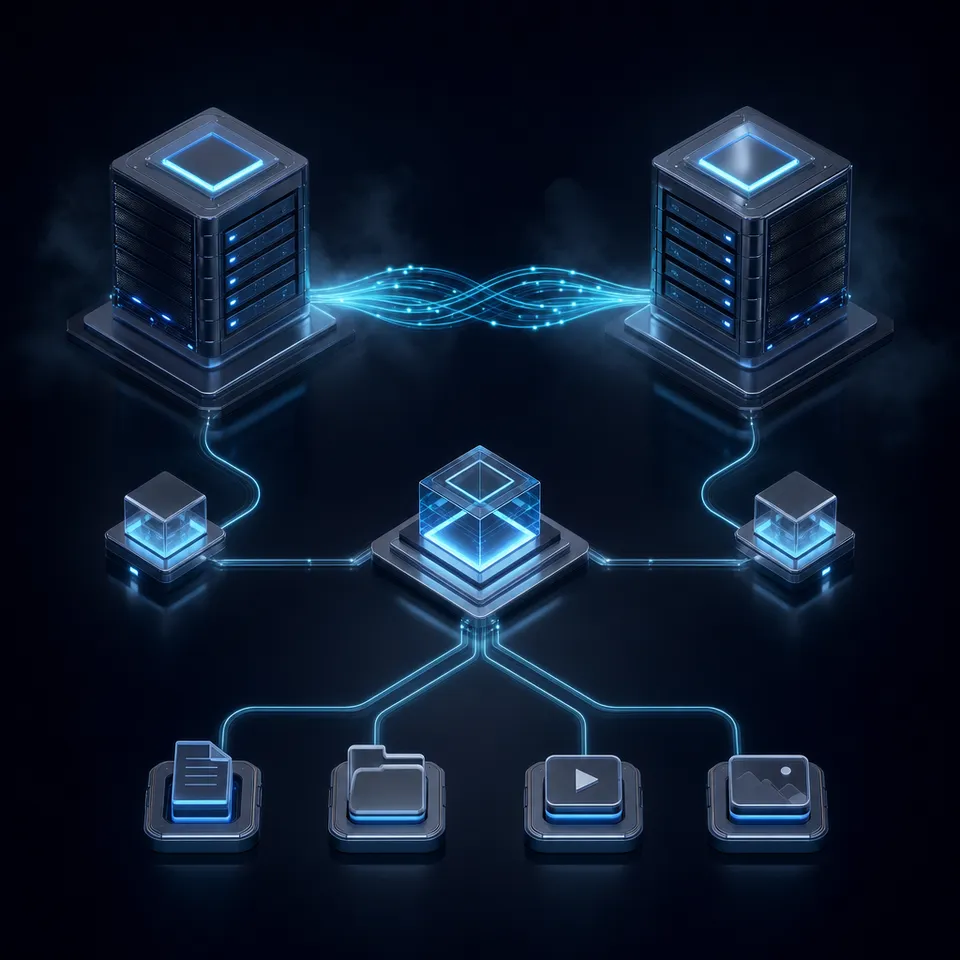
What MCP Servers for Cloud Infrastructure Actually Do
An MCP server for cloud infrastructure connects AI agents to cloud provider APIs, enabling autonomous provisioning, monitoring, and management of cloud resources. Instead of copying CLI commands from documentation or navigating web consoles, your AI assistant calls the MCP server directly to create instances, query logs, deploy functions, or inspect configurations.
The protocol standardizes how agents talk to external services. Each cloud MCP server exposes a set of tools (think: typed function signatures) that an AI client can discover and invoke. The agent sends structured requests, the MCP server translates them into provider-specific API calls, and results come back in a format the model can reason about.
The practical impact: you describe what you want in natural language, and the agent handles the API choreography. Need to check which EC2 instances are running in us-east-1 with costs above a threshold? The agent queries the AWS MCP server, filters the response, and reports back. No tab switching, no remembering flag syntax.
We evaluated servers based on four criteria: provider coverage (which services are exposed), maturity (GA vs. preview, version history), security model (auth, RBAC, scoping), and integration breadth (which AI clients work out of the box).
Related guides
- Hosted MCP Services: Cloud Infrastructure for AgentsHosted MCP services keep AI agents running 24/7 without tying them to your laptop. Cloud-hosted Model Context Protocol...
- How to Scale MCP Servers for Production WorkloadsMoving an MCP server from a laptop to production requires more than just a public URL. You have to handle many agents...
- How to Load Balance MCP Servers for Production ScaleScaling Model Context Protocol (MCP) servers isn't as simple as adding more instances. When you move from a few users...
- How to Deploy and Host an MCP ServerMoving an MCP server from localhost to a production environment gives remote access to AI agents across your...
- How to Set Up the GitLab MCP Server for AI Devops AgentsSetting up a GitLab MCP server connects your AI coding assistants directly to your repositories, issues, and pipelines....
- How to Deploy an MCP Server to ProductionDeploying an MCP server to production means running the Model Context Protocol in a reliable place where AI clients can...
More on this subject: MCP and Model Context Protocol (238 guides)
Comparison Table
Provider-Native MCP Servers
1. AWS Labs MCP Servers
The official AWS MCP repository at github.com/awslabs/mcp contains a suite of specialized servers rather than a single monolith. Each targets a different workflow:
- AWS API MCP Server handles programmatic access to core AWS services through CLI commands. Agents can manage EC2 instances, S3 buckets, Lambda functions, and IAM policies with proper credential scoping.
- AWS IaC MCP Server focuses on CloudFormation template validation, CDK documentation search, compliance checking, and deployment troubleshooting. It pulls from official CDK knowledge bases and best-practice libraries.
- AWS Documentation MCP Server provides search over AWS docs using the official search API, useful for letting agents self-research before taking action.
The suite uses stdio transport and authenticates through standard AWS credential chains (environment variables, profiles, or instance roles). It's fully open source under the Apache 2.0 license.
Best for: Teams already on AWS who want deep, service-specific tooling rather than a generic "call any API" interface.
2. Google Cloud MCP Servers
Google announced managed MCP servers at Cloud Next '26 with 50+ servers spanning Compute Engine, Cloud Storage, BigQuery, Cloud Run, Cloud Functions, and more. The standout feature: these are remote, Google-managed endpoints. You enable a product in your project, and the MCP endpoint is available by default (no local server to run).
Since March 2026, MCP endpoints activate automatically when you enable a supported product. Authentication flows through Google Cloud IAM, so agents inherit the same RBAC your team already configured.
Best for: GCP-native teams who want zero infrastructure overhead for their MCP layer. The managed hosting means no containers to maintain or scale.
3. Azure MCP Server
Microsoft's Azure MCP Server (version 2.0, stable since early 2026) is open source and designed for both local and remote hosting. It integrates with the Azure CLI, Azure Developer CLI (azd), and 19+ packaged "Azure Skills" covering prepare, validate, deploy, diagnostics, and cost analysis.
Authentication uses Entra ID through the Azure Identity library, and it works natively with GitHub Copilot agent mode, the OpenAI Agents SDK, and Semantic Kernel. Visual Studio 2026 ships with the Azure MCP Server built in, so .NET developers get infrastructure interactions without leaving the IDE.
Best for: Microsoft-stack teams, especially those using Visual Studio 2026 or GitHub Copilot for infrastructure workflows.

Infrastructure-as-Code MCP Servers
4. Terraform MCP Server (HashiCorp)
The official HashiCorp Terraform MCP Server gives agents structured access to the Terraform ecosystem: browsing the public registry, discovering modules and providers, validating configurations, and managing HCP Terraform workspaces. It earned over 1,280 GitHub stars in its first months.
Key capabilities:
- Browse provider documentation and resource schemas from the Terraform Registry
- Search and evaluate modules with version info and usage examples
- Validate configurations against best practices and policy libraries
- Manage workspaces in HCP Terraform or Terraform Enterprise (plan, apply, state inspection)
The server supports dual transports: stdio for local IDE integrations and StreamableHTTP for networked deployments. Production security includes CORS, TLS, rate limiting, and allowed-origins configuration. Authenticate with a TFE_TOKEN for workspace operations.
Best for: Any team using Terraform (regardless of cloud provider) who wants agents to generate, validate, and deploy IaC from natural language prompts.
5. Pulumi MCP Server
Pulumi's MCP server connects agents to Pulumi Cloud, exposing 25+ tools spanning the full infrastructure lifecycle. The distinguishing feature is Pulumi Neo delegation: for complex multi-step tasks (code generation, testing, PR creation), your AI assistant can hand off to Pulumi's autonomous infrastructure agent.
Core tools include stack listing, resource search across all stacks using Lucene queries, registry documentation lookup, and policy violation reports. The remote hosted mode at mcp.ai.pulumi.com/mcp means no local server setup.
Best for: Teams using Pulumi who want the deepest possible integration. The Neo delegation is unique in the IaC space for handling multi-step infrastructure changes autonomously.


Store your infrastructure artifacts where agents and humans can find them
Persistent workspaces with Intelligence Mode for semantic search over Terraform plans, deployment logs, and architecture docs. MCP-ready at /mcp.
Kubernetes and Edge MCP Servers
6. kubectl-mcp-server
Published in the CNCF Landscape alongside Terraform, kubectl-mcp-server lets AI assistants manage Kubernetes clusters through natural language. Unlike thin wrappers around kubectl, this is a native Go implementation that talks directly to the Kubernetes API server.
Capabilities span the full cluster lifecycle:
- Pod management (list, logs, health, crash diagnosis)
- Resource creation and deletion from manifests or inline content
- Helm chart operations (install, upgrade, rollback, list releases)
- Multi-cluster support through kubeconfig contexts
- Configurable safety modes (read-only, non-destructive, full access)
Version 1.24.0 added an interactive 3D cluster topology viewer built with Three.js, making it possible to visualize your entire cluster as a navigable 3D scene. Install via npx, npm, or pip.
Best for: Platform teams managing multiple Kubernetes clusters who want AI-assisted diagnostics and operations without granting agents unrestricted kubectl access.
7. Cloudflare MCP Server
Cloudflare's approach is architecturally distinct: rather than exposing individual tools per service, their MCP server provides access to the entire Cloudflare API (2,500+ endpoints) through just two tools: search() and execute(). Their "Code Mode" collapses tool interfaces into dynamic entry points, reducing token usage by up to 99.9% compared to listing every operation.
The server covers DNS, Workers, R2 storage, Zero Trust, and every other Cloudflare product. Enterprise deployments use Cloudflare Access for authentication (SSO, MFA, device posture), and the reference architecture supports centralized governance across teams.
Workers run on V8 isolates that start in milliseconds using only a few megabytes of memory, which makes Cloudflare's platform particularly well-suited for running MCP servers at edge locations with minimal cold-start latency.
Best for: Teams using Cloudflare for edge computing, DNS, or CDN who want a single MCP endpoint covering their entire Cloudflare footprint.
Observability and Platform Engineering
8. Datadog MCP Server
Launched for general availability in March 2026, Datadog's remote MCP server bridges AI agents to your full observability stack. It ships with 16+ core tools plus optional toolsets for APM, Error Tracking, Feature Flags, Database Monitoring, Security, and LLM Observability.
The practical value: when a monitor fires, your agent can immediately pull relevant logs, traces, and metrics without opening browser tabs. An incident response agent can correlate alert timing with feature flag changes and surface root cause hypotheses automatically. The server uses CSV formatting and SQL queries to cut token usage by up to 50%.
Best for: Teams running Datadog who want incident response agents that can cross-reference monitors, logs, traces, and deployment events in a single conversation.
9. StackGen MCP Server
StackGen targets platform engineering teams balancing developer velocity with enterprise governance. Its MCP server exposes 25+ tools spanning IaC generation, drift detection, policy enforcement, and incident remediation across multi-cloud deployments.
The workflow: a developer describes what they need, StackGen generates compliant infrastructure code following your organization's blueprints, provisions it, and monitors for drift. Organizations with 50+ developers and strict compliance requirements benefit most from the blueprint-driven approach.
StackGen recently announced a partnership with Google and Wiz for secure infrastructure generation, combining StackGen's IaC with Wiz's security scanning and Google's Antigravity framework.
Best for: Enterprise platform teams (50+ developers) who need governed self-service infrastructure with guardrails baked in.
10. Fastio MCP Server
Fastio's MCP server solves a different piece of the infrastructure puzzle: persistent file storage and workspace management for agents operating across all these cloud tools. When your infrastructure agent generates Terraform configs, pulls Datadog reports, or exports Kubernetes manifests, those artifacts need to live somewhere accessible to both agents and humans.
Fastio exposes a consolidated toolset via Streamable HTTP at /mcp and legacy SSE at /sse. Once Intelligence is enabled for a workspace, uploaded files are auto-indexed for semantic search and RAG, letting you ask questions about infrastructure documentation without building a separate vector database. The ownership transfer workflow lets agents build workspaces and hand them off to human operators.
Fastio offers a 14-day Business Trial with paid plans starting at $9.99/month for teams and agents.
Best for: Agent workflows that produce artifacts (configs, reports, audit logs) needing persistent storage, semantic search, and human handoff.

How to Choose the Right MCP Server
Your choice depends on where you sit in the infrastructure stack:
Single cloud provider: Start with the native server. AWS Labs, Google Cloud, or Azure MCP servers give you the deepest service coverage with authentication that matches your existing IAM setup. Google's managed hosting requires zero maintenance; AWS and Azure offer more control with self-hosted options.
Multi-cloud or IaC-first: Terraform MCP Server if you're already using HCL, Pulumi MCP if you prefer general-purpose languages. Both abstract away provider differences and let agents work at the infrastructure definition layer rather than individual cloud APIs.
Kubernetes-focused: kubectl-mcp-server provides the best combination of cluster coverage, safety controls, and community momentum (CNCF Landscape listing helps with enterprise adoption).
Observability and incident response: Datadog MCP Server for existing Datadog users. The token-efficient design and cross-product correlation make it valuable for automated incident triage.
Agent coordination and file persistence: Fastio for storing and sharing the artifacts that infrastructure agents produce. Intelligence Mode means your Terraform plans, deployment logs, and architecture docs become searchable knowledge without additional tooling.
Most production setups combine several of these. A typical stack might include the AWS MCP server for provisioning, Terraform MCP for IaC management, Datadog MCP for observability, and Fastio for artifact storage and team handoff.
Sources
References used to verify factual claims in this guide.
-
AWS Labs maintains official open-source MCP servers at github.com/awslabs/mcp
-
Google announced 50+ managed MCP servers at Cloud Next '26
-
Terraform MCP Server has over 1,280 GitHub stars
-
Datadog MCP server launched for general availability in March 2026 with 16+ core tools
-
Cloudflare MCP server provides access to 2,500+ API endpoints through two tools
-
kubectl-mcp-server is published in the CNCF Landscape
-
Azure MCP Server 2.0 stable release for self-hosted agentic cloud automation
-
Pulumi MCP server exposes 25+ tools spanning the full infrastructure lifecycle
Frequently Asked Questions
What MCP servers work with AWS?
AWS Labs maintains an official suite of open-source MCP servers at github.com/awslabs/mcp. This includes the AWS API MCP Server for core service management (EC2, S3, Lambda, IAM), the AWS IaC MCP Server for CloudFormation and CDK workflows, and the AWS Documentation MCP Server for searching official docs. They authenticate through standard AWS credential chains and use stdio transport.
Can AI agents manage cloud infrastructure?
Yes. MCP servers enable AI agents to provision resources, query service status, deploy applications, and troubleshoot issues across AWS, GCP, and Azure. Safety controls like read-only modes, RBAC scoping, and approval gates prevent agents from making destructive changes without authorization. Most teams start with read-only access for diagnostics and gradually expand to write operations.
Is there an MCP server for Terraform?
HashiCorp maintains the official Terraform MCP Server with over 1,280 GitHub stars. It provides registry browsing, module search, configuration validation, and workspace management for HCP Terraform and Terraform Enterprise. The server supports both local (stdio) and network (StreamableHTTP) deployments with production security controls.
How do MCP servers connect to Kubernetes?
kubectl-mcp-server (published in the CNCF Landscape) connects to Kubernetes clusters through kubeconfig contexts. It's a native Go implementation that talks directly to the Kubernetes API server, supporting multi-cluster management, pod diagnostics, Helm operations, and configurable safety modes. No kubectl binary needed on the host system.
Are cloud infrastructure MCP servers secure enough for production?
Production readiness depends on the server. Google Cloud MCP servers use managed IAM with automatic endpoint provisioning. Azure MCP Server 2.0 supports Entra ID and remote hosting with governance controls. Terraform MCP Server includes CORS, TLS, and rate limiting. For any MCP server, apply the principle of least privilege: scope credentials to only the services and actions your agent actually needs.
Do I need separate MCP servers for each cloud provider?
If you use multiple clouds directly, yes. Each provider's MCP server covers their specific APIs and auth model. However, IaC-layer servers like Terraform MCP and Pulumi MCP abstract across providers, letting one server handle multi-cloud infrastructure through a unified configuration language.
Related Resources

Store your infrastructure artifacts where agents and humans can find them
Persistent workspaces with Intelligence Mode for semantic search over Terraform plans, deployment logs, and architecture docs. MCP-ready at /mcp.