How to Deploy an MCP Server to Production
Deploying an MCP server to production means running the Model Context Protocol in a reliable place where AI clients can reach it. Local development uses simple input/output (stdio), but production needs HTTP servers with Server-Sent Events (SSE).


What to check before scaling mcp server production deployment
Most developers start building Model Context Protocol (MCP) tools using the stdio transport. This works well for a single user running Claude Desktop or a local IDE because the AI client launches the server process on the same machine.
Production deployment works differently. You cannot pipe stdio over the internet. To make your tools available to a team, a remote agent, or a web app, you must switch to the Streamable HTTP transport using Server-Sent Events (SSE).
Key Differences
Running an MCP server in production involves more than just exposing a port. You have to handle long connections, manage security, and make sure the server doesn't crash under load.
Helpful references: Fastio Workspaces, Fastio Collaboration, and Fastio AI.
Related guides
- How to Deploy and Host an MCP ServerMoving an MCP server from localhost to a production environment gives remote access to AI agents across your...
- How to Scale MCP Servers for Production WorkloadsMoving an MCP server from a laptop to production requires more than just a public URL. You have to handle many agents...
- How to Deploy a Kubernetes MCP Server for AI Platform DevOpsRunning AI agents with full admin access to Kubernetes clusters introduces significant security risks. By deploying a...
- How to Load Balance MCP Servers for Production ScaleScaling Model Context Protocol (MCP) servers isn't as simple as adding more instances. When you move from a few users...
- How to Set Up the GitLab MCP Server for AI Devops AgentsSetting up a GitLab MCP server connects your AI coding assistants directly to your repositories, issues, and pipelines....
- How to Implement Collaborative MCP Server Management for DevOps TeamsCollaborative MCP management brings DevOps principles to AI agent infrastructure. As teams move from local scripts to...
More on this subject: MCP and Model Context Protocol (238 guides)
Self-Hosting (The Hard Way)
If you have a DevOps team and need full control over your infrastructure, you can self-host your MCP server. This usually involves putting your application in a container and placing it behind a reverse proxy like Nginx to handle SSL and SSE connection upgrades.
1. Containerize Your Server
First, wrap your MCP server in a Docker container. Make sure your server code listens on 0.0.0.0 and not just 127.0.0.1.
### Dockerfile
FROM python:3.10-slim WORKDIR /app
COPY requirements.txt . RUN pip install -r requirements.txt
COPY . .

### Expose the port (e.g., 8000)
EXPOSE 8000

### Run with an SSE-capable server like Uvicorn
CMD ["uvicorn", "server:app", "--host", "0.0.0.0", "--port", "8000"]
2. Configure Nginx for SSE
Server-Sent Events need specific Nginx configurations to stop buffering. If Nginx buffers the response, the AI client will never see the real-time events.
### nginx.conf location block
location /sse {
    proxy_pass http://mcp_backend:8000;

    ### CRITICAL: Disable buffering for SSE
    proxy_buffering off;
    proxy_cache off;

    ### Connection headers
    proxy_set_header Connection '';
    proxy_http_version 1.1;
    chunked_transfer_encoding off;

    ### Timeouts (SSE connections are long-lived)
    proxy_read_timeout 24h;
}
3. Handle Authentication
Unlike the stdio transport, a public HTTP endpoint is open to everyone. You must add authentication middleware (like OAuth2 or API keys) to stop unauthorized use, especially if the tools can read files or run code.

Option 2: Fastio Managed MCP (The Easy Way)
For most teams, maintaining the infrastructure for an MCP server takes too much time. Fastio offers a managed MCP server that handles the transport, security, and storage layers. Instead of writing Dockerfiles and Nginx configs, you connect your AI agent to your Fastio workspace.
Why use a Managed MCP Server?
- Zero Configuration: Connect through the Streamable HTTP endpoint for your client. No server provisioning needed.
- A consolidated MCP toolset: Access file operations, search, and image processing tools.
- Persistent Storage: Fastio provides persistent storage (generous storage) that agents can read from and write to, unlike temporary containers.
- Granular Security: Use standard Fastio permissions to control exactly which files and folders the agent can access.
How to Connect
Connecting an agent is simple. In Claude, add a custom connector under Customize, then Connectors, with https://mcp.fast.io/mcp/tools and sign in to Fastio. A custom agent that runs without a browser provides the endpoint and your API key:
{
  "mcpServers": {
    "fastio": {
      "url": "https://mcp.fast.io/mcp/tools",
      "headers": {
        "Authorization": "Bearer sk_..."
      }
    }
  }
}
This gives your agent production capabilities without any infrastructure code.
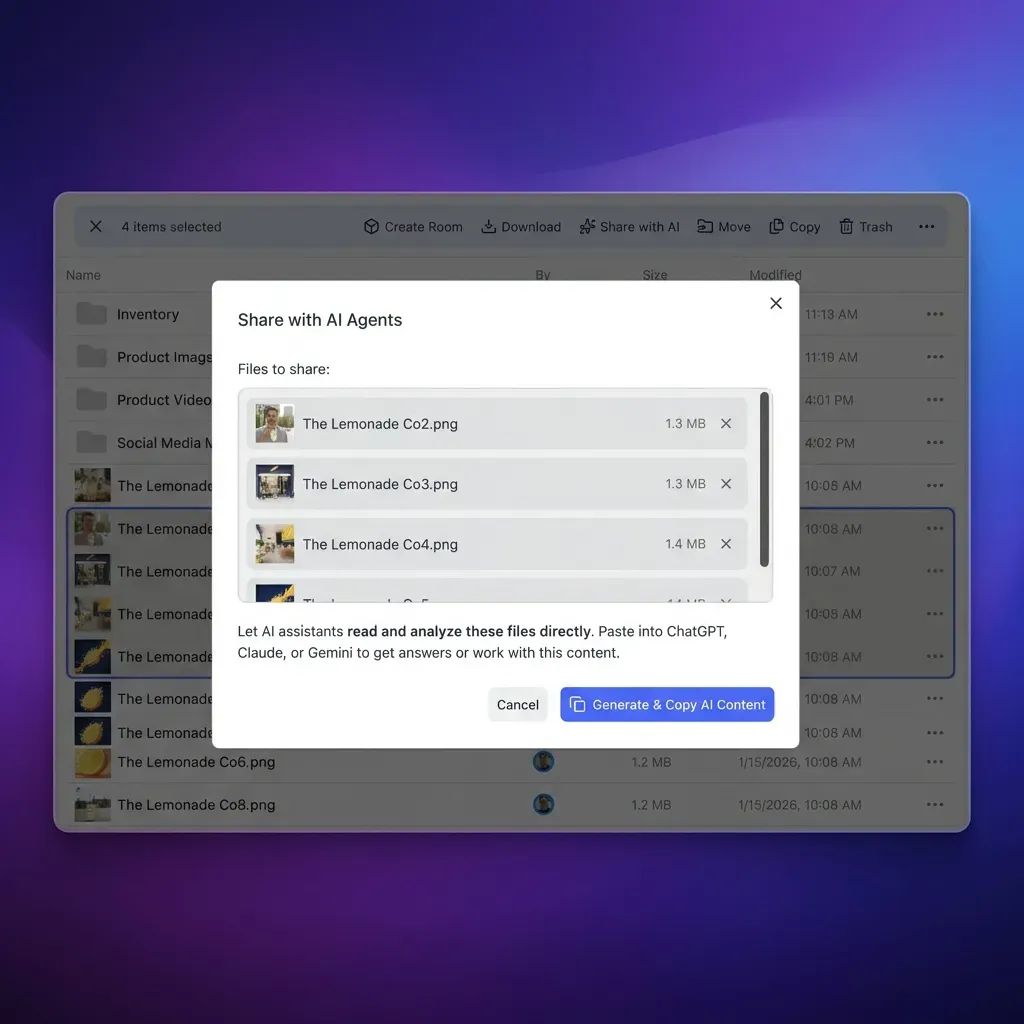


Give Your AI Agents Persistent Storage
Connect to a production-ready MCP server with a consolidated toolset and persistent storage. No Dockerfiles required.
Production Security Checklist
Whether you self-host or use a managed service, security is critical when giving AI agents access to real environments.
1. Principle of Least Privilege
Never run your MCP server as root. If you are self-hosting, create a dedicated user in your Dockerfile. If using Fastio, create a specific workspace for your agent rather than giving it access to your root drive.
2. Rate Limiting AI agents can get into loops, requesting the same tool thousands of times. Add rate limiting on your API endpoints to prevent accidental Denial of Service (DoS) attacks on your own infrastructure.
3. Audit Logging You need to know what the AI did. Keep detailed logs of every tool call and its arguments.
- Self-hosted: Configure your application logger to output JSON logs to stdout/stderr.
- Fastio: Check the "Activity" tab in your dashboard for a complete audit trail.
4. Network Isolation If your MCP server connects to internal databases, deploy it in a DMZ or a specific VPC subnet that restricts outbound access.

Monitoring and Observability
In a production environment, "it works on my machine" won't cut it. You need to verify the health of your MCP server.
Health Checks
Add a /health endpoint that your load balancer can ping. This endpoint should check that the server can connect to any other services (like databases or file stores).
Metric Tracking Track these metrics:
- Active Connections: How many agents are currently connected via SSE?
- Tool Latency: How long does each tool take to execute?
- Error Rates: Are specific tools failing often? High latency on tool execution often means the agent is struggling to process large payloads or your server is under-provisioned.
Sources
References used to verify factual claims in this guide.
-
MCP server code listens on 0.0.0.0 not just 127.0.0.1 using uvicorn --host 0.0.0.0
-
Nginx for SSE uses proxy_http_version 1.1 with proxy_buffering off and chunked_transfer_encoding off
-
Fastio provides a consolidated MCP toolset for file operations, search, and image processing
-
Fastio provides persistent storage (generous storage) that agents can read from and write to, unlike temporary containers
Frequently Asked Questions
Can I use the stdio transport in production?
Generally, no. The stdio transport relies on piping input and output directly between processes on the same machine. For production deployments where the agent and server are on different machines, you must use the Streamable HTTP transport with SSE.
How do I secure a public MCP server?
Secure a public MCP server by implementing strong authentication (API keys or OAuth), enforcing HTTPS with valid SSL certificates, and setting up strict rate limiting. Also, ensure the server runs with the minimum necessary file and network permissions.
What is the best way to host an MCP server?
The best hosting method depends on your needs. For complete control, use Docker on a cloud provider like AWS or DigitalOcean. For ease of use and instant access to file tools, use a managed service like Fastio which provides a pre-configured, secure MCP environment.
Related Resources

Give Your AI Agents Persistent Storage
Connect to a production-ready MCP server with a consolidated toolset and persistent storage. No Dockerfiles required.