How to Set Up a Vendor Collaboration Portal
A vendor collaboration portal replaces scattered email threads and shared drives with a single branded workspace for supplier file sharing, bid collection, and approvals. This guide covers what a vendor portal does, which features matter most, and how to set one up from scratch.


What Is a Vendor Collaboration Portal?
A vendor collaboration portal is a secure, web-based workspace where your team and external suppliers share files, manage bids, collect approvals, and communicate about ongoing work. Instead of scattering documents across email inboxes, FTP servers, and consumer cloud folders, the portal puts everything in one location with proper access controls and an audit trail.
Vendor portals centralize file sharing and approvals with vendors. That single sentence captures the core value. Procurement teams use them for RFP distribution and bid collection. Manufacturers share engineering drawings and receive supplier quotes. Construction firms manage subcontractor submissions. Any business that regularly exchanges documents with outside partners can benefit.
The typical workflow looks like this: your team uploads specs, drawings, or requirements to a shared folder. Vendors access that folder through a branded link, review the materials, and upload their responses. Your team reviews submissions, leaves comments, and moves approved files through the pipeline. Logs capture who did what and when.
What separates a real vendor portal from a generic shared drive is structure. Permissions control exactly which vendors see which folders. Branding makes the portal feel like part of your company. Notifications alert the right people when files arrive. And audit trails give you a defensible record of every interaction.
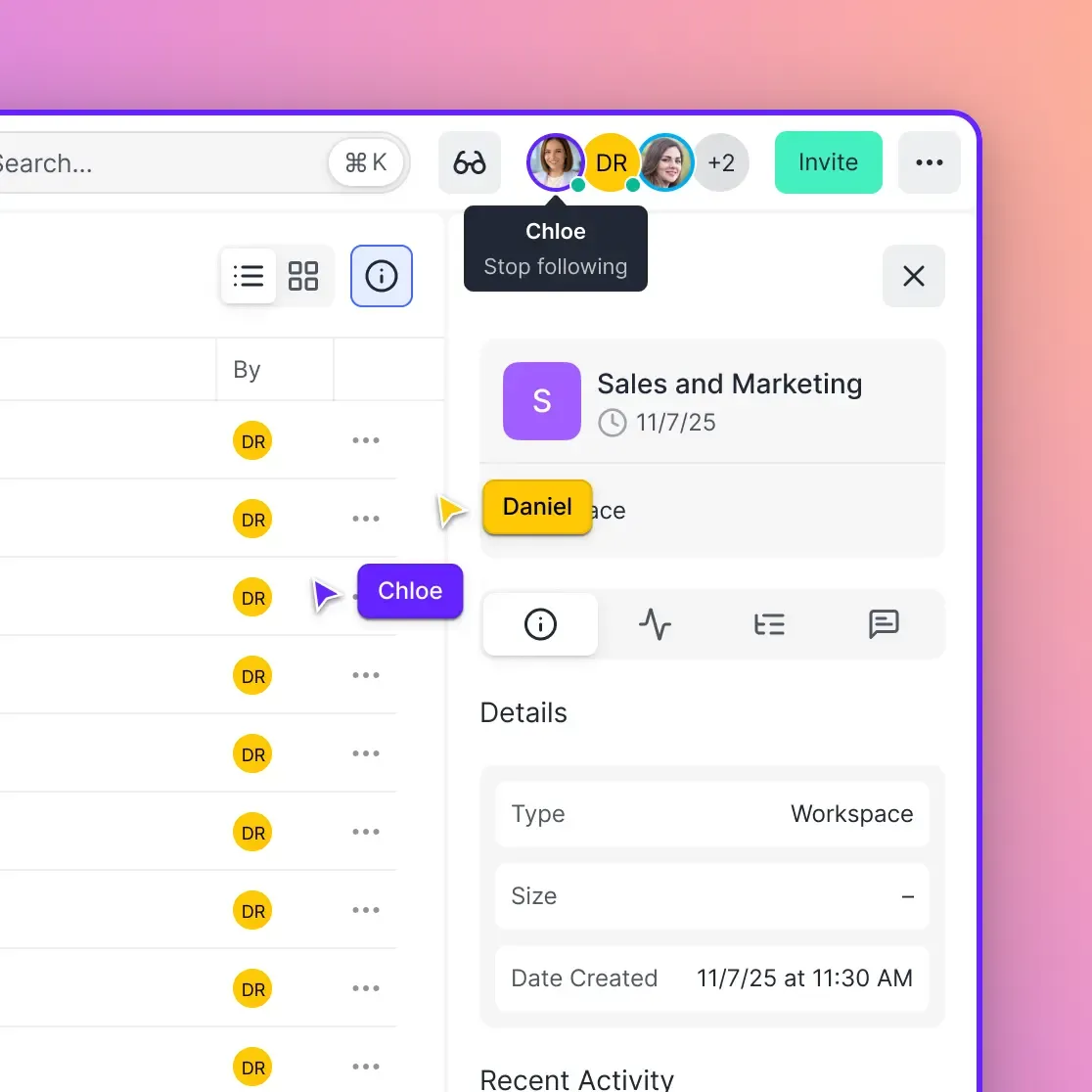
Helpful references: Fastio Workspaces and Fastio Collaboration.
Related guides
- How to Set Up a Client Collaboration PortalA client collaboration portal is a dedicated online space where you share files, collect feedback, and manage projects...
- How to Set Up a White Label Client Portal for Your BusinessA white label client portal is a fully brandable workspace where agencies and service businesses share files, collect...
- How to Set Up a Client Portal for Your Photography BusinessA client portal for photographers is a branded hub where you manage the full client experience, from contracts and shot...
- How to Set Up a HubSpot Client Portal (And When You Need More)HubSpot's customer portal gives clients a branded interface to track support tickets, but it was never designed for...
- How to Run an RFP Response Portal for Vendor SubmissionsAn RFP response portal gives vendors a single, secure place to submit proposals and supporting documents to a buyer's...
- How to Set Up a Tax Preparation Client PortalA tax preparation client portal is a secure online workspace where tax preparers collect documents, share returns for...
More on this subject: Team Collaboration (125 guides)
Why Vendor Portals Beat Email and Shared Drives
Most vendor relationships start with email. Someone sends a spec sheet, the vendor replies with a quote, feedback goes back and forth, and within a week the thread is buried under newer messages. Multiply that by ten suppliers and you have a mess that costs real money.
The problems are predictable:
- Version confusion. Three people email slightly different versions of the same drawing. A supplier builds parts from the wrong revision. According to Nira's research on vendor file sharing, using the wrong revision of a drawing can lead to part scrap and production delays.
- No access control. Email attachments can be forwarded to anyone. Shared drive links grant the same access to every vendor, so Supplier A can see Supplier B's pricing.
- No audit trail. When a dispute arises, nobody can prove who sent what file or when it was opened.
- Size limits. Email caps attachments at 10-25MB. Engineering files, CAD drawings, and video walkthroughs regularly exceed that.
A vendor portal fixes each of these. File versioning keeps one source of truth. Granular permissions isolate each vendor's view. Activity logs record every view, download, and comment. And upload limits are measured in gigabytes, not megabytes.
The business case is straightforward. Procurement teams that move from email-based workflows to structured portals typically see faster bid cycles, fewer document errors, and cleaner audit trails. Centralized data entry and standardized processes reduce the variations caused by individual preferences and manual handling.
Public cloud folders (Google Drive, Dropbox) solve the size problem but not the structure problem. They lack built-in vendor isolation, branded access, and the kind of activity tracking that procurement and compliance teams need. A purpose-built portal fills those gaps.



Build Your Vendor Portal in Minutes
Fastio gives you branded workspaces with unlimited guest access, granular permissions, and AI-powered document search. Explore plans at /pricing/.
Key Features of Effective Vendor Portals
Not every portal platform offers the same capabilities. Here are the features that separate useful vendor portals from glorified file dumps.
Branded Access
Vendors reach your portal through a link that carries your logo and colors. This builds trust. A branded portal feels more legitimate than a generic sharing link. Suppliers are more likely to adopt a tool that looks intentional.
Granular Permissions
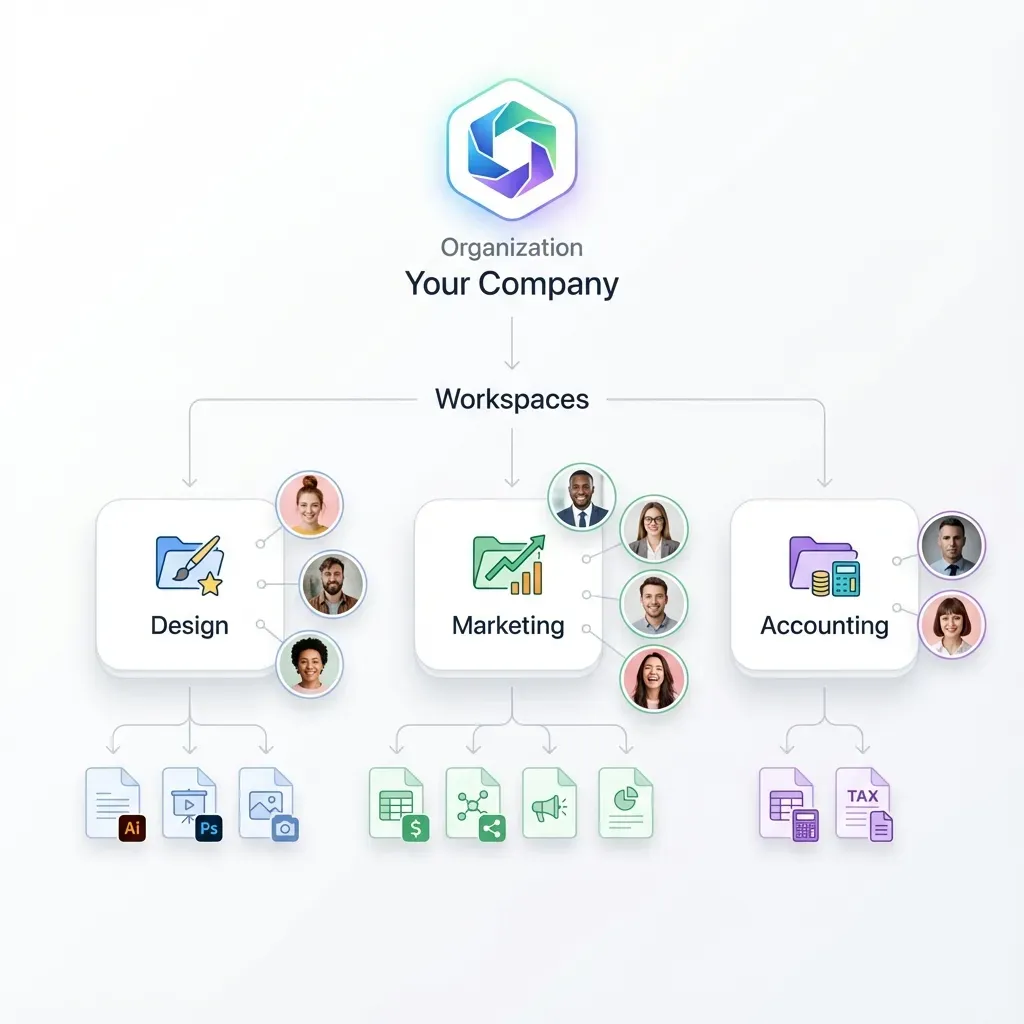
Permissions at the organization, workspace, folder, and file level. A good setup lets Vendor A upload to their bid folder but not see Vendor B's submissions. Your internal team gets full access. Reviewers get read-only. This layered approach prevents accidental data exposure without creating administrative overhead.
Audit Trails
Complete logs of who viewed, downloaded, commented on, or modified each file, with timestamps. These logs matter for compliance reviews, dispute resolution, and internal accountability. Look for platforms that let you filter logs by user, date range, or action type.
Guest Access Without Seat Costs
Per-seat pricing breaks down quickly when you work with dozens of suppliers. If each vendor contact needs a paid account, costs spiral. The better model lets vendors access the portal as guests without creating accounts or counting against your license. Fastio, for example, includes unlimited guest access on all plans.
Inline Previews
Vendors should be able to view documents, images, spreadsheets, and video directly in the browser without downloading files or installing software. This speeds up review cycles and reduces the risk of files being saved to uncontrolled local machines.
Notifications and Webhooks
Automated alerts when vendors upload files, when your team leaves comments, or when approvals are pending. For teams that use Slack, Teams, or an ERP system, webhook support lets portal events trigger actions in other tools.
AI-Powered Search and Tagging
As your portal fills with hundreds of vendor documents, finding the right file gets harder. AI indexing lets you search by meaning rather than filename. Ask "show me all steel bid documents from Q1" instead of scrolling through folders. Fastio's Intelligence Mode auto-indexes uploaded files for semantic search and metadata extraction, so vendor submissions are searchable the moment they arrive.
How to Choose Vendor Portal Software
The right platform depends on your team size, vendor count, file types, and budget. Here is what to evaluate before committing.
Pricing Model
Per-seat platforms like Box (starting around $15/user/month) and ShareFile (around $10/user/month) charge for every named user. That works if you have five vendors. It gets expensive with fifty. Usage-based platforms charge for storage and bandwidth instead, which scales better when you have many external collaborators but modest storage needs.
Guest Limits
Check whether guest users count against your license. Some platforms treat every vendor contact as a seat. Others offer true guest access where external users can view and upload without an account.
File Size and Format Support
Engineering teams share CAD files, video walkthroughs, and high-resolution images. If your platform caps uploads at 2-5GB, you will hit that limit. Fastio supports files up to 100 GB on the Enterprise plan (25 GB on Starter, 50 GB on Business) and previews formats like PDF, PSD, spreadsheets, and video in the browser.
Integration Depth
Does the platform connect to your ERP, procurement system, or project management tools? API access and webhook support determine whether the portal can fit into your existing workflows or becomes another silo.
Setup Speed
Enterprise platforms like SAP Ariba and Coupa offer deep procurement features but require weeks of configuration and training. Lighter platforms get you running in minutes. Match the tool to your complexity. A ten-person procurement team does not need the same platform as a Fortune 500 supply chain.
Alternatives Worth Evaluating
- Clinked offers white-labeled client portals with onboarding automation and compliance certifications.
- Box provides strong enterprise integrations and compliance features but uses per-seat pricing.
- ShareFile focuses on secure document exchange with e-signatures.
- SAP Ariba and Coupa handle end-to-end procurement but come with enterprise complexity and cost.
- Fastio offers flat plans with seats included, guests who do not take a seat, built-in AI indexing, and branded shares for Send, Receive, and Exchange workflows.
Pick the tool that matches your actual workflow. If you mostly need structured file exchange with vendors, a lightweight portal beats an enterprise procurement suite.
Step-by-Step Setup on Fastio
Here is how to build a production-ready vendor collaboration portal on Fastio. The process takes about fifteen minutes.
1. Create Your Account and Organization
Sign up at fast.io/pricing. You can start with a 14-day Business Trial (credit card required) or choose a Starter, Business, or Enterprise plan. Your organization is the top-level container for all workspaces, members, and settings.
2. Create a Vendor Portal Workspace
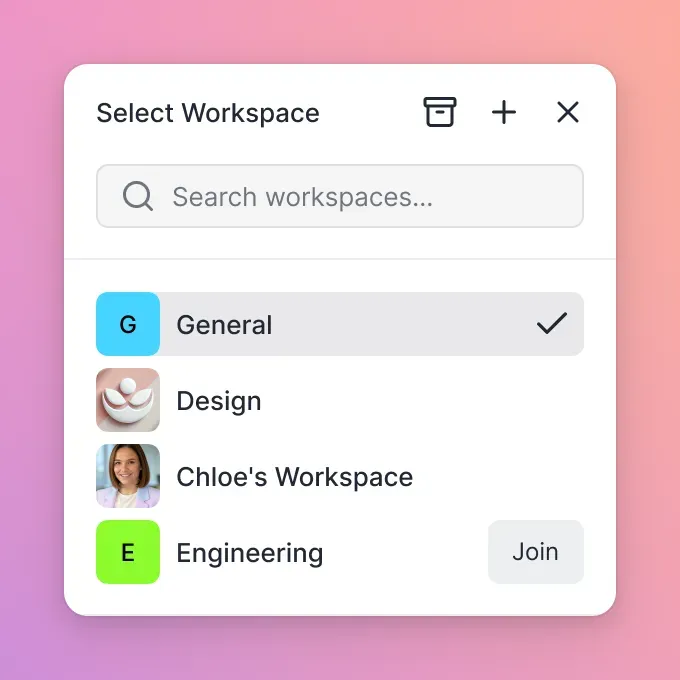
From the dashboard, create a new workspace. Name it something descriptive: "Vendor Portal - Q1 2026 RFP" or "Supplier Document Exchange." Set it to private. Each workspace has its own members, permissions, and files, so vendor documents stay isolated from internal projects.
3. Build Your Folder Structure
Create folders that match your document workflow:
- Specs (your team uploads, vendors read)
- Bids (vendors upload, your team reviews)
- Contracts (shared after approval, read-only for vendors)
- Invoices (vendors upload, finance reviews)
- Archive (completed items, read-only for everyone)
This structure gives vendors a clear mental model. They know where to look and where to upload.
4. Set Permissions and Brand the Portal
Configure folder-level permissions: Specs is read-only for vendors; Bids is upload-and-read for the vendor's own folder; Invoices is upload-only. Apply your company branding: logo, primary color, and custom subdomain so the portal looks like an extension of your business.
5. Create Branded Shares
Generate share links for each vendor. Use password protection and set expiration dates aligned with your project timeline. Fastio's Send, Receive, and Exchange share modes let you configure whether vendors can only download, only upload, or do both.
6. Enable Intelligence Mode
Toggle Intelligence Mode on for the workspace. This auto-indexes every uploaded file for semantic search, summarization, and metadata extraction. When a vendor uploads a bid document, it becomes searchable immediately. You can ask questions like "which suppliers quoted under $50,000 for steel components" and get answers with citations pointing to specific documents.
7. Configure Notifications
Set up email alerts for uploads, comments, and permission changes. You can also monitor the realtime activity feed or connect to the WebSocket events feed to track portal events programmatically. This keeps everyone informed without checking the portal manually.
8. Onboard Your First Vendors
Send each vendor a welcome email with the portal link, a brief explanation of the folder structure, and any file naming conventions you want them to follow. A standard like BID-[VendorName]-[PartNumber]-[Date].pdf keeps submissions organized as volume grows.
Test the full workflow before going live: upload a sample spec, have a test vendor submit a response, leave a comment, and verify that permissions, notifications, and search all work as expected.
Best Practices for Running Your Portal
Setting up the portal is the easy part. Keeping it useful over months and years takes some discipline.
Standardize File Naming Early
Mandate a naming convention from day one. Something like BID-[Vendor]-[Part]-[YYYYMMDD].pdf prevents the chaos of files named "final_v3_REAL_final.pdf." Communicate the convention during onboarding and include it in the portal's welcome message.
Segment by Vendor or Project
For large vendor programs, create separate workspaces or top-level folders per vendor or project. This keeps permissions clean and prevents vendors from accidentally seeing each other's materials. If you manage more than twenty vendors, consider a workspace-per-vendor approach.
Use Threaded Comments for Feedback
Avoid sending feedback over email when the portal has comment threads. Comments anchored to specific files, pages, or regions create a cleaner paper trail than email chains. Mention specific team members in comments to assign responsibility.
Review Audit Logs Regularly
Check activity logs monthly. Look for unusual patterns: vendors accessing files outside their scope, downloads from unexpected locations, or stale accounts that should be deactivated. Regular reviews catch problems before they become incidents.
Set Expiration Dates on Shares
Time-bound shares reduce stale access. A bid collection that closed three months ago does not need active vendor access. Set shares to expire after the relevant deadline, and archive completed projects to read-only folders.
Leverage AI for Document Intelligence
As your portal accumulates documents, AI search becomes more valuable. Use Intelligence Mode to extract patterns across vendor submissions. You can compare bids, flag outliers, and surface documents that match specific criteria without manually reading every file. This is where the real time savings compound.
Track Metrics That Matter
Measure bid submission rates, average review cycle time, and error rates (non-compliant files, wrong formats, missing documents). Compare these numbers before and after portal adoption to quantify the improvement and justify continued investment.
Sources
References used to verify factual claims in this guide.
-
Using the wrong revision of a drawing can lead to part scrap and production delays
-
Vendor portals reduce errors by centralizing data entry and standardizing processes
-
Over 77,300 enterprises worldwide implemented digital supply chain technology in 2024
-
Clinked offers white-labeled vendor portals with ISO 27001 and HIPAA compliance
Frequently Asked Questions
What are the best vendor collaboration portals?
The best platform depends on your needs. SAP Ariba and Coupa suit large enterprises with complex procurement workflows. Clinked and ShareFile work well for document-heavy collaboration with strong compliance requirements. Fastio fits teams that need flat plans with seats included, guest access that does not use a seat, and AI-powered document search. Box offers deep enterprise integrations. Evaluate based on your vendor count, file types, and budget.
How do I build a vendor portal from scratch?
Start by choosing a platform that supports branded access, granular permissions, and guest uploads. Create a workspace, build a folder structure that matches your document workflow (specs, bids, contracts, invoices), set permissions so vendors can only access their own folders, and brand the portal with your logo and colors. Test the full workflow with a pilot vendor before rolling out broadly.
What features does a supplier portal need?
At minimum, a supplier portal needs granular permissions, file versioning, audit logs, guest access without seat costs, and notifications on uploads and comments. Stronger portals add branded access, inline file previews, webhook integrations, and AI-powered search. The right feature set depends on how many vendors you manage and how complex your document workflows are.
Can vendors upload large files to a portal?
It depends on the platform. Consumer tools often cap uploads at 2-5GB. Fastio supports files up to 100 GB on the Enterprise plan (25 GB on Starter, 50 GB on Business), with chunked uploads for reliability on large transfers. Engineering files, CAD drawings, and video walkthroughs all upload without compression.
Can I try Fastio for a vendor portal before paying?
Fastio provides a 14-day Business Trial requiring a credit card. Paid plans start at $9.99 per month for the Starter plan, offering usage-based credits, granular permissions, and guest access that does not take a seat.
How do I keep vendor files secure in a portal?
Use folder-level permissions to isolate each vendor's access. Enable password protection on shared links. Set expiration dates so access does not persist indefinitely. Review audit logs regularly for unusual activity. Choose a platform that encrypts files in transit and at rest, and consider domain restrictions to limit access to specific email domains.
Related Resources

Build Your Vendor Portal in Minutes
Fastio gives you branded workspaces with unlimited guest access, granular permissions, and AI-powered document search. Explore plans at /pricing/.