How to Set Up a HubSpot Client Portal (And When You Need More)
HubSpot's customer portal gives clients a branded interface to track support tickets, but it was never designed for file delivery or document collaboration. This guide walks through the setup process, explains what the portal actually does, and covers alternatives for teams that need more than ticket tracking.


What HubSpot's Customer Portal Actually Does
HubSpot's client portal is a Service Hub feature that gives customers a branded interface to view, open, and reply to support tickets linked to their HubSpot contact record. That last part is important: this is a ticket portal, not a file sharing portal.
When a customer logs into the HubSpot portal, they can:
- View open and closed support tickets tied to their contact record
- Submit new tickets through a connected support form
- Reply to ticket conversations and add updates
- Access knowledge base articles (if you have one set up)
- Upload file attachments to ticket conversations
The portal inherits your HubSpot branding, including logo, colors, and favicon. Customers authenticate through a login tied to their HubSpot contact, so every interaction maps back to their CRM record.
What the portal does not do is serve as a general-purpose file sharing space. There is no shared folder structure, no document library, and no way for clients to browse deliverables outside of ticket threads. If a client needs to download a project file you sent them last month, they have to find the right ticket and scroll through the conversation.
This distinction matters because many teams search for "HubSpot client portal" expecting something closer to a Dropbox shared folder or a branded file delivery hub. HubSpot's portal solves a different problem: it reduces repetitive "what's the status of my request?" emails by letting clients check their own tickets.
Related guides
- How to Set Up a White Label Client Portal for Your BusinessA white label client portal is a fully brandable workspace where agencies and service businesses share files, collect...
- How to Set Up a Client Portal for Your Photography BusinessA client portal for photographers is a branded hub where you manage the full client experience, from contracts and shot...
- How to Set Up a Client Collaboration PortalA client collaboration portal is a dedicated online space where you share files, collect feedback, and manage projects...
- How to Set Up a Client Portal for Your Therapy PracticeA client portal for therapists is a secure online space where practitioners share intake forms, session notes, and...
- Best Free Client Portal Tools in 2026Most free client portal lists skip the fine print. This guide compares seven free client portal tools with their actual...
- How to Build a Salesforce Client Portal (And What It Actually Costs)Salesforce Experience Cloud lets you build branded customer portals for case management, knowledge bases, and partner...
More on this subject: Team Collaboration (125 guides)
What You Need to Enable the Portal
The customer portal is available on HubSpot Service Hub Starter, Professional, and Enterprise tiers. However, the features differ significantly by plan.
On Service Hub Professional ($90 per seat/month as of early 2026, with a $1,500 onboarding fee), you get access to the full portal feature set including custom branding, connected knowledge base, and SLA tracking. The Starter tier offers a more limited version. Enterprise adds advanced permissions and custom objects.
Setup steps
Setting up the portal takes about 30 minutes if your CRM data is clean:
- Go to Service > Customer Portal in your HubSpot account
- Choose a domain for the portal (you can use a HubSpot subdomain or connect your own)
- Configure which ticket pipelines are visible to customers
- Connect a support form for new ticket submissions
- Set up access rules (which contacts can log in)
- Customize branding: logo, colors, and navigation
- Link your knowledge base if you have one
- Test with a sample contact before going live
The portal uses HubSpot's CMS for rendering, so if you're already using HubSpot's website tools, the domain setup will feel familiar.
Access control
You control who can access the portal through contact list membership. You can require customers to register and verify their email, or auto-grant access based on CRM properties like company association or lifecycle stage. This is one of HubSpot's genuine strengths here: since the portal is CRM-native, permissions stay in sync with your customer data automatically.
Where HubSpot's Portal Falls Short
The portal works well for its intended purpose, which is self-service ticket tracking. Problems appear when teams try to use it for workflows it was not built to handle.
File delivery gaps
Clients can attach files to ticket conversations, but there are real constraints. The upload limit on ticket detail pages is 50MB, and only specific file types are supported (PDF, ZIP, common image formats, and a few others). When creating a new ticket through the portal form, uploads allow up to 100MB with broader format support. This inconsistency frustrates both clients and support teams.
There is no way to create a shared file library, organize deliverables into folders, or give clients a browsable download area. Every file lives inside a ticket thread, which means important documents get buried in conversation history.
No standalone file portal
If you run an agency, consultancy, or professional services firm, clients often need a place to pick up deliverables, upload source materials, or review assets, all outside of a support ticket context. HubSpot's portal has no mechanism for this. You would need to supplement it with a separate file sharing tool, which defeats the purpose of a unified client experience.
Branding limitations
While you can apply your logo and brand colors, the portal template is relatively rigid. You cannot build custom page layouts, add navigation to other client-facing tools, or embed interactive elements beyond what HubSpot provides. For teams that want the portal to feel like a fully custom-branded app, the customization ceiling is low.
Pricing relative to scope
At $90 per seat/month for Professional (the tier where the portal becomes genuinely useful), the cost adds up for larger teams. A 10-person service team pays $900/month before you factor in the $1,500 onboarding fee. That is a meaningful investment for what amounts to a ticket self-service window.


Need a client portal that goes beyond ticket tracking?
Fastio gives your clients a branded workspace for file delivery, uploads, and collaboration. generous storage.
HubSpot Portal vs. Dedicated Client Portal Tools
The right choice depends on what your clients actually need when they log in. Here is how the two approaches compare.
Ticket tracking vs. file delivery
HubSpot's portal excels at reducing inbound support volume. If your clients primarily need to check ticket status and submit requests, it handles that well and integrates directly with your CRM data.
Dedicated client portal tools like Fastio, Clinked, or SuiteDash focus on a broader set of client interactions: file sharing, document collaboration, branded workspaces, and deliverable management. These platforms treat the portal as the center of the client relationship, not just a support channel.
Storage and file handling
HubSpot's file handling is limited to ticket attachments with size and format restrictions. Dedicated portals typically offer structured folder systems, large file support, version history, and streaming previews for media files.
Fastio, for example, supports chunked uploads for large files, HLS video streaming for instant playback, and file versioning with full audit trails. Clients get a branded workspace where they can browse, preview, and download files without digging through support tickets.
Permissions and access
HubSpot ties portal access to CRM contacts, which is elegant for support workflows but limiting for project-based work. If you need to share different files with different stakeholders on the same client account, the contact-level permission model gets awkward.
Tools designed for client collaboration typically offer granular permissions at the folder or file level, guest access without account creation, and the ability to manage multiple projects per client with separate access controls.
Cost comparison
HubSpot Service Hub Professional at $90/seat/month gives you the portal alongside SLAs, automation, and feedback tools. If you already use HubSpot for CRM and marketing, the marginal cost makes sense.
Standalone portal tools often price differently. Fastio offers subscription plans starting at $9.99/mo with 250 GB of storage and a 14-day Business Trial, which covers many teams. For larger deployments, dedicated tools tend to be more cost-effective than adding Service Hub seats when the primary need is file delivery rather than ticket management.
When to Keep HubSpot's Portal (And When to Add Something Else)
Keep HubSpot's portal if
- Your clients mainly need to track support tickets and submit requests
- You already run HubSpot Service Hub Professional or Enterprise
- Your team wants every client interaction logged in the CRM automatically
- File sharing is minimal and fits within ticket attachment limits
Add a dedicated portal if
- Clients need to browse and download deliverables outside of ticket threads
- You share large files (video, design assets, raw photos) regularly
- Multiple stakeholders per client need different access levels to different projects
- You want a branded file hub that feels like your own product
- File versioning, team collaboration, or audit trails are part of your process
Run both together
Many teams get the best results by keeping HubSpot for support ticket management while using a dedicated tool for file delivery. HubSpot handles the "what's the status?" questions, and a tool like Fastio handles the "where do I download the final files?" questions. This avoids forcing either tool into a role it was not designed.
Once Intelligence is enabled for the workspace, Fastio auto-indexes uploaded files for semantic search. If you are building a client resource library or knowledge base alongside your deliverables, this lets clients ask questions about documents in natural language rather than browsing through folders.
Setting Up a File Delivery Portal with Fastio
If HubSpot handles your ticket management but not your file delivery, here is how to add Fastio alongside it.
Set up a file delivery workspace
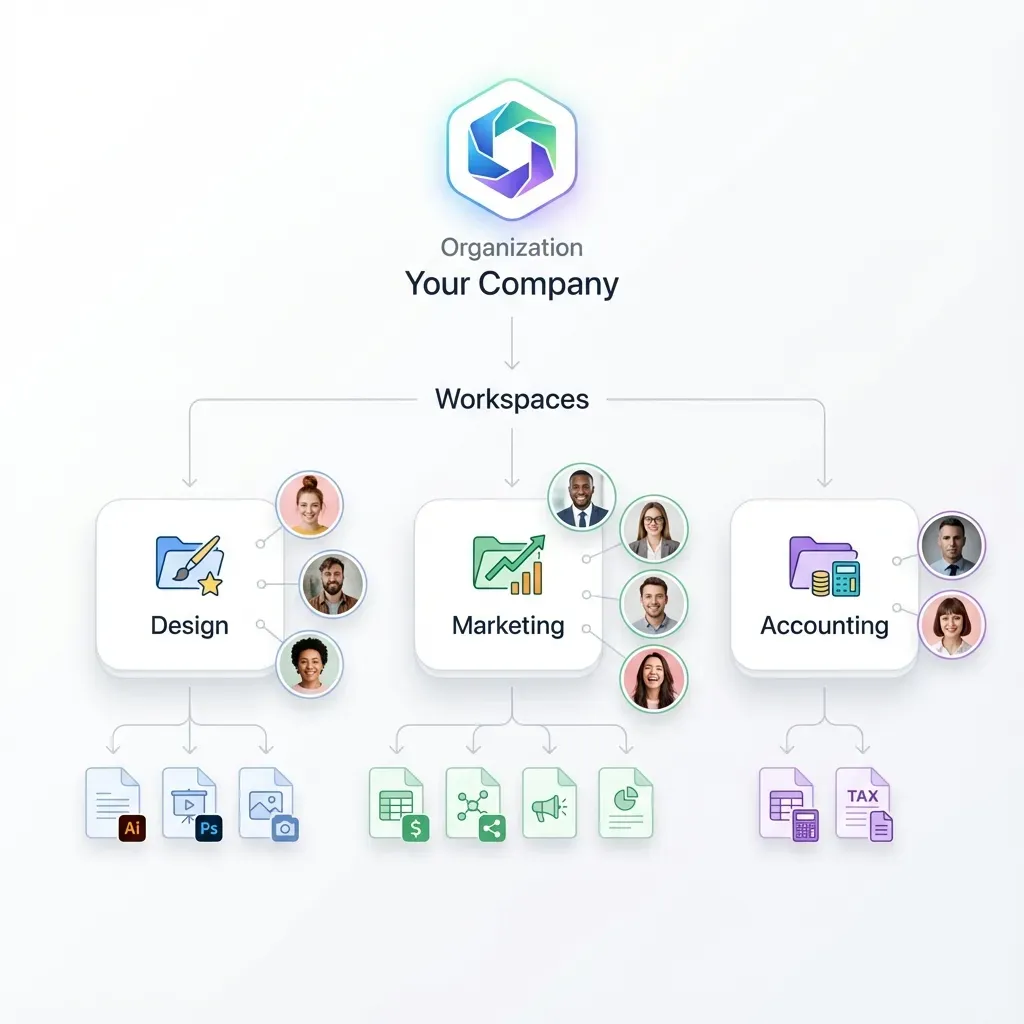
Sign up at fast.io/pricing (plans start at $9.99/mo with a 14-day Business Trial). Create a workspace per client or per project. Unlike HubSpot's ticket-centric model, files live in a browsable folder structure that clients can navigate on their own.
Replace ticket attachments with branded shares
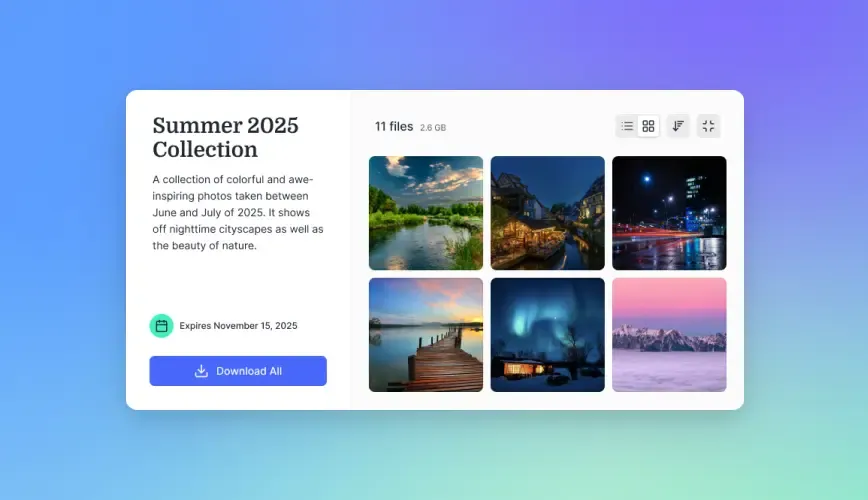
Instead of attaching files to HubSpot tickets (with 50MB limits and format restrictions), create a branded Share in Fastio. Send shares deliver files to clients. Receive shares collect files from them. Exchange shares handle two-way collaboration. Each gets a unique link , with no client login required.
Mirror your CRM access model
HubSpot ties portal access to CRM contacts. In Fastio, permissions work at the org, workspace, folder, and file level. Invite the same client stakeholders with specific roles. Permissions cascade through folders, so new uploads automatically inherit the right access level.
Get the tracking HubSpot's portal lacks
Every file action (upload, download, view, share) is logged with timestamps and user identity. You'll know whether the client opened the deliverable before the status meeting , which is something HubSpot's portal can't tell you.
Fastio also supports Intelligence Mode for semantic search across uploaded documents, and provides an MCP server for agentic file operations.
Learn more: Content Portals, Workspaces, Media.
Sources
References used to verify factual claims in this guide.
-
HubSpot Service Hub Professional starts at $90 per seat/month
-
File uploads on ticket detail pages are capped at 50MB with restricted file types
-
HubSpot customer portal is available on Starter, Professional, and Enterprise tiers
Frequently Asked Questions
Does HubSpot have a client portal?
Yes. HubSpot offers a customer portal through Service Hub. It provides a branded interface where clients can view, create, and reply to support tickets tied to their CRM contact record. The portal is available on Starter, Professional, and Enterprise tiers, though feature depth varies by plan.
What HubSpot plan includes the client portal?
The customer portal is available starting from Service Hub Starter. However, the full feature set, including connected knowledge base, SLA tracking, and advanced branding, requires Service Hub Professional at $90 per seat/month (with a $1,500 onboarding fee) or Enterprise.
Can clients upload files in HubSpot's portal?
Clients can attach files to ticket conversations, but with limitations. Uploads on ticket detail pages are capped at 50MB and restricted to specific file types (PDF, ZIP, common image formats). New ticket submissions through forms support up to 100MB with broader format support. There is no shared file library or folder-based file browsing.
Is HubSpot's portal good for file sharing with clients?
HubSpot's portal was designed for ticket tracking, not file delivery. While clients can attach files to tickets, there is no shared folder structure, no document library, and no way to organize deliverables for browsing. Teams that need structured file delivery typically pair HubSpot with a dedicated file sharing tool.
What are alternatives to HubSpot for client portals?
Dedicated client portal tools include Fastio (file delivery and branded workspaces), Clinked (collaboration-focused portals), SuiteDash (all-in-one business management), and Softr (no-code portals built on existing data). The right choice depends on whether you primarily need ticket management, file delivery, or project collaboration.
Related Resources

Need a client portal that goes beyond ticket tracking?
Fastio gives your clients a branded workspace for file delivery, uploads, and collaboration. generous storage.