How to Set Up a Client Portal for Your Photography Business
A client portal for photographers is a branded hub where you manage the full client experience, from contracts and shot lists to final image delivery. This guide covers what separates a real portal from a gallery-one of the few tools, the features that matter most, and how to set one up without stitching together five different apps.


What a Client Portal Actually Does (Beyond Galleries): client portal photographers
Most photographers start with a gallery platform. Pixieset, ShootProof, Pic-Time, and CloudSpot all do a solid job displaying finished images in a clean, branded layout. Clients can browse, favorite, and download. That covers the last mile of a shoot.
But the last mile is not the whole job. Before you deliver a single image, you need to collect shot lists, send contracts, handle invoicing, share location details, and coordinate timelines. After delivery, you need to track print orders, manage album proofing, and archive everything for future reference.
A client portal for photographers is a branded hub where photographers manage the full client experience, from contracts and shot lists to final image delivery. It pulls these scattered workflows into one space your client actually logs into. Instead of sending a contract through one app, an invoice through another, and a gallery link through a third, everything lives under one roof.
The distinction matters because fragmented tools create fragmented experiences. Clients lose track of emails. You lose track of which contract version they signed. A portal gives both sides a single URL to check for everything related to their project.
Helpful references: Fastio Workspaces, Fastio Collaboration, and Fastio AI.
Related guides
- How to Set Up a White Label Client Portal for Your BusinessA white label client portal is a fully brandable workspace where agencies and service businesses share files, collect...
- How to Create a Client Portal for Your BusinessA client portal is a secure, branded space where businesses share files, collect documents, and communicate with...
- How to Set Up a HubSpot Client Portal (And When You Need More)HubSpot's customer portal gives clients a branded interface to track support tickets, but it was never designed for...
- How to Set Up a Client Collaboration PortalA client collaboration portal is a dedicated online space where you share files, collect feedback, and manage projects...
- How to Set Up a Client Portal for Your Therapy PracticeA client portal for therapists is a secure online space where practitioners share intake forms, session notes, and...
- 7 Best Photography Client Gallery Platforms for 2026A photography client gallery is an online platform where photographers deliver, showcase, and sell images to clients....
More on this subject: Team Collaboration (125 guides)
Gallery Tools vs. Full Client Portals
The photography software market splits into two camps. Gallery-first tools focus on beautiful image presentation. Full portal tools focus on managing the entire client relationship. Here is what each camp typically covers:
Gallery-only tools (Pixieset, ShootProof, Pic-Time, Lightfolio, CloudSpot):
- Image display with customizable layouts and branding
- Client favorites and proofing selections
- Print store integration and digital downloads
- Password-protected gallery access
- Basic download tracking
Full client portals (HoneyBook, Dubsado, Agency Handy, Fastio):
- Contracts and e-signatures
- Invoicing and payment collection
- Questionnaires and shot lists
- File delivery for large batches
- Project timelines and task tracking
- Branded workspace with your logo and colors
Some photographers use both: a gallery tool for the final image presentation and a portal for everything else. That works, but it means maintaining two systems and sending clients to two different places. The trend in 2026 is toward consolidation, where one platform handles the full lifecycle.
The right choice depends on your volume. If you shoot ten weddings a year and your workflow is simple, a gallery tool with basic business features might be enough. If you run a studio with multiple photographers, commercial clients, and retainer relationships, a full portal pays for itself in time saved.
Features That Matter for Photographer Portals
Not every portal feature is equally important for photography work. Here is what to prioritize when evaluating options.
Large File Handling
Wedding photographers deliver 400 to 1,500 edited images per event, with raw files running 20-50 MB each. A portrait session might produce 50-200 finals. Your portal needs to handle bulk uploads without choking, support folder structures that keep sessions organized, and let clients download everything in one batch without timeout errors.
General-purpose file sharing tools like Dropbox or Google Drive handle the volume, but your photos show up as thumbnails in an interface designed for documents. No branding, no curation, no way for clients to proof or favorite images in context.
Branding and Presentation
Your portal is an extension of your brand. Clients should see your logo, your colors, and your aesthetic when they log in. This is not vanity. It is professionalism that justifies premium pricing.
Client Access Without Friction
Clients should not need to create an account, download an app, or remember a password to access their files. The best portals send a link, optionally with a PIN or password, and let clients browse immediately. Auto-expiring access links work well for time-limited sharing during the proofing phase.
Proofing and Feedback
For album design, print selection, and edit requests, clients need a way to leave feedback directly on images. Comments anchored to specific photos beat email threads where "the third photo in the second group" means different things to different people.
Version Control
Album layouts go through revisions. Retouching requests change files. You need to track which version the client approved and keep the full history. This protects you when a client says "I liked the earlier version better" three months later.
Contracts and Invoicing
If your portal handles contracts and payments alongside file delivery, you eliminate two extra tools from your stack. Look for e-signature support, automated payment reminders, and the ability to gate gallery access behind a paid invoice.


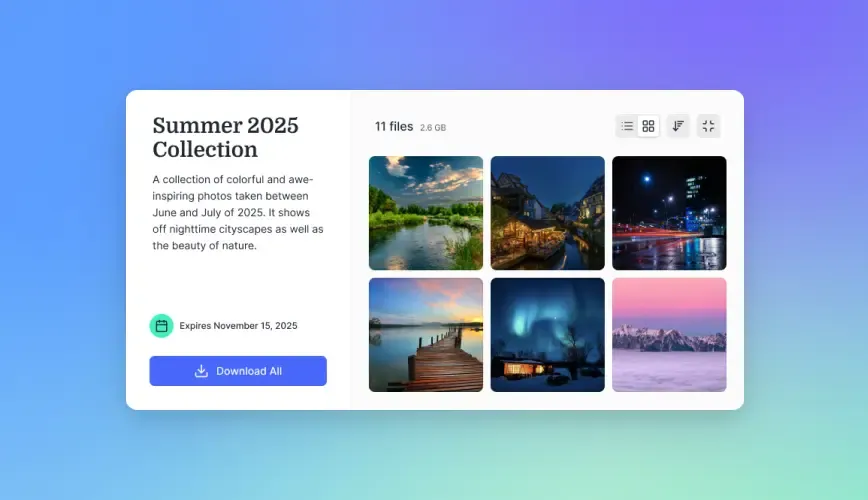
A Branded Portal Your Photography Clients Will Actually Use
Set up a client portal with 250 GB of storage or more, password-protected access, and your studio branding. Built for photography workflows.
Setting Up a Photographer Client Portal Step by Step
Here is a practical setup process that works regardless of which platform you choose.
Step 1: Map Your Client Journey
Before you configure anything, write down every touchpoint in your client relationship. For a wedding photographer, that might look like this:
- Inquiry and booking
- Contract signing and deposit
- Planning questionnaire and shot list
- Timeline and location details
- Pre-wedding communication
- Sneak peek delivery (5-10 images within a week)
- Full gallery delivery (400-1,500 images within 4-8 weeks)
- Album proofing and revisions
- Print orders
- Archive and referral request
Each of these steps either produces a file, requires a signature, or triggers a message. Your portal should handle as many of these as possible without forcing the client to leave.
Step 2: Choose Your Platform
If you need gallery-first with light business features, start with Pixieset or ShootProof. Both offer client galleries, online stores, contracts, and invoicing in one subscription. Pricing runs $10-30 per month for most solo photographers.
If you need a full business portal that happens to handle files, look at HoneyBook or Dubsado. These are client relationship platforms with built-in proposals, contracts, invoicing, scheduling, and client portals. They cost $15-40 per month.
If your main challenge is large file delivery, branded sharing, and client access control, a workspace platform like Fastio gives you branded portals with custom logos and colors. Clients access files through password-protected links without creating accounts, and the platform handles chunked uploads for large batches. Fastio offers a 14-day Business Trial (card required; see /pricing/) with Starter at $9.99/mo for 250 GB of storage, covering dozens of complete wedding deliveries.
Step 3: Configure Your Brand
Upload your logo, set your brand colors, and customize the client-facing interface. Small details make a noticeable difference in how clients perceive your business.
Step 4: Build Templates
Create reusable templates for each project type: wedding, portrait, commercial, event. Each template should include a standard folder structure, a pre-written welcome message, and any default questionnaires or timelines. Templates save 15-30 minutes per new client and keep your delivery consistent.
Step 5: Test the Client Experience
Before you onboard real clients, send a test portal link to a friend or family member. Ask them to find a specific photo, download the full gallery, and leave a comment. Watch where they get confused. Fix those friction points before they cost you a client review.
Managing Large Photo Deliveries Without the Headaches
File delivery is where most photographer workflows break down. Wedding galleries run 5-15 GB for edited JPEGs alone. Add layered PSDs or TIFF files for album spreads and you are looking at 50 GB or more per project.
Batch Upload Strategies
Upload your images in logical batches rather than one massive dump. Group by ceremony, reception, portraits, and details. This makes the upload more resilient to network interruptions and gives you natural folder organization on the other end. Platforms with chunked upload support handle large files more reliably because they can resume interrupted transfers instead of starting over.
Delivery Timelines
Industry-standard turnaround for wedding photos is 4 to 8 weeks, though some photographers promise 2 weeks for sneak peeks. Portrait sessions typically turn around in 1 to 2 weeks. Commercial work varies widely based on the retouching scope.
Set your delivery timeline in the contract and communicate it in your portal's welcome message. When the gallery is ready, send a notification through the portal rather than a separate email. This keeps all communication in one thread and gives you a record of exactly when the client was notified.
Download Options
Give clients multiple download options: individual images, selected favorites, or the complete gallery as a ZIP. Some clients want everything at once. Others want to download a handful for social media first and come back for the rest later. Supporting both use cases reduces "where are my photos?" support emails.
Archive Strategy
Decide how long you will keep client galleries active. Many photographers archive after 12 months and offer reactivation on request. Communicate this policy upfront so clients download what they need within the active window. If your platform charges per-gigabyte storage, archiving old projects keeps your costs manageable. Fastio's plans, for example, include 250 GB to 25 TB of storage, and clients view archived projects as guests rather than paid seats.
Making Your Portal Work Harder With Automation
A well-configured portal reduces the manual work that eats into your editing time.
Automated Notifications
Set up triggers for key milestones: contract sent, payment received, gallery uploaded, download completed. Clients appreciate proactive updates, and you avoid the "just checking in" emails that interrupt your retouching sessions.
Access Controls
Use time-limited access for proofing galleries where you want the client to make selections within a defined window. For final delivery galleries, keep access open longer but set an expiration that matches your archive policy. Password protection adds security for sensitive shoots like boudoir or corporate events.
AI-Powered Search and Organization
Some workspace platforms now index uploaded files for semantic search. If you enable intelligence features on a workspace, clients or team members can search across hundreds of images by description rather than filename. Platforms like Fastio auto-index files when Intelligence Mode is enabled, making it possible to ask questions like "show me all the outdoor ceremony photos" across an entire workspace.
Integration With Your Editing Workflow
The fewer times you manually move files, the fewer chances for errors. If your portal supports cloud import from services like Google Drive or Dropbox, you can push finished exports from Lightroom directly to your cloud storage and pull them into the portal without downloading and re-uploading. This is especially valuable when you are editing on one machine and managing your business on another.
Feedback Loops for Album Design
For album proofing, use a portal that supports comments anchored to specific files or image regions. The client marks up a spread layout, you see exactly what they want changed, and the revision history stays attached to the file. This beats the alternative of tracking feedback across email chains, text messages, and phone calls.
Sources
References used to verify factual claims in this guide.
-
Wedding photographers deliver 400 to 1,500 edited images per event
-
Industry-standard turnaround for wedding photos is 4 to 8 weeks
-
50 to 100 edited photos per hour of coverage is a common benchmark
Frequently Asked Questions
What is the best client portal for photographers?
It depends on your primary need. For gallery presentation and print sales, Pixieset and ShootProof are the most popular options. For full business management with contracts and invoicing, HoneyBook and Dubsado lead the market. For large file delivery with branded portals and flexible access controls, workspace platforms like Fastio offer strong options with flat plans that include seats.
How do photographers deliver files to clients?
Professional photographers typically use dedicated gallery platforms that display images in a branded, password-protected layout. Clients receive a link, browse their gallery, select favorites, and download images individually or as a batch. For larger deliveries or commercial work, photographers use file sharing platforms that handle chunked uploads and bulk downloads without size restrictions.
Do photographers need a client portal or just a gallery?
A gallery covers the delivery step, but a portal covers the entire relationship. If you only need to share finished images, a gallery tool works fine. If you also manage contracts, invoices, shot lists, timelines, and revisions, a client portal consolidates those workflows into one branded space. Studios with higher volume or commercial clients benefit most from the full portal approach.
How long do photographers keep client galleries active?
Most photographers keep galleries active for 6 to 12 months after delivery. Some offer permanent hosting as a premium add-on. The key is communicating your policy in the contract and sending reminders before the gallery expires so clients can download everything they need.
How much does Fastio cost for photography client portals?
Fastio provides a 14-day Business Trial (credit card required; see /pricing/) that includes branded portals, granular permissions, and password-protected shares. Paid plans begin with Starter at $9.99/mo for 250 GB of storage.
How many photos should I deliver for a wedding?
Wedding photographers typically deliver 400 to 1,500 edited images depending on coverage hours, wedding size, and shooting style. A common benchmark is 50 to 100 edited photos per hour of coverage. More important than the count is delivering a complete, curated set that tells the story of the day without duplicates or filler shots.
Related Resources

A Branded Portal Your Photography Clients Will Actually Use
Set up a client portal with 250 GB of storage or more, password-protected access, and your studio branding. Built for photography workflows.