How to Run an RFP Response Portal for Vendor Submissions
An RFP response portal gives vendors a single, secure place to submit proposals and supporting documents to a buyer's procurement team. This guide covers what a good portal should support, how to structure submissions, and how to run the process without drowning in email attachments.


What an RFP Response Portal Actually Is
An RFP response portal is a secure workspace for vendors to submit proposals and supporting files to a buyer's procurement team. It sits between the RFP document you issue and the scoring process your evaluators run. Instead of asking ten vendors to email zipped folders to a shared inbox, you give each vendor a space where they upload their response, label it, and confirm submission.
The distinction matters because most "RFP software" on the market is built for the other side of the transaction. Tools like Loopio, RFPIO, and Responsive focus on helping vendors answer questions faster using content libraries and AI. Those are useful if you respond to RFPs for a living. They do not help the buyer collect, organize, and evaluate what comes back.
A submission portal is the buyer's side of the problem. It needs to handle structured intake from many vendors at once, keep each vendor's submission separate and confidential, support large supporting files, and give procurement a clean audit trail when a losing vendor asks why they did not win.
Helpful references: Fastio Workspaces, Fastio Collaboration, and Fastio AI.
Related guides
- How to Choose and Set Up Supplier Portal SoftwareSupplier portal software gives procurement teams a central place to exchange documents, onboard vendors, and track...
- How to Set Up a Vendor Collaboration PortalA vendor collaboration portal replaces scattered email threads and shared drives with a single branded workspace for...
- Best Free Client Portal Tools in 2026Most free client portal lists skip the fine print. This guide compares seven free client portal tools with their actual...
- How to Build a Salesforce Client Portal (And What It Actually Costs)Salesforce Experience Cloud lets you build branded customer portals for case management, knowledge bases, and partner...
- Best Client Portal Software for Agencies in 2026Client portal software provides a branded, secure space where businesses share files, collect feedback, and collaborate...
- Best Client Portal Apps for Teams and AgenciesA client portal app is a mobile or web application that gives clients a dedicated space to access files, track project...
More on this subject: Team Collaboration (125 guides)
Why Email Breaks Down for Procurement
Most mid-sized organizations still run RFPs through email. A procurement lead sends out a PDF, vendors reply with attachments, and someone copies files into a shared drive. This works for small, simple RFPs. It falls apart quickly on anything complex.
Enterprise RFPs often bundle a written proposal with financial models, security questionnaires, certifications, reference letters, case studies, and technical diagrams. Once supporting documents pile up, email becomes a liability:
- Attachment size limits force vendors to split files or use random file transfer links, some of which expire before evaluators open them.
- Version confusion is constant. "Is this the revised pricing or the original?" becomes a daily question.
- Confidentiality leaks happen when a reply-all goes to the wrong distribution list.
- There is no record of who submitted what, when, or whether they confirmed submission before the deadline.
- Procurement cannot tell a late vendor from an on-time one without digging through timestamps.
A portal fixes the coordination problem by giving every vendor the same structured experience and every evaluator the same clean view.
What a Good RFP Submission Portal Should Support
If you are evaluating tools or building your own portal on top of a file platform, use this as a checklist. The portal should handle the full submission lifecycle, not just the upload moment.
- Per-vendor isolation. Each vendor sees only their own space. They cannot list other vendors, preview competing proposals, or discover who else is in the running.
- Branded intake. The portal carries your logo and domain, not the vendor of whatever SaaS tool you picked. Vendors should feel like they are submitting to your procurement team, not to a third party.
- Structured folders. Predefined folders for the proposal, pricing, security, references, and appendices. Vendors drop files into the right place instead of inventing their own structure.
- Large file support. Financial models, video demos, and technical packages routinely exceed what email allows. The portal should accept multi-gigabyte uploads without timing out.
- Deadline enforcement. A hard cutoff that stops accepting new files after the RFP closes, with a timestamped record of what arrived before the deadline.
- Confirmation receipts. Vendors get an automatic acknowledgement when they finish submitting. Procurement sees who has and has not confirmed.
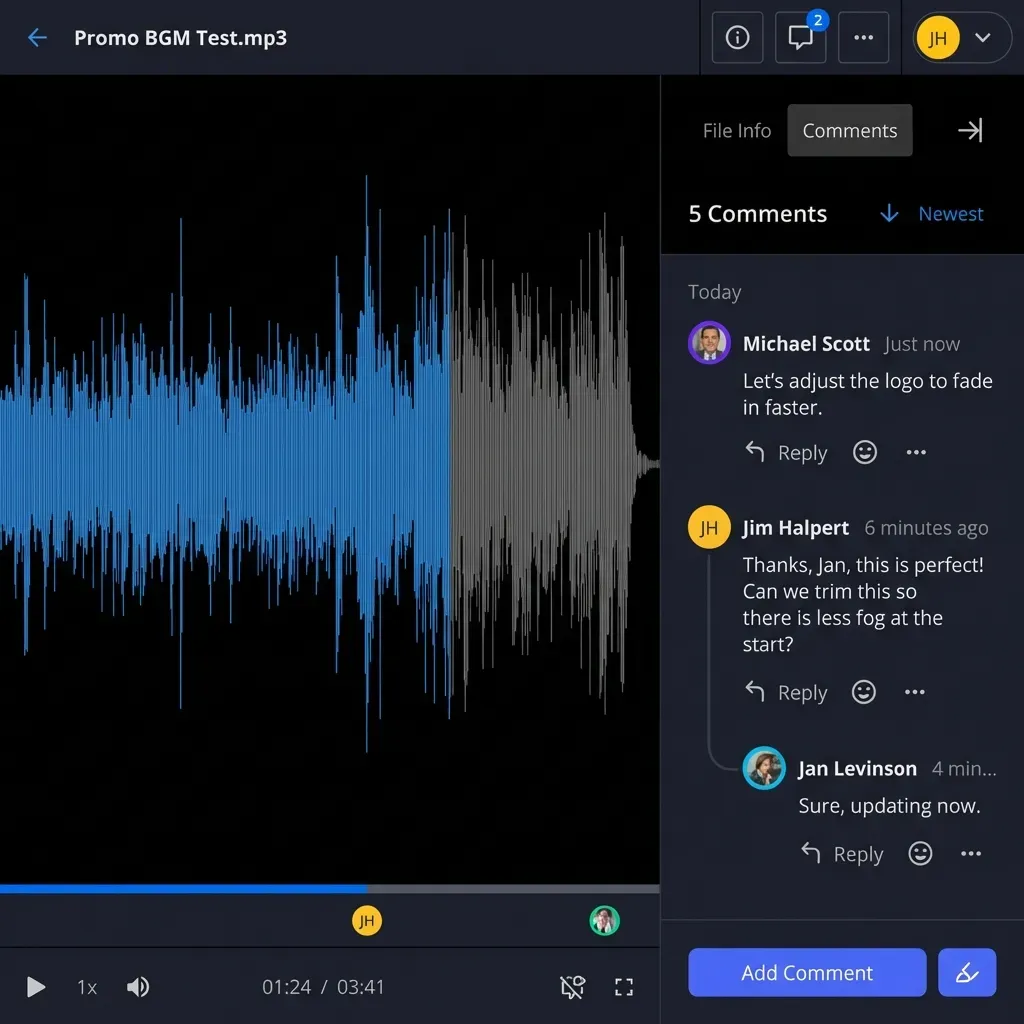
- Full audit trail. Every upload, download, rename, and access event is logged with the user and timestamp. This matters when a losing vendor protests and asks for the record.
- Evaluator access controls. Different evaluators can see different parts of a submission. Legal might only need the contract exhibit. Security reviews only the questionnaire.
- Export and archive. When the process ends, you can pull down the whole record for long-term retention without manual copying.
Most procurement tools cover some of these. Few cover all of them, which is why many teams end up combining a proposal management tool with a separate file workspace.
Designing the Submission Flow
The structure you give vendors determines the quality of what comes back. An unstructured "upload anything" portal produces a mess. Over-engineered structure frustrates vendors and delays submissions. The right middle ground has three layers.
The Top-Level Folder
Named after the RFP itself, with the vendor's company name inside. Example: RFP-2026-DataPlatform / Acme Analytics / . This makes downstream evaluation and archiving simple.
Required Subfolders
Define these in the RFP document so vendors know what to expect. A typical set:
01-Proposalfor the main response document02-Pricingfor financial models and pricing tables03-Securityfor security questionnaires and certifications04-Referencesfor case studies and reference letters05-Appendicesfor anything else
Numbering prefixes force a consistent sort order across vendors, which matters when an evaluator opens ten submissions in a row.
Submission Metadata
A short form at the top of the portal captures the essentials: primary contact, proposed start date, any assumptions, and a confirmation checkbox. This metadata beats trying to extract the same fields from twenty different proposal PDFs later.
Keep the structure the same across every RFP you run. Vendors who respond to your RFPs regularly will learn the pattern, and new vendors will not have to guess.


Collect proposals without the email mess
Stand up a branded RFP response portal on Fastio in an afternoon.
Running the Process With Fastio
Fastio is one way to stand up an RFP response portal without buying dedicated procurement software. It gives you shared workspaces, granular permissions, branded shares, and a full audit trail, which covers most of the submission-portal checklist above. Alternatives worth considering include SharePoint with custom permissions, Box with a custom portal layer, or a purpose-built tool like Workplace by OpenText if you have the budget and procurement volume.
To set one up in Fastio:
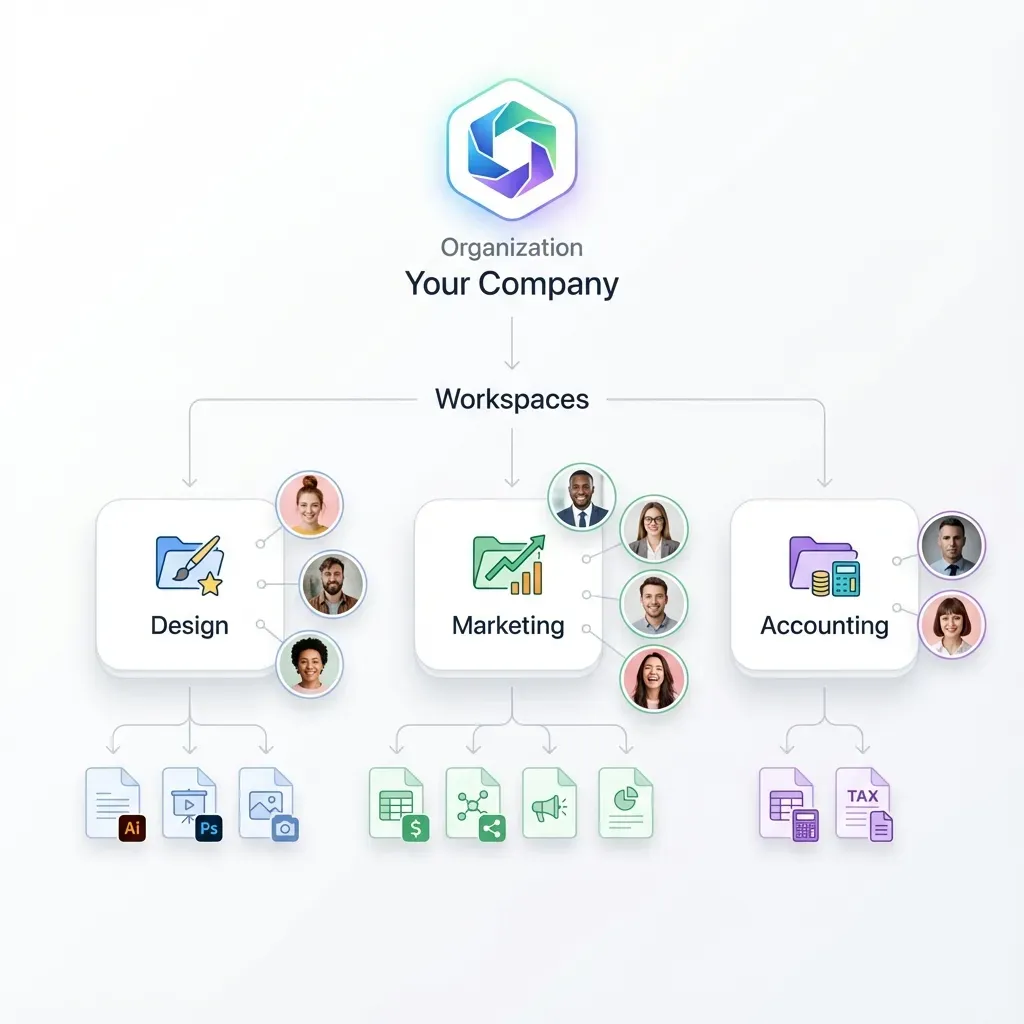
- Create a workspace named after the RFP. Set up the folder template (proposal, pricing, security, references, appendices) once.
- For each invited vendor, create a Receive share pointing at a dedicated subfolder. Receive shares let vendors upload into your workspace without giving them visibility into other vendors' folders.
- Send each vendor their unique share link with the RFP document. The link carries your branding.
- As submissions come in, evaluators work from the same workspace. Granular permissions let you give legal read access to the contract exhibits and nothing else. Security reviewers see only the security folder.
- When the RFP closes, revoke the Receive shares. The workspace becomes a frozen record. The audit log shows every access event from the entire process.
- After award, transfer or archive the workspace. If you used Fastio's ownership transfer, the final record can move cleanly to the contract owner while procurement retains admin access. Intelligence Mode is worth enabling on RFP workspaces once submissions are in. It indexes every file for semantic search, so an evaluator can ask "which vendors committed to a high availability SLA" and get answers with citations back to the source document, instead of opening ten PDFs by hand. Built-in RAG replaces the spreadsheet that usually tracks proposal details. Fastio offers a Business Trial with storage and agent tooling for testing this workflow. Larger processes with video demos and multi-gigabyte financial models may need a paid plan for the storage headroom.
Evaluator Workflow After Submissions Close
The portal is only half the story. What happens after the deadline determines whether the process actually improves.
Give each evaluator a scoring template before submissions open. A simple spreadsheet with the evaluation criteria, weights, and a notes column is enough. The point is that everyone scores the same way.
Set a submission review window before scoring begins. Evaluators read every proposal top to bottom without yet assigning scores. This prevents the first vendor read from anchoring the scale for everyone after.
Use the audit log to confirm coverage. Procurement should be able to see that every evaluator opened every submission. If someone skipped a vendor, you catch it before the scoring meeting, not after.
Keep a single questions-and-clarifications channel. When an evaluator has a question for a vendor, it goes through procurement, who posts the question and answer to every vendor in the running. This is both a fairness requirement and a sanity requirement. Without it, different evaluators get different information and the process becomes defensible only by luck.
When scoring is complete, export the full workspace and store it with the contract. A losing vendor who asks for their feedback should get a real answer grounded in the record, not a form letter.
Common Mistakes to Avoid
A few patterns come up repeatedly in RFPs that go sideways:
- Mixing intake and evaluation in one shared folder. Vendors should never see evaluator comments, scoring sheets, or competing proposals. Keep the submission zone and the evaluation zone in separate, permissioned folders.
- Letting vendors email you "one more thing" after the deadline. If the deadline is real, enforce it. If late additions are allowed, say so in the RFP and apply the rule equally.
- Not versioning the RFP document itself. When you issue an addendum, every vendor should get the updated RFP in the same place. A version history on the RFP document prevents "I did not see the amendment" disputes.
- Assuming vendors will figure out the structure. Include a one-page submission guide in the RFP package that shows the expected folder structure and file naming convention. It takes an hour to write and saves days of cleanup.
- Forgetting to revoke access when the process ends. A losing vendor's Receive share does not need to stay live for six months. Close it when scoring starts.
Frequently Asked Questions
What is an RFP portal?
An RFP portal is a secure online workspace where vendors submit proposals and supporting documents in response to a request for proposal. It replaces email attachments with structured intake, per-vendor isolation, and an audit trail that procurement can use for compliance and protest response.
How do vendors submit RFP responses through a portal?
Vendors receive a unique link from the buyer's procurement team that opens their own dedicated submission space. They upload the main proposal, pricing, security documents, and references into predefined folders, then confirm submission before the deadline. Each vendor sees only their own space, not other vendors' submissions.
What is the difference between an RFP response portal and RFP software like Loopio or Responsive?
Tools like Loopio, Responsive, and RFPIO help vendors answer RFP questions faster using content libraries and AI. An RFP response portal sits on the buyer's side and handles collecting, organizing, and evaluating what vendors send back. Some teams use both, one for responding to inbound RFPs and one for running outbound RFPs.
Can a file sharing platform work as an RFP response portal?
Yes, if the platform supports per-vendor isolated upload links, folder templates, granular evaluator permissions, and a complete audit log. Fastio, Box, and SharePoint can all be configured this way. Dedicated procurement tools add features like built-in scoring workflows, but many mid-sized teams run successful RFPs on a general file workspace with good permission controls.
How do you handle confidentiality when multiple vendors submit at the same time?
Give each vendor their own upload target that is not discoverable by anyone else. In Fastio this is a Receive share pointing at a dedicated subfolder. Evaluators work from a separate view of the parent workspace. Vendors cannot list other vendors or preview competing submissions, and evaluator comments stay out of the vendor-facing zone.
How long should RFP submissions be retained after the process closes?
Retention varies by industry and regulatory requirements, so check what your legal and compliance teams require before setting a policy. Whatever the window, the portal should support a frozen archive mode where submissions can be read but not modified, with the audit log preserved alongside the files.
Related Resources

Collect proposals without the email mess
Stand up a branded RFP response portal on Fastio in an afternoon.