Top OpenClaw Workflows for AI Image-to-Video Conversion
OpenClaw's video_generate tool supports 13 providers for image-to-video conversion, each with different strengths. Some accept a single reference frame, others take up to nine images for compositing. This guide covers seven specific workflows for turning still images into video, from simple first-frame animation to batch processing pipelines with automatic provider fallback.


How Image-to-Video Works in OpenClaw
OpenClaw 2026.4.5 introduced the video_generate tool as a built-in capability. When you pass one or more reference images to this tool, it automatically switches to imageToVideo mode. No separate command or configuration flag is needed.
The tool accepts three image-related parameters:
- image for a single reference (file path or URL)
- images for multiple references (array, provider limits vary)
- imageRoles for labeling each image as first_frame, last_frame, or reference_image
Processing is asynchronous. The tool returns a task ID immediately, and the agent continues working while the provider renders the video. When the video is ready, OpenClaw wakes the session and delivers the result. You can check progress through the platform's built-in task tracking, which shows queued, running, succeeded, and failed states for every generation request.
Thirteen of the sixteen video generation providers support image-to-video mode. The differences between them matter: some accept only one image, others accept up to nine, and the quality of motion inference varies depending on the model and input type.

Related guides
- How to Automate Video Review Workflows with Manus AIWhile AI-driven automation can slash initial video editing and rough-cut assembly times by up to 80%, creative teams...
- How to Use DALL-E 3 Image Generation in Clay GTM WorkflowsThe query "dall-e 3 ai image generator" draws about 60,500 monthly US searches at a keyword difficulty of 53 and...
- Best OpenClaw Workflows for AI Music Video and Lyric Video CreationOpenClaw 2026.4.5 shipped music_generate and video_generate as built-in tools, but most guides cover them in isolation....
- Best OpenClaw Workflows for AI Product Demo Video and Walkthrough CreationOpenClaw's ecosystem includes a dedicated demo-video skill that records browser walkthroughs through CDP screencast, a...
- Top OpenClaw Workflows for AI Video Dubbing and Lip SyncThe AI video translation market hit $2.68 billion in 2024 and is growing at 28.7% annually, yet most dubbing guides...
- Top OpenClaw Workflows for AI Text-to-Video GenerationOpenClaw agents can generate video directly from text prompts, but the right workflow depends on what you are building....
More on this subject: OpenClaw Workflows and Integrations (69 guides)
Seven Workflows Ranked by Use Case
We organized these workflows by practical application rather than alphabetically by provider. Each one solves a distinct image-to-video problem. Pick the workflow that matches your input format and output requirements instead of trying to learn all thirteen providers at once.
1. Single-Frame Animation with Google Veo
The simplest image-to-video workflow passes one image as the opening frame and lets the model generate motion from there. Google Veo handles this well because its motion inference is strong on natural scenes and product photography.
You provide a single image through the image parameter along with a text prompt describing the desired motion. Veo treats your image as the first frame and generates several seconds of video that extends the scene.
This works best for:
- Product photography where you want subtle camera movement or lighting shifts
- Landscape or architectural images that benefit from a slow pan or zoom
- Hero images for websites that need an animated version
One thing to watch: Veo generates motion based on its interpretation of the scene, so abstract or heavily stylized images can produce unpredictable results. If your image has clear spatial depth and identifiable objects, the motion will be more coherent. For flat graphic designs, consider using a reference-based workflow instead.


Store and share your generated videos in one workspace
Workspaces with MCP-native access. Your OpenClaw agent reads reference images and writes finished videos to the same place your team reviews them.
2. First and Last Frame Interpolation with BytePlus Seedance 1.5
When you need precise control over where a video starts and ends, Seedance 1.5 accepts two images with explicit role assignments. Label one as first_frame and the other as last_frame, and the model generates the motion between them.
This is useful for:
- Before/after reveals (product transformations, room makeovers)
- A-to-B transitions where both endpoints are predetermined
- Character pose changes where you control the start and end positions
Seedance 1.5 also supports adaptive aspect ratio detection. Set aspectRatio to "adaptive" and it reads the dimensions from your input images automatically, which avoids cropping or letterboxing mismatches.
The constraint is that two frames give the model limited information about what happens in between. If the start and end states are visually different, like a daytime photo transitioning to a nighttime version of the same scene, the interpolated motion can look unnatural. Keep the visual distance between frames moderate for the best results.
3. Multi-Reference Compositing with BytePlus Seedance 2.0
Seedance 2.0 is the most capable provider for image-to-video work. It accepts up to nine reference images, three reference videos, and three audio references through a unified API. All inputs must be remote HTTPS URLs.
Nine reference images open up workflows that other providers cannot handle:
- Brand-consistent content: Pass your logo, brand color palette samples, product shots, and lifestyle images together. The model uses all of them as style and content anchors.
- Storyboard-to-video: Provide sequential storyboard frames and let the model fill in the motion between keyframes.
- Character sheets: Supply front, side, and three-quarter views of a character to maintain visual consistency across the generated video.
The tradeoff is complexity. More reference images means more potential for conflicting signals. If your nine images have inconsistent lighting, color temperature, or style, the output can look confused. Curate your reference set carefully. Three to five high-quality, visually consistent references often produce better results than nine loosely related ones.
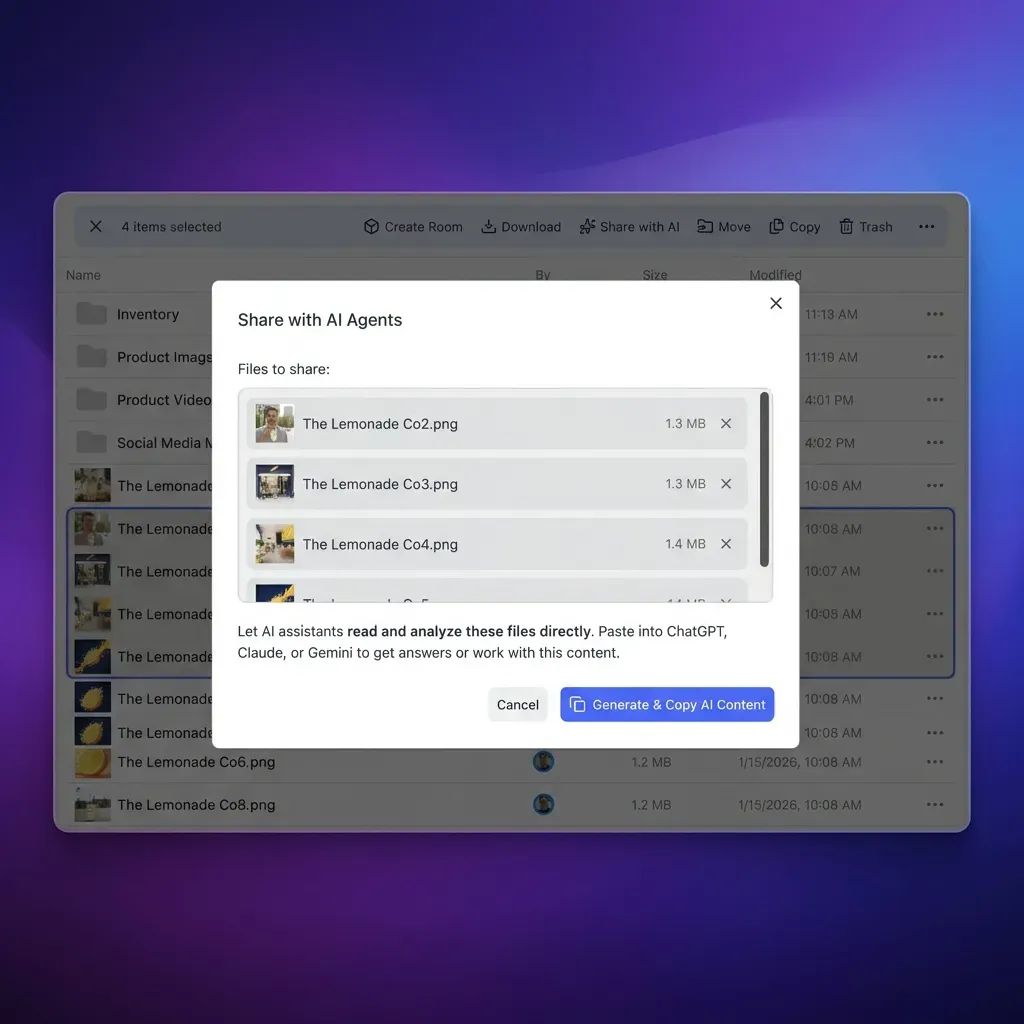
For teams producing video at scale, this workflow pairs well with a shared workspace where reference assets live in a single, version-controlled location. Fastio workspaces solve this by giving agents and humans access to the same file tree. Upload your reference images once, share the URLs with your OpenClaw agent, and every team member can see exactly which references produced which output.
4. Reference-Guided Style Transfer with xAI Grok
xAI's Grok model takes a different approach to multi-image input. It supports up to seven images, but they must all be labeled as reference_image. Unlike Seedance's first/last frame approach, Grok treats every input as a style reference rather than a sequential keyframe.
This makes Grok well suited for style transfer workflows:
- Pass several images that share a visual style (watercolor paintings, pixel art, vintage photographs) and the generated video will match that aesthetic
- Provide product images from different angles and the model generates video that maintains the product's appearance while adding natural motion
- Supply reference images of a specific environment and generate video that feels like it belongs in that world
The practical difference from Seedance 2.0 is that Grok's reference_image role does not imply temporal ordering. Your seven images inform the style and content of the output without dictating sequence. This is better for mood-based generation but worse for narrative sequences where frame order matters.
One limitation: Grok's image-to-video is accessible through the xAI API, which has separate pricing and rate limits from other OpenClaw providers. Factor this into your cost planning if you're generating at volume.
5. How to Scale with Batch Processing and Provider Fallback
For production workloads, two capabilities turn OpenClaw from a single-clip tool into a scalable pipeline: async task processing and automatic provider fallback.
Batch processing works because every video_generate call returns a task ID immediately. Your agent can submit dozens of generation requests without waiting for any of them to finish. Each task runs independently in the background, and OpenClaw wakes the session as results arrive. The platform's task tracking surfaces the status of every queued, running, succeeded, or failed generation without requiring your agent to poll.
A practical batch workflow looks like this: an agent reads a folder of product images, generates a text prompt for each one based on the product category, submits all of them to video_generate with appropriate provider settings, and then processes results as they complete. No blocking, no polling loops.
Provider fallback adds resilience. OpenClaw automatically cycles through configured providers if the primary one fails. If your Runway request times out, the system retries with your next configured provider. This is handled at the runtime level, so your agent code does not need retry logic.
For teams running batch video generation, managing the input images and output videos becomes its own challenge. Storing reference images in local directories works for one-off projects, but breaks down when multiple agents or team members need access to the same assets. A shared workspace with version history and audit trails keeps the pipeline organized. Fastio provides MCP-native access with a 14-day Business Trial (card required; see pricing), which means your OpenClaw agent can read reference images and write finished videos to the same workspace that your human reviewers use.
How to Choose the Right Workflow for Your Project
The best workflow depends on three factors: how many reference images you have, how much control you need over the output, and whether you're generating one video or hundreds.
Start with Google Veo if you have a single strong image and want the model to handle motion on its own. It is the fast path from still image to video with minimal configuration.
Use BytePlus Seedance 1.5 when you need to control both the start and end state of the video. Two-frame interpolation is the most predictable workflow for transition-style content.
Use BytePlus Seedance 2.0 for complex compositions where multiple reference images define the brand, character, or scene. The nine-image capacity is unmatched, but curate your references carefully.
Use xAI Grok when style consistency matters more than frame sequence. Seven reference images as style anchors produce videos that match an aesthetic without imposing temporal ordering.
Use OpenRouter for moderate multi-image needs (up to four images) with good model variety behind a single API.
For production pipelines, combine any of these with async batch submission and provider fallback. The async task system means your agent is never idle waiting for renders, and automatic failover means a single provider outage does not stop your pipeline.
One pattern that works well for teams: store all reference images in a shared Fastio workspace with Intelligence Mode enabled. This lets both agents and human reviewers search reference images semantically, find the right assets quickly, and maintain a clean audit trail of which references produced which videos. The workspace becomes the single source of truth for the entire image-to-video pipeline.
Sources
References used to verify factual claims in this guide.
-
13 of 16 video generation providers support image-to-video mode BytePlus Seedance 2.0 accepts up to 9 reference images, 3 reference videos, and 3 reference audios xAI Grok supports up to 7 reference_image inputs
-
OpenClaw automatically cycles through configured providers if the primary one fails
Frequently Asked Questions
How do I convert images to video with OpenClaw?
Pass one or more images to the video_generate tool using the image parameter (single image) or images parameter (multiple). OpenClaw automatically detects the image input and switches to imageToVideo mode. Add a text prompt describing the motion you want, and the tool submits the request to your configured provider. Processing is asynchronous, so your agent gets a task ID back immediately and continues working while the video renders.
Which OpenClaw video providers support image-to-video?
Thirteen of the sixteen video generation providers support imageToVideo mode. These include Google Veo, OpenAI Sora 2, Runway, BytePlus Seedance 1.0/1.5/2.0, MiniMax, fal, ComfyUI, OpenRouter, xAI Grok, Alibaba, and Qwen. Each has different limits on reference image count, ranging from one image (most providers) up to nine (BytePlus Seedance 2.0).
Can OpenClaw batch process image-to-video conversions?
Yes. Every video_generate call is asynchronous and returns a task ID without blocking. You can submit as many generation requests as you need, and OpenClaw processes them in parallel across your configured providers. The platform's built-in task tracking shows queued, running, succeeded, and failed states for every request. Combined with automatic provider fallback, batch processing remains reliable even if one provider goes down.
What is the best provider for image-to-video in OpenClaw?
It depends on your input. Google Veo works well for single-frame animation with strong motion inference. BytePlus Seedance 2.0 is the most capable for multi-reference work, accepting up to nine images. xAI Grok is strongest for style-guided generation with up to seven reference images. For controlled start-to-end transitions, BytePlus Seedance 1.5 handles two-frame interpolation with adaptive aspect ratios.
What image roles does OpenClaw support for video generation?
OpenClaw supports three image roles through the imageRoles parameter. first_frame marks an image as the opening frame of the video, last_frame marks it as the final frame, and reference_image tells the model to use the image for style and content guidance without placing it at a specific point in the timeline. Not all providers support all roles. BytePlus Seedance 1.5 uses first_frame and last_frame, while xAI Grok expects all images to be labeled reference_image.
Related Resources

Store and share your generated videos in one workspace
Workspaces with MCP-native access. Your OpenClaw agent reads reference images and writes finished videos to the same place your team reviews them.