Top OpenClaw Tools for AI Real Estate Photo Staging and Virtual Tours
NAR's 2025 Profile of Home Staging found that 83% of buyers' agents say staging helps buyers picture themselves in a property, yet only 21% of sellers' agents stage every listing. AI staging tools running inside OpenClaw produce furnished room images for pennies per photo and process a full listing in minutes instead of days. This guide ranks the OpenClaw skills that handle virtual staging, photo enhancement, and listing asset delivery.


How AI Changes the Staging Cost Equation
Physical staging cost a median of $1,500 per property in 2025, according to NAR's Profile of Home Staging. That figure, combined with the two to three days most staging companies need for setup, explains why staging adoption among sellers' agents dropped from 38% in 2017 to 21% in 2025. The demand is still there: 83% of buyers' agents report that staging helps their clients visualize a home as a place to live. The bottleneck is cost and turnaround time.
AI virtual staging closes that gap. Dedicated models like fal.ai's Flux Apartment Staging produce furnished room images from empty-room photos at $0.021 per megapixel, putting a full listing's staging budget under $5. OpenClaw, the open-source AI agent framework, can chain these tools into automated pipelines that pull listing photos, stage them, enhance the results, and deliver polished packages to clients without manual steps.
This guide covers six OpenClaw skills and integrations for real estate photo staging and virtual tour enhancement, ranked by use case. Each entry includes strengths, limitations, pricing, and where it fits in a listing workflow.
How We Evaluated
We ranked tools on five criteria relevant to real estate photo workflows:
- Staging realism: How well the tool preserves room geometry while adding furniture
- Batch capability: Whether it processes multiple photos in a single run
- Cost per image: Total API cost for a typical listing of 8 to 15 photos
- Integration depth: How tightly it works within OpenClaw conversations
- Output flexibility: Resolution options, format support, and style control
Related guides
- Best n8n Tools for AI Agents: Top 10 Nodes for 2026n8n changed AI automation with its visual workflow builder. We rank the best nodes and integrations for building...
- Best Tools for CrewAI Agents: Top Picks for 2026CrewAI agents need good tools to be useful. The framework handles coordination, but external integrations let agents...
- Top OpenClaw Tools for AI Photo Animation and Cinemagraph CreationThe AI image generator market reached $484 million in 2026, but most of that growth targets text-to-image creation....
- Best OpenClaw Tools for AI Pet Portrait and Custom Animal Photo ArtThe AI pet portrait market hit $240 million in 2025 and generated 4.7 million portraits, yet most standalone apps...
- Top OpenClaw Tools for AI Emoji and Sticker CreationOpenClaw's skill registry includes a focused set of tools for generating custom emoji and automating sticker delivery...
- Top 7 OpenClaw Tools for AI Reel Maker and Short-Form Video CreationThe short-form video market is growing at 30.33% annually, but most teams still produce only a few reels per week. This...
More on this subject: OpenClaw Tools (101 guides)
1. fal-ai Skill: Purpose-Built Room Staging
The fal-ai skill connects OpenClaw to fal.ai's model library, which includes a Flux 2 LoRA model fine-tuned specifically for apartment staging. Unlike general image generators, this model was trained to add furniture and decor to empty rooms while preserving the original architecture: wall angles, window placement, lighting direction, and spatial proportions stay locked through constrained LoRA scaling.
Key Strengths:
- Domain-specific fine-tuning produces staged images that respect the room's actual geometry, not just a plausible approximation
- Costs $0.021 per megapixel, roughly 48 generations per dollar, making it the cheapest dedicated staging option on this list
- Seed control enables reproducible A/B testing, so you can show a client the same room in modern, farmhouse, or minimalist styles with consistent framing
- Supports PNG, JPEG, and WebP output with automatic input dimension detection
Limitations:
- Focused on interior room staging only, not exterior shots, aerial photos, or 360-degree virtual tour frames
- Requires a separate fal.ai API key and billing account
Best For: High-volume brokerages staging 10 or more listings per month who need consistent, photorealistic results at predictable costs.
Pricing: $0.021 per megapixel. A typical listing with 10 photos at standard resolution runs roughly $2 to $4 total.
Install the fal-ai skill from ClawHub and add your API key. Your OpenClaw agent can then stage photos by providing an empty-room image URL and a text prompt describing the desired furniture style. The model's 40-step inference process generates results in seconds, and batch requests of up to four images keep the workflow efficient for multi-room listings.
2. How OpenClaw's Built-in Image Generation Handles Staging
OpenClaw ships with a built-in image generation tool that connects to multiple providers, so there is nothing extra to install before your agent can start staging. The tool supports reference-image editing, which is where the real estate value lies: you supply both the empty room photo and a style reference, and the model transfers the aesthetic while preserving the room's layout. That workflow produces consistent furniture styles across a full listing without manual prompt-engineering for each room.
Key Strengths:
- Multiple image generation providers available without installing separate skills
- Reference-image editing lets you pair the empty room with a style guide photo in a single request for consistent results across rooms
- High-resolution output that covers standard MLS photo requirements and virtual tour upload specs
- Requests process concurrently, so your agent can stage an entire listing's photo set in parallel
Limitations:
- Not fine-tuned for staging specifically, so results need more descriptive prompts than a dedicated model like fal-ai's apartment staging LoRA
- Quality and cost differ across providers, which means testing a few backends to find the right fit
Best For: Agents who want a single tool for staging, photo enhancement, and marketing graphics without managing separate skill installations.
Pricing: Varies by provider. Each backend charges its own per-image rates. Check the OpenClaw image generation docs for current pricing across providers.
The practical advantage is workflow flexibility. You can chain a staging call with a follow-up that generates a social media graphic from the staged photo, all within one OpenClaw conversation. For virtual tour workflows, reference-image editing cleans up panoramic shots, adjusts lighting, or adds decorative elements to 360-degree captures before you upload them to your tour platform.


Organize Your Staged Listing Photos in One Searchable Workspace
Persistent team workspace with Intelligence Mode for semantic search across listing assets once enabled. Connect your OpenClaw agent via MCP.
3. Recraft and EachLabs for Photo Enhancement
Raw staged images often need post-processing before they are listing-ready. Brightness, color balance, resolution, and background cleanup can make the difference between a photo that sells and one that gets scrolled past. Recraft and EachLabs fill that gap with editing and enhancement tools that run directly inside OpenClaw conversations.
Recraft Skill
Recraft exposes a full creative toolkit through its OpenClaw skill: raster and vector generation, prompt-based editing, background removal, vectorization, and upscaling. For real estate workflows, the most useful features are background removal for cleaning up exterior shots, upscaling for bumping phone-quality photos to print resolution, and style-consistent generation for marketing materials like brochures and social media cards.
Key Strengths:
- Background removal isolates properties from cluttered surroundings or unflattering neighboring buildings
- Upscaling improves phone-quality photos to listing-grade resolution without visible artifacts
- Generates assets in roughly 12 seconds per request, fast enough for interactive workflows
Limitations:
- Per-request API billing adds up for large batch jobs across many listings
- No domain-specific staging model, so it handles enhancement better than furnishing
Best For: Agents who need a one-stop editing skill for touch-ups, print materials, and photo enhancement alongside their staging workflow.
EachLabs Image Edit Skill
EachLabs routes through over 200 AI models for editing, transforming, and upscaling images. This breadth is useful when you need a specific capability like style transfer from a design reference photo, HDR tone mapping for dim interior shots, or color grading to match a brokerage's brand palette across all listing photos.
Key Strengths:
- Access to 200+ models covers niche editing needs that general tools miss
- Flexible enough for tasks like color correction, style transfer, and resolution upscaling in a single skill
Limitations:
- The large model catalog requires some experimentation to find the right model for each task
- Per-request pricing varies by model, making cost prediction harder for large batches
Best For: Teams with specific post-processing requirements that general-purpose tools do not cover.

4. ClawBot Real Estate Skill and Fast.io for Listing Delivery
Staging photos is one step in a larger listing workflow. The ClawBot Real Estate Skill and Fast.io handle the administrative and delivery layers that surround the visual work.
ClawBot Real Estate Skill
The ClawBot Real Estate Skill automates the text and data side of listing management. It drafts property descriptions from listing details, updates CRM records in Follow Up Boss or kvCORE, manages lead follow-up sequences, and compiles showing feedback into structured reports. Combined with staging tools, it completes the loop: your OpenClaw agent stages the photos, writes the listing copy, and pushes both into your CRM.
Key Strengths:
- Generates listing descriptions from property details, photos, and neighborhood data
- Works alongside real estate CRMs including Follow Up Boss, kvCORE, and LionDesk
- Automates lead follow-up emails and drip sequences triggered by listing activity
Limitations:
- Does not generate or edit images directly. It complements staging tools rather than replacing them
- Full CRM automation requires API access to your specific platform
Best For: Solo agents and small teams who want end-to-end listing automation from photo staging through lead nurture.
Fast.io for Listing Asset Management
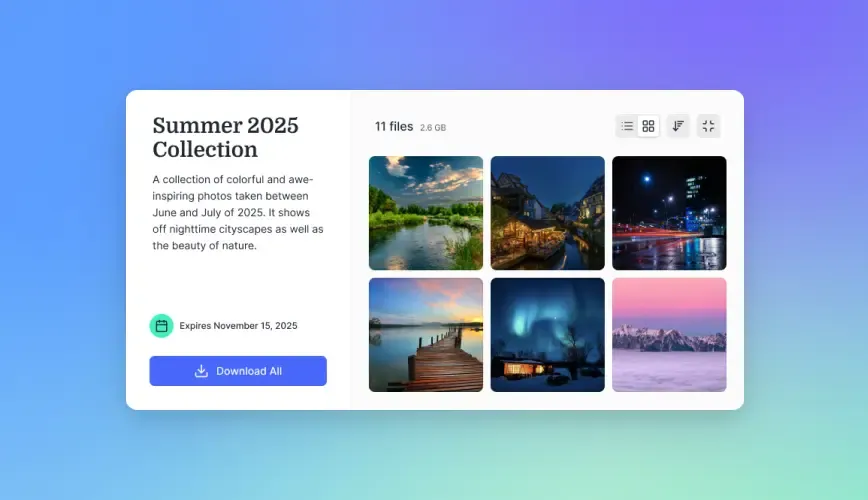
Fast.io serves as the workspace where staged photos, original images, listing descriptions, and marketing materials live together. When your OpenClaw agent generates staged images, they land directly in a Fast.io workspace organized by property address or listing ID.
Key Strengths:
- Intelligence Mode auto-indexes uploaded files for semantic search once Intelligence is enabled. Ask "show me staged living room photos from 123 Main Street" and get results instantly, even across hundreds of listings
- Branded shares let you send polished photo packages to clients and prospects under your brokerage's brand, not a generic cloud drive link
- Agents and humans share the same workspace through the Fast.io MCP server, so handoff from AI pipeline to human review happens without downloading and re-uploading files
- 14-day Business Trial (card required); paid plans start at $9.99/mo with 250 GB storage and 3 seats
Limitations:
- Not a staging or editing tool. It handles organization, search, and delivery
- Intelligence Mode credits scale with the volume of indexed files
Best For: Any brokerage that needs a central, searchable hub for listing assets that both AI agents and human team members can access. Start a 14-day Business Trial and connect it to your OpenClaw pipeline through the MCP endpoint.
How to Match Tools to Your Listing Volume
The right combination depends on how many listings you handle and what quality bar your market demands.
Solo agents (1 to 3 listings per month): OpenClaw's built-in image generation and the ClawBot Real Estate Skill cover the basics. The image tool handles occasional staging requests without extra accounts, and ClawBot takes care of listing descriptions and CRM updates. Store everything in a Fast.io workspace so clients get branded download links instead of raw cloud drive folders.
Mid-volume teams (5 to 15 listings per month): Add a dedicated staging skill like fal-ai. Purpose-built staging models produce more consistent furniture placement at higher volume than general-purpose generators, and per-image costs stay predictable. Layer in Recraft for photo touch-ups and marketing materials when you need print-ready assets alongside your staged photos.
High-volume brokerages (20+ listings per month): Chain multiple skills into an end-to-end workflow. Your OpenClaw agent retrieves listing photos from a shared workspace, stages them with a dedicated model, enhances the results with an upscaling and color correction tool, generates listing copy, and delivers the finished package to a Fast.io workspace for branded client sharing. The workflow runs conversationally without manual file handling between steps.
For virtual tours, OpenClaw's image generation can enhance panoramic photos and 360-degree captures before you upload them to platforms like Matterport or iStaging. Full 3D tour creation still requires a dedicated scanning platform, but the photo enhancement and staging steps benefit from the same skill-chaining approach described above.
The common thread across all volume tiers: OpenClaw orchestrates the tools, and a persistent workspace like Fast.io keeps the outputs organized, searchable, and shareable. Start with the solo setup and expand your skill stack as listing volume grows.
Sources
References used to verify factual claims in this guide.
-
83% of buyers' agents say staging helps buyers picture themselves in a property; only 21% of sellers' agents stage every listing; median staging cost $1,500
-
Staging adoption among sellers' agents dropped from 38% in 2017 to 21% in 2025; buyers viewed 20 homes online versus 8 in person
-
fal.ai Flux 2 LoRA Apartment Staging costs $0.021 per megapixel with 40-step inference
-
OpenClaw image_generate supports multiple providers with reference-image editing for style-consistent staging
Frequently Asked Questions
Can AI stage real estate photos?
Yes. AI virtual staging models accept an empty-room photo and generate a furnished version using text prompts that describe the desired style. Dedicated models like fal.ai's Flux Apartment Staging fine-tune specifically for furniture placement while preserving room geometry. General-purpose image generators like OpenAI's GPT Image 2 can also stage rooms, though they require more detailed prompting. Results are good enough for MLS listings at a fraction of physical staging costs.
What are the best OpenClaw tools for real estate?
For photo staging, the fal-ai skill (Flux Apartment Staging) and OpenClaw's built-in image_generate tool handle furnishing empty rooms. For photo enhancement, Recraft and EachLabs cover upscaling, background removal, and color correction. The ClawBot Real Estate Skill automates listing descriptions and CRM updates. Fast.io provides the workspace layer for organizing and sharing listing assets.
How do you create a virtual tour with AI?
Full 3D virtual tours still require a scanning platform like Matterport or iStaging to capture the spatial data. AI can enhance the workflow by improving panoramic photo quality, adjusting lighting in 360-degree captures, and staging rooms within tour frames before upload. OpenClaw's image_generate tool supports resolutions up to 4K, which meets most tour platform upload requirements.
Is AI virtual staging as good as professional staging?
For online listings, AI staging produces results that are increasingly comparable to professional photo staging at a fraction of the cost. NAR data shows buyers viewed 20 homes online versus 8 in person in 2025, making digital presentation quality critical. AI staging works best for standard residential interiors. Luxury properties with unusual layouts or custom design requirements may still benefit from professional staging services or designer-led hybrid platforms.
How much does AI virtual staging cost through OpenClaw?
Costs depend on which skill and provider you use. The fal-ai Flux Apartment Staging model charges $0.021 per megapixel, putting a typical 10-photo listing at $2 to $4 total. OpenClaw's built-in image_generate routes through providers with their own pricing. Recraft and EachLabs bill per API request. The OpenClaw framework itself and the ClawBot Real Estate Skill are free to install.
Related Resources

Organize Your Staged Listing Photos in One Searchable Workspace
Persistent team workspace with Intelligence Mode for semantic search across listing assets once enabled. Connect your OpenClaw agent via MCP.