Top OpenClaw Tools for AI Photo Animation and Cinemagraph Creation
The AI image generator market reached $484 million in 2026, but most of that growth targets text-to-image creation. Photo animation, turning existing still photos into subtle motion loops and cinemagraphs, remains a specialized niche with consistent commercial demand.


What Sets Photo Animation Apart from Video Generation
The global AI image generator market reached $484 million in 2026, expanding at a 17.4% compound annual growth rate according to Fortune Business Insights. Most of that growth concentrates on text-to-image and text-to-video generation. Photo animation, the process of adding targeted motion to an existing still photograph, occupies a smaller but commercially active niche. The keyword "ai cinemagraph" draws just 10 monthly searches, but its $5.06 cost-per-click signals that the people searching are ready to buy, not browse.
A cinemagraph isolates motion in one part of a photograph while the rest stays frozen. Steam rises from a coffee cup. Water flows behind a bridge. Hair moves in wind while everything else holds still. The effect works because your eye catches the motion against an otherwise static frame. Traditional cinemagraph creation required shooting video, manually masking the movement area, and looping the clip. AI-powered tools skip the manual masking by generating motion from a single still image and a text prompt.
Most "AI video generation" guides cover text-to-video workflows where you describe a scene from scratch. Photo animation is different: you start with an existing image you want to preserve, and the tool adds movement without changing the composition. That distinction matters for product photography, social media content, real estate listings, and portfolio presentations where the original photo already looks right.
OpenClaw gives you two paths into this workflow. The built-in video_generate tool handles image-to-video conversion natively with 16 provider backends. Community skills on ClawHub add specialized models, multi-step pipelines, and provider access beyond what the built-in tool covers. This guide evaluates five options and ranks them by how well they handle the specific requirements of photo animation and cinemagraph output.
Related guides
- Best n8n Tools for AI Agents: Top 10 Nodes for 2026n8n changed AI automation with its visual workflow builder. We rank the best nodes and integrations for building...
- Best Tools for CrewAI Agents: Top Picks for 2026CrewAI agents need good tools to be useful. The framework handles coordination, but external integrations let agents...
- 7 Best OpenClaw Tools for AI Animation and Motion DesignOpenClaw's skill ecosystem now includes dozens of animation and video generation tools, but most guides focus on static...
- Top OpenClaw Tools for AI Subtitle and Caption GenerationOpenClaw's skill ecosystem includes dedicated tools for extracting, generating, translating, and formatting subtitles...
- Best OpenClaw Tools for AI Video Editing AutomationOpenClaw's ecosystem includes both built-in video generation tools and community-developed editing skills that handle...
- Best OpenClaw Tools for AI Video Upscaling and EnhancementOpenClaw's built-in video_generate tool now supports video-to-video mode with 16 provider backends, but none of them...
More on this subject: OpenClaw Tools (101 guides)
Five OpenClaw Tools Ranked for Photo Animation
We evaluated each tool against four criteria specific to photo animation work:
- Source image preservation: Does the output respect the original composition, colors, and framing?
- Motion control: Can you specify which areas move and which stay frozen?
- Loop quality: Does the output loop cleanly for cinemagraph use, or does it produce one-shot clips?
- Provider breadth: How many underlying models can you access through the tool?
Every tool below is available through OpenClaw's skill system or ships built-in. Community skills can be added from ClawHub directly within an OpenClaw session.
1. Built-in video_generate (Image-to-Video Mode)
OpenClaw's built-in video_generate tool, introduced in version 2026.4.5, supports image-to-video as a native mode. No skill installation required. Every OpenClaw agent session has access to it immediately.
The tool accepts one or more reference images with imageRoles that let you specify whether your photo should serve as the first frame, last frame, or a general reference. This control is critical for photo animation: setting your still image as the first_frame tells the model to begin with your exact composition and generate motion from there.
Sixteen provider backends are available, including Runway, xAI, Alibaba Wan, Google, MiniMax, OpenAI, fal, DeepInfra, and Together. The three default providers (xAI, Alibaba Wan, and Runway) cover a range of visual styles and price points without additional configuration. Duration varies by provider, typically 5 to 10 seconds.
Key strengths:
- Zero installation, available in every agent session
- imageRoles parameter (first_frame, last_frame, reference_image) for composition control
- 16 provider backends with different visual characteristics
- Async processing with automatic status polling
Limitations:
- No built-in loop stitching for smooth cinemagraph cycles
- Motion control is prompt-based only, no region masking
- Output duration capped at 5 to 10 seconds depending on provider
Best for: Teams that want image-to-video without managing API keys or installing skills. Start here before exploring specialized options.
2. creaa-ai
The creaa-ai skill connects OpenClaw agents to four generation models through the Creaa API: Nano Banana 2 for images, and Sora 2, Seedance 2.0, and Veo 3.1 for video. For photo animation specifically, the image-to-video mode with Seedance 2.0 or Veo 3.1 produces some of the highest-quality results available through any OpenClaw skill.
The skill is available on ClawHub and handles asynchronous job polling automatically, returning a result URL when generation completes.
Key strengths:
- Access to Veo 3.1 and Seedance 2.0, two of the strongest image-to-video models available in 2026
- Supports both text-to-video and image-to-video workflows
- Aspect ratio control per model
- Clean security audit from both VirusTotal and OpenClaw
Limitations:
- Requires a Creaa API account and credits
- Model availability depends on Creaa's backend status
- Credit costs vary by model and resolution
Best for: When output quality is the priority and you want access to frontier video models like Veo 3.1 without managing separate API integrations.
3. eachlabs-video-generation
EachLabs provides the broadest model catalog of any OpenClaw video skill, routing requests to over 165 specialized AI models through a single API. The skill covers text-to-video, image-to-video, talking head generation, avatar creation, motion control, and transitions between images.
The skill is available on ClawHub and requires an API key from eachlabs.ai.
For photo animation, the image-to-video mode accepts a source image and generates motion based on your prompt. The breadth of the model catalog means you can experiment across different generation engines without switching skills or managing separate API keys for each one.
Key strengths:
- 165+ models accessible through one consistent API
- Image-to-video, talking head, and motion control modes
- Configurable resolution (720p default), duration, and aspect ratio
- Good for A/B testing different models against the same source image
Limitations:
- Flagged as "Suspicious" in security audits, so review the skill before production use
- API key required from eachlabs.ai
- Model quality varies across the catalog
Best for: Experimentation and comparison. If you want to test how the same source photo looks animated by different underlying models, this skill's breadth is unmatched.
4. ai-video-gen
The ai-video-gen skill takes a different approach: instead of routing to one model, it chains multiple generation stages into a pipeline. You can swap different providers at each stage for image generation, video synthesis, voice-over, and FFmpeg-based post-processing.
This modular design is useful for photo animation workflows where you want control over each step. You could use one model to extend your still image into multiple frames, another to synthesize smooth motion between them, and FFmpeg to handle the final loop stitching and format conversion.
Key strengths:
- Modular pipeline with swappable providers per stage
- FFmpeg integration for post-processing, format conversion, and loop creation
- Good for multi-step workflows that combine generation with editing
Limitations:
- More complex setup than single-model tools
- Requires understanding of the pipeline stages to configure effectively
- Text-to-video is the primary documented workflow
Best for: Developers building custom cinemagraph pipelines who want control over every generation and post-processing stage.
5. Recraft
Recraft's OpenClaw skill handles image generation and editing rather than video output, making it a supporting tool in the photo animation pipeline. Its value for cinemagraph work is in source frame preparation.
Install by running /recraft in an OpenClaw conversation and providing your Recraft API key. The skill enables prompt-based editing, background removal, vectorization, upscaling, and batch processing.
Before animating a photo, you often need to upscale it, clean up artifacts, remove distracting backgrounds, or adjust composition. Recraft handles these preprocessing steps inside the same OpenClaw session, so you can prepare your source image and pass it to video_generate or another animation skill without leaving the agent workflow.
Key strengths:
- High-quality image upscaling for sharper animation source frames
- Background removal for isolating subjects before animation
- Prompt-based editing to adjust composition without manual tools
- Available through both OpenClaw skill and MCP integration
Limitations:
- Does not generate video or animation directly
- Requires a Recraft API account with per-request billing
- Strictly a preparation step, not a standalone animation solution
Best for: Improving source image quality before passing photos to an animation tool. Pair with video_generate or creaa-ai for the complete workflow.
Which Tool Should You Start With
If you have never animated a photo in OpenClaw, start with the built-in video_generate tool. It requires no installation and no API keys beyond your default provider configuration. Generate a few test clips to see how different providers handle your source image.
Once you know what output quality you need, move to creaa-ai for access to Veo 3.1 and Seedance 2.0. These models produce stronger results for subtle, realistic motion but require a Creaa API account.
For teams running production cinemagraph pipelines, ai-video-gen gives you the most control over each generation and post-processing stage. Pair it with Recraft for source image preparation and you have a complete pipeline inside one OpenClaw session.
How to Get Clean Cinemagraph Loops
The gap between a standard image-to-video clip and a polished cinemagraph comes down to three workflow decisions.
First, constrain your motion prompt. Generic prompts like "animate this photo" produce too much movement across the entire frame. Specify exactly what should move: "gentle ripple on the water surface, everything else stays still" or "light steam rising from the cup, background frozen." The more specific your prompt, the closer the output gets to cinemagraph quality without manual masking.
Second, use the first_frame imageRole in video_generate or the equivalent parameter in other skills. This anchors the output to your original composition. Without it, some models reinterpret the scene and shift colors, lighting, or framing in ways that make the result look like a generated video rather than an animated photograph.
Third, plan for loop post-processing. Most AI video tools output one-shot clips, not smooth loops. The ai-video-gen skill's FFmpeg stage can handle reverse-and-append looping (play forward, then backward) for a basic ping-pong effect. For smoother results, export the clip and use a crossfade dissolve between the last and first frames. FFmpeg's loop filter or a dedicated video editor handles this in seconds.
One workflow pattern that works well: use Recraft to upscale and clean the source image, pass the result to video_generate with a constrained motion prompt and first_frame anchoring, then run FFmpeg through ai-video-gen or a shell command to stitch the loop. The entire pipeline runs inside a single agent session.
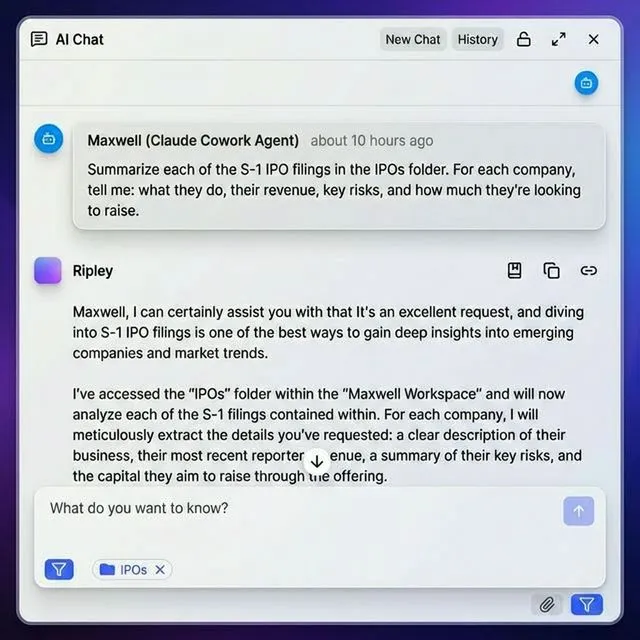


Store and share your cinemagraph collections in one workspace
Upload from OpenClaw agents via MCP, organize by project, and share with clients.
Storing and Versioning Animated Output
Photo animation workflows generate dozens of variants before you find the right combination of model, prompt, and motion parameters. Each attempt produces a video file that needs storage, comparison, and eventual delivery to a client or team.
Local storage works for solo experimentation, but breaks down when agents run unattended or when you need to share results. Cloud storage services like Google Drive or Dropbox handle basic file hosting, but they treat video files as static blobs without version context or agent-friendly APIs.
Fast.io handles the specific needs of agent-generated content. Workspaces organize animation variants by project, version history tracks which prompt and model produced each output, and branded shares let you send cinemagraph collections to clients with your own domain. The Fast.io MCP server gives OpenClaw agents direct access to upload, organize, and share files without leaving the agent session.
Once Intelligence is enabled for the workspace, uploaded videos are auto-indexed for semantic search, so you can find animations later by describing the motion or subject rather than remembering file names. Fast.io offers a 14-day Business Trial, card required; see fast.io/pricing. Paid plans start at $9.99/mo for 250 GB of storage and 3 seats.
Sources
References used to verify factual claims in this guide.
-
The global AI image generator market reached $484 million in 2026, expanding at a 17.4% compound annual growth rate
-
OpenClaw 2026.4.5 introduced video_generate as a built-in tool supporting image-to-video mode with 16 provider backends
-
eachlabs-video-generation provides access to over 165 specialized AI models through one API
Frequently Asked Questions
How do you make a still photo move with AI?
Upload your photo to an AI image-to-video tool and write a prompt describing the motion you want. In OpenClaw, the built-in video_generate tool handles this natively. Set your photo as the first_frame, describe the movement (for example, "water ripples gently, sky stays still"), and the model generates a short video clip preserving your original composition while adding targeted motion.
What is the best AI cinemagraph tool?
For OpenClaw users, the built-in video_generate tool with image-to-video mode is the fast starting point because it requires no installation. For higher output quality, the creaa-ai skill provides access to Veo 3.1 and Seedance 2.0, which are among the strongest image-to-video models available in 2026. The best choice depends on whether you prioritize convenience (built-in) or output quality (creaa-ai).
Can OpenClaw animate photos?
Yes. Since version 2026.4.5, OpenClaw includes a built-in video_generate tool that supports image-to-video mode. You provide a still photo and a motion prompt, and the tool generates an animated clip using any of 16 supported provider backends including Runway, xAI, and Alibaba Wan. Community skills like creaa-ai and eachlabs-video-generation add access to additional models.
What is the difference between photo animation and video generation?
Video generation creates new visual content from a text description, building the scene from scratch. Photo animation starts with an existing photograph and adds motion to specific elements while preserving the original composition. Cinemagraphs are a subset of photo animation where only a small portion of the image moves, creating a loop that sits between a still photo and a full video.
Do I need separate API keys for each OpenClaw animation skill?
The built-in video_generate tool works with OpenClaw's default provider configuration, so you may not need additional keys to start. Community skills like creaa-ai and eachlabs-video-generation each require their own API keys from their respective services. Recraft similarly needs its own API key. Each service has independent pricing.
Related Resources

Store and share your cinemagraph collections in one workspace
Upload from OpenClaw agents via MCP, organize by project, and share with clients.