Top OpenClaw Tools for AI Content Detection in 2026
OpenClaw's skill ecosystem now includes several paths for integrating AI content detection into automated publishing workflows. This guide evaluates the top tools available to OpenClaw users, from API-based detection skills to security scanners, and explains how each fits into an agentic content pipeline where authenticity checks happen before publication rather than after.


Why AI Content Detection Matters in Agentic Workflows
AI-generated text now appears in a significant share of web content. An Ahrefs study of 900,000 pages found that 74.2% of newly published web pages contain some AI-generated content, though only 2.5% are entirely machine-written. For teams running OpenClaw agents that draft, edit, or publish content automatically, detection tools serve a different purpose than they do in classrooms or newsrooms.
In an agentic pipeline, detection is a quality gate. Your OpenClaw agent generates a draft, a detection skill checks it, and the workflow either flags the content for human review or routes it through a rewriting step. This prevents publishing content that reads as machine-generated, which can hurt reader trust and SEO performance over time.
The tools below range from dedicated OpenClaw skills on ClawHub to external APIs you can wire into your agent's workflow through custom skills or MCP tool connections. Each one solves a slightly different problem, and the right choice depends on whether you need speed, accuracy, multilingual support, or tight integration with an existing editing stack.
Related guides
- Best n8n Tools for AI Agents: Top 10 Nodes for 2026n8n changed AI automation with its visual workflow builder. We rank the best nodes and integrations for building...
- Best Tools for CrewAI Agents: Top Picks for 2026CrewAI agents need good tools to be useful. The framework handles coordination, but external integrations let agents...
- Top OpenClaw Tools for AI Content HumanizationOpenClaw's skill ecosystem includes several purpose-built tools for detecting and removing AI writing patterns from...
- Top OpenClaw Tools for AI Data Extraction from Screenshots and Visual ContentAgent Browser passed 58,600 installs on Composio in early 2026, signaling that developers need tools for data locked...
- 7 OpenClaw Tools That Automate Employee Onboarding ContentGartner projects that 40% of enterprise applications will embed task-specific AI agents by the end of 2026, up from...
- Top OpenClaw Tools for AI Press Release and Media Content Creation91% of PR professionals use generative AI for writing, but most rely on standalone generators that handle drafting and...
More on this subject: OpenClaw Tools (101 guides)
How We Evaluated These Tools
We assessed each tool against five criteria specific to OpenClaw integration:
- Integration path. Does a ready-made ClawHub skill exist, or do you need to build a custom skill wrapping an external API?
- Detection accuracy. How well does the tool identify AI-generated text while avoiding false positives on human writing?
- Speed. Can it return results fast enough to sit inside an automated pipeline without creating bottlenecks?
- Cost at scale. What happens to pricing when your agent processes hundreds or thousands of documents daily?
- Multilingual support. Does detection work beyond English?
OpenClaw skills are instruction packages that teach your agent how to use a tool. Some detection tools already have community-built skills on ClawHub (which hosts over 13,700 publicly available skills as of early 2026). Others require a custom skill that wraps their REST API. Both approaches work, but a maintained ClawHub skill saves setup time.

1. GPTZero API
GPTZero is the most widely used AI detection platform, with over 8 million users. Its API returns probability scores at the document, paragraph, and sentence level, making it straightforward to build an OpenClaw skill that highlights which specific passages triggered detection.
Key strengths:
- 99.3% overall detection accuracy with a 0.24% false positive rate in controlled testing
- Sentence-level scoring lets your agent pinpoint exactly which sections need rewriting rather than flagging entire documents
- SDKs available in 17 languages including Python and Node.js
- Chrome extension and Google Docs integration for manual verification alongside agent workflows
Limitations:
- Higher false positive rate on shorter texts (under 250 words)
- No built-in plagiarism checking, only AI detection
OpenClaw integration path: No official ClawHub skill exists yet. Build a custom skill that calls the GPTZero detection API, passes your document content, and interprets the returned probability scores. GPTZero offers a free tier for development testing.
Pricing: Free tier available. Paid plans start around $10/month for higher volume.
Best for: Teams that want the highest accuracy on English-language content and need sentence-level granularity for targeted rewrites.


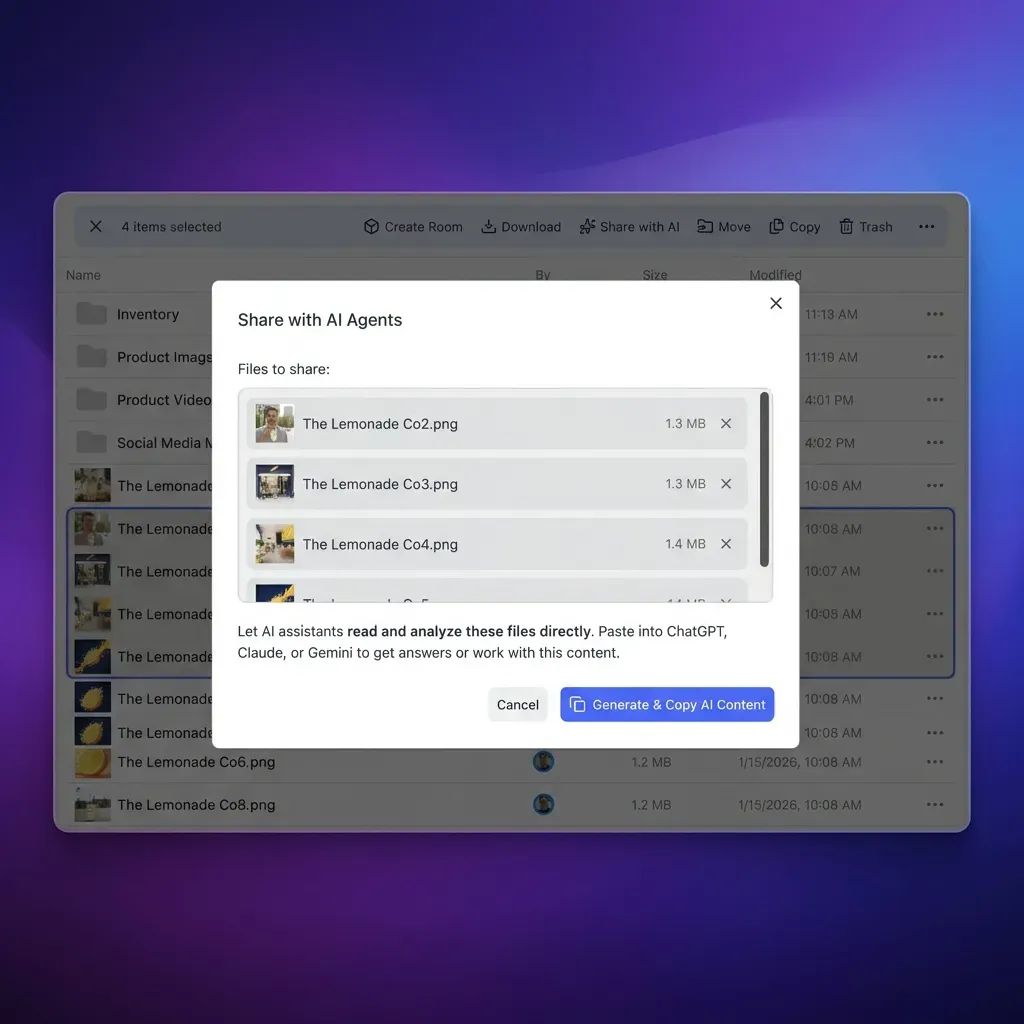
Store and audit your agent's verified content
Fastio gives OpenClaw agents persistent, indexed storage with full audit trails. Upload verified content via MCP, share with editors, and query detection history through Metadata Views.
2. Copyleaks AI Detection API
Copyleaks combines AI detection with plagiarism checking in a single API call, which makes it useful for OpenClaw workflows that need both checks in one step. The API processes documents in 2-4 seconds for texts under 2,000 words and delivers results via automation hooks callbacks, fitting naturally into asynchronous agent pipelines.
Key strengths:
- Dual-purpose scanning: AI detection and plagiarism checking in one request
- automation hooks-based results delivery works well with event-driven OpenClaw architectures
- Supports 30+ languages for multilingual content pipelines
- SDKs in C#, Node.js, PHP, Java, Ruby, and Python
- AI Source Match feature identifies which AI model likely generated the text
Limitations:
- Misclassifies roughly 1 in 20 human-written documents as AI-generated in some studies
- Pricing scales per scan, which gets expensive at high volumes
OpenClaw integration path: Create a custom skill that submits documents to the Copyleaks API and processes automation hooks responses. The async model means your agent can continue other work while waiting for results, then react when the automation hooks fires.
Pricing: Usage-based. Enterprise plans available for high-volume pipelines.
Best for: Multilingual teams that need plagiarism and AI detection in a single workflow step.
3. Originality.ai
Originality.ai targets publishers and SEO teams specifically, combining AI detection, plagiarism checking, and readability scoring. Its API achieved 100% accuracy across all tested LLMs in a January 2026 study, though real-world performance varies with content type and editing level.
Key strengths:
- Consistently high accuracy on long-form content typical of marketing and editorial workflows
- Combined AI detection, plagiarism checking, and fact-checking in one platform
- Enterprise API access for building custom integrations
- Team management features for collaborative content review
- Regularly updated to detect output from new models as they launch
Limitations:
- Originality.ai has no free tier for API access
- Accuracy drops on heavily human-edited AI content (down to approximately 71% in some tests)
OpenClaw integration path: Build a custom skill that authenticates with the Originality.ai API, submits content for scanning, and parses the response into actionable decisions (pass, flag for review, or send to rewriting). Pipedream and Zapier integrations exist if you prefer no-code connections, but a direct API skill gives you more control over the agent's decision logic.
Pricing: Plans start at $14.95/month for 200,000 words. API access included in all paid tiers.
Best for: Publishing teams running content pipelines where accuracy on long-form editorial content matters more than speed.
4. Sapling AI Detector API
Sapling takes a developer-first approach to AI detection. Its API returns both an overall document score and per-sentence scores using two complementary models: a classification model trained on AI-generated text and a perplexity-based model that measures statistical patterns. This dual-model approach catches different types of AI writing.
Key strengths:
- Per-character pricing makes costs predictable and fair for variable-length content
- Sentence-level and token-level scoring for precise identification
- Dual-model architecture (classification plus perplexity) reduces blind spots
- Rate-limited free key available for development and testing (50,000 characters per 24 hours)
- Clean REST API with minimal setup overhead
Limitations:
- Less brand recognition means fewer community resources and examples
- Documentation is thorough but the ecosystem of pre-built integrations is smaller
OpenClaw integration path: Sapling's straightforward REST API is among the easiest to wrap in a custom OpenClaw skill. Send text to the detection endpoint, interpret the returned confidence scores, and branch your agent's workflow based on the threshold you set.
Pricing: First 10 million characters at $0.025 per 1,000 characters. Volume discounts above that threshold.
Best for: Developers who want granular, per-character pricing and clean API design without platform lock-in.
5. Winston AI
Winston AI bundles text detection, image detection (identifying AI-generated images and deepfakes), and readability scoring into a single platform. The image detection angle is relevant for OpenClaw workflows that process both text and visual content.
Key strengths:
- Detects both AI-generated text and AI-generated images in one platform
- Claims 99.98% accuracy on text detection
- Supports multiple languages including English, French, Spanish, German, Portuguese, Dutch, and Chinese
- API access included starting from the $12/month Essential plan
- 14-day free trial
Limitations:
- Smaller user base means less independent accuracy verification
- Image detection is newer and less battle-tested than text detection
OpenClaw integration path: Build a custom skill that calls the Winston API. The combined text and image detection is useful if your OpenClaw agent handles visual content alongside written copy.
Pricing: Essential plan at $12/month with 80,000 queries. Team plans at $29/user/month.
Best for: Teams whose content pipelines include both text and images that need authenticity verification.
6. Bitdefender AI Skills Checker (Security Layer)
This tool solves a different detection problem. Rather than checking whether your agent's output is AI-generated, Bitdefender AI Skills Checker scans OpenClaw skills themselves for malicious behavior before you install them. It is relevant here because content detection skills you find on ClawHub might themselves be compromised.
In January 2026, security researchers discovered the "ClawHavoc" campaign: 341 malicious skills on ClawHub, with 335 from a single campaign distributing Atomic Stealer malware. Bitdefender's initial scans revealed nearly 900 malicious skills, representing roughly 20% of total packages at the time. Before installing any community-built detection skill, run it through this checker.
Key strengths:
- Free, no subscription required
- AI-powered pattern detection for backdoors, data exfiltration, prompt injection, and obfuscation
- Validates skill behavior against declared requirements
- Context-aware analysis reduces false positives on legitimate automation patterns
Limitations:
- Only scans skill code and SKILL.md files, not runtime behavior
- Cannot catch deeply hidden prompt injection payloads in all cases
OpenClaw integration path: This is a pre-installation verification tool, not a runtime skill. Run it on any ClawHub skill (including content detection skills) before adding them to your agent's configuration. Available directly at Bitdefender's website.
Best for: Every OpenClaw user. Run this before installing any community skill, especially ones that handle your content.
Building a Detection Pipeline in OpenClaw
The real value of these tools comes from chaining them into an automated workflow. Here is a practical pattern for integrating detection into an OpenClaw content pipeline:
Stage 1: Generation. Your agent drafts content using its primary model.
Stage 2: Detection gate. A detection skill (GPTZero or Sapling for speed, Originality.ai for accuracy on long-form) scores the output. You define a threshold, for example anything above 0.7 AI probability gets flagged.
Stage 3: Conditional routing. If the content passes, it moves to the next stage. If it fails, it routes to either a rewriting skill (like the community "humanize-ai-text" skill on ClawHub) or a human review queue.
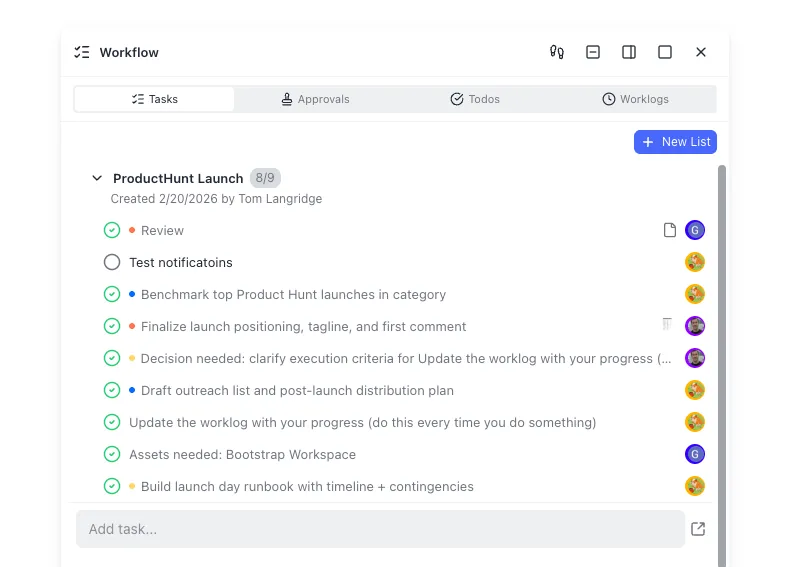
Stage 4: Storage and handoff. Verified content lands in a persistent workspace. Fastio handles this stage well for teams using OpenClaw: content files are uploaded via the MCP server, auto-indexed for search once Intelligence is enabled, and shared with human editors for publication. Fastio offers a 14-day Business Trial, card required; see /pricing/.
Stage 5: Audit trail. Store detection scores alongside the content so editors can review the agent's decision history. Fastio's audit logging and Metadata Views can structure these scores into a queryable record, giving your team visibility into which content triggered detection flags and what happened next.
This pattern works whether you use one detection tool or several. Some teams run a fast, cheap detector (Sapling) as a first pass and only send flagged content to a slower, more accurate tool (Originality.ai) for confirmation. This layered approach keeps costs down while maintaining quality.
Sources
References used to verify factual claims in this guide.
-
74.2% of newly published web pages contain some AI-generated content, though only 2.5% are entirely machine-written
-
GPTZero achieved 99.3% overall accuracy with a 0.24% false positive rate
-
Detection tools correctly identify fully AI-generated unedited content 89% of the time, dropping to 71% for heavily edited content
-
ClawHavoc campaign discovered 341 malicious skills on ClawHub with Bitdefender finding nearly 900 malicious skills total
-
ClawHub hosts over 13,700 publicly available skills as of early 2026
Frequently Asked Questions
What OpenClaw tools can detect AI-written content?
No single official OpenClaw skill is dedicated solely to AI content detection. The practical approach is building custom skills that wrap external detection APIs like GPTZero, Copyleaks, Originality.ai, Sapling, or Winston AI. These skills call the detection API, parse the response, and feed the result back into your agent's workflow as a pass/fail gate.
How do you integrate AI detection into an OpenClaw workflow?
Create a custom skill with a SKILL.md that instructs your agent to call a detection API after content generation. The skill receives the generated text, submits it to the API endpoint, and interprets the confidence score against your threshold. If the score exceeds your limit, the skill routes content to rewriting or human review. This works with any detection API that accepts text via REST.
Which OpenClaw skills work best for content authenticity checks?
For speed and cost efficiency, build a skill around the Sapling API (free development tier, per-character pricing). For highest accuracy on editorial content, use Originality.ai. For combined plagiarism and AI detection, use Copyleaks. For multilingual content, Copyleaks or Winston AI cover 30+ and 7 languages respectively.
Are AI content detectors accurate enough for automated pipelines?
Detection tools correctly identify fully AI-generated, unedited content roughly 89% of the time. Accuracy drops to about 71% for heavily human-edited AI content and 42% for content where AI handled only research or outlines. For automated pipelines, this means detection works best as a filter for obvious AI text, not as a final arbiter. Use it to catch the clearest cases and route borderline content to human reviewers.
How much does it cost to run AI detection at scale in OpenClaw?
Costs vary widely. Sapling charges $0.025 per 1,000 characters (roughly $0.50 per 2,000-word article). GPTZero offers free testing with paid plans from $10/month. Originality.ai starts at $14.95/month for 200,000 words. Winston AI offers 80,000 queries for $12/month. For high-volume pipelines, Sapling's per-character model or Copyleaks' enterprise pricing typically offers the best value.
Related Resources

Store and audit your agent's verified content
Fastio gives OpenClaw agents persistent, indexed storage with full audit trails. Upload verified content via MCP, share with editors, and query detection history through Metadata Views.